TL;DR

Get kitchen gear delivered free — and shop member deals
- Fast, free delivery on millions of items
- Access to Prime Big Deal Days deals on October 6–7
- Prime Video, Amazon Music and more included
Electric popcorn makers heat kernels until the moisture inside turns to steam and pressure pops each kernel. Hot-air machines use little or no oil, while stirring and kettle-style models can make richer popcorn with more cleanup; compare capacity, noise, storage, and the maker’s instructions before choosing.
A popcorn maker can fill your kitchen with a warm, buttery smell in minutes—or leave you with a bowl of dry popcorn and a counter full of crumbs. The difference often comes down to the machine’s design and whether it suits the way you snack.
Here’s how electric popcorn makers work, how hot-air and kettle-style models compare, and what to check before buying. You’ll also get practical tips for better popping, easier cleanup, and fewer disappointing unpopped kernels.
Hot-air poppers usually need no oil for popping; add butter or seasoning afterward if you want it to stick.
Stirring and kettle-style machines can produce richer, oil-coated popcorn and usually need more cleanup.
Check whether a maker’s capacity describes kernels or popped popcorn before choosing a batch size.
Fresh kernels, a sealed container, and a portion within the machine’s limit can help reduce unpopped kernels.
Unplug the machine, let it cool, and keep electrical parts dry when you clean it.
See how a popcorn maker turns a hard kernel into a fluffy snack
An electric popcorn maker heats kernels until the moisture inside turns to steam, pressure builds, and the hull bursts open. The kernel’s moisture is what makes popping possible: as it heats, steam expands inside the hull until the kernel opens and its starchy interior puffs out. If a kernel has dried out, or never gets hot enough, it may stay unpopped. That is why kernel storage and the machine’s heating pattern both affect the bowl you get.
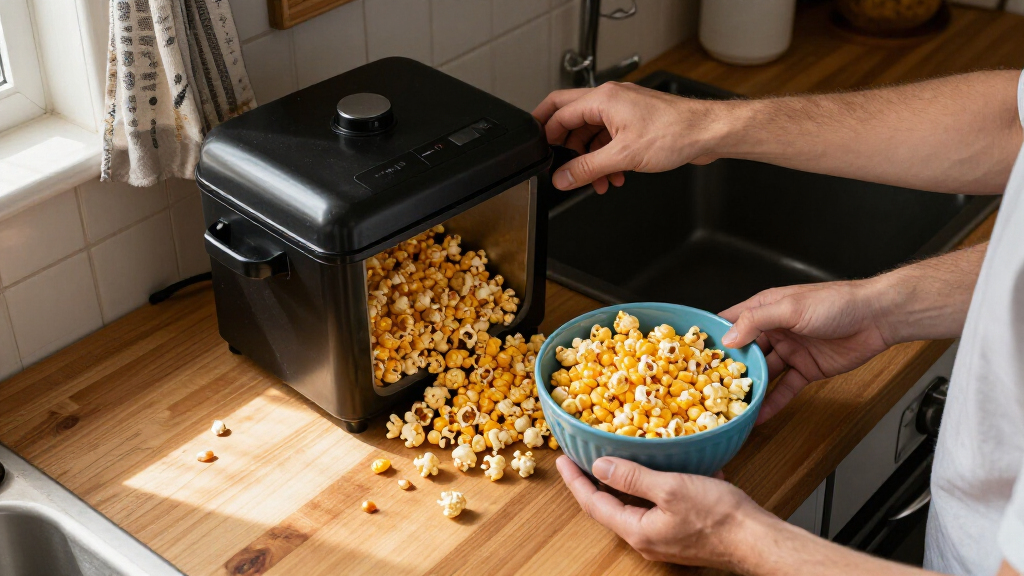
Most home models use one of two electric designs: hot-air poppers or stirring and kettle-style makers. A hot-air popper circulates heated air around the kernels, then blows the popcorn down a chute, often straight into a bowl. This avoids oil during popping, but the airflow can make the machine loud and can send light pieces bouncing out of a narrow bowl. A kettle-style machine heats kernels with oil; stirring helps distribute heat and oil, and the batch is typically tipped or released when it’s ready. The oil can coat the popcorn as it pops, adding flavor but also leaving residue on the kettle and nearby surfaces.
Microwave poppers sometimes appear in the same shopping searches, but they are not electric appliances themselves. They sit inside a separate microwave oven, which supplies the heat. That distinction matters if counter space is tight: a microwave popper is stored away between uses, while a countertop maker needs a place to sit or live in a cupboard. The microwave option saves a dedicated appliance, though the result depends on the oven and its settings.
Choose the popping style that fits your taste and cleanup tolerance
Electric popcorn makers trade off oil use, flavor, and cleanup in different ways. Hot-air models typically need no oil to pop, so the finished popcorn starts out lighter and drier; adding butter or oil afterward can bring flavor, but may make seasoning uneven unless you toss the bowl. Stirring and kettle-style machines generally use oil during popping, which gives the kernels a richer coating and can help seasonings cling. The same coating is why their heated parts usually take more effort to clean. Neither design guarantees perfect results: kernel freshness, portion size, and how evenly heat reaches the batch still matter.
| Style | What you get | What to weigh |
|---|---|---|
| Hot-air | Popcorn made with little or no added oil | Can taste drier; often loud and may scatter pieces near the chute |
| Stirring or kettle-style | Richer flavor and a texture closer to cinema popcorn | Oil and heated parts can mean more cleanup |
| Microwave popper | A simple popping vessel used in your microwave | Requires a separate oven, and results depend on its settings |
Imagine making a quick snack for two on a weekday: a compact hot-air model may be easy to run and serve, especially if you want to avoid measuring oil or cleaning a kettle. If you’re setting out a big bowl for a film night and prefer a glossy, lightly salted coating, a stirring model may suit you better—provided its batch size matches your group and you’re happy to wipe it down afterward. The choice is less about one style being universally better and more about which routine you’ll keep using.
Check these details before you bring a machine home
The best popcorn maker for your kitchen has a batch size you’ll use, a footprint you can store, and a cleanup routine you won’t resent. Capacity labels can mislead: a maker’s “cup” measurement may refer to kernels going in or popcorn coming out. Popped volume is much larger than the starting measure, so mistaking one for the other could leave you buying a machine that makes too little—or filling it past its safe limit. Check the manual or product details for the actual kernel portion limit.
Run through these checks before buying:
- Serving size: A small machine may suit one or two people but require several batches for a group. Consider whether you’re willing to run batches back to back; repeated batches take time and can leave hungry guests waiting.
- Counter and cupboard space: Some makers are bulky. A built-in serving bowl can save a dish, but the appliance still needs somewhere to live. Measure the storage spot, including height, so a convenient feature doesn’t turn into a machine you avoid using.
- Noise and mess: Hot-air poppers can be loud, and their chute may send lightweight popcorn tumbling out of the bowl. A wide bowl and a spot away from conversation can make that tradeoff easier to live with.
- Cleaning: Removable parts and accessible surfaces make oil residue easier to tackle. Check which parts can be washed and how; if cleanup is awkward, it may outweigh a richer result when you’re choosing a machine for frequent snacks.
- Price and parts: Think about how often you’ll use it and whether replacement parts or accessories cost extra. A higher price alone does not promise better popping, so compare practical features you’ll use with the cost of keeping the machine in service.
For instance, a compact kitchen may benefit more from a popper that stores in a cupboard than from a vintage-style kettle that looks charming but occupies a permanent patch of counter. If you make popcorn often, though, an easy-to-reach machine may be more useful than one that is technically compact but inconvenient to unpack.
Get more kernels to pop with three small changes
To reduce unpopped kernels, use fresh popcorn kernels, measure a portion that fits your machine, and store the kernels in a sealed container in a cool, dry place. Old maids—the familiar name for kernels left behind—may have lost too much moisture, have a damaged hull, or simply have missed even heating. Since those causes can look alike in the bowl, one disappointing batch is not enough to diagnose a fault; check your portion and storage before assuming the maker is failing.
- Measure the kernels: Follow the maker’s portion limit and use popcorn kernels meant for popping. Overfilling crowds the cooking area, making it harder for hot air or a stirring mechanism to reach every kernel evenly. A smaller batch within the limit may pop more consistently than trying to maximize each run.
- Store them well: Keep kernels sealed in a cool, dry spot. Avoid the fridge or freezer unless the packaging recommends it, since storage conditions can affect moisture. The goal is to keep kernels from drying out or taking on dampness, both of which can make popping less reliable.
- Let the machine do its job: Use the specified setting and give the batch time to finish. Stopping early can leave kernels that were still heating, while running beyond the maker’s instructions can risk scorching. Kernels that pop in quick succession sound like a little crackle of applause.
If your first batch spills from the chute, try a wider bowl and a smaller portion next time. That simple change can keep the popping stream inside the bowl while also helping the machine heat the kernels more evenly. If unpopped kernels remain a problem, change one factor at a time—portion, storage, or setting—so you can tell what helped.
Add flavor after popping and keep the machine easy to clean
For a hot-air popper, add butter, oil, or seasoning after the kernels pop unless your manual explicitly says otherwise. Oil-free popping describes how the machine heats the kernels; it does not mean the finished snack has no calories or sodium. A light drizzle of melted butter or oil helps fine salt and other seasonings cling to the popcorn instead of falling to the bottom of the bowl. Toss as you add it so the coating reaches more pieces without making the bottom soggy.
Try a small batch with a teaspoon of melted butter and a pinch of salt, then adjust to taste. Stirring or kettle-style makers can produce a richer result because they use oil during popping, but that coating tends to leave more residue to clean. Think of the choice as a trade: less added fat and a drier crunch, or a fuller coating with a little more scrubbing. If convenience matters most, seasoning after popping lets you control the amount and keeps extra ingredients out of the machine.
When you finish, unplug the maker and let it cool fully before cleaning. Wash removable parts as the manual directs, keep the motor and cord dry, and don’t immerse electrical components. The kettle, heating surface, and popped corn can all be hot, so use the machine on a stable surface and follow its safety instructions. Waiting for the appliance to cool also helps prevent burns and keeps you from wiping hot oil across surfaces.
Decide whether a dedicated popcorn maker earns its shelf space
An electric popcorn maker can be worth buying if you make popcorn often and value a fast, repeatable snack or a particular popping style. If popcorn is an occasional treat, a stovetop pan or microwave popper may take up less cupboard space. How often you’ll use it matters because a dedicated appliance only saves effort when it is easy to reach, suits your usual batch size, and doesn’t make cleanup feel like a separate chore.
Say you make popcorn every Friday for a family film night: a larger machine with a clear serving bowl may save time and make the routine fun, especially if one batch is enough for everyone. If you’re a solo snacker with little storage, an appliance that comes out twice a year may feel like one more bulky thing to move. Compact designs, removable parts, and built-in bowls are handy features when they solve a real storage or serving problem, but they don’t prove a machine pops better.
Health depends on the serving and toppings, too. Plain air-popped popcorn is often lower in added fat before toppings, but butter, oil, cheese, and salt change the nutrition profile. That means the maker’s style can shape your starting point, while the portion and what you add determine much of the finished snack. Choose based on the snack you actually want to eat, not just the machine’s label.
Frequently Asked Questions
Are electric popcorn makers worth buying?
They can be a good buy if you make popcorn often and want a dedicated machine for convenience or a particular style. If you only make it now and then, a stovetop method or microwave popper may be easier to store.
Which electric popcorn maker makes the best-tasting popcorn?
Taste is personal: hot-air machines prioritize popping with little or no oil, while stirring and kettle-style makers can deliver a richer, more familiar cinema-style coating. Try to match the machine to the flavor and cleanup routine you prefer.
Do hot-air poppers need oil?
Usually they do not need oil to pop kernels. You can add a little melted butter or oil afterward to help salt and other seasonings stick.
Why does my popcorn maker leave so many kernels unpopped?
Kernels may be stale or poorly stored, the machine may be overfilled, or the heat may not reach every kernel evenly. Measure the portion the maker allows and store popcorn kernels sealed in a cool, dry place.
Can I put butter or seasoning into the machine while it pops?
Only do this if the manufacturer’s instructions explicitly allow it. Adding ingredients to the wrong area can interfere with heating, create smoke, or make cleanup harder.
Conclusion
Choose your popcorn maker by the snack you want and the space, noise, and cleanup you can accept. Check its kernel capacity, follow the manual, and keep a bowl ready for that first warm, crackling batch.
Fall Picks
fall essentials
As an affiliate, we earn on qualifying purchases.