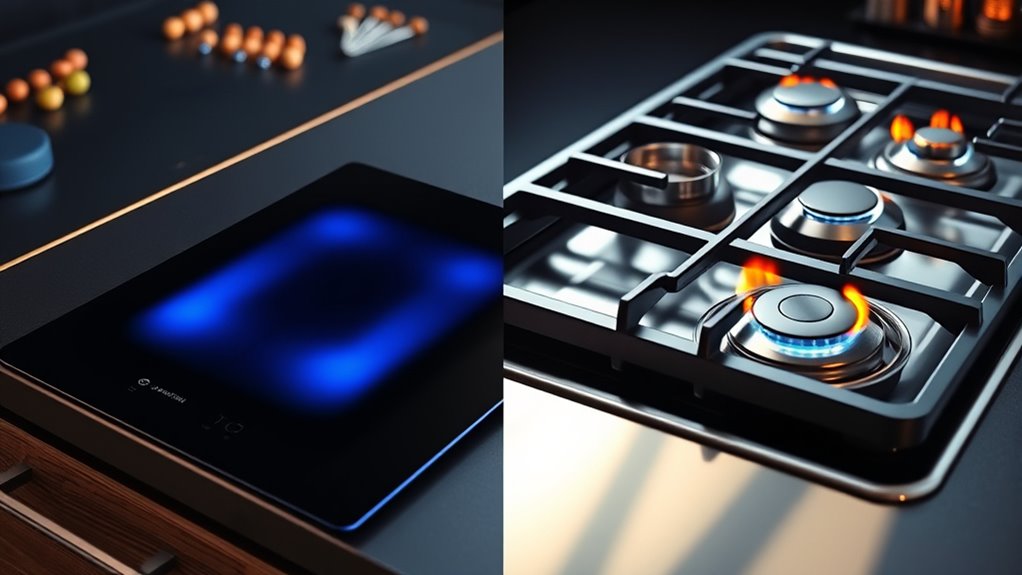

You might notice more techies switching from gas to induction because induction cooktops are safer, more energy-efficient, and easier to clean. Induction heats quickly with precise temperature control, reducing energy waste and risk of burns. Plus, they lack open flames and have safety features like automatic shut-off. If you’re curious about how these benefits compare and why induction is becoming the top choice, keep exploring the advantages that make it a modern kitchen upgrade.
Key Takeaways
- Induction offers faster heating and precise temperature control, appealing to tech-savvy users seeking efficiency.
- Safer with no open flames or gas leaks, reducing hazards for households with children or pets.
- Easier to clean due to flat glass surfaces, saving time and maintaining kitchen aesthetics.
- Supports smart kitchen integration with advanced features, aligning with modern technological trends.
- More energy-efficient and eco-friendly, aligning with sustainable and innovative cooking solutions.
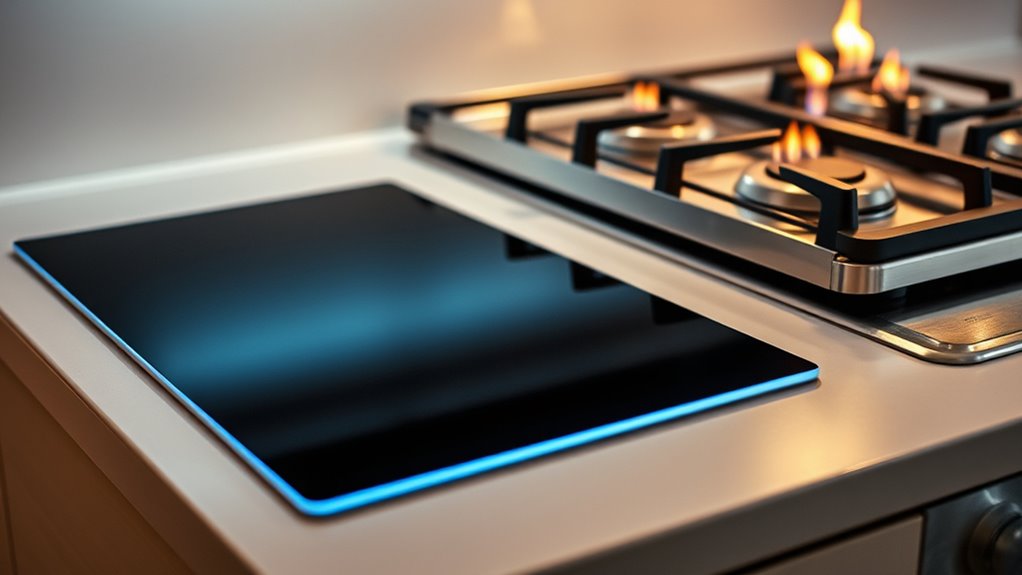
When choosing a cooking method, understanding the differences between gas and induction can help you make an informed decision. Both have their advantages, but many tech-savvy cooks are leaning toward induction for its modern features. One of the key factors to weigh is energy efficiency. Induction cooktops excel here because they transfer heat directly to the cookware via electromagnetic fields, meaning less energy is wasted. Gas stoves, on the other hand, lose a significant portion of heat around the sides of the flame, making them less efficient overall. If you’re concerned about reducing energy consumption and lowering your utility bills, induction provides a more sustainable option, heating up quickly and responding instantly to temperature adjustments. You’ll notice that your cooking becomes faster and more precise, which is especially useful if you enjoy experimenting with recipes that require delicate temperature control.
Safety features are another essential aspect that tech enthusiasts prioritize. Gas stoves pose certain risks, such as open flames and gas leaks, which can be hazardous if not properly maintained. Induction cooktops eliminate these dangers because they don’t produce an open flame or direct heat. The surface itself remains relatively cool, only heating through the magnetic interaction with compatible cookware. This reduces the risk of burns, especially for households with children or pets. Additionally, many induction units come equipped with automatic shut-off features if no cookware is detected or if the heat exceeds a preset limit, adding an extra layer of safety. These features give you peace of mind, knowing that your stove is less likely to cause accidents or health hazards. Furthermore, the precise control and safety features of induction are supported by advanced technology, making them increasingly popular among modern kitchens.
Moreover, induction cooktops are easier to clean because their flat glass surfaces don’t have grates or burners that trap grime. Wiping them down is quick and straightforward, saving you time and effort. Gas stoves, with their burners and open flames, tend to collect spills and grease, requiring more maintenance. When you combine the energy efficiency and safety features of induction with its sleek design, it’s easy to see why more tech enthusiasts are switching over. They’re not just investing in a cooking appliance but embracing a smarter, safer, and more eco-friendly kitchen technology. If you’re looking to upgrade, understanding these differences helps you choose a stovetop that aligns with your priorities for efficiency, safety, and convenience.

WAATFEET 1700W Portable Induction Cooktop,Electric Induction Cooker and Burner,Countertop Hot Plate with 10-Level Adjustment,3-Hour Timer,Smart Touch Cooktop,and Safety Lock Feature,Black
- Power Output: 1700W for versatile cooking
- Timer: 3-hour precise cooking timer
- Portability: Lightweight and easy to transport
As an affiliate, we earn on qualifying purchases.
As an affiliate, we earn on qualifying purchases.
Frequently Asked Questions
Which Type of Stove Is More Energy-Efficient Overall?
Induction stoves are more energy-efficient overall because they use electromagnetic energy to directly heat pots and pans, reducing energy consumption. This method minimizes heat loss, making it faster and more precise. Additionally, induction cooking has a lower environmental impact since it consumes less power and produces fewer emissions. If you’re looking to save energy and reduce your carbon footprint, switching to an induction stove is a smart choice.
How Does Each Stovetop Type Impact Indoor Air Quality?
You’ll find that gas stoves can negatively impact indoor air quality, releasing pollutants like nitrogen dioxide and carbon monoxide, which raise air quality concerns. Proper ventilation is essential to mitigate these effects. In contrast, induction cooktops produce no harmful emissions, so they pose fewer air quality concerns. This means you’ll enjoy cleaner indoor air, especially if your ventilation system is less than ideal, making induction a healthier choice for your home.
Are Induction Cooktops Safe for Children?
Induction cooktops are generally safe for children because they don’t produce open flames or hot surfaces, reducing burn risks. However, you should be aware of electromagnetic fields, which are present during operation. To safeguard child safety, keep children away from the cooktop when in use, and use safety features like child locks. With proper precautions, induction stoves can be a safe, modern choice for your family.
What Are the Long-Term Maintenance Costs for Gas Versus Induction?
You’ll find that induction cooktops typically have lower long-term maintenance costs because they’re less prone to costly repairs and need less frequent replacement. Gas stoves, on the other hand, may require more upkeep due to wear and tear on burners and connections, leading to higher expenses over time. Induction surfaces are durable and easier to clean, ultimately saving you money on repairs and replacements in the long run.
Can Induction Stoves Heat up Larger Cookware Effectively?
Induction stoves can heat larger cookware effectively, especially when you choose compatible, flat-bottomed pots. For example, a family chef used a 12-inch cast iron skillet on induction, noting even heat distribution across the surface. While cookware compatibility is essential, induction provides rapid, consistent heating even for bigger pots. Just make sure your cookware has a magnetic base to optimize heat transfer, making larger cookware just as efficient as smaller ones.

VBGK Double Induction Cooktop,110V 4000W Electric burner,2 burner Hot Plate LED Sensor Touch Energy-Saving induction stove top with Child Safety Lock & Timer 2 burner induction cooktop
- Double Induction Zones: Two independent 2000W burners
- Fast Cooking: Quickly prepares two dishes simultaneously
- Energy Efficient: Electromagnetic induction reduces heat loss
As an affiliate, we earn on qualifying purchases.
As an affiliate, we earn on qualifying purchases.
Conclusion
So, whether you prefer gas or induction, the choice boils down to your cooking style and priorities. Induction’s efficiency and safety might just tip the scales for tech-savvy cooks, while gas offers that hands-on control many still crave. Remember, it’s not just about sticking to the old ways—it’s about finding what works best for you. Don’t be afraid to shake things up and try something new; you might just discover a whole new way to cook.

Duxtop Portable Induction Cooktop, Countertop Burner 1800W Silver 9600LS
- Portable Design: Lightweight and compact for easy handling
- Power & Temperature Settings: 20 preset power and temperature levels
- Energy Efficient: 83% energy efficiency for faster cooking
As an affiliate, we earn on qualifying purchases.
As an affiliate, we earn on qualifying purchases.

BIGoods 24 Inch Induction Cooktop 4 Burners, Flat Glass Top Electric Stove with Bridge-SYNC, 3 Preset Modes Booster, Timer, Pause, Child Lock, Drop in, 208~240V/40A, Black
- Preset Cooking Modes: Melt, Keep Warm, Simmer
- Safety Features: Heat Warnings, Auto Shutdown, Child Lock
- Flexible Cooking Zones: Bridge Functionality for Large or Separate Zones
As an affiliate, we earn on qualifying purchases.
As an affiliate, we earn on qualifying purchases.