
To improve rice texture every time, start by measuring water precisely based on your rice type, and always rinse well to remove excess starch. Use the right water-to-rice ratio and follow your rice cooker’s guidelines. Allow the cooked rice to rest for 5-10 minutes before fluffing gently with a fork to distribute moisture evenly. Small adjustments in your process can make a big difference; keep exploring for more tips to perfect your technique.

Get kitchen gear delivered free with Prime
- Fast, free delivery on millions of items
- Prime Video, Amazon Music and more included
- Member-only deals all year
Key Takeaways
- Measure rice and water accurately according to rice variety and use the rice cooker’s recommended ratios.
- Rinse rice thoroughly to remove surface starch and prevent clumping, enhancing fluffiness.
- Follow specific cooking times and avoid opening the lid during cooking to maintain consistent moisture.
- Let the rice rest for 5-10 minutes after cooking to allow moisture to distribute evenly.
- Fluff rice gently with a fork or rice paddle to improve texture and prevent mushiness.
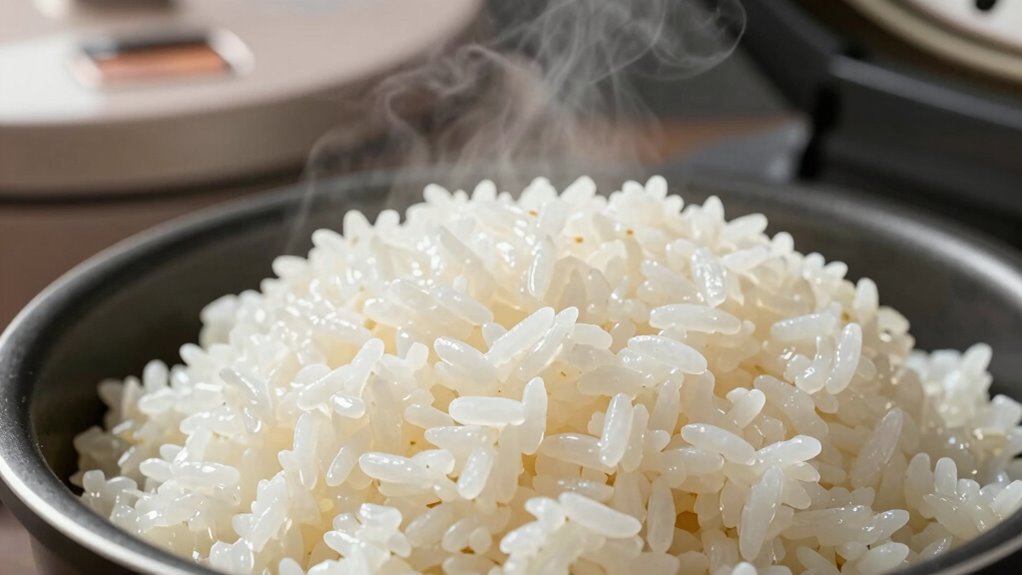
Getting perfect rice every time can feel tricky, especially if your rice cooker isn’t giving you the texture you want. If your rice turns out too mushy or too firm, it’s likely because you’re not paying attention to some key factors that influence the final result. One of the most important aspects is understanding how flavor enhancement and rice variety play a role in achieving that ideal texture. Different types of rice—like jasmine, basmati, or short-grain—have unique qualities, so adjusting your approach based on the rice you’re using makes a big difference. For example, jasmine rice tends to be softer and more fragrant, so it needs less water and shorter cooking time compared to firmer rice types like basmati.
To get the best texture, start by measuring your rice and water accurately. Many rice cookers come with measuring cups, but it’s worth double-checking the proportions recommended for your rice variety. Too much water can lead to a mushy outcome, while too little might leave your rice undercooked and dry. Once you get the measurements right, consider rinsing your rice thoroughly before cooking. Rinsing removes excess surface starch, which helps prevent clumping and results in fluffier, more evenly cooked rice. This step also enhances flavor by washing away any debris or residual impurities.
Flavor enhancement isn’t just about spices or seasonings added after cooking; it begins with the rice itself and how you prepare it. Using high-quality rice and properly rinsing it can bring out its inherent aroma and taste, contributing to a better overall texture. If you’re experimenting with different rice varieties, remember that some may require slightly different water ratios or cooking times. Consult your rice cooker’s manual or trusted recipes tailored to each variety to avoid over- or under-cooking. Additionally, understanding the biodiversity of rice varieties can help you select the best type for your preferred texture and flavor profile. For example, selecting rice with consistent grain size can contribute significantly to achieving uniform texture. Furthermore, paying attention to the grain moisture content can influence how the rice absorbs water and cooks, impacting the final texture.
Another way to improve texture is to let the rice rest after cooking. Once your rice cooker switches to the “keep warm” setting, allow the rice to sit undisturbed for 5-10 minutes. This helps the moisture distribute evenly, making every grain tender and separate. Fluff the rice gently with a fork or rice paddle to release excess steam and prevent clumping. These small adjustments can dramatically enhance the texture, giving you that perfect fluffy, tender rice every time.
As an affiliate, we earn on qualifying purchases.
Frequently Asked Questions
Can the Type of Rice Affect the Cooking Texture?
Yes, the type of rice affects the cooking texture. Different rice varieties, like jasmine, basmati, or short-grain, have unique starch contents and grain sizes that influence how they turn out. Adapt your cooking techniques accordingly—soaking, water ratios, and cooking time—to enhance texture. For example, jasmine rice needs less water, while brown rice requires more. Choosing the right rice and applying proper techniques guarantees consistently better, desired textures every time.
Should I Rinse Rice Before Cooking in a Rice Cooker?
Yes, you should rinse rice before cooking in a rice cooker. Rinsing removes excess surface starch, improving texture and preventing stickiness. Use proper cooking water ratios for fluffy rice, typically a 1:1.5 or 1:2 ratio, depending on rice type. Incorporate rice soaking techniques if you want softer grains; soak for 20-30 minutes before cooking to enhance texture and guarantee even cooking.
How Do Altitude and Humidity Impact Rice Cooker Results?
Altitude and humidity can surprise you with unexpected rice textures. High altitudes require altitude adjustments—reducing water and increasing cooking time—because water boils at a lower temperature. Humidity effects, like damp air, can cause rice to absorb more moisture, leading to stickiness or undercooked grains. Pay close attention to these factors; tweaking your rice cooker settings guarantees perfect rice, no matter the environment. Don’t let the elements sabotage your rice game!
Is There a Way to Prevent Rice From Sticking?
To prevent rice from sticking, you should add a little cooking oil or butter before cooking. This creates a barrier between the rice and the cooker’s surface. Additionally, use a rice cooker with a non-stick coating, which makes it easier to remove the rice without sticking. Rinsing the rice thoroughly before cooking also helps reduce excess starch, further minimizing sticking and ensuring fluffy, separate grains every time.
What Maintenance Tips Improve Rice Cooker Performance?
Like tuning a fine instrument, regular maintenance boosts your rice cooker’s performance. You should regularly clean the inner pot and lid to prevent residue buildup. Use high-quality water, as water quality directly impacts texture. Season your cooker with seasoning techniques like a vinegar rinse occasionally to prevent sticking and guarantee even cooking. Following these tips keeps your rice cooker in top shape, delivering consistently perfect rice every time.
As an affiliate, we earn on qualifying purchases.
Conclusion
Just like Cinderella’s slipper fit perfectly when everything was just right, your rice will turn out flawless every time with these tips. Remember, patience and attention to detail are your fairy godmothers in the kitchen. Keep experimenting, trust your instincts, and soon you’ll be mastering rice textures that even the most seasoned chefs envy. With a little practice, you’ll be turning simple grains into culinary magic—just like a well-told fairy tale, it’s all about the perfect ending.
As an affiliate, we earn on qualifying purchases.
As an affiliate, we earn on qualifying purchases.
Halloween Picks
halloween
As an affiliate, we earn on qualifying purchases.