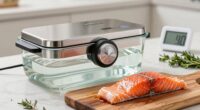
To think like a sous vide pro, focus on how temperature controls doneness and time affects texture and moisture. Recognize that small changes in either can drastically alter your results, so precise adjustments are key. Understand heat transfer and how heat moves through food, especially with different thicknesses. By mastering these principles, you’ll make more consistent, restaurant-quality dishes. Keep exploring these concepts, and you’ll soon have a deeper control over your cooking outcomes.
Key Takeaways
- Understand that temperature sets the level of doneness, while time influences texture and moisture retention.
- Recognize that small adjustments in time or temperature can significantly impact the final result.
- Use precise control of your immersion circulator to ensure even, consistent cooking.
- Adapt timing based on ingredient thickness to prevent over or undercooking.
- Apply culinary science principles to anticipate how heat transfer affects food, guiding your adjustments.
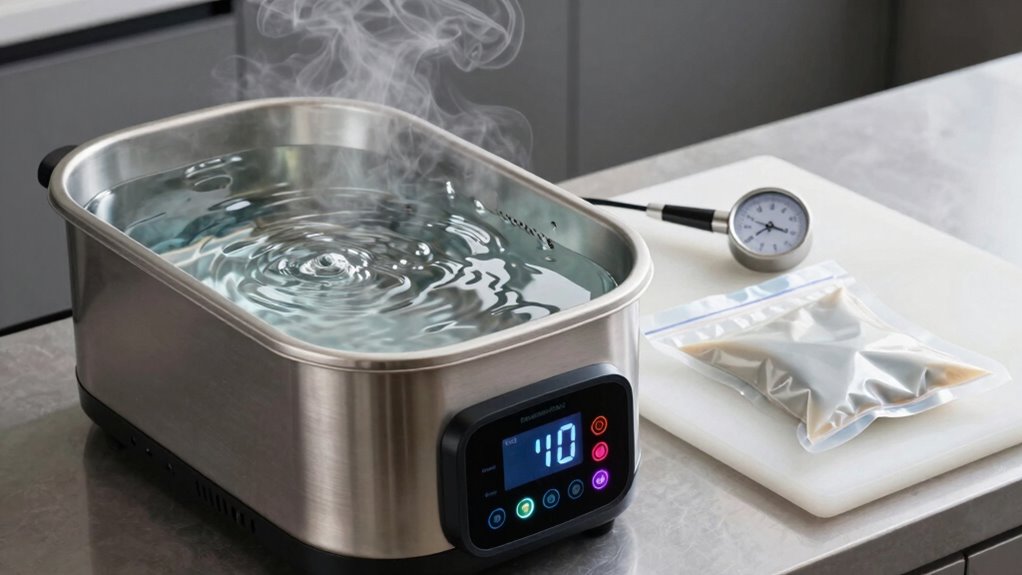
Mastering sous vide cooking means understanding how time and temperature work together to produce perfect results. When you grasp this, you gain precision control over your dishes, allowing you to cook with confidence and consistency. Sous vide isn’t just about following a recipe; it’s about applying culinary science to achieve the exact texture, flavor, and doneness you desire. By thinking like a pro, you begin to see how minute adjustments to time and temperature can elevate your cooking from good to exceptional.
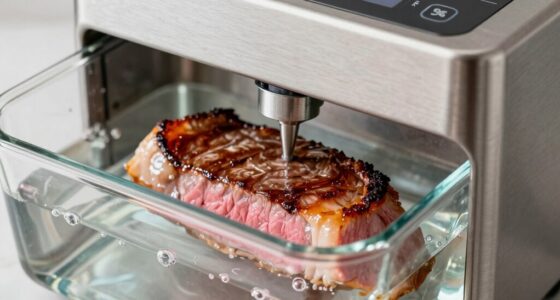
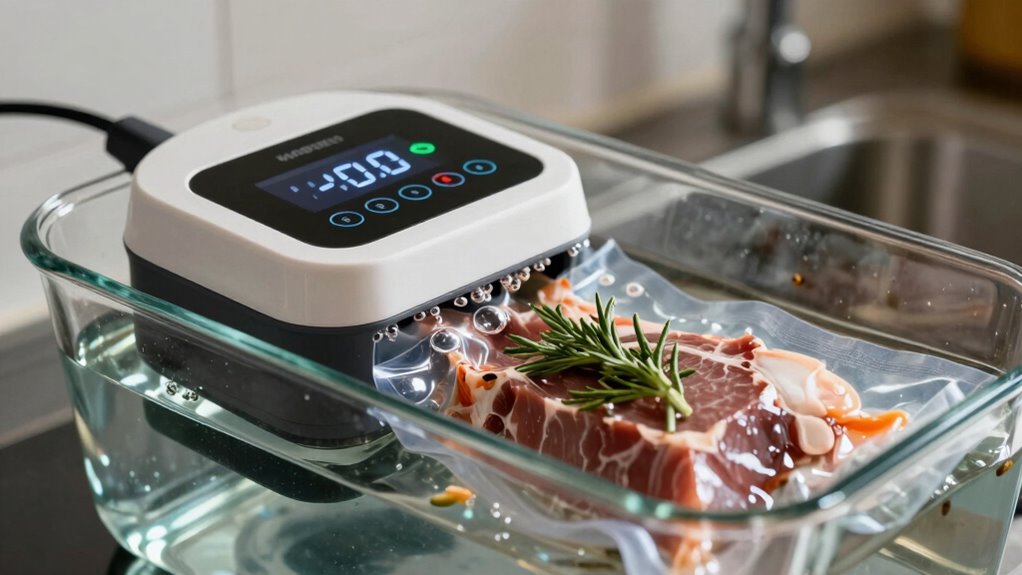
At the core of this approach is an understanding that temperature determines the doneness of your food, while time influences its texture and moisture retention. You don’t need to rely on guesswork when you understand these principles. For example, cooking steak at 130°F for an hour yields a perfect medium-rare, tender, and juicy result. Slightly increasing or decreasing the time, or adjusting the temperature by a few degrees, can drastically change the outcome. This is where culinary science shines—knowing how heat affects proteins and connective tissues helps you make informed decisions. Instead of simply following a recipe, you begin to think critically about how each variable interacts.
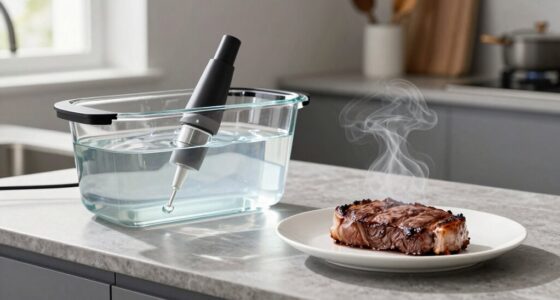
Precision control is what sets professional sous vide chefs apart. They use precise temperature settings and carefully timed cooks to ensure each dish is cooked exactly as intended. You can do the same by investing in a reliable immersion circulator and learning to monitor your setup. The beauty of sous vide is that once you set the right parameters, you can walk away without worry, knowing your food is cooking evenly and to your desired specifications. This control allows for experimentation—adjust timings for different textures or tweak temperatures to explore new flavor profiles—without risking overcooking or undercooking. Additionally, understanding thermal conduction helps you optimize your cooking process for better results. Recognizing heat transfer as a fundamental principle enables you to better anticipate how your food will cook over time.
Thinking like a sous vide pro also means understanding how to adapt your timing based on the thickness of your ingredients. Thicker cuts need more time, but the temperature stays consistent. By mastering this balance, you avoid common pitfalls like overcooking the exterior while the interior remains underdone. Culinary science teaches you that heat transfer is gradual, so patience and precision are key. Over time, you’ll develop an intuitive sense for how long to cook various proteins and vegetables, based on their size and your desired outcome. Recognizing the importance of temperature control and consistent heat transfer helps you achieve uniform results every time.

Sous Vide, Wancle Sous Vide Cooker 1100W IPX7 Waterproof Thermal Immersion Circulator With Reservation Function, Easy to store
✔[Good Performance Sous Vide] Wancle newly released 1100W high-performance sous vide cooker with as high as 1100W power…
As an affiliate, we earn on qualifying purchases.
As an affiliate, we earn on qualifying purchases.
Frequently Asked Questions
How Does Altitude Affect Sous Vide Cooking Times?
At higher altitudes, the boiling point drops, so you’ll need altitude adjustments for sous vide cooking. Since water boils at a lower temperature, you should increase the cooking time slightly to ensure proper doneness, especially for thicker cuts. Keep an eye on your temperature settings and adjust the time accordingly, as the lower boiling point means your food might require a bit more time to reach the desired internal temperature.
Can I Reuse Sous Vide Bags Safely?
Think of reusable bags as your culinary trust tokens—they can be used again, but only if you prioritize food safety. You can reuse sous vide bags if you thoroughly wash and sterilize them, ensuring no bacteria or residue remain. Inspect them for tears or damage, as compromised bags could harbor food bacteria. Proper cleaning and careful handling keep your reusable bags safe, making your sous vide process both sustainable and secure.
What’s the Best Way to Troubleshoot Uneven Cooking?
To troubleshoot uneven cooking, first check your water’s temperature precision—make sure your sous vide device maintains a consistent heat. Next, guarantee proper water circulation by gently stirring or tampering with the water bath to promote even heat distribution. These steps help eliminate hot spots and cold spots, resulting in uniformly cooked food. Regularly calibrate your equipment and monitor your water level for the best results.
How Do I Adjust Recipes for Different Sous Vide Equipment?
To modify recipes for different sous vide equipment, start by checking your device’s cooking temperature accuracy through calibration. If it’s off, adjust the temperature settings accordingly. Keep in mind that some equipment heats more evenly than others, so you might need to tweak cooking times slightly. Always monitor your results and make small adjustments to guarantee your dishes come out perfectly, regardless of equipment variations.
Are There Health Risks With Sous Vide Cooking?
There are minimal health risks with sous vide cooking if you prioritize food safety. Guarantee your food reaches the proper temperature for the right amount of time to eliminate harmful bacteria. Use high-quality, food-grade bag material that’s BPA-free and designed for sous vide to prevent chemical leaching. Proper temperature control and safe packaging are key to enjoying healthy, safe sous vide meals without risks.
Sous Vide, Wancle Sous Vide Cooker 1100W IPX7 Waterproof Thermal Immersion Circulator With Reservation Function, Easy to store
✔[Good Performance Sous Vide] Wancle newly released 1100W high-performance sous vide cooker with as high as 1100W power…
As an affiliate, we earn on qualifying purchases.
As an affiliate, we earn on qualifying purchases.
Conclusion
Mastering time and temperature in sous vide isn’t just about following recipes—it’s about understanding how these variables interact to perfect your dishes. Did you know that a difference of just 1°C can change your steak from medium-rare to well-done? Keep experimenting and paying attention to those subtle shifts. With practice, you’ll develop an intuitive sense for precision, elevating your cooking from good to pro level. Remember, consistency is key—so keep honing your skills!
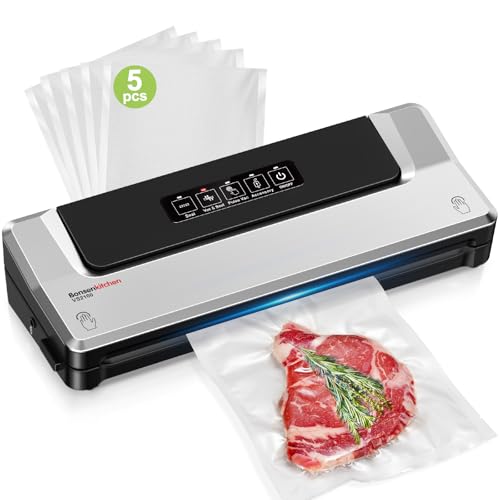
Bonsenkitchen Vacuum Sealer Machine | Compact Food Sealer for Kitchen Storage & Meal Prep | Multiple Modes | External Vacuum System | 5 Bags, Silver
4 Modes : 'Vac & Seal' – one-touch automatic vacuum and seal, perfect for food that does not…
As an affiliate, we earn on qualifying purchases.
As an affiliate, we earn on qualifying purchases.
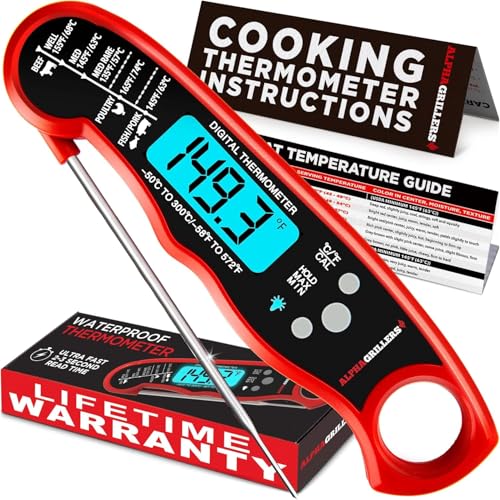
Alpha Grillers Meat Thermometer Digital – Instant Read Food Thermometer for Cooking & Grilling – Professional Kitchen Birthday Gifts for Men, Him, Dad, Husband, Boyfriend
Instant Read Food Thermometer | Our instant read thermometer features a temperature probe and advanced, highly accurate technology…
As an affiliate, we earn on qualifying purchases.
As an affiliate, we earn on qualifying purchases.