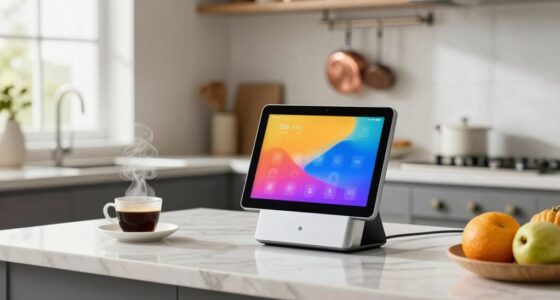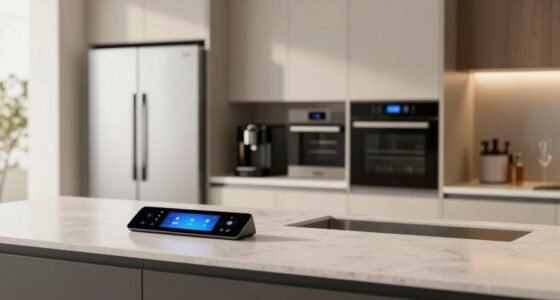
In a high-tech kitchen, plan outlet access near prep areas, cooking stations, and under cabinets for convenience, while avoiding interference with cabinets and appliances. Install outlets with multi-device support, USB ports, or wireless charging for future needs. Focus on safety with GFCI outlets in moist areas and dedicated circuits for high-power appliances. Keep future upgrades in mind by choosing modular systems and staying aware of emerging technologies. If you want to learn more, you’ll find essential tips for creating a safe, adaptable, and efficient space.
Key Takeaways
- Prioritize outlet placement near prep and cooking areas for convenience and to support smart appliances.
- Incorporate outlets with USB ports, wireless charging, and smart controls to enhance device connectivity.
- Plan for future upgrades with modular panels and additional circuits to accommodate emerging technology needs.
- Use GFCI outlets in moisture-prone zones for safety and dedicated circuits for high-power appliances.
- Consider wireless power transfer options and strategic placement to reduce reliance on physical outlets over time.
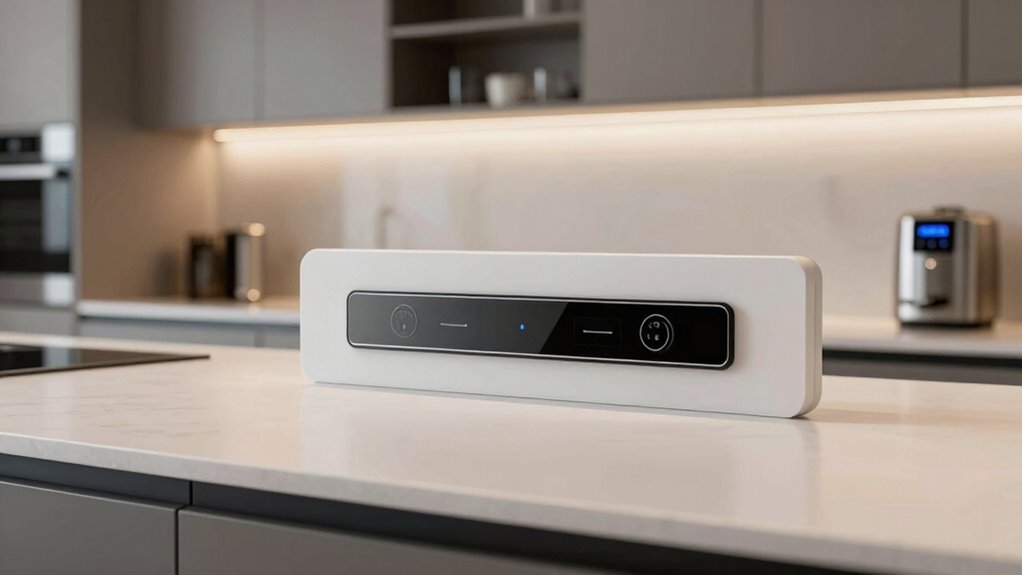
In a high-tech kitchen, having easy and reliable outlet access is essential for making the most of your smart appliances and gadgets. As you set up your space, consider where your devices will go and how outlets can support smooth smart appliance integration. You want to avoid the frustration of unplugging and replugging devices or running extension cords that clutter your countertops. Instead, plan for conveniently located outlets that can handle multiple devices, especially near your prep areas, cooking stations, and under cabinets. This careful placement ensures your smart appliances—like voice-activated assistants, connected refrigerators, or smart ovens—operate seamlessly without interruption.
Energy efficiency considerations should also influence your outlet placement. Look for outlets equipped with features like built-in timers or smart controls that can automatically turn off devices when not in use. This minimizes standby power consumption, helping you save on energy costs while supporting your eco-friendly goals. When designing your outlet setup, think about incorporating outlets with USB ports or integrated wireless charging pads so you can power smartphones and tablets without using up standard socket space. These features make your kitchen more streamlined and reduce the clutter of chargers and adapters.
Another aspect to think about is future-proofing your outlet access. As technology advances, new smart appliances and devices will emerge, potentially requiring more power sources or different configurations. Installing outlets with additional circuits or modular panels allows for expansion and upgrades without major renovations. Additionally, consider the placement of outlets to avoid interference with cabinetry or appliances, ensuring they are accessible yet unobtrusive. Planning for future technology upgrades can help keep your kitchen adaptable and ready for new innovations. It’s also beneficial to stay informed about emerging outlet features that enhance safety and convenience. Being aware of trends like wireless power transfer can also position your kitchen for seamless power solutions in the future.
When planning your outlet access, don’t forget about safety. Install outlets with ground-fault circuit interrupters (GFCIs) in areas prone to moisture, such as near sinks or dishwashers. This adds an essential layer of protection for you and your appliances. Also, think about how your outlets are wired—dedicated circuits for high-power appliances prevent overloads and ensure each device receives sufficient power without compromising the overall electrical system. Incorporating outlet access into your kitchen design from the start helps to create a more efficient and safer environment for your smart technology.
Furthermore, considering wireless power transfer options could become increasingly relevant as technology evolves, potentially reducing the need for physical outlets in the future. Ultimately, effective outlet access in a high-tech kitchen blends convenience, smart appliance integration, and energy efficiency. By being strategic about placement, selecting the right features, and considering future needs, you create a space that’s not only functional but also optimized for your smart lifestyle. Well-planned outlets make it easier to enjoy the benefits of modern kitchen technology while keeping your space safe, organized, and energy-efficient.

TOPGREENER 4.2A 3-Port Type C USB Outlet, 15 Amp Receptacle Plug, Charging Power Outlet with Dual Type C&A Ports, Screwless Wall Plate Included, UL Listed, Residential Grade, White, 2 Pack
𝐌𝐨𝐝𝐞𝐫𝐧 𝐃𝐞𝐬𝐢𝐠𝐧 – Screwless Wall Plate Included. USB receptacle with sleek design and glossy smooth finish, prevents fingerprint,…
As an affiliate, we earn on qualifying purchases.
As an affiliate, we earn on qualifying purchases.
Frequently Asked Questions
Can I Install Outlets Behind Appliances for a Cleaner Look?
Yes, you can install outlets behind appliances for a cleaner look. To do so, you’ll need concealed wiring to hide the cords and maintain a sleek aesthetic. This approach reduces clutter and keeps your high-tech kitchen looking modern. Make certain to consult a professional to guarantee safety and proper installation, especially since hidden outlets can be tricky to access when needed. Prioritize both functionality and visual appeal for the best results.
Are There Safety Concerns With High-Tech Outlet Placements?
You should prioritize child safety and adhere to electrical code when placing high-tech outlets. For example, a family installed hidden outlets behind appliances, but overlooked childproof covers, risking accidents. To prevent this, guarantee outlets are installed at safe heights, use tamper-resistant designs, and follow electrical code standards. Properly planning outlet placement minimizes safety concerns and keeps your high-tech kitchen both functional and secure for everyone.
How Do I Choose the Right Outlet Type for My Kitchen?
Choose outlets that meet GFCI requirements, especially near sinks and wet areas, to guarantee safety. Consider outlet height standards for convenience and code compliance, typically placing them 12 to 18 inches above countertops. For a high-tech kitchen, opt for smart outlets or USB-enabled outlets to integrate seamlessly with your appliances and devices. This way, you maximize safety, accessibility, and modern functionality.
Can Smart Outlets Be Integrated With Existing Home Automation Systems?
Coincidence often brings smart outlets into your home automation seamlessly; yes, they can be integrated. You’ll enjoy wireless integration, allowing you to control appliances remotely or via voice commands. Most smart outlets are compatible with popular home systems, making it easy to add voice control and automate your kitchen. Just make certain the outlets support your existing system’s protocols, and you’ll effortlessly enhance your high-tech kitchen experience.
What Are the Best Practices for Outlet Placement in a Small Kitchen?
You should place outlets at a convenient height, typically around countertop level, to guarantee easy access and maintain a clean look. Consider appliance compatibility when positioning outlets, making sure they’re near your most-used appliances without cluttering the space. Avoid placing outlets behind bulky items or too close to corners, which can hinder accessibility. Proper placement maximizes functionality, keeps your small kitchen organized, and ensures seamless use of your high-tech appliances.

TOZO W1 New Anti-Slip Aircraft-Grade Aluminum Wireless Charger 15W Max Fast Wireless Charging Pad Compatible with iPhone 17/17 Pro/17 Pro Max/Air/16/15/SE Series, Samsung Galaxy S25/S24, Ink Black
[Compatible with iPhone and Android Devices] Enabled wireless charging devices or devices with receivers, such as compatible with…
As an affiliate, we earn on qualifying purchases.
As an affiliate, we earn on qualifying purchases.
Conclusion
Think of your high-tech kitchen as a bustling city, with outlets acting as the crucial power stations fueling every innovation. Just like a city needs well-placed power sources to keep traffic flowing smoothly, your kitchen’s outlets keep your gadgets and appliances running seamlessly. When you plan your outlet access wisely, you’re fundamentally wiring your culinary city for efficiency and safety—ensuring that every meal, just like every journey, flows effortlessly and without interruption.

ELEGRP GFCI Outlet 20 Amp, Self-Test GFI Electrical Outlet with Thinner Design, TR Tamper Resistant GFCI Receptacle, Ground Fault Circuit Interrupters with Wall Plate, UL Listed, Matte White, 1 Pack
✅【Innovative Dual Protection System】Features twin solenoid and double silicon controlled rectifier (SCR), ensuring an always-on GFCI protection to…
As an affiliate, we earn on qualifying purchases.
As an affiliate, we earn on qualifying purchases.

SURAIELEC 24 in Hardwired Under Cabinet Power Strip with USB-A & USB-C, 3 TR Outlets, Custom Length Plug Molding Under Cabinet, Seamless Outlet Strip for Kitchen Cabinets, Workshop, ETL Listed, White
Under Cabinet Power Strip with USB: Rated 125Vac 60Hz, 15Amp, 1875W. Equipped with 6 tamper-resistant AC outlets and…
As an affiliate, we earn on qualifying purchases.
As an affiliate, we earn on qualifying purchases.