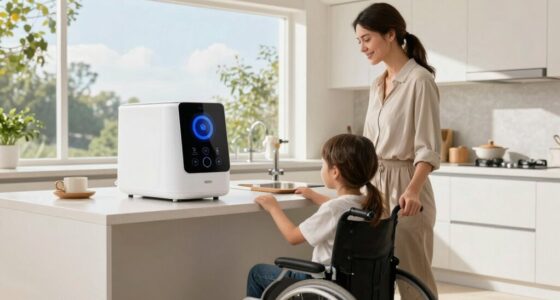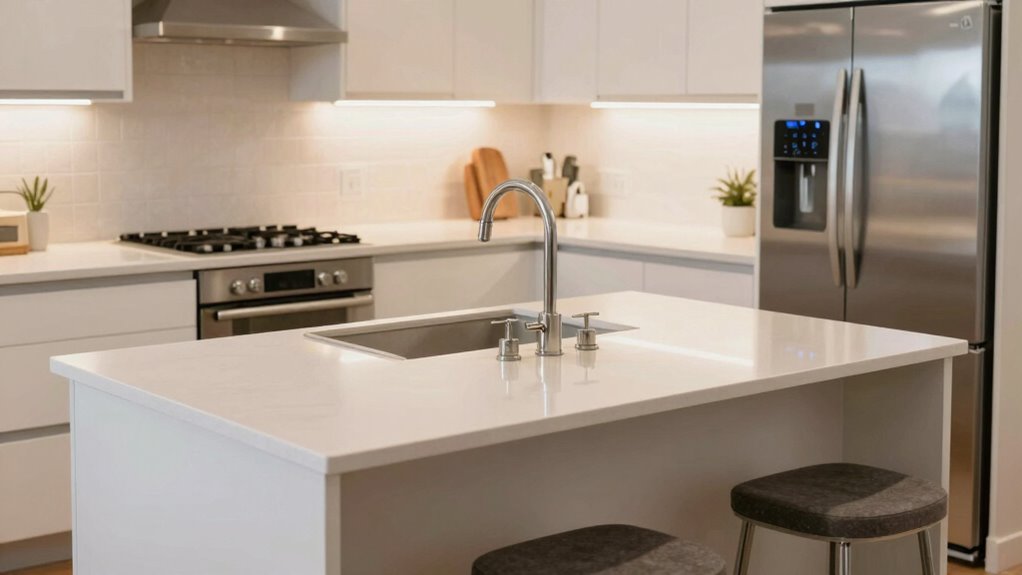
To make cooking easier for seniors, look for safety features like automatic shut-offs, child-proof locks, and clear, easy-to-read controls. Opt for ergonomic design, such as adjustable countertops, lever handles, and waist-level storage to reduce bending and reaching. Guarantee the kitchen layout has wide, clutter-free pathways and good lighting, including under-cabinet and motion-activated lights. These thoughtful features boost independence and confidence—keep exploring to discover more ways to create a safer, more accessible kitchen.
Open a free Amazon Business account
Business pricing, bulk buying and tax-exempt orders.
As an affiliate, we earn on qualifying purchases.
Key Takeaways
- Appliances with automatic shut-off and child-proof locks to prevent accidents and enhance safety.
- Ergonomically designed countertops, adjustable-height surfaces, and easy-to-use handles to reduce strain.
- Wide, non-slip flooring and clear pathways to prevent slips and facilitate easy movement.
- Bright, well-distributed lighting, including under-cabinet and motion-activated lights, for better visibility.
- Clutter-free layout with strategically placed storage to minimize hazards and promote independence.
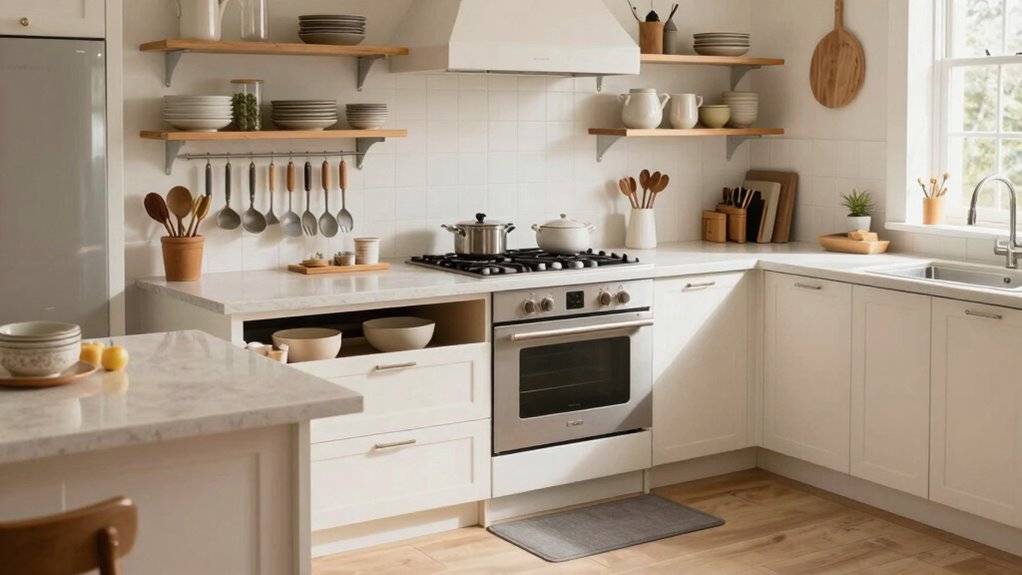
Cooking can become more challenging as we age, but the right kitchen features can make a significant difference. When designing or updating your kitchen, focusing on appliance safety and ergonomic design can help you stay independent and enjoy cooking with confidence. These adjustments are not just about convenience; they’re about creating a space that prioritizes your safety and comfort.
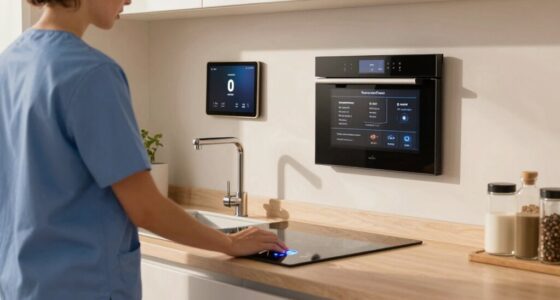
Start by considering appliance safety. Modern appliances come with features that reduce risks, such as automatic shut-off functions on stoves and ovens, which prevent fires if you forget to turn them off. Look for appliances with easy-to-read controls and clear indicators, so you don’t have to strain or guess. Low-profile or slide-in ranges can minimize the risk of bumping into hot surfaces. Additionally, choosing appliances with child-proof locks or safety covers can prevent accidental operation, especially if you have grandchildren visiting. Positioning appliances at accessible heights reduces the need for bending or reaching, decreasing the chance of falls or strains.
Prioritize appliances with safety features, clear controls, and accessible placement to enhance kitchen safety and ease of use.
Ergonomic design is equally crucial in making your kitchen user-friendly. You want countertops at a height that allows you to work comfortably without hunching over or stretching excessively. Adjustable-height counters or pull-out shelves can make a huge difference. When it comes to storage, keep frequently used items within easy reach—ideally at waist level—to avoid unnecessary bending or climbing. Incorporating lever-style handles on cabinets and drawers, which require less grip strength and make opening and closing easier, can significantly improve usability. Anti-fatigue mats placed in standing areas can reduce strain on your legs and back, making longer cooking sessions less tiring. Also, opting for wide, non-slip flooring helps prevent slips and falls when moving around, especially if you’re carrying hot or heavy items. Proper kitchen layout and thoughtful organization can further enhance safety and efficiency. Ensuring proper lighting enhances safety and ease of use, making your kitchen more comfortable.
Lighting plays a critical role in safety and usability. Bright, even lighting reduces eye strain and helps you see clearly while preparing food. Under-cabinet lighting is a practical addition, illuminating work surfaces directly. Consider installing motion-activated lights, so you don’t have to fumble with switches when your hands are full or messy. Additionally, incorporating safety features like timer functions or automatic shut-offs in appliances can provide extra peace of mind.
Finally, think about the overall flow of your kitchen. Creating clear pathways and minimizing clutter not only enhances safety but also makes the space more inviting. When your kitchen is designed with appliance safety and ergonomic principles in mind, cooking becomes less stressful and more enjoyable. These thoughtful features ensure that you can continue to prepare meals safely and comfortably as you age, fostering independence and confidence in your culinary pursuits.
As an affiliate, we earn on qualifying purchases.
Frequently Asked Questions
How Can Lighting Be Optimized for Seniors in the Kitchen?
You can optimize kitchen lighting for seniors by installing smart lighting systems with adjustable fixtures. These allow you to customize brightness levels, reducing glare and shadows that can cause accidents. Use bright, even lighting over work areas and softer lights elsewhere for ambiance. Smart lighting also enables voice control or remote adjustments, making it easier for seniors to manage their environment independently and safely while cooking.
What Safety Measures Are Recommended for Senior-Friendly Kitchen Designs?
Think of your kitchen as a sanctuary where safety is your guiding star. You should install appliances with easy-to-use controls and guarantee regular appliance maintenance to prevent mishaps. Keep a fire extinguisher nearby and check smoke detectors frequently, like vigilant sentinels. Clear clutter from pathways to avoid falls. These safety measures create a fortress of security, empowering you to cook confidently while reducing risks and maintaining peace of mind.
Are There Specific Tools That Assist Seniors With Limited Dexterity?
Yes, there are specific tools that help seniors with limited dexterity, like adaptive utensils and ergonomic tools. These are designed with easy-to-grip handles, lightweight materials, and simple mechanisms, making cooking safer and more manageable. You’ll find ergonomic tools that reduce strain on joints, while adaptive utensils often feature non-slip grips and easy-turn mechanisms. Using these tools, you can maintain independence and enjoy cooking with less frustration.
How Can Kitchen Layouts Reduce Fall Risks for Seniors?
You can reduce fall risks in your kitchen by installing non-slip mats on floors, especially in high-traffic areas, to prevent slips. Adding grab bars near the sink and stove provides extra support when standing or reaching for items. Arrange appliances and utensils within easy reach to minimize bending or stretching. Ensuring good lighting and keeping pathways clear also helps you move safely and confidently while cooking.
What Are the Best Storage Solutions for Easy Access?
You should incorporate organizational hacks like pull-out shelves and lazy Susans to keep essentials within easy reach. Accessibility upgrades, such as installing lower cabinets and lever-style handles, make accessing stored items effortless. Keep frequently used items at waist level for quick grabbing, and use clear containers for visibility. These solutions reduce strain and improve safety, making your kitchen more senior-friendly and ensuring you can cook comfortably and confidently.
ergonomic kitchen faucet with lever handles
As an affiliate, we earn on qualifying purchases.
As an affiliate, we earn on qualifying purchases.
Conclusion
Designing your kitchen with seniors in mind can truly make a difference. Simple features like lever faucets and non-slip flooring enhance safety and ease of use. Did you know that nearly 80% of senior injuries happen in the kitchen? By incorporating these thoughtful features, you’ll create a space that’s safer and more comfortable, allowing you to enjoy cooking without worry. It’s all about making everyday tasks easier and safer for you.
adjustable height kitchen countertops
As an affiliate, we earn on qualifying purchases.
As an affiliate, we earn on qualifying purchases.
motion-activated under-cabinet lighting
As an affiliate, we earn on qualifying purchases.
As an affiliate, we earn on qualifying purchases.
NFL season / tailgating Picks
team gear
As an affiliate, we earn on qualifying purchases.