High-tech espresso machines are designed to deliver consistent, precise results with minimal effort, making brewing easier for you. They automate many traditional techniques, such as temperature control and extraction timing, giving you a reliable cup every time. While they may seem less artisanal, they can improve flavor and reduce guesswork. If you want to understand whether they truly match traditional craftsmanship or just simplify your process, there’s more to explore below.
Key Takeaways
- High-tech machines offer greater consistency and precise control, reducing user error and producing reliable espresso shots.
- They simplify the brewing process, making quality espresso accessible to beginners without extensive skill.
- Traditional machines provide artisanal control and craftsmanship, valued for authenticity but requiring skill and effort.
- Automated features can enhance flavor extraction but may sacrifice the personal touch and cultural authenticity of manual methods.
- Overall, high-tech machines are easier and more consistent, but whether they’re “better” depends on individual preferences for craftsmanship versus convenience.
high-tech espresso machine with automatic grind and tamp
As an affiliate, we earn on qualifying purchases.
As an affiliate, we earn on qualifying purchases.
The Rise of Smart Espresso Technology

As technology advances, smart espresso machines have become increasingly popular, transforming the way you brew coffee at home or in cafes. These machines often reduce the need for manual techniques and artisanal methods, streamlining the brewing process with automated precision. Instead of relying solely on traditional, hands-on methods like tamping or adjusting grind size manually, smart machines use sensors and software to optimize each shot. This shift allows you to achieve consistent results without extensive barista skills. While some purists prefer the tactile experience of artisanal methods, smart espresso machines emphasize convenience and efficiency, making high-quality espresso accessible to everyone. The rise of this technology signifies a move toward smarter, more user-friendly brewing that retains flavor while simplifying the process. Additionally, these machines often incorporate advanced calibration features to enhance overall performance and consistency, which is part of the broader trend toward integrated smart features in modern appliances. These innovations not only improve brewing precision but also facilitate easy customization to suit individual taste preferences. Moreover, the integration of energy-efficient components aligns with the push for sustainable appliance technology, further broadening their appeal. Furthermore, ongoing developments in sensor technology continue to refine the brewing process, providing even greater control and quality.
smart espresso machine with app control
As an affiliate, we earn on qualifying purchases.
As an affiliate, we earn on qualifying purchases.
Features That Promise Perfect Coffee
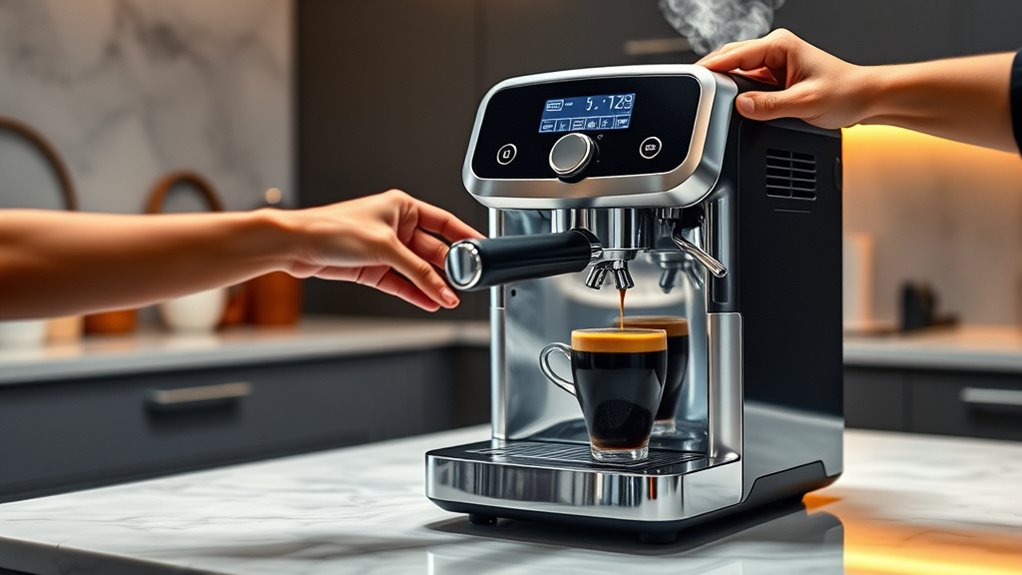
When shopping for a high-tech espresso machine, focus on features that guarantee your coffee turns out flawless every time. Look for options that balance automation with manual techniques, giving you control over grind size, tamping pressure, or water temperature. These manual techniques enable you to customize each shot for ideal flavor. Additionally, pay attention to aesthetic design, as a sleek, well-built machine not only elevates your kitchen’s look but also often reflects quality craftsmanship. Features like precise temperature control, integrated grinders, and customizable settings ensure consistency and quality. High-tech machines that combine advanced technology with user-friendly interfaces help you achieve barista-level results without sacrificing control. The right features make it easier to craft perfect espresso every time, blending innovation with your personal touch. Understanding the importance of battery lifecycle can also help ensure your machine remains reliable and efficient over time.
automatic espresso maker with temperature control
As an affiliate, we earn on qualifying purchases.
As an affiliate, we earn on qualifying purchases.
Comparing Traditional and High-Tech Machines

Traditional espresso machines rely on manual control and craftsmanship, requiring you to master techniques like tamping and temperature adjustment to produce good shots. This hands-on approach is deeply rooted in coffee shop culture, where barista skills define quality. With these machines, you’re involved in every step, from grinding to extraction, which can be both rewarding and challenging.
Traditional espresso machines demand skill and craftsmanship, making every shot a personal art.
Imagine:
- Adjusting pressure manually during extraction
- Relying on your experience for perfect temperature control
- Developing a keen eye for consistency
- Engaging with customers through your skill and technique
- Creating a personalized coffee experience
High-tech machines automate many of these steps, reducing the skill level needed but also changing the traditional barista’s craft. This comparison highlights the difference between artistry and ease in coffee making.
best espresso machine for beginners
As an affiliate, we earn on qualifying purchases.
As an affiliate, we earn on qualifying purchases.
Impact on Coffee Flavor and Quality

High-tech espresso machines substantially improve coffee flavor and quality through precise brewing and consistency. With advanced temperature controls, you can maintain ideal heat, ensuring each shot is perfect. Extraction techniques also help maximize flavor, giving you a richer, more balanced espresso every time. Additionally, many models feature precise temperature control, which is crucial for achieving optimal extraction and flavor. Modern machines often incorporate user-friendly interfaces, making it easier for users to fine-tune brewing parameters and consistently produce high-quality espresso. Furthermore, consistent brewing performance helps reduce variability, so each cup meets your expectations.
Precision Brewing Consistency
Precision brewing consistency plays a essential role in shaping the flavor and overall quality of your coffee. When your machine delivers consistent pressure, grind, and extraction, each cup reflects a high standard of artisanal brewing. This reduces reliance on barista skill, ensuring even beginners can produce quality results. With precise control, you get uniform espresso shots, balanced flavors, and richer aromas. Imagine:
- Steady pressure for a full-bodied shot
- Exact grind size for ideal extraction
- Consistent tamping pressure
- Precise shot timing
- Reliable extraction strength
These factors combine to produce a nuanced, flavorful brew every time. High-tech machines minimize variability, meaning your coffee maintains its desired profile without guesswork. As a result, you enjoy a more dependable, high-quality experience, whether you’re a seasoned barista or a home enthusiast. Consistent feedback from the machine helps identify and correct discrepancies, further enhancing your brewing precision.
Temperature Control Benefits
Maintaining the right temperature during brewing is essential because even slight variations can substantially affect your coffee’s flavor and aroma. High-tech espresso machines excel at providing superior temperature stability, ensuring consistent heat levels throughout each shot. This consistency prevents over-extraction or under-extraction, which can dull or distort the coffee’s true taste. Additionally, these machines often feature calibration accuracy, allowing you to set and maintain precise temperatures tailored to your beans and preferences. With accurate calibration, you avoid fluctuations that compromise flavor complexity and aroma. Load calculations and proper setup contribute to maintaining optimal brewing conditions, ensuring each cup is brewed at the ideal temperature. Proper temperature regulation is crucial for extracting the full spectrum of flavors from your coffee beans. Reliable temperature control also minimizes the risk of temperature fluctuations, which can negatively impact the overall quality of your espresso. As a result, your espresso will have a balanced, rich profile with enhanced aromatic qualities. Overall, reliable temperature control directly improves the quality and consistency of your coffee, making each cup as good as the last. Additionally, precise temperature control plays a vital role in achieving the perfect crema and overall espresso texture. Incorporating advanced thermal management technology further enhances temperature stability, ensuring optimal extraction conditions at all times.
Extraction Optimization Techniques
Enhancing extraction techniques is crucial because it directly influences the flavor and overall quality of your espresso. Small adjustments can make a significant difference. Pay attention to:
- Proper manual tamping to ensure even pressure and consistent extraction
- Choosing the right grind size for ideal water flow
- Adjusting tamping pressure to prevent under- or over-extraction
- Maintaining uniform coffee bed thickness for consistency
- Monitoring extraction time to avoid sour or bitter flavors
Ease of Use vs. Craftsmanship

Have you ever wondered whether a high-tech espresso machine should prioritize ease of use or craftsmanship? Many machines aim to simplify the process, reducing the need for barista skill and manual control. While this makes brewing accessible, it can limit your ability to fine-tune flavors and develop craftsmanship. Consider the following:
| Ease of Use | Craftsmanship |
|---|---|
| Intuitive interfaces | Manual control over brew variables |
| Automated routines | Requires barista skill |
| Faster setup | Slower but more precise |
| Less room for personalization | Greater control over taste |
Choosing between them depends on your goals: convenience or mastery. High-tech machines tend to favor ease of use, but true craftsmanship often demands manual control and skill. Developing your skills can help you train smarter and get better results over time, especially when you understand the fundamentals of brewing. Additionally, incorporating connected equipment can enhance your ability to fine-tune brewing parameters and improve consistency. Leveraging smart home technology can also help bridge the gap between ease and craftsmanship, offering more versatile options for enthusiasts.
Cost and Maintenance Considerations

While high-tech espresso machines often boast advanced features and sleek designs, their initial purchase price and ongoing maintenance costs can be significant. You need to weigh whether the investment aligns with your budget and how it impacts cost efficiency over time. These machines often require specialized parts and frequent servicing, which can add up quickly. Additionally, high-tech models may demand more expensive filters or cleaning solutions, further increasing maintenance costs. To get a clear picture, think about:
- High upfront costs compared to traditional machines
- Frequent calibration or software updates
- Replacement parts like sensors or pumps
- Specialized cleaning routines and products
- Energy consumption impacting ongoing bills
Balancing these factors helps determine if the convenience and features justify the ongoing expenses.
Does Convenience Compromise Authenticity?
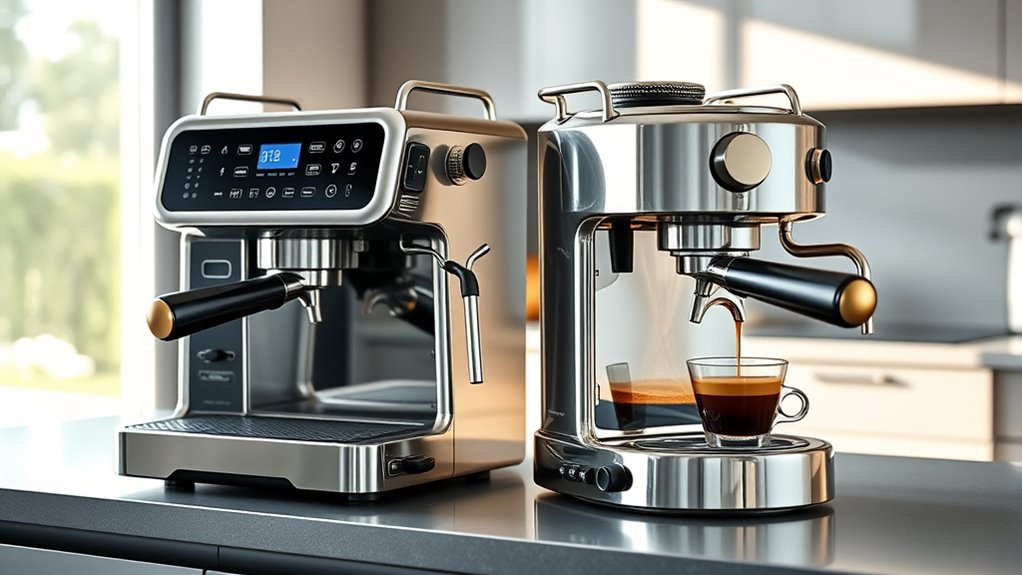
High-tech espresso machines promise convenience through automation and precision, but this often raises questions about whether they sacrifice the authenticity of traditional brewing methods. When you rely on manual artistry, you engage in a cultural process that emphasizes skill and personal touch, which many feel defines genuine espresso. High-tech machines can streamline the process, but some argue they limit the craft’s cultural authenticity. Additionally, understanding credit card terms is essential for consumers and businesses to navigate modern payment methods securely and efficiently.
Some enthusiasts also consider the craftsmanship involved in traditional espresso making as a vital aspect of its cultural value. The debate continues as enthusiasts weigh the benefits of technological innovation against the preservation of traditional barista techniques.
Frequently Asked Questions
Do High-Tech Espresso Machines Require Special Training to Operate?
Yes, high-tech espresso machines often require some special training to operate properly. Their advanced user interface can be complex, making it necessary to learn specific functions and settings. Additionally, the maintenance complexity may be higher, demanding regular care and troubleshooting skills. While they are designed to be user-friendly, mastering their features guarantees ideal performance and coffee quality, so a bit of training is usually beneficial.
Are There Any Health Risks Associated With Using Smart Espresso Machines?
There are minimal health risks associated with using smart espresso machines, but you should stay cautious. If you’re caffeine-sensitive, you might experience jitters or insomnia after frequent use. Also, if the machine isn’t cleaned properly, chemical residues from cleaning agents could remain, potentially affecting your health. Always follow the manufacturer’s instructions for maintenance, and monitor your caffeine intake to avoid any unwanted side effects.
How Long Do High-Tech Espresso Machines Typically Last?
Think of your high-tech espresso machine as a loyal companion, lasting around 5 to 10 years with proper care. You’ll face maintenance costs and occasional repairs, but regular upkeep can extend its life. While advanced features add convenience, they can also mean more frequent repairs. If you stay diligent with maintenance, your machine will serve you well, turning mornings into moments of joy for years to come.
Can High-Tech Machines Be Customized for Different Coffee Preferences?
Yes, high-tech espresso machines can be customized for your different coffee preferences. They often come with numerous customization options like adjusting temperature, grind size, shot volume, and brewing pressure. This allows you to fine-tune your coffee’s flavor preferences, ensuring each cup matches your taste. With these advanced features, you have greater control over your brew, making it easier to create your perfect espresso every time.
Do High-Tech Espresso Machines Significantly Increase Energy Consumption?
High-tech espresso machines do tend to increase energy consumption due to their advanced features, such as digital displays and multiple brewing options. This higher energy use can contribute to a greater environmental impact over time. However, many models include energy-saving modes or efficient heating systems, which help reduce overall consumption. If you’re concerned about environmental impact, look for machines with good energy ratings and eco-friendly features to balance performance and sustainability.
Conclusion
Like the legendary quest for the Holy Grail, choosing between high-tech and traditional espresso machines boils down to what you value most. If convenience and consistency are your quests, smart machines may be your Excalibur. But if you seek the true artistry of coffee, remember that even King Arthur’s sword required craftsmanship. Ultimately, it’s your taste and dedication that determine if technology elevates your brew or merely simplifies the journey.