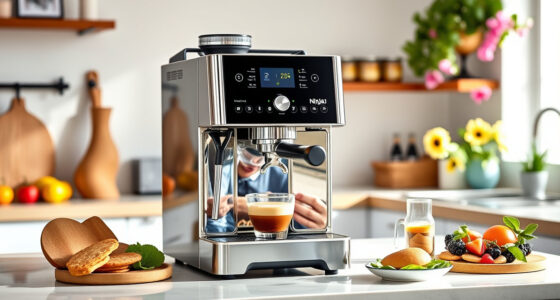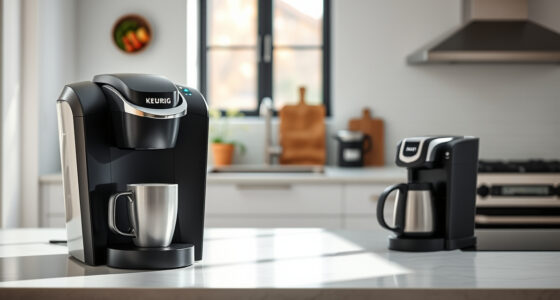

To clean and descale your coffee maker while keeping it smart, start by gathering supplies like water, a soft cloth, and descaling solution or vinegar. Unplug the machine, remove removable parts, and wipe down the exterior. Descale with a vinegar-water mix or commercial cleaner by running a brew cycle, then rinse thoroughly. Regular maintenance prevents buildup and keeps your machine running smoothly. Continue exploring for detailed steps to guarantee your coffee always tastes great.

Get kitchen gear delivered free with Prime
- Fast, free delivery on millions of items
- Prime Video, Amazon Music and more included
- Member-only deals all year
Key Takeaways
- Regularly remove and clean removable parts like the filter basket, carafe, and drip tray with warm, soapy water.
- Use a descaling solution or vinegar-water mix to run a brewing cycle, then rinse thoroughly to remove mineral buildup.
- Wipe the exterior with a damp cloth, avoiding abrasive cleaners, and inspect filters for replacement to maintain efficiency.
- Schedule descaling every 1-3 months based on water hardness to prevent damage and ensure optimal flavor.
- Implement a routine with filtered water, accurate coffee grounds measurement, and smart sensors for automatic maintenance alerts.
As an affiliate, we earn on qualifying purchases.
Gathering Your Cleaning Supplies and Preparing Your Coffee Maker

Before you begin cleaning, gather all the supplies you’ll need to make the process smooth and efficient. Start by collecting a clean coffee filter, as you’ll need it to remove any built-up residues. Next, fill your water reservoir with fresh water to flush out any lingering mineral deposits. You might also want a soft cloth or sponge for wiping down surfaces later. If your coffee maker has a removable filter basket, have that ready for cleaning or replacement. Having everything at hand prevents interruptions during the process. Confirm your coffee maker is unplugged before starting. Preparing your supplies beforehand helps you stay organized, saves time, and ensures a thorough cleaning, setting a solid foundation for your coffee maker’s maintenance. Additionally, understanding the importance of descaling can help prolong the lifespan of your appliance and maintain optimal brewing performance. Remember, regular cleaning not only improves the taste of your coffee but also enhances the overall efficiency of your coffee maker. Incorporating preventive maintenance practices, such as routine descaling, can further extend your appliance’s longevity.
automatic coffee machine cleaner
As an affiliate, we earn on qualifying purchases.
As an affiliate, we earn on qualifying purchases.
Step-by-Step Guide to Cleaning Your Coffee Maker’s Exterior and Removable Parts
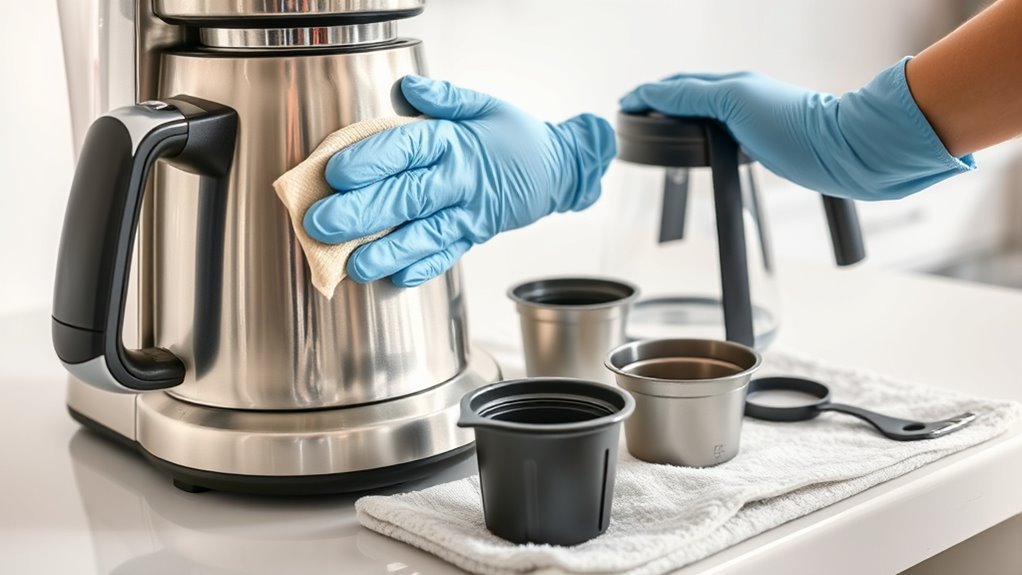
With your supplies ready and the coffee maker unplugged, it’s time to focus on cleaning the exterior and removable parts. Start by removing any coffee carafe, filter basket, and drip tray. Use a soft cloth dampened with warm, soapy water to wipe down surfaces, removing coffee stains and water residue. For stubborn stains, a gentle scrub with a baking soda paste works well. Avoid abrasive cleaners that could scratch surfaces. Regular cleaning helps maintain the performance cookies of your coffee maker, ensuring it functions efficiently and lasts longer. Proper maintenance also supports the longevity of your appliance, saving you money in the long run. Additionally, inspecting the filters and replacing them when necessary can improve the overall air quality of your kitchen environment. Incorporating routine cleaning into your maintenance schedule can further enhance your appliance’s efficiency and lifespan.
As an affiliate, we earn on qualifying purchases.
How to Properly Descale Your Coffee Maker to Remove Mineral Buildup
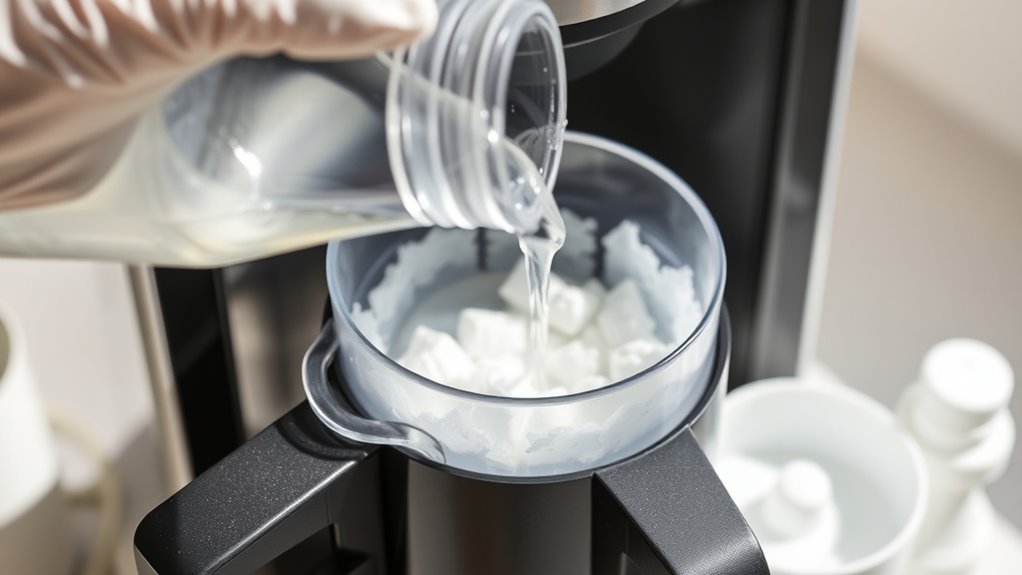
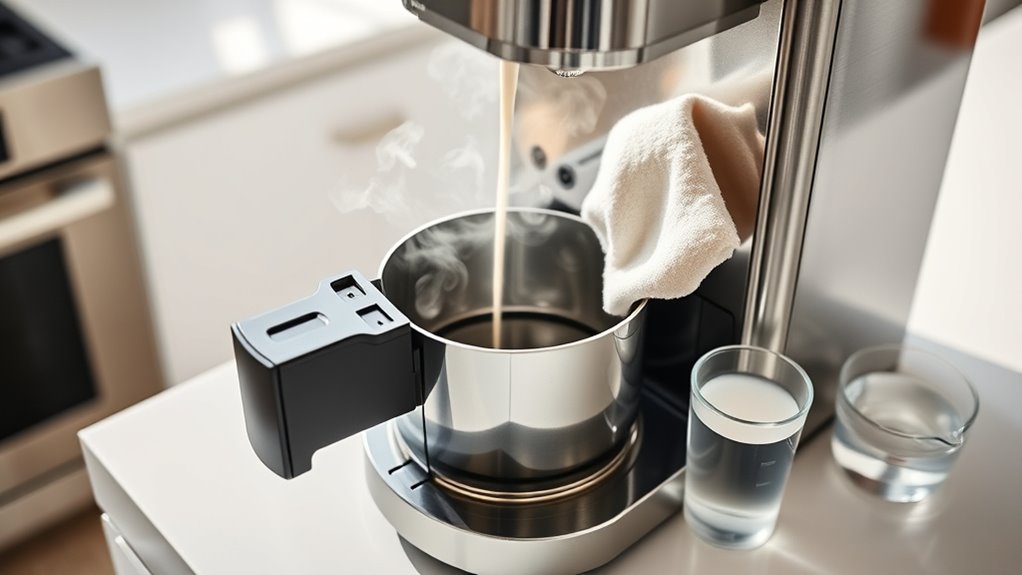
Mineral buildup from hard water can clog your coffee maker and affect the flavor of your brew. To combat this, descaling is essential. Regular descaling removes water mineral buildup, keeping your machine running smoothly. You should aim for a descaling frequency based on your water hardness and usage—usually every 1 to 3 months. Here’s how to do it:
Regular descaling prevents mineral buildup, ensuring optimal coffee flavor and machine longevity.
- Use a commercial descaling solution or equal parts white vinegar and water.
- Fill the water reservoir with the solution.
- Run a brewing cycle without coffee.
- Rinse thoroughly with clean water.
- Repeat if necessary to eliminate vinegar smell and residue.
- Proper descaling techniques can help prevent mineral deposits from damaging your machine. Additionally, understanding your water quality and hardness level can help you determine the appropriate descaling frequency. Monitoring your water mineral content can also assist in scheduling descaling more effectively. Regularly checking your vacuum’s filter condition can also improve its performance and longevity.
Consistent descaling preserves your coffee’s flavor and extends your machine’s lifespan. Don’t wait until mineral buildup causes problems—descale proactively.
vinegar descaling for coffee machine
As an affiliate, we earn on qualifying purchases.
As an affiliate, we earn on qualifying purchases.
Tips for Maintaining a Smart and Efficient Coffee Brewing Routine
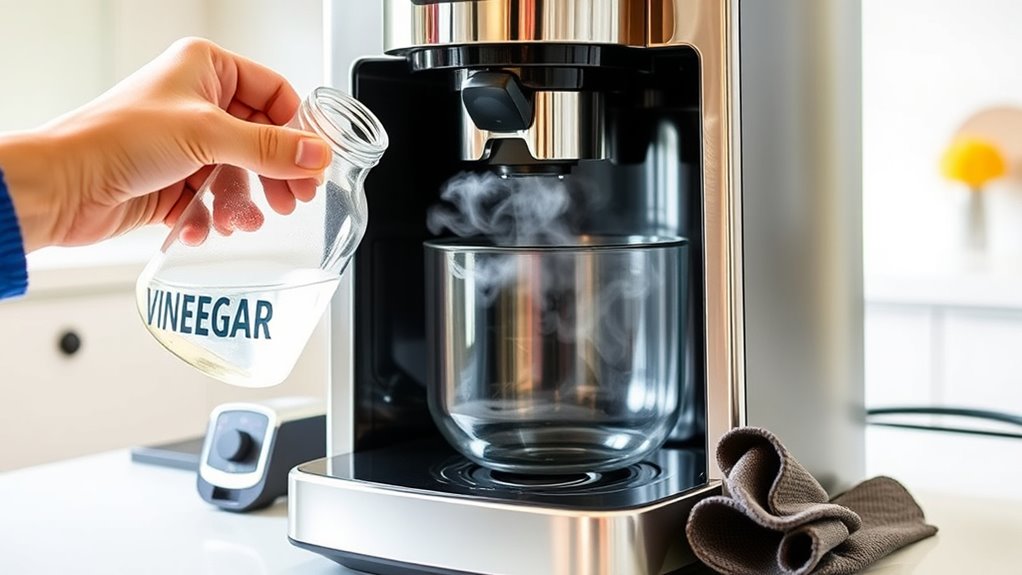
Establishing a smart and efficient coffee brewing routine starts with planning your schedule to guarantee your coffee is fresh and ready when you want it. Use high-quality water, as water quality directly impacts flavor and machine longevity. Regularly measure your coffee grounds to avoid overfilling, which can cause clogs or uneven extraction. Keep your coffee grounds fresh and store them properly to preserve flavor. Set a consistent brewing time each day to streamline your routine and reduce waste. Use filtered water if possible, to minimize mineral buildup and improve taste. Clean your machine regularly to prevent buildup that can interfere with brewing. Staying organized with a schedule for cleaning and maintenance helps keep your coffee maker working efficiently and ensures every cup tastes its best. Incorporating quality water filtration solutions can further enhance your brewing process and extend your machine’s lifespan. Additionally, understanding descaling techniques can help remove mineral deposits and maintain optimal performance over time. Regularly checking your machine’s components, like filters and seals, also helps maintain a smart brewing routine and prolongs the lifespan of your coffee maker. To ensure consistent quality, it’s beneficial to learn about water quality testing to monitor mineral levels and adjust your maintenance accordingly. Implementing a routine cleaning schedule can prevent issues before they arise, keeping your coffee experience seamless.
Troubleshooting Common Cleaning and Descaling Issues
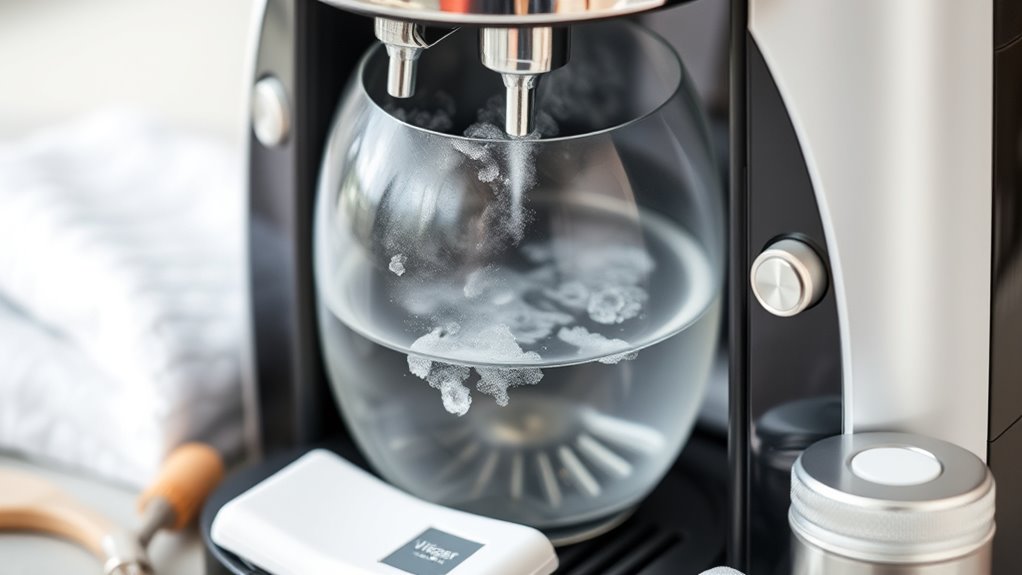
Even the best coffee makers can encounter cleaning and descaling issues that disrupt your brewing process. When your machine isn’t performing smoothly, it might be due to an inconsistent cleaning schedule or incorrect descaling frequency. Common problems include stubborn mineral buildup, slow water flow, and strange odors. To troubleshoot, check if you’re adhering to recommended descaling intervals and cleaning regularly. Incorporating connected equipment that monitors maintenance needs can help you stay on top of these tasks. Consider these emotional triggers: – Frustration from a weak brew that tastes off – Disappointment when your machine won’t start – Anxiety over mineral buildup damaging parts – Stress from wasting time fixing issues – Relief once you restore ideal performance. Maintaining proper thermal behavior and ensuring consistent cleaning prevents these issues and keeps your coffee maker running like new. Additionally, utilizing smart sensors for automatic descaling alerts can streamline maintenance and prevent future problems.
Frequently Asked Questions
How Often Should I Clean and Descale My Coffee Maker?
You should clean and descale your coffee maker every 1 to 3 months, depending on your usage and water hardness. Follow a maintenance schedule to prevent signs of buildup, like slower brewing or strange tastes. Regular cleaning keeps your machine running smoothly and guarantees great-tasting coffee. If you notice mineral deposits or reduced performance, it’s time for a deep clean. Staying consistent helps maintain your coffee maker’s longevity and peak performance.
Can I Use Vinegar Instead of Commercial Descaling Products?
Imagine a gentle stream of vinegar flowing through your coffee maker, and yes, you can use vinegar as a descaling alternative. Vinegar safety is generally good, but it’s important to rinse thoroughly afterward to prevent any lingering odor or taste. While vinegar is effective and budget-friendly, some prefer commercial descaling products for a more thorough clean. Always follow your machine’s instructions to avoid damage or residue buildup.
Are There Specific Cleaning Methods for Different Coffee Maker Brands?
Yes, there are specific cleaning methods for different coffee maker brands. You should follow brand-specific cleaning instructions to avoid damaging your machine. For DIY descaling methods, check your user manual or manufacturer’s website for recommended procedures. Some brands have unique cleaning cycles or require special descaling solutions. Always use the appropriate cleaning agents and avoid harsh chemicals to keep your coffee maker running smoothly and prolong its lifespan.
How Can I Prevent Mineral Buildup in My Coffee Maker?
Imagine a clear stream flowing smoothly—this is what preventing mineral buildup feels like. You can do this by using water filtration to reduce mineral content and regularly descaling your machine. Always opt for filtered water, and schedule routine cleanings to keep mineral deposits at bay. This way, your coffee maker stays efficient and your brew remains pure, ensuring every cup tastes fresh and vibrant.
Is It Safe to Run My Coffee Maker Without Water During Cleaning?
No, it’s not safe to run your coffee maker without water, even during cleaning. Doing so can cause water damage and lead to machine malfunction. The heating element needs water to operate safely and prevent overheating. Running it dry can damage internal components, void warranties, and require costly repairs. Always verify there’s enough water in the reservoir before starting a cleaning cycle to keep your machine functioning properly and safely.
Conclusion
Keeping your coffee maker clean and descaled isn’t just about maintenance—it’s about ensuring every brew tastes fresh and your machine lasts longer. Regular care prevents mineral buildup, much like how a well-tuned engine runs smoothly. Think of your coffee maker as a trusted partner; with consistent cleaning, it’ll serve you perfect cups day after day. So, stay diligent, and your mornings will always start with the best brew possible.
Halloween Picks
halloween
As an affiliate, we earn on qualifying purchases.