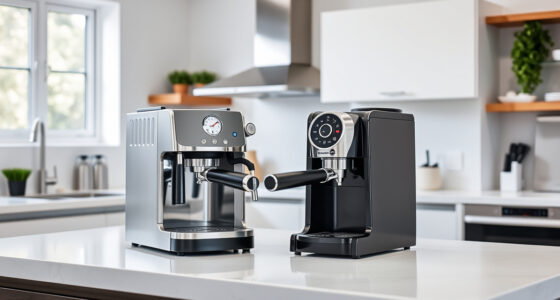
To master latte art at home, you’ll want gadgets like a high-quality espresso machine with a steam wand, a frothing pitcher, and a coffee grinder for fresh beans. Consider investing in latte art stencils or pen tools for creating precise designs. Using good-quality beans and controlling your steaming technique will improve your results. If you keep exploring these tools and techniques, you’ll soon craft stunning latte art that rivals your favorite café—there’s much more to discover ahead.
Open a free Amazon Business account
Business pricing, bulk buying and tax-exempt orders.
As an affiliate, we earn on qualifying purchases.
Key Takeaways
- Investing in a quality espresso machine with a reliable steam wand ensures consistent microfoam for latte art.
- Use a milk frother or wand attachment to easily create smooth, velvety microfoam at home.
- A precision coffee grinder helps achieve the perfect grind size for rich crema and optimal espresso quality.
- Latte art tools like etching pens or pattern stencils assist in designing intricate patterns easily.
- Practice with measuring jugs and pour-over guides to improve pouring control and pattern consistency.
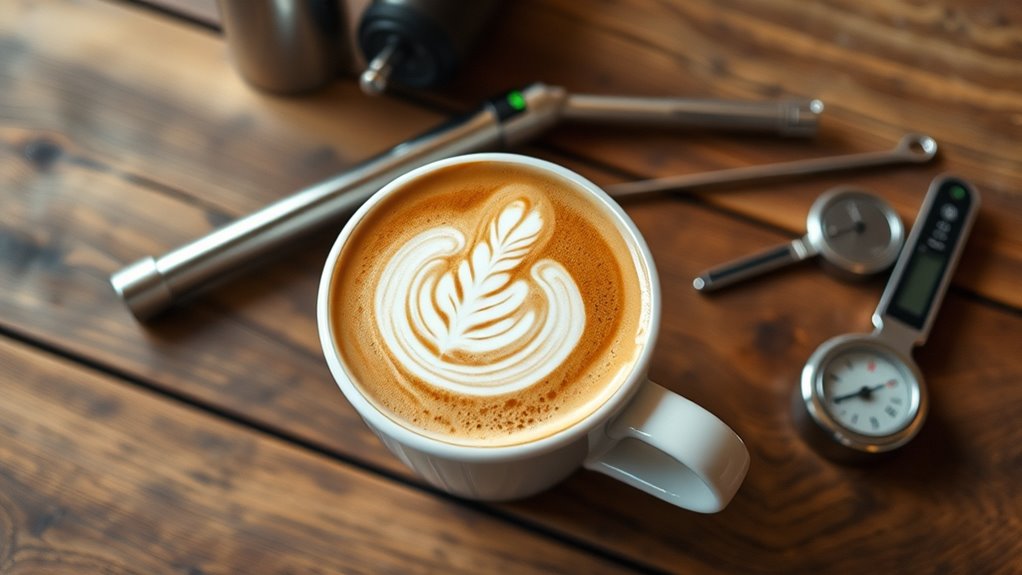
If you’ve ever admired the intricate patterns on barista-made lattes, you might think creating latte art at home is complicated. The truth is, it’s all about mastering a couple of key skills—primarily milk frothing techniques and selecting the right coffee beans. When you get these right, you’ll find that pouring beautiful latte art becomes much more achievable.
First, perfecting your milk frothing techniques is essential. The goal is to produce a smooth, velvety microfoam that’s glossy and dense, not bubbly or frothy. To do this, start with cold milk and pour it into a clean, stainless steel pitcher. Use a steam wand, ideally attached to a high-quality espresso machine, and position it just below the milk’s surface. Turn on the steam and introduce air by keeping the wand near the surface, creating tiny bubbles. Once the milk warms up to around 140-150°F (60-65°C), submerge the wand deeper to heat the milk evenly while continuing to create a silky, fine microfoam. Practice controlling the steam and pitcher tilt to achieve a steady, whirlpool motion, which helps break down larger bubbles. Over time, your milk will become smooth, making it easier to pour precise patterns.
Master the art of steaming milk for smooth, velvety microfoam perfect for latte designs.
Equally important is your choice of coffee beans. Selecting high-quality, freshly roasted beans considerably impacts the flavor and crema quality, which form the foundation of good latte art. Opt for beans that suit your taste preferences—whether you prefer a bright, fruity note or a rich, chocolatey profile. Freshness matters, so buy whole beans and grind them just before brewing. The grind size should be fine enough to extract a rich crema, but not so fine that it clogs your espresso machine. A good crema provides a creamy, golden base that makes your latte art stand out. When your espresso shot has a thick, caramel-colored crema, it’s easier to pour patterns that hold their shape and look visually appealing. Paying attention to bean freshness and grind consistency can significantly enhance your latte art outcomes.
Combining these elements—mastering milk frothing techniques and choosing the right coffee beans—sets the stage for creating stunning latte art at home. As you practice pouring with confidence, you’ll notice your patterns become more intricate and consistent. The key is patience and attention to detail. Once you get comfortable with steaming and pouring, you can start experimenting with different designs, from simple hearts to complex rosettas. With the right gadgets, a bit of practice, and good beans, you’ll soon be impressing friends and family with your barista skills right in your own kitchen.
espresso machine with steam wand
As an affiliate, we earn on qualifying purchases.
As an affiliate, we earn on qualifying purchases.
Frequently Asked Questions
What Are the Best Types of Milk for Latte Art at Home?
For the best latte art at home, choose whole milk because of its ideal milk texture and frothing techniques. Its higher fat content creates a smooth, glossy microfoam that’s easy to manipulate. If you prefer a lighter option, 2% milk also works well, offering good frothing ability. Avoid skim milk, as it produces thin foam that’s hard to shape. Practice consistently to master your frothing techniques and improve your latte art skills.
How Do I Prevent My Milk From Burning When Frothing?
A watched pot never boils, and the same goes for your milk—stay attentive to prevent burning. Keep your milk temperature below 140°F and use gentle frothing techniques to avoid overheating. Use a thermometer to monitor milk and move your steam wand constantly, ensuring even heat distribution. This way, you’ll achieve smooth, creamy froth without risking burnt milk, helping you craft perfect latte art every time.
Can I Create Latte Art With Decaffeinated Coffee?
Yes, you can create latte art with decaffeinated coffee. Many decaffeinated options have a similar flavor profile to regular coffee, making them suitable for latte art. Keep in mind, the flavor comparison might differ slightly, often milder or less robust, but the visual aspect remains the same. Use fresh, good-quality beans and proper frothing techniques to achieve smooth, velvety milk for beautiful latte art.
What Safety Precautions Should I Take With Electric Frothers?
To guarantee electric frother safety, always handle it carefully and follow the manufacturer’s instructions. Keep your hands and utensils away from the frothing mechanism to avoid accidents. Unplug the frother before cleaning or when not in use to prevent handling frother risks. Never immerse the motor base in water, and check for damaged cords or plugs. Staying vigilant and cautious helps you enjoy safe, smooth frothing sessions at home.
How Long Does It Typically Take to Master Basic Latte Art Skills?
It usually takes a few weeks of consistent practice to master basic latte art skills. You should focus on practicing consistency, patience, and refining your technique. Start with simple designs like hearts or rosettas, and gradually challenge yourself with more complex patterns. Regular practice helps you develop muscle memory and control, making your latte art look more professional over time. Remember, persistence and patience are key to improvement.
As an affiliate, we earn on qualifying purchases.
Conclusion
Now that you’ve got the gadgets, who needs a fancy coffee shop? With a little practice, you’ll be serving up latte art that’s almost as good as your barista’s—if they’re blindfolded. So go ahead, impress your friends, or just pretend you’re a true coffee connoisseur. Just remember, the real art is convincing everyone you know what you’re doing. Cheers to your at-home barista dreams—may your foam never fail!
As an affiliate, we earn on qualifying purchases.
As an affiliate, we earn on qualifying purchases.
Fall Picks
fall essentials
As an affiliate, we earn on qualifying purchases.