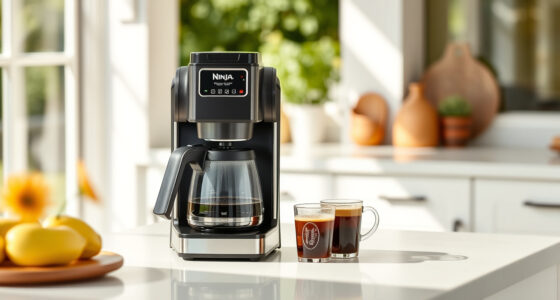

Self-cleaning coffee makers do automate internal cleaning tasks like descaling and sanitizing water reservoirs, which helps prevent buildup and keeps your brew tasting fresh. However, they don’t completely eliminate manual maintenance—periodic descaling, cleaning removable parts, and refilling cleaning solutions are still necessary. While these features make things easier, regular upkeep is essential for peak performance and flavor. Keep going to discover how to get the most out of your machine.
Listen free for 30 days with Audible
Thousands of audiobooks and originals — cancel anytime.
As an affiliate, we earn on qualifying purchases.
Key Takeaways
- Self-cleaning coffee makers automate descaling and reservoir sanitizing, but still require manual maintenance like refilling cleaning solutions.
- Regular manual descaling and cleaning of removable parts are necessary to prevent buildup and ensure optimal performance.
- Automated cleaning features help maintain consistent brew quality and flavor by removing mineral deposits and oils.
- They do not eliminate all maintenance tasks; periodic manual cleaning and descaling are essential for longevity.
- Proper upkeep, combining automated and manual cleaning, ensures the machine functions effectively and produces high-quality coffee.

Are you tired of spending time and effort cleaning your coffee maker? If so, a self-cleaning model might seem like the perfect solution. These machines are designed to streamline your routine, but do they truly eliminate the need for maintenance? The truth is, while they make cleaning more convenient, they still require some attention to keep everything running smoothly.
One of the main benefits of self-cleaning coffee makers is their ability to maintain ideal brew strength. Over time, mineral deposits and coffee oils can build up inside the machine, affecting the flavor and consistency of your brew. Self-cleaning models typically have automated descaling cycles that flush out these deposits, helping you preserve that rich, robust taste you enjoy. This process ensures that the brew strength stays consistent, allowing you to get the perfect cup every time without manually scrubbing or soaking parts. Plus, by regularly cleaning the internal components, these machines prevent clogs that can lead to weaker brews or uneven extraction.
Self-cleaning coffee makers help maintain consistent brew strength and prevent clogs for better-tasting coffee.
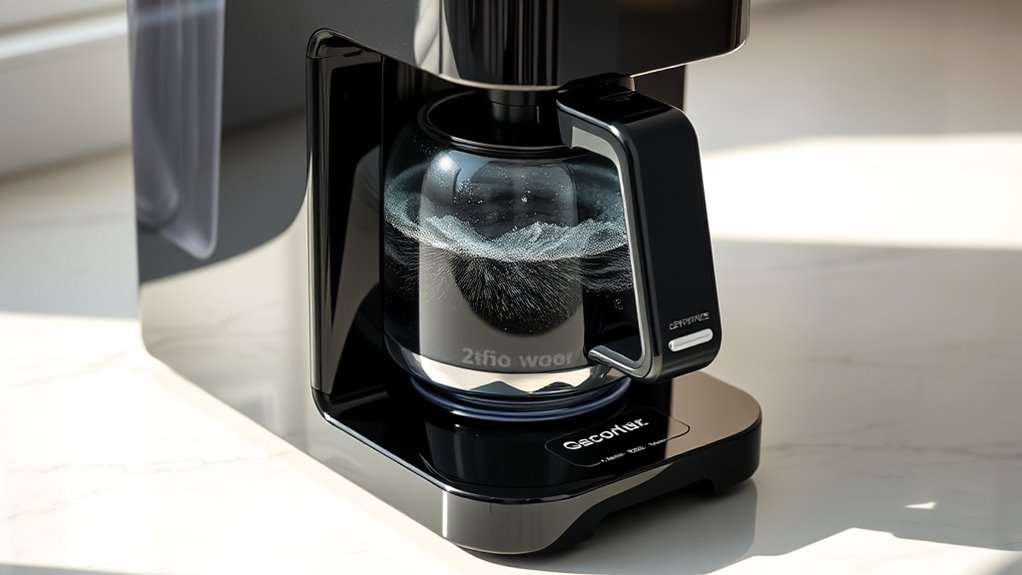
Another key feature of self-cleaning coffee makers is their water reservoir. You might not realize it, but this component can harbor mold, bacteria, and mineral buildup if not cleaned regularly. Self-cleaning systems automate the process of sanitizing the water reservoir, reducing the risk of impurities contaminating your coffee. Many models use a combination of water and cleaning agents to thoroughly rinse and disinfect the reservoir, ensuring that every brew is fresh and safe. Since the reservoir is often large and less accessible, automatic cleaning functions save you time and effort—no more scrubbing away at hard-to-reach corners. Regular maintenance of this part keeps your machine functioning properly, extends its lifespan, and guarantees consistent flavor.
Despite their convenience, self-cleaning coffee makers aren’t entirely maintenance-free. You’ll need to refill the cleaning solution periodically, and some models recommend manual descaling every few months, especially if you have hard water. It’s also wise to regularly check the brew basket, drip tray, and other removable parts to prevent mold and residue buildup. While these machines do a lot of the work for you, a little proactive care ensures they operate at peak performance for years to come.
self-cleaning coffee maker descaling kit
As an affiliate, we earn on qualifying purchases.
As an affiliate, we earn on qualifying purchases.
Frequently Asked Questions
How Often Should I Run the Self-Cleaning Cycle?
You should run the self-cleaning cycle every 1 to 3 months, depending on your usage and water hardness. Regular maintenance tips include using the machine’s cleaning feature as recommended and avoiding overuse of descaling products. Keep an eye on the indicator lights, and if you notice mineral buildup or odors, increase the cleaning frequency. Staying consistent guarantees your coffee maker remains efficient and produces fresh-tasting brews.
Are Self-Cleaning Features Energy-Efficient?
Like a well-oiled machine, self-cleaning features are quite energy-efficient, helping you save energy with each cycle. They reduce the need for harsh cleaning chemicals, lowering environmental impact, and optimize power use during cleaning. This means your coffee maker consumes less energy, contributing to overall energy savings. So, you can enjoy your brew knowing you’re making an eco-friendly choice that benefits both your wallet and the planet.
Can I Use Vinegar for Cleaning Instead of the Machine’s Cycle?
You can use vinegar for cleaning, but it’s better to explore vinegar alternatives like citric acid or specialized descaling solutions. If you prefer a natural approach, cleaning with baking soda is effective and gentle. However, avoid using straight vinegar regularly, as it can damage some machine parts. Always check your manufacturer’s recommendations to make sure you’re using safe, compatible cleaning methods to keep your coffee maker in top shape.
Do Self-Cleaning Coffee Makers Require Special Maintenance?
Like a car needing regular oil changes, your self-cleaning coffee maker does require some maintenance, but not much. Forget maintenance myths—these machines generally need only occasional cleaning and descaling. You should follow the manufacturer’s recommended cleaning frequency to keep it running smoothly. No special tools or routines are needed, just simple steps to guarantee it stays in top shape, making your coffee consistently delightful.
How Long Does the Self-Cleaning Process Typically Take?
The cleaning cycle duration for a self-cleaning coffee maker usually takes around 15 to 30 minutes, depending on the model. During this time, it automatically runs a cleaning process to remove buildup. To keep it functioning well, follow maintenance tips like regularly refilling descaling solutions and running the cleaning cycle as recommended. This guarantees your coffee maker stays clean and operates efficiently over time.
automatic water reservoir cleaner for coffee machine
As an affiliate, we earn on qualifying purchases.
As an affiliate, we earn on qualifying purchases.
Conclusion
So, are self-cleaning coffee makers truly tidy and trouble-free? While they promise to purge impurities and prevent buildup, you still need to stay vigilant. Regular rinsing and routine maintenance remain your best buddies for a spotless, sparkling brew. Don’t depend solely on the device—delight in daily diligence. Keep your coffee clean, your mornings more manageable, and your mug of motivation magnificent. Remember, consistent care crafts a clean, convenient coffee corner for every caffeine craving.
manual cleaning tools for coffee maker
As an affiliate, we earn on qualifying purchases.
As an affiliate, we earn on qualifying purchases.
As an affiliate, we earn on qualifying purchases.
Flea & tick season Picks
flea and tick prevention
As an affiliate, we earn on qualifying purchases.