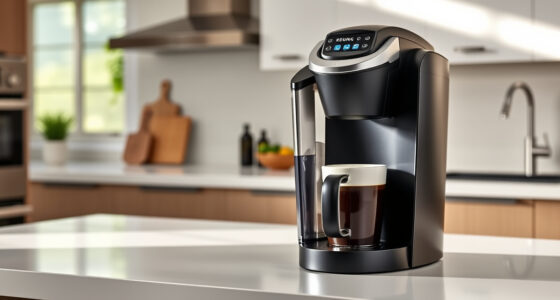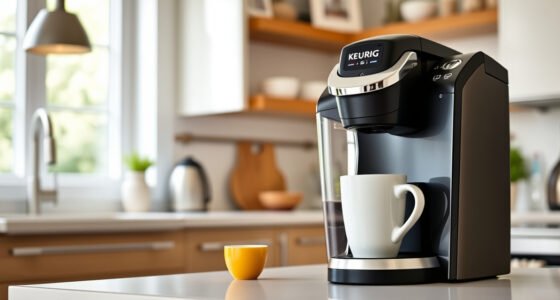
If you want cold brew faster, quick-brew machines use advanced tech like high pressure and rapid chilling to cut brewing time from 12-24 hours to just 2-4 hours. These machines efficiently extract flavors while maintaining smoothness, offering a convenient alternative to traditional methods. While they’re great for saving time, the best results come from choosing quality equipment. Keep exploring to discover how different methods stack up and get the most flavor out of your cold brew.

Get kitchen gear delivered free — and shop member deals
- Fast, free delivery on millions of items
- Access to Prime Big Deal Days deals on October 6–7
- Prime Video, Amazon Music and more included
Key Takeaways
- Quick cold brew machines significantly reduce brewing time from 12-24 hours to 2-4 hours using advanced technology.
- Traditional methods prioritize flavor complexity through slow extraction, often resulting in richer profiles.
- Modern machines optimize extraction efficiency with high-pressure and rapid chilling to mimic traditional flavor in less time.
- Quality and flavor preservation depend on machine design; high-quality rapid brewers better replicate traditional cold brew.
- Quick-brew options offer convenience and time savings, making them ideal for those seeking rich cold brew without long wait times.

If you’re enthusiastic to enjoy cold brew coffee faster, there are simple methods to cut down the brewing time without sacrificing flavor. Traditional cold brew methods typically take 12 to 24 hours, relying on slow, steady coffee extraction to develop a smooth, rich profile. This lengthy process is rooted in brewing technology that emphasizes gradual extraction at low temperatures, allowing the coffee’s flavors to fully develop. However, if you want your cold brew sooner, quick-brew machines and innovative techniques can help you achieve a similar quality in a fraction of the time.
Quick-cold brew machines utilize advanced brewing technology designed specifically to accelerate coffee extraction. These machines often employ high-pressure systems, rapid chilling, or specialized filters to shorten brewing times to as little as 2 to 4 hours. By increasing the pressure or manipulating temperature, these devices enhance extraction efficiency—meaning they extract more flavor compounds in less time. As a result, you get a cold brew that’s comparable in depth and smoothness to traditionally brewed coffee, but without the lengthy wait. The key advantage here is that these machines optimize brewing technology to maintain flavor integrity while vastly reducing brewing duration.
On the other hand, traditional methods rely on patience and a careful balance of coffee-to-water ratio, grind size, and steeping time. These techniques focus on a slow, gentle coffee extraction process that ensures a fuller, more nuanced flavor profile. While it might take longer, many enthusiasts prefer this approach because it allows for more control over the final taste. However, if speed is your priority, modern quick-brew machines leverage brewing technology to mimic the results of traditional steeping, often by increasing surface contact between water and coffee grounds or using innovative filtration systems.
It’s important to recognize that not all quick-brew options produce the same quality of coffee as traditional methods, but advances in brewing technology continue to narrow that gap. The best quick-brew machines optimize coffee extraction by employing precise temperature control, pressure systems, and rapid chilling techniques. This ensures that the coffee maintains its flavor complexity and smoothness despite the shorter brewing time. Ultimately, if you want to enjoy cold brew faster, investing in a high-quality quick-brew machine with advanced brewing technology might be your best bet. It offers a convenient way to enjoy freshly brewed cold coffee without the long wait, all while preserving much of the flavor richness that traditional cold brewing delivers.
As an affiliate, we earn on qualifying purchases.
Frequently Asked Questions
How Does Temperature Affect Cold Brew Extraction Speed?
Temperature directly impacts cold brew extraction speed by increasing extraction efficiency and influencing brew strength. When you use warmer water, the extraction process speeds up, allowing flavors and compounds to dissolve faster. Cooler temperatures slow down extraction, resulting in a milder, less intense brew. Adjusting temperature helps you control brew strength and efficiency, so you can make cold brew faster or more nuanced depending on your preference.
Are There Health Risks With Faster Cold Brew Methods?
You might worry about health risks with faster cold brew methods, and there’s a valid concern. Rapid brewing can create conditions conducive to microbial growth if not handled properly, potentially leading to health concerns. To stay safe, make sure your equipment is clean, and follow manufacturer instructions carefully. While faster processes save time, they shouldn’t compromise safety. Proper sanitation and monitoring are key to enjoying cold brew without risking microbial issues.
Can Quick Cold Brew Taste as Good as Traditional Methods?
Yes, quick cold brew can taste as good as traditional methods if you choose high-quality beans and maintain consistent brewing parameters. While it might slightly differ in flavor consistency, modern quick-brew machines often preserve the rich brewing aroma, delivering a smooth, flavorful cup. Experiment with steeping times and temperatures to match your preferred taste profile, ensuring that the quicker process still produces satisfying, aromatic cold brew coffee.
What Maintenance Is Required for Quick-Brew Machines?
You can keep your quick-brew machine running smoothly with regular maintenance. Start by calibrating the machine periodically to ensure peak brewing. Check and replace filters as needed to prevent clogs and maintain flavor quality. Proper calibration and timely filter replacements extend your machine’s lifespan and guarantee consistent cold brew results. Neglecting these steps might lead to performance issues, which proves that attentive maintenance truly enhances both efficiency and the quality of your coffee.
How Cost-Effective Are Quick Cold Brew Machines Long-Term?
Quick cold brew machines are quite cost-effective long-term because they save you time and labor costs, leading to significant cost savings over traditional methods. While the initial investment costs might be higher, the quick turnaround and consistent quality reduce waste and improve efficiency. Over time, these machines can lower your overall expenses, making them a smart investment for your business or personal use.
As an affiliate, we earn on qualifying purchases.
Conclusion
Think of quick-cold brew machines as the turbocharged sports cars of coffee, speeding you toward your perfect cup in record time. Traditional methods, on the other hand, are like a leisurely road trip—slow, steady, and full of charm. Whether you choose the thrill of speed or the patience of tradition, both paths lead to a delicious brew. Just remember, no matter the journey, the destination is that perfect, invigorating sip you crave.
As an affiliate, we earn on qualifying purchases.
cold brew coffee maker with rapid chilling
As an affiliate, we earn on qualifying purchases.
As an affiliate, we earn on qualifying purchases.
Fall Picks
fall essentials
As an affiliate, we earn on qualifying purchases.