
🔍 Read the full analysis: Anchovies, The Italian Way: From Bagna Cauda To Spaghetti With Colatura on Mad Tasting
TL;DR
Italy employs anchovies in two primary ways: as a subtle, invisible seasoning in sauces and as a prominent ingredient in dishes like bagna cauda and spaghetti with colatura. This article details these preparations, their cultural significance, and how to use them at home.
Italy’s culinary tradition elevates anchovies as both an invisible seasoning and a visible star on the plate, with dishes like Piedmont’s bagna cauda and spaghetti with colatura di alici exemplifying this dual approach. These preparations are celebrated for their depth of flavor and cultural significance, making anchovies a fundamental ingredient across the country.
Anchovies, primarily the European species Engraulis encrasicolus, are integral to Italian cooking, valued for their ability to add savory depth without imparting a fishy taste. They are used in various forms: fresh, cured, or as a seasoning called colatura di alici, a PDO product from Cetara. The two main culinary approaches involve melting anchovies into sauces or serving them prominently as a main ingredient.
In Piedmont, despite being landlocked, salted anchovies arrived via trade routes from Ligurian ports and are central to the traditional bagna cauda—a warm, garlicky anchovy and olive oil dip served with vegetables. This dish exemplifies the ‘invisible’ use of anchovies, where they dissolve into the oil, enhancing flavors subtly. Conversely, in Campania, colatura di alici is a prized seasoning derived from anchovies cured in salt and aged in wooden barrels, producing a rich, amber liquid used in pasta dishes like spaghetti with colatura.
Experts emphasize that well-prepared anchovies do not taste fishy because their glutamates dissolve into fat and amplify other ingredients. Overuse, poor quality fish, or high heat can lead to a fishy or bitter flavor, but patience and low-temperature techniques prevent this. The preparation of colatura involves months of curing and fermentation, making it a complex, artisan product highly valued in Italian cuisine. For more on traditional Italian anchovy preparations, see the original analysis here.
Anchovies, The Italian Way: From Bagna Cauda To Spaghetti With Colatura
Italy elevates the humble anchovy in two distinct ways: as an invisible seasoning that melts into sauces, and as a visible star on the plate — from Piedmont’s warm communal dip to Campania’s amber, barrel-aged fish sauce.
One Fish, Two Culinary Philosophies
Anchovies are integral to Italian cooking, prized for adding savory depth without any fishy taste. Their glutamates dissolve into fat and amplify other ingredients — whether hidden in a sauce or presented proudly at the center of the table.
Melted Into Sauces
Anchovies dissolve gently into olive oil or water-based sauces over low heat, disappearing completely while releasing umami that deepens every other flavor in the dish. This is the technique behind bagna cauda and countless pasta sauces across Italy.
Prominent On The Plate
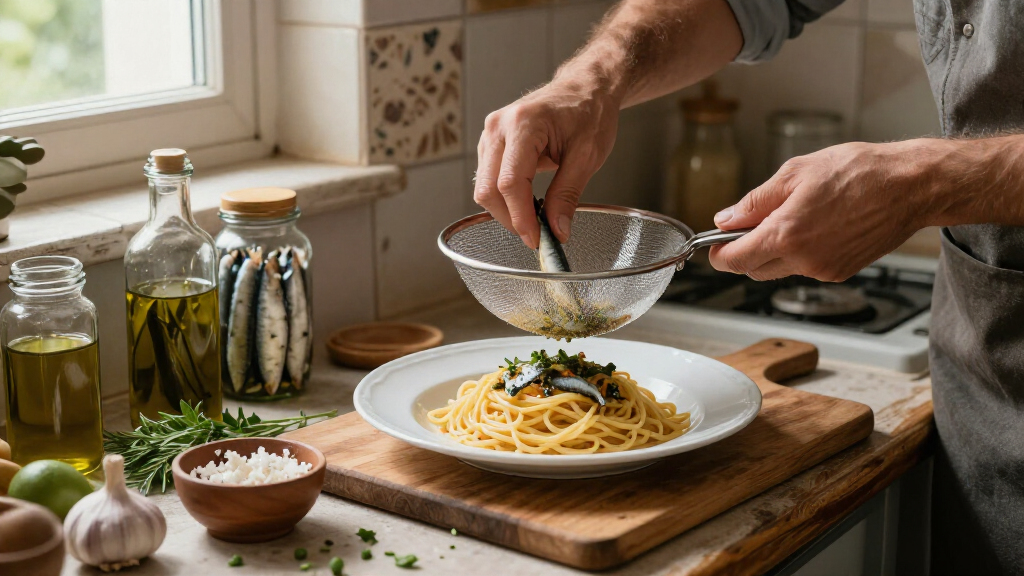
In dishes like spaghetti with colatura di alici, the anchovy-derived seasoning takes center stage — an amber liquid drizzled over pasta, delivering bold, fermented complexity that celebrates rather than conceals the fish.
From The Alps To The Amalfi Coast
Two regions, hundreds of kilometers apart, showcase the remarkable range of Italy’s anchovy craft — one landlocked, one maritime, both devoted.
Bagna Cauda
A landlocked region transformed by trade: salted anchovies arrived via historic routes from Ligurian ports. The result — a warm, garlicky anchovy and olive oil dip served communally with raw and cooked vegetables.
Colatura di Alici
A prized PDO seasoning rooted in centuries of Amalfi Coast fishing culture. Anchovies layered with sea salt and aged in wooden barrels slowly release a rich, amber liquid — Italy’s answer to ancient garum.
The Everyday Umami
Fresh, cured, or oil-packed — anchovies appear across the country in grilling, marinating, and seasoning. Cured and oil-packed versions dominate sauces for their concentrated flavor and ease of storage.
Well-prepared anchovies never taste fishy. Their glutamates dissolve into fat and amplify other ingredients — overuse, poor quality, or high heat are the only culprits behind bitterness.
The Golden Rule of Italian Anchovy CookeryHow Colatura di Alici Is Made
Months of curing and fermentation transform fresh catch into one of Italy’s most complex artisan products.
Catch & Clean
Fresh European anchovies are caught in the waters off Cetara and cleaned by hand.
Layer In Salt
Anchovies are layered with sea salt inside wooden barrels, head-to-tail.
Age & Ferment
Over months, a weight presses the catch as fermentation works slowly.
Drip & Collect
A rich amber liquid gradually drips from the barrel — liquid gold.
Filter & Bottle
The colatura is filtered and bottled, ready to season pasta and more.
Using Anchovies Without The Fishiness
The difference between sublime umami and unpleasant fishiness comes down to quality, temperature, and patience.
Use High-Quality Anchovies
DoStart with well-cured, oil-packed anchovies from reputable producers. Quality fish dissolves cleanly and delivers pure savory depth.
Cook Gently Over Low Heat
DoMelt anchovies slowly into warm olive oil or sauces. Low temperatures preserve their glutamates and prevent bitterness from developing.
Practice Patience In Sauces
RememberLet anchovies fully dissolve and integrate. Rushing the process leaves uneven flavor and harsh, salty pockets in the finished dish.
Avoid High Heat & Overuse
AvoidHigh heat and excessive quantities are the fastest route to a fishy, bitter result — the opposite of the Italian approach.
Key Questions, Answered
What is bagna cauda, and how is it made?
A warm Piedmontese dip of anchovies, garlic, and olive oil. Gently heat garlic and oil over low heat, melt in the anchovies, and serve communally with raw and cooked vegetables for dipping.
How can I avoid a fishy taste?
Use high-quality anchovies, cook gently over low heat, and be patient. Melting them into oil lets their glutamates dissolve, enhancing flavor without overpowering the dish.
Are fresh anchovies suitable for Italian cooking?
Yes, with careful handling — they excel grilled or marinated. For sauces and seasoning, cured or oil-packed anchovies are preferred: easier to store and more concentrated in flavor.
Can I find authentic colatura outside Italy?
Authentic colatura di alici is available through specialty Italian food stores or online. Verify provenance and quality — counterfeit versions lack the same depth of flavor.
Cultural and Culinary Impact of Anchovies in Italy
Anchovies’ dual role as a subtle seasoning and a main ingredient underscores their importance in Italian culinary identity. They exemplify Italy’s mastery of transforming simple ingredients into complex flavors without overpowering dishes, highlighting regional diversity and culinary craftsmanship. Understanding these techniques enriches home cooking and preserves a vital aspect of Italy’s gastronomic heritage.
As an affiliate, we earn on qualifying purchases.
Historical Roots and Regional Variations
Although Piedmont is landlocked, historical trade routes from Liguria introduced salted anchovies, which became central to local cuisine. The region’s bagna cauda reflects this influence, blending rustic traditions with communal dining. On the Amalfi Coast, colatura di alici has been produced for centuries, rooted in the fishing culture of Cetara. These regional practices demonstrate Italy’s diverse ways of celebrating anchovies, from subtle seasoning to bold, fermented condiments.
Modern interest in authentic Italian ingredients and techniques has revived appreciation for these preparations, encouraging home cooks to experiment with low-heat methods and artisanal products like colatura. The global culinary scene increasingly recognizes anchovies as a versatile, sophisticated ingredient rather than just a fishy flavor.
As an affiliate, we earn on qualifying purchases.
Unanswered Questions About Anchovy Use and Quality
While traditional methods are well-documented, it is still unclear how widespread modern home preparation of bagna cauda and colatura has become outside Italy. The availability and authenticity of colatura di alici can vary, and there is ongoing debate about the best ways to store and use fresh versus cured anchovies for optimal flavor and safety. Additionally, the impact of different anchovy species and regional variations on flavor profiles remains underexplored.
As an affiliate, we earn on qualifying purchases.
Future Trends in Italian Anchovy Cuisine
Expect increased interest in authentic, artisanal products like colatura and in traditional low-heat cooking techniques. Culinary professionals and home cooks are likely to experiment more with anchovies in contemporary dishes, emphasizing their umami qualities while respecting regional traditions. Ongoing efforts to preserve artisanal methods and promote sustainable sourcing will shape the future of Italy’s anchovy cuisine.
As an affiliate, we earn on qualifying purchases.
Key Questions
What is bagna cauda, and how is it made?
Bagna cauda is a warm Piedmontese dip made from anchovies, garlic, and olive oil. It is prepared by gently heating garlic and olive oil over low heat, then melting anchovies into the mixture. It is traditionally served with raw and cooked vegetables for dipping, creating a communal, flavorful meal.
What is colatura di alici, and how is it produced?
Colatura di alici is an amber-colored fish sauce from Cetara, made by layering anchovies with sea salt and aging them in wooden barrels. Over months, a flavorful liquid drips out, which is filtered and bottled. It is used as a seasoning in pasta and other dishes, adding depth and umami without fishiness.
How can I use anchovies without making my dish taste fishy?
The key is to use high-quality anchovies, cook them gently over low heat, and incorporate them into sauces with patience. Melting anchovies into oil or water-based sauces allows their glutamates to dissolve, enhancing flavor without overpowering the dish with fishiness.
Are fresh anchovies suitable for cooking Italian dishes?
Yes, but they require careful handling. Fresh anchovies are often used in grilling or marinating, but cured or oil-packed anchovies are more common for sauces and seasoning because they are easier to store and have a concentrated flavor.
Can I find authentic colatura di alici outside Italy?
Authentic colatura di alici is available through specialty Italian food stores or online, but buyers should verify its provenance and quality to ensure it is genuine. Counterfeit or low-quality versions may not deliver the same depth of flavor.
Source: Mad Tasting