
Some foods benefit from automation because it enhances sustainability, boosts efficiency, and guarantees consistent flavor and quality, especially in mass production. Automated processes help minimize waste, conserve water, and control variables like temperature and humidity, leading to fresher and more reliable products. However, foods that require delicate handling or artisanal techniques often resist automation because they rely on human craftsmanship and tradition for authentic quality. If you want to understand which foods embrace automation and why others resist, keep exploring the details.

Get kitchen gear delivered free with Prime
- Fast, free delivery on millions of items
- Prime Video, Amazon Music and more included
- Member-only deals all year
Key Takeaways
- Foods that require consistent quality and large-scale production benefit from automation’s efficiency and precision.
- Delicate or artisanal foods rely on human craftsmanship to preserve authenticity, tradition, and unique qualities.
- Automation enhances sustainability for crops and processed foods by reducing waste and conserving resources.
- Fresh produce and handcrafted items often resist automation to maintain their natural, farm-fresh appeal.
- The balance between automation and tradition depends on preserving flavor, texture, and cultural heritage.
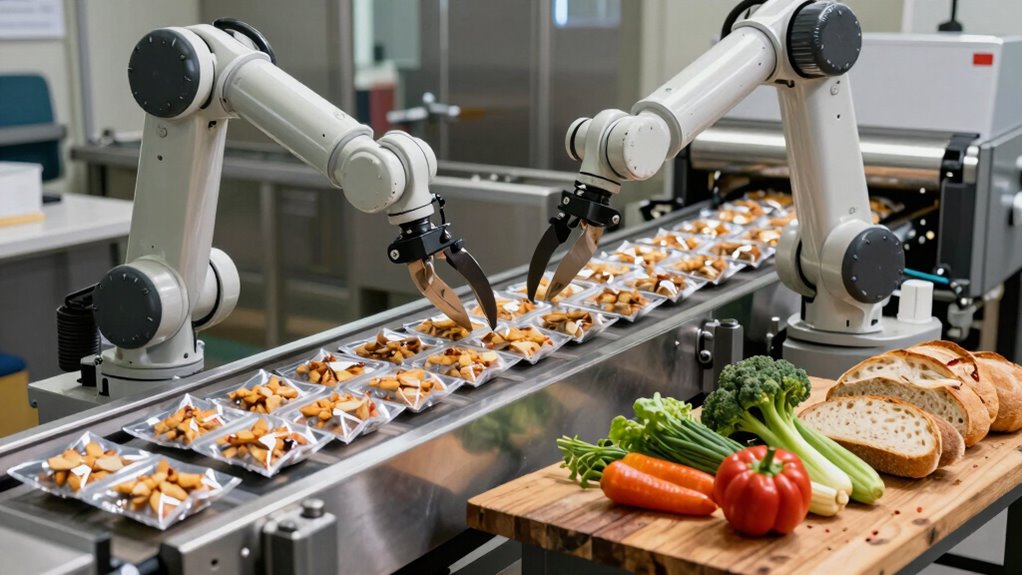
Have you ever wondered how automation is transforming the foods we eat every day? It’s changing the way farms operate, how ingredients are processed, and even how your favorite snacks reach store shelves. Automation allows for more precise, efficient, and scalable food production, which is especially beneficial for sustainable farming practices. By automating tasks like planting, watering, and harvesting, farmers can reduce waste, conserve water, and minimize the use of harmful chemicals. This not only helps the environment but also supports the long-term health of the land. When you think about sustainability, automation often plays a key role in balancing productivity with ecological responsibility.
Automation enhances sustainable farming by increasing efficiency, reducing waste, conserving water, and minimizing harmful chemicals.
At the same time, automation helps preserve flavor by maintaining consistent quality throughout the production process. Machines can precisely control variables such as temperature, humidity, and processing time, ensuring that each batch of food retains its intended taste and texture. For example, flavor stability is crucial for products like coffee, baked goods, or beverages where flavor consistency is essential. This consistency also enhances consumer trust and satisfaction, reinforcing the importance of automation in modern food manufacturing. So, while automation can make food production more efficient, it also guarantees that the final product remains true to its original flavor profile, satisfying your taste buds.
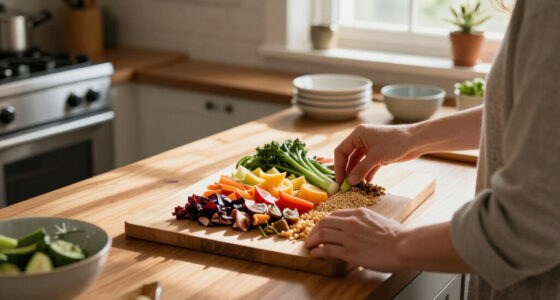
However, not all foods benefit equally from automation. Fresh produce, for example, often relies on delicate handling that can be difficult to automate without damaging the product. Many consumers prefer freshly picked fruits and vegetables, which are often best enjoyed with minimal processing. Automation in these cases might lead to a perception of lower quality or a loss of the natural, farm-fresh appeal. Additionally, certain artisanal foods, like handcrafted cheeses or small-batch chocolates, thrive on human skill and tradition. Automating these processes might strip away the unique qualities that make them special, causing purists to shy away from highly automated production. Furthermore, manual craftsmanship remains a vital aspect for maintaining authenticity and preserving cultural heritage in food production. Interestingly, some small-scale, traditional methods, such as hand-picking or artisanal crafting, are often viewed as essential for preserving the unique character and quality of specific foods. Moreover, some consumers actively seek out handmade foods as a way to support local artisans and maintain cultural traditions.
Despite these differences, automation’s influence is undeniable. It’s transforming mass food production into a more sustainable, flavor-preserving process while highlighting the importance of human touch for certain foods. You benefit from more consistent products, better environmental practices, and often, fresher, tastier options. Still, the foods that rely heavily on tradition and delicate handling remind us that some aspects of food are best preserved through human craftsmanship. Understanding the role of automation in food production can help you appreciate the balance between efficiency and tradition. Ultimately, whether a food loves automation or not depends on its nature, the values behind its production, and what you, as a consumer, prioritize most.
As an affiliate, we earn on qualifying purchases.
Frequently Asked Questions
How Does Automation Impact Food Quality and Safety?
Automation improves food quality and safety by ensuring ingredient consistency, which keeps products uniform and reliable. It also helps prevent contamination through precise, controlled processes that reduce human error. You benefit from fewer safety risks and higher-quality foods when automation is in place. By maintaining strict standards and minimizing contamination chances, automation supports safer, better-tasting products that meet consumer expectations consistently.
Are Traditional Foods Threatened by Automation?
Traditional foods aren’t necessarily threatened by automation, but it can impact cultural preservation and artisan craftsmanship. When automation replaces handmade processes, you may lose the unique flavors and techniques passed down through generations. While automation boosts efficiency, it risks eroding the cultural identity of these foods. If you value authenticity, it’s crucial to find a balance that preserves traditional craftsmanship while embracing technological advancements to guarantee these foods thrive.
Which Foods Benefit Most From Automation?
You’ll find that processed foods, baked goods, and beverages benefit most from automation. Automation guarantees flavor consistency, so every product tastes the same, pleasing customers. It also enhances ingredient precision, reducing waste and improving quality. By automating these foods, manufacturers can increase efficiency, lower costs, and maintain high standards. This makes automation especially valuable for mass-produced items where uniformity and quality are essential.
How Do Consumers Perceive Automated Food Production?
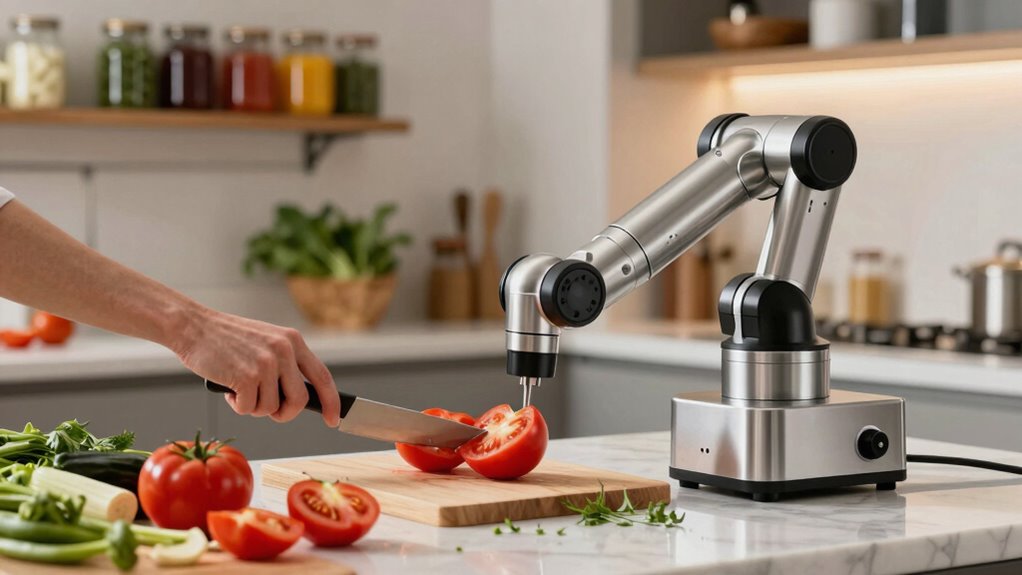
You might notice that consumers often feel a mix of curiosity and skepticism towards automated food production, like watching a robot assemble a burger. Their perception hinges on consumer trust, which can be shaken by concerns over food safety and quality. While automation offers consistency and efficiency, some still harbor automation skepticism, fearing that machines could compromise the personal touch and natural authenticity they value in their food.
What Future Trends Will Shape Food Automation?
Future trends in food automation will focus on robotic harvesting and AI flavor profiling. You’ll see more robots efficiently picking produce, reducing labor costs, and increasing speed. AI will analyze taste profiles, helping manufacturers create personalized, consistent flavors that meet consumer preferences. These advancements will make food production smarter, faster, and more tailored, transforming how you experience and enjoy food while boosting sustainability and quality across the industry.
As an affiliate, we earn on qualifying purchases.
Conclusion
So, as you see, some foods embrace automation like a knight rallying to a noble cause, while others cling to tradition like a squire to the old ways. Whether it’s a futuristic robot chef or grandma’s cherished recipes, your choices shape the culinary world. Just remember, in this ever-evolving kitchen of life, blending the new with the old—like a well-placed hollyhock in a medieval tapestry—can create the most delicious results.
precision food temperature controller
As an affiliate, we earn on qualifying purchases.
As an affiliate, we earn on qualifying purchases.
As an affiliate, we earn on qualifying purchases.
Halloween Picks
halloween
As an affiliate, we earn on qualifying purchases.