
🔍 Read the full analysis: Gnocchi Di Patate: Light, Pillowy, And Absolutely Doable on Mad Tasting
Prime for Young Adults — start your free trial
Fast free delivery, streaming and member deals for eligible 18–24 year olds.
Try it freeAs an affiliate, we earn on qualifying purchases.
TL;DR
Gnocchi di Patate are traditional Italian potato dumplings known for their soft, pillowy texture. This guide explains how to select potatoes, handle dough, and cook them perfectly, making them accessible for home cooks.
Homemade gnocchi di Patate can be surprisingly simple to make with the right techniques, resulting in light, pillowy dumplings that rival those served in Italy. This guide explains how to select the best potatoes, handle the dough gently, and cook the gnocchi to perfection, making this classic dish accessible for weeknight dinners.
Gnocchi di Patate are small, soft Italian potato dumplings with roots in Northern Italy, traditionally made from just potatoes, flour, and sometimes egg. Their characteristic lightness depends on choosing the right potatoes—starchy varieties like Russets or Yukon Golds—and cooking them properly by baking or steaming, not boiling, to avoid excess moisture. The key to their fluffy texture is adding minimal flour—generally 1½ to 2 cups per 2 pounds of potatoes—and handling the dough gently, folding rather than kneading, to preserve airiness.
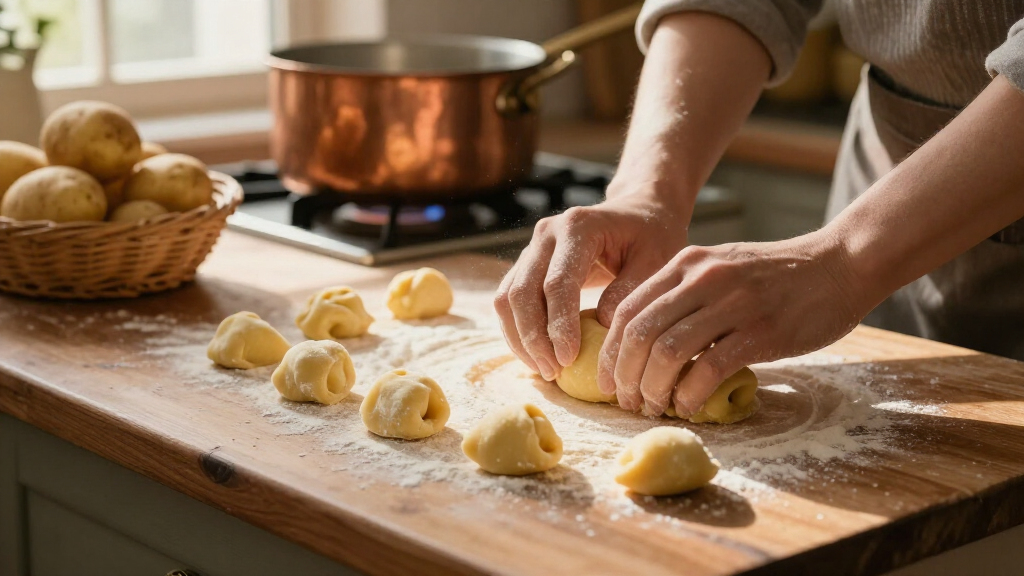
Making gnocchi involves baking the potatoes until tender, passing them through a ricer while still hot, then mixing with flour and optional egg. The dough should be soft, slightly tacky, and rested briefly before shaping. Gnocchi are formed by rolling the dough into ropes, cutting into small pieces, and pressing ridges with a fork, which helps hold sauce and enhances texture. They are cooked by boiling in salted water until they float, usually within 2-3 minutes, indicating doneness. Regional variations include different sauces and shapes, but the core goal remains the same: a potato flavor that dissolves on contact.
The Importance of Technique in Achieving Perfect Gnocchi
Mastering the technique of selecting the right potatoes, handling the dough gently, and cooking correctly is essential to produce gnocchi that are light and tender, not dense or gummy. These skills make the difference between a homemade success and a kitchen failure, allowing home cooks to enjoy authentic Italian flavors without special equipment or ingredients. Achieving the ideal texture enhances the eating experience and respects the dish’s regional heritage, which values simplicity and quality.
As an affiliate, we earn on qualifying purchases.
Historical Roots and Regional Variations of Gnocchi
Gnocchi have a long history in Italy, with early versions made from bread, semolina, or chestnut flour before the arrival of potatoes in the 16th century. The potato-based gnocchi we recognize today emerged in Northern Italy during the 19th century, particularly in Veneto, Piedmont, and Lombardy. Each region has its own variations: Verona, for example, celebrates gnocchi with a festival and serves them with butter and cheese, while others prefer different sauces. The dish’s simplicity and regional pride have helped preserve its popularity across Italy.
“The difference between dense brick and cloud-like gnocchi is just a few small decisions—potato choice, cooking method, flour amount, and handling.”
— Mad Tasting
As an affiliate, we earn on qualifying purchases.
Common Challenges and What Remains Unclear
While the basic process for making gnocchi is well-established, some details remain debated among cooks, such as the optimal amount of flour for different potatoes, whether to include egg, and the best shaping techniques. Additionally, regional variations and personal preferences influence the final product, making perfect gnocchi somewhat subjective. The impact of humidity and potato variety on texture also requires further experimentation for home cooks.
As an affiliate, we earn on qualifying purchases.
Next Steps for Home Cooks and Enthusiasts
Home cooks are encouraged to experiment with their preferred potatoes and flour ratios, practicing gentle handling to achieve their ideal texture. Trying different shaping techniques and sauces can also enhance the experience. For those interested in regional variations, exploring traditional recipes from Veneto, Piedmont, or Lombardy can deepen appreciation for the dish. Future developments may include more detailed guides on troubleshooting common issues like gummy dough or dense gnocchi, as well as adapting recipes for dietary preferences.
As an affiliate, we earn on qualifying purchases.
Key Questions
Can I make gnocchi without egg?
Yes, many traditional recipes omit egg for lighter gnocchi. Using just potatoes and flour is common, but adding egg can make handling easier, especially for beginners.
What type of potatoes should I use?
Starchy potatoes like Russets or Yukon Golds are ideal because they produce a fluffy, light texture. Waxy potatoes tend to make dense gnocchi.
How do I prevent gummy or heavy gnocchi?
Use minimal flour, handle the dough gently, and avoid overworking it. Also, cook potatoes properly and drain excess moisture before mixing.
How long do I cook gnocchi?
Boil them in salted water until they float to the surface, typically within 2-3 minutes, then remove immediately.
Can I store leftover gnocchi?
Yes, store uncooked gnocchi in a single layer on a floured tray and refrigerate for up to a day. Cook directly from cold when ready to serve.
Source: Mad Tasting
Fall Picks
fall essentials
As an affiliate, we earn on qualifying purchases.