
🔍 Read the full analysis: Weekend Ravioli: Ricotta-Spinach Pillows With Sage Butter on Mad Tasting

Get kitchen gear delivered free with Prime
- Fast, free delivery on millions of items
- Prime Video, Amazon Music and more included
- Member-only deals all year
TL;DR
Mad Tasting’s weekend recipe pairs fresh ravioli filled with ricotta, spinach and Parmesan with sage butter. It recommends drying the filling well, sealing the pasta without trapped air and simmering the ravioli gently; shaped pieces can be frozen and cooked from frozen.
Mad Tasting has published a weekend recipe guide for ricotta-spinach ravioli served with sage butter, with instructions focused on keeping the filling dry and the pasta seams intact. The guide gives home cooks a method for preparing fresh pasta by hand or with a machine, and says shaped ravioli can be frozen and cooked without thawing.
The filling combines cooked, well-squeezed spinach with firm ricotta, grated Parmesan, lemon zest, black pepper and a pinch of nutmeg. For a practical batch, the recipe suggests about 10 ounces of cooked spinach, 1 cup ricotta and ½ cup Parmesan. The spinach should be cooled and chopped after its liquid is squeezed out; ricotta that has released whey can be drained in a sieve or cheesecloth. The mixture should hold a rounded shape on a spoon rather than slump or leave water underneath.
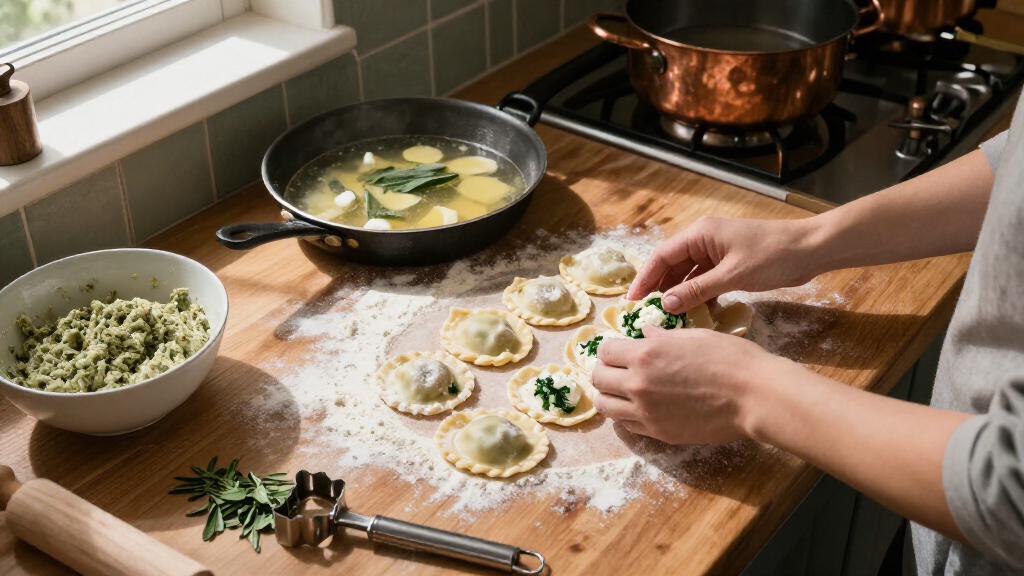
The dough should rest, covered, for about 30 minutes after kneading, then be rolled into an even, thin sheet. The guide suggests adding small mounds of filling, roughly 1½ inches apart, and pressing from around each mound outward to release trapped air before the edges are sealed and the pasta is cut. A little water can help if an edge has dried, but excess moisture or flour can weaken the join. Finished ravioli should sit with space between them on a tray dusted with flour or semolina.
For cooking, the recipe calls for salted water brought to a boil and then reduced to a gentle simmer. Fresh ravioli generally take only a few minutes, but the source does not give one fixed cooking time because size and pasta thickness vary. Sage butter is prepared to accompany the pasta; the recipe’s aim is to have the sauce ready when the ravioli are cooked. The guide also says shaped pieces may be frozen and cooked straight from frozen.
Ricotta-Spinach Ravioli with Sage Butter
Mad Tasting’s guide turns fresh filled pasta into a planned weekend meal. Dry filling, careful sealing and gentle cooking help keep the ravioli intact.
Build a filling that holds
The filling should stay rounded on a spoon without slumping or leaving water underneath.
Squeeze spinach dry
Cool and chop cooked spinach after removing its liquid. Thawed frozen spinach also works when thoroughly wrung out.
Drain ricotta if needed
If it has released whey, drain it in a sieve or cheesecloth. Add lemon zest, black pepper and a pinch of nutmeg; taste before adding much salt.
Shape with care
Work in small batches so the pasta stays workable while you seal it.
After kneading, cover and rest it for about 30 minutes, then roll an even, thin sheet.
Space filling roughly 1½ inches apart. Keep unused dough covered so it does not dry out.
Press outward from each mound to release trapped air before sealing and cutting the pasta.
Cook gently and serve
The guide gives no fixed cooking time: size and pasta thickness affect how quickly the ravioli cook.
- Cook in salted water reduced to a gentle simmer.
- Check each piece for doneness; fresh ravioli take a few minutes.
- Have the sage butter ready when the pasta is cooked.
- Freeze shaped ravioli with space between them on a floured or semolina-dusted tray.
- Cook straight from frozen and monitor closely.
- The guide does not specify storage duration or extra cooking time.
A More Reliable Homemade Ravioli
The recipe’s practical value is its focus on the steps most likely to affect whether filled pasta holds together: removing excess moisture, using modest amounts of filling and pressing air out before sealing. Wet filling can make dough edges difficult to join, while trapped air can expand during cooking and force a seam open. Those details may help home cooks avoid leaks and cloudy cooking water without specialist equipment.
The instructions also leave room for different kitchens and skill levels. A pasta machine can help produce even sheets, but the guide says a rolling pin is an option. The dish takes some preparation and careful handling, yet the described approach breaks the work into stages: make the filling, let the dough rest, shape the ravioli and cook them shortly before serving. That makes it suited to a planned weekend meal rather than a quick weeknight dish.
The combination of ricotta, spinach and sage butter is presented as a familiar style of home cooking associated with northern and central Italy. For readers, the recipe offers both a meal and a reusable technique for handling fresh filled pasta. Its advice is culinary guidance, not a report of a new restaurant trend or a change in food safety rules.
Products Worth Considering

Traeger Pro 22 Wood Pellet Grill & Smoker

KitchenAid 13-Cup Food Processor, KFP1318, Contour Silver

Le Creuset Enameled Cast Iron Rectangular Roaster, 5.25 qt, Riviera
As an affiliate, we earn on qualifying purchases.
The Recipe’s Key Preparation Steps
Fresh filled pasta depends on both the dough and the filling being workable at the same time. According to the guide, pasta sheets can dry quickly, so unused dough should remain covered while each small batch is assembled. Working with only six or eight filling mounds at a time is one suggested way to seal them before the dough turns leathery.
The source says frozen spinach can be used if it is fully thawed and wrung out in a clean towel. It may make the mixture denser than chopped fresh spinach, so cooks should avoid adding more than the filling can hold. The recipe also advises tasting before adding much salt, since Parmesan already contributes saltiness.
The guide notes that the dish contains milk, eggs and wheat when made with ricotta, egg pasta and wheat flour. It advises keeping the filling refrigerated while preparing the dough and avoiding extended time at room temperature. These are relevant considerations for diners with allergies and for cooks preparing the meal ahead.
“A raviolo should feel like a soft little pillow when your fork cuts through it.”
— Mad Tasting recipe guide
Timing and Recipe Details Not Specified
The supplied recipe material does not include a complete ingredient list or a precise quantity for the pasta dough, and it does not provide a fixed cooking time for the ravioli. It says cooking takes a few minutes, with the result depending on ravioli size and pasta thickness. Cooks will need to check the pasta as it cooks rather than rely on a single stated minute mark.
The source also does not state the guide’s publication date, a tested yield, or specific amounts and steps for making the sage butter. Its freezing advice is limited to saying that shaped ravioli can be cooked straight from frozen; the supplied text does not specify storage duration or a separate frozen cooking time. No independent testing or nutritional information is provided.
Prepare, Shape and Cook the Ravioli
The next steps for a cook following the guide are to prepare and thoroughly drain the filling, knead and rest the dough, then roll and seal the ravioli in small batches. Before cooking, the seams can be checked and pressed again where needed. The pasta should be added to salted water at a gentle simmer, with doneness judged by the individual pieces rather than an exact time supplied in the source.
For advance preparation, the guide says to freeze the shaped ravioli and cook them directly from frozen. Since it does not give a storage period or timing adjustment, cooks should monitor the pasta closely and avoid assuming that fresh and frozen pieces will finish at the same time. The sage butter should be ready for serving alongside the cooked ravioli.
Key Questions
What goes into the ricotta-spinach ravioli filling?
The suggested filling uses cooked spinach, firm ricotta and grated Parmesan, with lemon zest, black pepper and a pinch of nutmeg. The recipe gives a practical batch of about 10 ounces of cooked spinach, 1 cup of ricotta and ½ cup of Parmesan.
How can I keep the ravioli from opening during cooking?
Squeeze the spinach very dry, drain ricotta if it contains whey, use small portions of filling and press trapped air out before sealing. The guide recommends cooking the ravioli at a gentle simmer rather than a rolling boil.
Can the ravioli be made ahead and frozen?
Yes. Mad Tasting says shaped ravioli can be frozen and cooked straight from frozen. The supplied recipe does not specify how long to store them or how much extra cooking time frozen pieces need, so check them as they cook.
How long should fresh ravioli cook?
The guide says fresh ravioli usually take a few minutes, but the time depends on their size and the thickness of the pasta. It does not provide a single exact cooking time.
What allergens does the dish contain?
As described, the filling contains milk from ricotta and Parmesan. Egg pasta contains eggs, and wheat flour contains gluten. Check the ingredients used if cooking for someone with an allergy or dietary restriction.
Source: Mad Tasting