TL;DR
Compact air fryers are countertop convection ovens that circulate hot air to brown food with little added oil. To choose one, measure the appliance and its ventilation space, check what fits in the basket in a single layer, and weigh useful features against added bulk and cleanup. A small model works well for snacks, leftovers, and one or two servings, but larger meals may require batches.
A countertop can feel full before dinner even starts—especially when a kettle, cutting board, and coffee machine are already competing for space. Compact air fryers promise crisp edges and quick cooking in a smaller package, but “compact” does not tell you whether the basket fits your food or the appliance fits your kitchen.

Get kitchen gear delivered free with Prime
- Fast, free delivery on millions of items
- Prime Video, Amazon Music and more included
- Member-only deals all year
This guide explains how to judge usable capacity, footprint, placement, and features before you buy. You’ll also see where a small air fryer shines, where it calls for cooking in batches, and what to check for safe, easy everyday use. Think of choosing one like packing a small suitcase: the outside dimensions matter, but so does the shape of what you need to fit inside.
Check basket shape and single-layer space; listed capacity alone does not show how much food will crisp well.
Measure width, depth, height, drawer clearance, and storage access before choosing a counter spot.
Leave room for airflow and follow the appliance’s instructions for placement, parchment, foil, and cleaning.
Prioritize sturdy construction, readable controls, and easy-to-clean parts over presets you will rarely use.
Plan for batches if you often cook for several people, and compare the real cooking routine with your available counter space.
Know what a compact air fryer can actually do
Compact air fryers are countertop convection ovens that move hot air around food to brown its surface, often with little added oil. They are called fryers, but they do not immerse food in hot oil, so their texture and flavor differ from deep-fried food. That distinction helps set expectations: crisp roasted potatoes are realistic; an exact replica of a basket of fries from a chip shop is not.
In a studio flat, you might use one to heat a handful of frozen chips while the hob stays free for eggs. It can also reheat yesterday’s pizza so the crust firms up instead of turning limp in the microwave. The fan and heating element do the work; the appliance needs room around its vents to release hot air.
Single-layer spacing improves crispness because air can reach more of the food. Pile potato wedges into a crowded basket and the pieces touching in the middle are more likely to soften. Spread the same wedges out, shake them partway through if the instructions recommend it, and you give them a better chance to brown evenly.
Think of the basket like a small oven rack: more food fits when you stack it, but it cooks better when hot air can move around it.
That makes these appliances a practical choice for snacks, leftovers, and smaller portions, with a tradeoff when you cook for several people. Product features and dimensions vary, so check current manufacturer specifications rather than relying on the word “compact” alone.
Products Worth Considering

Instant Pot Pro 8-Quart 10-in-1 Electric Pressure Cooker, Black

Vitamix 5200 Professional-Grade Blender, 64 oz. Container, Black

Le Creuset Enameled Cast Iron Rectangular Roaster, 5.25 qt, Riviera
As an affiliate, we earn on qualifying purchases.
Choose a basket that fits the way you cook
Capacity depends on the basket’s usable shape, not just its advertised quarts or liters. A narrow basket may hold fewer pieces in a single layer than a wider one with a similar listed volume. For one person who mainly reheats a pastry or cooks a small portion of vegetables, a smaller model may be enough; for a couple making dinner together, more width can matter more than a tall, deep drawer.
For example, imagine you want to roast two salmon portions and a handful of green beans. Check whether they can sit with space between them instead of judging the model by a generic “serves two” label. If dinner for four means repeating the same cycle twice, the air fryer still may suit you, but batch cooking adds hands-on time and means the first portions may cool while the next ones finish.
Match the basket to your regular meals, not an occasional ambitious recipe. A compact fryer can cook frozen snacks and small sides well, but a whole chicken or full-size pizza may not fit at all. Some oven-style models offer shelves or multiple zones, but those designs can take up more counter and storage space.
- Mostly snacks or single portions: prioritize a small footprint and an easy-to-clean drawer.
- Meals for two: check basket width and whether common foods can sit in one layer.
- Meals for a small family: compare the space needed for the appliance with the time you can spare for batches.
Before buying, picture a normal Tuesday meal in the basket. That concrete test tells you more than a capacity number by itself.
Measure your counter before the box arrives
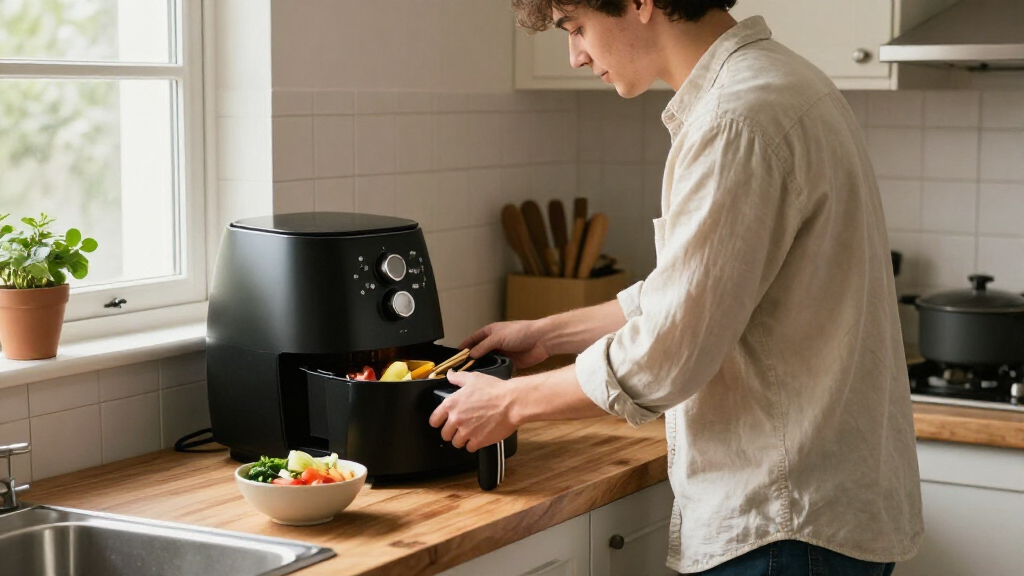
A compact air fryer needs more than its listed footprint: you need access to its drawer and the ventilation clearance specified by the manufacturer. Measure the width, depth, and height of the appliance, then check the space it occupies with the basket pulled out. A unit that tucks neatly under a cabinet when off may need to sit farther out during cooking, depending on its instructions.
Suppose your only free counter spot is beside a painted cabinet. Hot air escaping from the rear or top could affect nearby surfaces if the appliance sits too close, so follow the placement guidance and keep vents clear. Avoid placing it where the hot exhaust blows toward a wall, curtain, or other heat-sensitive material. The right position may be a little less convenient, but it can make daily use safer and less cramped.
Include storage in your measurements if the fryer will live in a cupboard between meals. Check its weight and shape: a bulky unit you must lift over stacked pans may stay on the counter simply because moving it is a chore. Also check the cord route and manufacturer’s electrical guidance; use a suitable outlet and avoid blocking vents with other appliances or stored items.
- Measure the counter space, including room to pull out the basket.
- Read the required clearance and placement instructions for the model.
- Check storage access, weight, and cord reach before deciding where it will live.
- Test the spot during cooking and keep hot air away from cabinets and walls as directed.
These steps are especially useful in a galley kitchen, where a few centimeters can determine whether you can still chop vegetables beside the appliance.
Compare the features you will use every week
Useful controls and easy cleanup can matter more than a long preset list. A clear temperature setting, a timer you can read across the counter, and a drawer that feels sturdy all affect daily use. Presets can save a few button presses, but food thickness, starting temperature, and how full the basket is still affect cooking time. Check the food rather than treating a preset as a guarantee.
Picture reheating breaded tofu after work. You want a timer that is easy to adjust, a basket you can shake without fumbling, and a tray that releases crumbs without a wrestling match. A pause function or shake reminder may help, while a viewing window can let you check browning without opening the drawer. Those extras are pleasant when they solve a real problem; they are less compelling if they add cost or make cleaning harder.
Compare the appliance as a whole, including warranty, replacement-part availability, basket coating, and how the drawer slides. Some parts may be dishwasher-safe, but verify the manual before washing them that way. Grease and crumbs can build up around the basket and heating area, so look for accessible surfaces and follow the manufacturer’s cleaning instructions.
Compact models can make some noise from their fan and release heat while operating. If you cook in a small, open-plan kitchen, think about whether that sound will interrupt a quiet call or whether the exhaust will warm the nearby area. Smaller footprints and easier-clean components are recent design priorities, but features differ by model and can change with new releases.
- Pay for: controls you can read, a drawer that moves smoothly, and parts that are straightforward to clean.
- Check carefully: viewing windows, connected controls, dual zones, and oven-style shelves; each may add bulk or cleaning effort.
- Verify: current dimensions, warranty terms, and part availability before comparing prices.
Get crisp results without crowding the basket
Food browns more reliably when you leave room for airflow, keep an eye on cooking, and adjust for your particular appliance. If your first batch comes out pale, the cause may be a crowded basket or pieces with different thicknesses—not a missing preset. A compact air fryer can be quick and convenient, but results vary by model and food.
Take a weeknight portion of frozen potato wedges. Arrange them with a little space, start with the package directions as a reference, and check their color partway through. Shake the basket if appropriate for that food and appliance. If the center remains soft while the edges brown, use a smaller batch next time instead of simply adding more time to an overcrowded load.
Air frying can use less added oil than deep frying, but it does not make food identical to deep-fried food. A light coating of oil can help some foods brown, while oil-heavy or wet batters may not behave as expected. For leftovers, the circulating heat can revive a crisp surface; a microwave is still useful when you want to heat soup or soften food quickly.
Do you need to preheat? Follow your appliance’s instructions and the recipe: some foods cook well from a cold start, while a preheated basket may help a particular recipe brown sooner. Keep parchment or foil from blocking airflow or contacting the heating element, and use these materials only when the manufacturer allows them. That small check can prevent a paper liner from lifting into the hot element.
When food lacks crunch, change the arrangement before blaming the appliance. A thinner, more open layer often gives hot air a better path across the food.
Test a familiar food first, such as a small batch of frozen chips, then use what you learn to adjust portions and timing. That gives you a dependable starting point for your own kitchen.
Decide whether a small model suits your whole meal
A compact fryer suits your household best when its capacity matches your usual portions and its counter demands fit your routine. It can be especially handy for one person, a couple, or anyone who wants to crisp a side dish without heating a full oven. When more people sit down together, the smaller basket may mean multiple rounds and a longer wait.
Consider a couple sharing a small kitchen: one partner puts a portion of seasoned chickpeas in the fryer while the other uses the hob for rice. That split keeps the pan free and produces a browned, crunchy topping. Now imagine serving four people fries and vegetables at once. If the baskets require separate batches, you will need to plan the sequence or keep the first batch warm in a way suitable for the food.
Compare convenience with the space you give up. A countertop model may be quicker for a modest portion than heating a large oven, but energy use depends on the appliance, recipe, batch size, and cooking time. Check the wattage and product guidance, and compare your real use rather than assuming every air fryer saves energy. A microwave will still handle liquids and quick reheating; a toaster oven may be more flexible for foods that need a flat tray.
Some compact air fryers are designed to appeal to people who want crisp food while keeping appliances small. That can make them a strong fit for a dorm kitchen or a narrow rental counter, but only if the usable basket still handles your favorite foods. Think back to the suitcase analogy: a neat exterior does not help if your everyday essentials do not fit inside.
Write down three meals you actually make in a typical week and see whether the basket suits them. If it does, the compact footprint can earn its place. If each meal requires several batches, a larger oven or another appliance may serve you better.
Frequently Asked Questions
What size compact air fryer works for one person or a couple?
Start with the food you cook most often, then check whether it fits in the basket with room for airflow. A small model can suit snacks or one serving; a couple may prefer a wider basket for two portions. Listed quarts or liters help with comparison, but do not show the basket’s usable shape.
How much counter space and ventilation clearance does it need?
Measure the appliance and the space needed to pull out its basket, then follow the manufacturer’s clearance and placement instructions. Keep vents open and route hot air away from cabinets, walls, and heat-sensitive items as directed. The right amount of clearance varies by model.
Can a compact air fryer cook a whole chicken or full meal?
Some compact models cannot fit a whole chicken or a full meal, so check the basket’s dimensions and manufacturer guidance for the food. Small portions and sides are more typical uses. A larger meal may require batches, which adds cooking time.
Does air-fried food taste like deep-fried food?
Air-fried food can brown and crisp, but it does not taste exactly like deep-fried food. The appliance circulates hot air, often with little added oil, rather than immersing food in oil. Spacing food out can help it crisp; overcrowding tends to soften it.
Should I shake the basket or preheat the air fryer?
Follow the recipe and your appliance’s instructions. Shaking or turning food partway through can improve browning when the pieces benefit from it. Some recipes may benefit from preheating, while others can start from a cold basket; check the food as it cooks.
Are parchment paper and foil safe to use in the basket?
Use parchment or foil only if the manufacturer allows it, and do not let it block airflow or touch the heating element. A loose liner can lift in the fan’s airflow. Follow the appliance manual for placement and safe use.
Conclusion
Choose the smallest air fryer that still fits the meals you make most often. Measure its working space, check the basket against a familiar dinner, and read the placement and care instructions before it arrives. A few minutes with a tape measure can save you from a bulky appliance that crowds the counter or a tiny drawer that turns dinner into a series of batches.
When the fit is right, you get browned edges, a free patch of counter, and less guesswork at mealtime. Let your everyday food—not the word “compact”—decide which model belongs in your kitchen.