TL;DR
A turkey roasting pan is an oven-safe pan large enough to hold a whole turkey with room for airflow, drippings, and safe handling. Measure both your oven and bird, compare sturdy materials and secure handles, and choose a rack or vegetable bed based on how you want the turkey to roast. Check the manufacturer’s temperature and care instructions before cooking or making gravy.
A turkey can look perfectly settled in the store and still turn a roasting pan into a balancing act: the handles catch the oven rack, the bird crowds the sides, and a wave of hot drippings sloshes when you pull it out. A good pan prevents much of that trouble. It gives the turkey a stable place to roast and gives you a safer way to handle the heavy bird.

Get kitchen gear delivered free with Prime
- Fast, free delivery on millions of items
- Prime Video, Amazon Music and more included
- Member-only deals all year
This guide explains how to match turkey roasting pans to your bird and oven, what materials and racks actually change, and which details matter when the pan is full and hot. You’ll also get a simple measuring process, practical cleanup advice, and ways to use the pan for more than Thanksgiving.
The goal is straightforward: choose a pan that is large enough to hold a whole turkey without crowding your oven, but not so oversized that drippings spread thinly and burn. A few measurements now can mean steadier roasting, richer gravy, and fewer tense moments at the oven door.
Measure your oven rack and include the roasting pan’s handles in the fit check.
Choose a pan that leaves room around the turkey; an oversized base can let drippings spread thinly and scorch.
A rack lifts the bird above the juices, while vegetables can provide a flavorful raised bed.
Check the pan’s temperature rating and cooktop compatibility before broiling or making stovetop gravy.
Cool the pan before cleaning, follow its care instructions, and use a thermometer to check turkey doneness.
Choose a pan that fits your turkey and oven
A turkey roasting pan should hold your bird without letting it touch the sides, while still leaving enough space in the oven for heat to move around it. The pan also needs to sit level on your oven rack, including its handles. Measure the oven opening and interior rack before shopping, then compare those dimensions with the pan’s full outside width and length.
Picture a 16-pound turkey in a pan that barely clears the oven walls. You might be able to slide it in, but the handles could catch, and the bird may sit close enough to the sides to crowd airflow. A pan with a little clearance is easier to use; one that is enormous can create another problem, since drippings spread thinly over a broad base and may scorch.
For a practical fit check, measure the bird at its widest point and leave some space around it for air and handling. Check the manufacturer’s listed dimensions rather than relying on a label such as “large.” A safe pan large enough to hold your turkey still needs to fit your oven, and your hand should be able to grip the handles without brushing the hot door or rack.
- Measure the oven rack and interior width, not just the doorway.
- Include handles in the pan’s outside dimensions.
- Check the turkey’s width and length, including any legs that stick out.
- Leave room for airflow and for lifting the pan level.
That last check matters most on serving day. A pan that fits on paper but forces you to twist your wrists around a hot oven frame is a poor fit in real life.
Products Worth Considering

KitchenAid NSF Certified Commercial Series 8-Qt Bowl-Lift Stand Mixer, KSM8990

Cuisinart Chef's Classic Stainless Steel Cookware Set, 11-Piece

De'Longhi Magnifica Evo Automatic Espresso Machine with Milk Frother, Silver
As an affiliate, we earn on qualifying purchases.
Pick a material that matches how you cook
Stainless steel, aluminum, enameled steel, cast iron, and nonstick each suit different cooks. Stainless steel offers durability and broad everyday use; aluminum heats quickly but can react with acidic foods unless coated or anodized. Enameled steel and cast iron hold heat well, though their weight can make a loaded pan harder to lift. Nonstick can release food easily, but its coating calls for careful handling and may have a lower temperature limit.
Think about the moment after roasting, too. If you want to deglaze the pan on a burner for gravy, confirm that the pan works on your cooktop. A stainless pan might suit that job if the maker approves burner use; an oven-safe label alone does not mean a pan can go on a stovetop. Someone who mainly wants easy release and washes by hand may prefer nonstick, provided the recipe stays within the coating’s temperature rating.
Construction counts alongside material. A thick, rigid base is less likely to warp under high heat, and solid handles feel more reassuring than thin ones when the pan carries a turkey and vegetables. If you are comparing two pans, lift them empty in the shop and imagine carrying each one full. Weight and handle shape matter most when the bird is hot, the drippings are moving, and you have oven mitts on.
There is no one material that wins every kitchen. Choose based on your bird size, storage space, cleanup habits, and whether you want to use the same pan for gravy or other large roasts.
Decide whether a rack or vegetables belong under the bird
A roasting rack raises the turkey above the pan so hot air can circulate underneath and the bird does not sit directly in its drippings. A V-shaped rack cradles the turkey, while a flat rack can work with other roasts or foods. You can also roast the bird on vegetables, which provide a raised bed and add flavor to the juices.
For example, scatter chopped onion, carrot, and celery across the bottom of a sturdy pan, then set a 12-pound turkey on top. The vegetables lift much of the bird above the pan floor and soak up savory drippings as they soften. If you want more even access to the underside, or plan to strain the juices cleanly for gravy, a rack may be more convenient.
A rack is useful, but it is not mandatory. If your pan has no rack, a bed of vegetables can do the job; if you skip both, watch for the turkey sitting in liquid as it cooks. Avoid piling vegetables so high that they crowd the bird or block air from moving around the pan. Also check whether a removable rack is dishwasher-safe and whether it fits the pan securely.
Simple rule: Use a rack to lift the turkey cleanly above its juices; use vegetables when you want a flavorful base and don’t mind a softer, more rustic result.
On a busy holiday, a rack can make it easier to lift the turkey out before you start gravy. On an ordinary Sunday, vegetables under a smaller roast may save you from washing another piece of equipment.
Use this quick checklist before you buy
Before buying turkey roasting pans, check fit, structure, handles, temperature limits, and care instructions. These details answer the practical question behind “Which one should I get?”: can you cook your usual bird, move the pan safely, and clean it without damaging the finish? A shiny coating or included baster matters less if the pan cannot fit your oven.
- Measure first. Write down your oven’s rack dimensions and compare them with the pan’s outside measurements, including handles.
- Match the bird. Check that your largest likely turkey fits without touching the sides. Leave some clearance for air and handling.
- Check the base and handles. Look for a rigid base and handles that feel secure. Make sure you can grip them with oven mitts.
- Confirm the heat rating. If you plan to use the broiler or make gravy on a burner, verify the specific pan’s temperature limit and cooktop compatibility.
- Review the care label. Find out whether the pan and rack can go in the dishwasher and what tools are safe for the surface.
Say your family usually cooks a 14-pound turkey, but your oven is a compact model. You could choose a pan sized for that bird and oven, then use a rimmed sheet tray to support a disposable aluminum pan if you are roasting a larger bird for a gathering. That backup makes a thin pan easier to carry, though it does not replace checking oven clearance or safe handling.
Current designs may include removable racks, induction-compatible bases, dishwasher-safe parts, lifters, or basters. Treat these as useful extras, not proof of quality. Product details vary by brand, so read the specifications before buying.
Roast and move the pan without spills
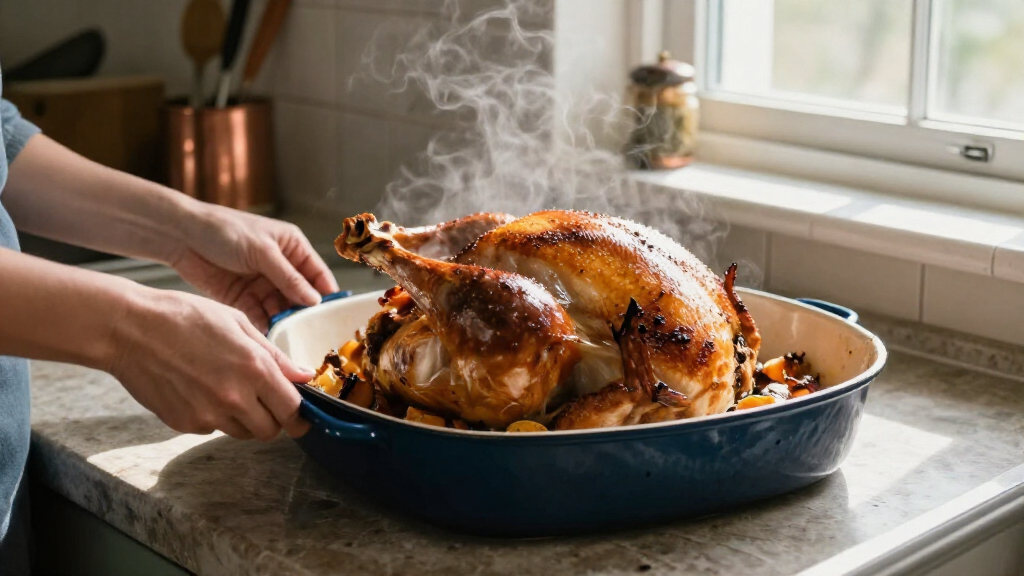
To handle a roasting pan safely, keep the bird and liquid load within the pan’s capacity, use oven mitts, and move the pan level with both hands. A turkey and its drippings can make the load heavy and awkward, especially if the pan has tall sides or a long reach from oven rack to counter. Make room on a heat-safe surface before you take the pan out.
A cook who adds several cups of broth, a mountain of vegetables, and a turkey to a pan may find that the contents slosh when the pan tilts. Most roasting needs little or no added liquid, although a recipe may call for some. If you add liquid, keep it below the rack and leave enough space to avoid overflow as the turkey releases juices.
Use a meat thermometer to check doneness rather than relying only on timing or browned skin. Timing varies with bird size, oven behavior, and recipe, while appearance cannot tell you the internal temperature. When the turkey is done, lift it with suitable tools and set the roasting pan down before you start handling hot drippings.
Safety note: A full roasting pan is hot, heavy, and easy to tip. Wear dry oven mitts, clear your path, and ask another adult to help if you cannot keep the load level.
If you plan to make gravy in the roasting pan, check that the manufacturer approves stovetop use and that the pan suits your burner. Do not assume oven-safe means stovetop-safe. For gas, electrical, structural, or roof work around a kitchen renovation, use a licensed professional; switch off power before electrical work and follow appropriate PPE and permit requirements.
Keep cleanup simple and get more use from the pan
Let the pan cool before washing, then soak stuck-on drippings in warm water with a little dish soap. Loosen browned residue with a nonabrasive sponge or tool that suits the pan’s surface. A 15-minute soak often softens the sticky brown bits left after gravy, while harsh scrubbing can scratch nonstick or damage some enamel finishes.
For instance, if the pan has a dark, caramelized layer after roasting, fill it with warm soapy water while you serve dinner. Once the residue loosens, scrape gently and rinse. Avoid a sudden temperature change, such as pouring cold water into a scorching hot pan; some materials and finishes can suffer from thermal shock.
Check the care instructions before putting the pan or rack in the dishwasher. Some models allow it, but dishwasher detergents and heat can affect certain finishes. A stainless-steel pan may handle years of regular use, while a coated surface benefits from gentler utensils and cleaning. Care varies by model, so the manufacturer’s directions are the useful guide.
A turkey pan can earn its shelf space beyond one holiday meal. Use it for a large roast, ham, a tray of vegetables, or a baked dish when its dimensions and temperature rating suit the recipe. If storage space is tight, a removable rack and a versatile pan may be more useful than a multi-piece set with accessories you rarely reach for.
Frequently Asked Questions
What size roasting pan do I need for my turkey?
Choose a pan that holds the turkey without the bird touching the sides, then confirm the pan sits level in your oven with room around it. Measure the oven rack and include the pan’s handles; a label such as “large” does not tell you whether it will fit.
Do I need a roasting rack?
No. A rack lifts the turkey so air can circulate beneath it and keeps it above the drippings. A bed of onion, carrot, and celery can work too, and it adds flavor to the juices.
Is stainless steel or nonstick better for turkey roasting?
Stainless steel is durable and can suit cooks who want a versatile pan, while nonstick can make food release and cleanup easier. Check each pan’s construction, temperature rating, and care instructions; the coating and design matter as much as the material label.
Can I use my roasting pan on the stovetop to make gravy?
Only if the manufacturer says the pan is safe on your type of cooktop. An oven-safe pan is not automatically stovetop-safe, so check compatibility before setting it on a burner.
Can I roast a turkey in a disposable aluminum pan?
It is possible, but a thin disposable pan can bend under a heavy turkey. Set it on a rigid baking sheet or support it with a sturdy pan when moving it, and make sure the full setup fits your oven.
How do I clean burnt-on drippings?
Let the pan cool, then soak it in warm water with dish soap to loosen residue before using a nonabrasive tool. Follow the manufacturer’s guidance, especially for nonstick coatings and enamel, and avoid sudden temperature changes.
Conclusion
Choose the pan around the bird you cook and the oven you own: measure first, check the handles, and match the material to your cooking and cleanup habits. A rack, sturdy base, and clear care instructions can make the difference between calm gravy-making and a hot, wobbly mess.
When the turkey comes out golden and the kitchen smells of roasted herbs, you want your attention on dinner—not on whether the pan can make it safely to the counter.