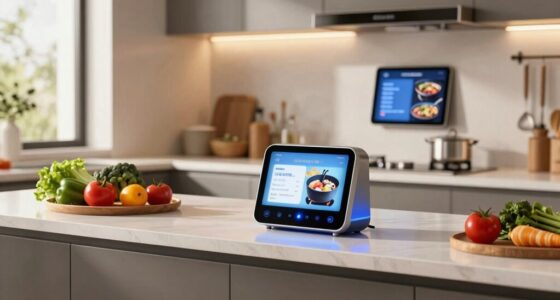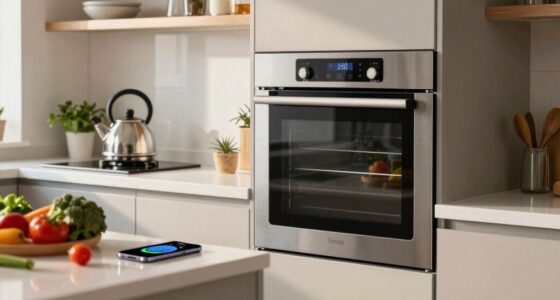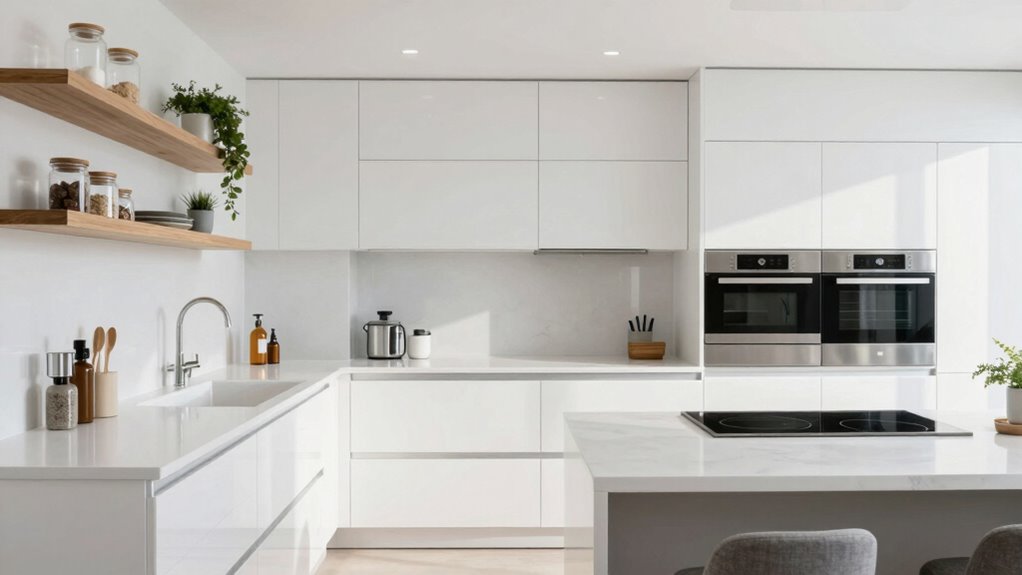

A fully connected kitchen feels seamless and intuitive. You control appliances with voice commands, like asking the oven to preheat or checking if the fridge needs groceries. Your appliances communicate with each other and adapt to your routines, making cooking and cleaning easier. Smart lights dim automatically, and notifications keep you informed about expiration dates or energy use. To see how this smart space transforms your home, keep exploring what’s possible in a connected kitchen.

Get kitchen gear delivered free with Prime
- Fast, free delivery on millions of items
- Prime Video, Amazon Music and more included
- Member-only deals all year
Key Takeaways
- Appliances communicate seamlessly via a central hub or app, enabling real-time coordination and control.
- Voice commands activate and adjust appliances, eliminating manual switches and enhancing hands-free convenience.
- Smart devices personalize settings by learning routines, optimizing energy use and meal preparation over time.
- Refrigerators, ovens, and dishwashers automatically track, suggest, and adapt based on user habits and inventory.
- The kitchen environment is enhanced with smart lighting and notifications, creating an intuitive, efficient space.

Have you ever wondered what a fully connected kitchen looks like in real life? Imagine walking into a space where everything seems to work seamlessly together, making your daily routines smoother and more efficient. That’s the essence of a smart kitchen — a place filled with smart appliances that communicate with each other and respond to your commands effortlessly. Instead of manually turning on appliances or searching for the right settings, you can control everything with simple voice commands, making your experience more intuitive and hands-free.
In this modern kitchen, smart appliances are the backbone of connectivity. Your refrigerator not only keeps your food fresh but also tracks what’s inside, suggests recipes, or even orders groceries automatically when supplies run low. The oven heats up to the perfect temperature based on the recipe you select, and smart dishwashers optimize water and energy use, adjusting their cycles to fit the load. These appliances are designed to sync through a central hub or app, creating a network that feels like it’s alive and responsive to your needs.
Voice control elevates the convenience factor in a fully connected kitchen. Instead of reaching for a device or tapping buttons, you speak naturally to activate or adjust appliances. Want to preheat the oven while you’re still putting away groceries? Just say, “Hey [Assistant], preheat the oven to 375 degrees.” Need to check if you left the coffee maker on? A quick voice command can confirm its status or turn it off. This hands-free approach not only saves time but also reduces clutter, allowing you to focus more on cooking or socializing rather than fiddling with switches and screens.
The beauty of a fully connected kitchen lies in its ability to learn and adapt. Over time, your smart appliances can recognize your routines and preferences, adjusting settings automatically. Perhaps the coffee maker brews your coffee at the usual time, or your smart lights dim as you start cooking dinner. You might even receive notifications about expiration dates or energy consumption, helping you make smarter choices every day.
All these features come together to create a kitchen that’s as intelligent as it is functional. It’s a space where technology responds seamlessly to your voice and commands, making your life easier and more enjoyable. A fully connected kitchen isn’t just about fancy gadgets — it’s about transforming your home into a smarter, more efficient environment that adapts to your lifestyle.
smart refrigerator with inventory tracking
As an affiliate, we earn on qualifying purchases.
As an affiliate, we earn on qualifying purchases.
Frequently Asked Questions
How Much Does a Fully Connected Kitchen Typically Cost?
A fully connected kitchen typically costs between $15,000 and $50,000, depending on the level of smart appliances and automation you choose. You’ll invest in smart refrigerators, ovens, lighting, and energy management systems that streamline cooking and reduce energy use. The more advanced and integrated the technology, the higher the cost. Keep in mind, this investment can boost convenience, efficiency, and long-term savings on energy bills.
What Are the Main Challenges of Maintaining a Connected Kitchen?
Like chasing the horizon, maintaining a connected kitchen presents ongoing challenges. Voice control systems can be tricky, often misinterpreting commands or losing connectivity. Ensuring energy efficiency demands constant monitoring and adjustments, which can get overwhelming. You need to stay vigilant about security risks, software updates, and device compatibility. Balancing convenience with privacy and safety is essential, making maintenance a continuous effort—much like tending to a delicate, ever-evolving ecosystem.
Is a Fully Connected Kitchen Suitable for Small Homes?
A fully connected kitchen can work well in small homes if you prioritize smart appliances that save space and boost energy efficiency. These devices streamline your cooking and cleaning, making your space more functional without clutter. However, consider the initial cost and potential maintenance. If you’re tech-savvy and want convenience, a connected kitchen suits small homes, helping you manage routines more effectively while conserving energy.
How Secure Are Smart Kitchen Devices From Hacking?
Are smart kitchen devices secure from hacking? While they offer convenience, you should be aware of privacy concerns and hacking vulnerabilities. Manufacturers implement security measures, but no system is entirely foolproof. You can reduce risks by updating firmware regularly, using strong passwords, and enabling two-factor authentication. Staying vigilant helps protect your devices and personal data, making your connected kitchen safer and more reliable for everyday use.
Can Existing Kitchens Be Upgraded to a Fully Connected System?
Yes, you can upgrade your existing kitchen to a fully connected system. Start by integrating smart appliances that support seamless communication and automation. Use smart hubs or Wi-Fi-connected devices for centralized control. Customize voice commands to simplify tasks and enhance convenience. With these upgrades, your kitchen becomes more efficient and intuitive, allowing you to manage everything from cooking to cleaning with just a few voice commands or taps, making everyday routines smoother.
As an affiliate, we earn on qualifying purchases.
Conclusion
So, there you have it—your dream fully connected kitchen. Where every gadget chats, every screen nags, and your coffee knows when you’re awake. It’s the future, or maybe just a techie’s nightmare, depending on your Wi-Fi mood. Just remember, in this brave new world, your fridge might judge your snack choices, and your oven could be more social than your friends. Welcome to the kitchen of tomorrow—if you can keep up!
As an affiliate, we earn on qualifying purchases.
As an affiliate, we earn on qualifying purchases.
Halloween Picks
halloween
As an affiliate, we earn on qualifying purchases.