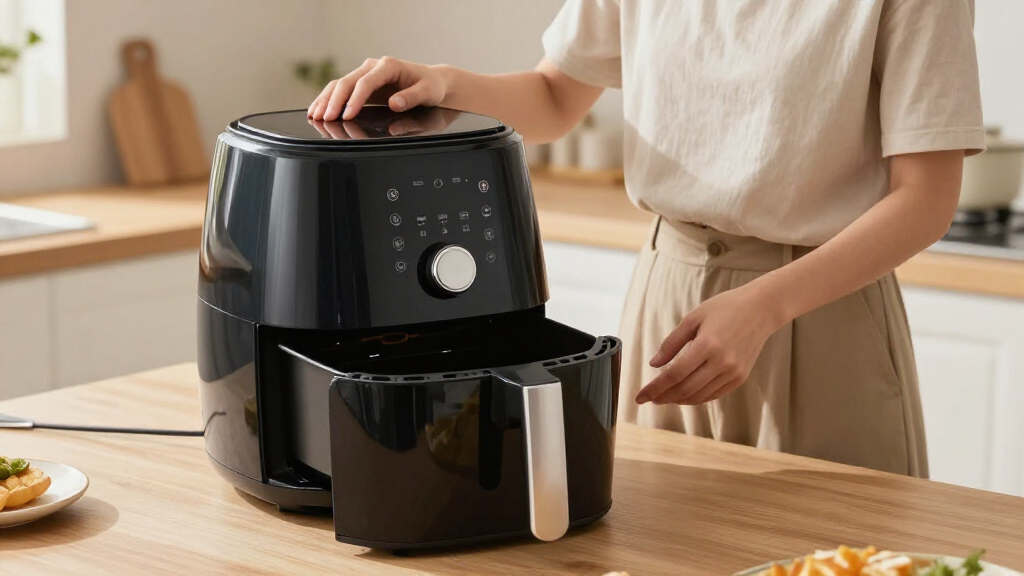
If you have a small kitchen, an air fryer is one of the few appliances that can genuinely earn its counter space: it crisps food faster than an oven, heats up in minutes, and often replaces a second burner. But the moment you start shopping, you hit the real decision — do you buy a compact basket-style air fryer (the classic drawer design, typically 2 to 4 quarts) or a small oven-style air fryer (a boxy countertop unit with shelves or racks, typically 6 to 10 quarts)?

Get kitchen gear delivered free — and shop member deals
- Fast, free delivery on millions of items
- Access to Prime Big Deal Days deals on October 6–7
- Prime Video, Amazon Music and more included
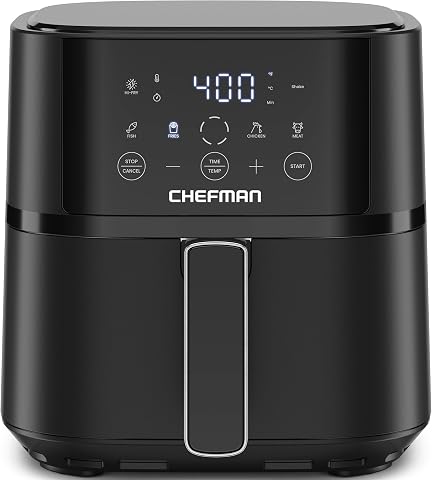
Chefman 4-Quart Compact Air Fryer
- ✔ Capacity: 4 quarts
- ✔ Power: 1500 W
- ✔ Maximum temperature: 450°F

Cosori TurboBlaze 9-in-1 Air Fryer, 6-Quart
- ✔ Capacity: 6 quarts
- ✔ Functions: 9-in-1
- ✔ Temperature range: 90°F–450°F

Chefman 2-Quart Digital Mini Air Fryer
- ✔ Capacity: 2 quarts
- ✔ Power: 900 watts
- ✔ Maximum temperature: 400°F
These two formats solve the same problem in opposite ways. Basket models are built around minimal footprint and fast, no-fuss cooking for one or two people. Oven models are built around capacity and versatility — toasting bread, roasting a small chicken, baking a pizza — but they demand more counter depth, more preheat patience, and usually more money. Neither is objectively better; the right answer depends almost entirely on how much space you can spare, how many people you cook for, and whether you want a specialist or an all-rounder.
In a small kitchen, every square inch of counter is currency. This comparison treats space as the central constraint and weighs everything else — capacity, speed, versatility, cleaning, noise, and price — against it. If you live alone or as a couple and mainly want crispy fries, reheated leftovers, and frozen snacks, the compact basket model is almost certainly your answer. If you cook for three or more, or you want to retire your toaster oven too, the oven-style model can justify its bulk. Here is how the two formats compare across the criteria that actually matter.
At a Glance
| Criteria | Compact basket air fryer (2–4 quart drawer style) | Countertop air fryer oven (compact oven-style model) | Winner |
|---|---|---|---|
| Counter footprint | Very small: roughly 10 x 8 inches, tucks into a corner or cabinet | Large: roughly 12–16 inches deep, needs dedicated counter space | A |
| Usable capacity | 2–4 quarts; fits 1–2 servings comfortably | 6–10 quarts; fits a whole batch, small chicken, or pizza | B |
| Cooking speed and preheat | Fastest: 2–3 minute preheat, cooks small batches quickly | Slower: 4–6 minute preheat, more volume to heat | A |
| Versatility | Air frying only, occasionally reheat or dehydrate on some models | Air fry, bake, roast, toast, broil, dehydrate, sometimes rotisserie | B |
| Crisping performance | Excellent on small batches; concentrated airflow | Very good but less concentrated; may need rack rotation | A |
| Cleaning and maintenance | Dishwasher-safe drawer and basket; one piece to wash | Multiple trays and crumb tray; more pieces to wash | A |
| Noise level | Moderate to loud; smaller fans spin fast | Quieter on average; larger, slower fans | B |
| Price and value | $40–$90 typical; strong value for solo cooks | $90–$180 typical; better value for families | Depends |
Chefman 4-Quart Compact Air Fryer
For most small-kitchen buyers, the Chefman 4-Quart hits the sweet spot that the other two models define from either side. It is sized to serve 2–4 people, which means it handles a typical couple’s dinner — or a small family’s side of fries — without the batch-cooking frustration of the 2-quart mini below it. At the same time, it avoids the cabinet-space demands of the 6-quart Cosori, making it the natural middle path.Its standout feature is the Hi-Fry setting, which pushes temperature to 450°F for the final two minutes of cooking. In practice, this is what separates soggy results from genuinely crisp skin-on chicken thighs or reheated pizza, and neither the smaller Chefman (which tops out at 400°F) offers an equivalent finishing boost. The touchscreen with four presets keeps operation simple, though buyers who want dehydration, proofing, or low-and-slow functions should look to the Cosori’s nine functions instead.The tradeoffs are real but reasonable. Four presets feels thin compared with the Cosori’s nine-in-one platform, and households of four-plus will still cook in batches. But for the buyer this product targets — someone who wants crisp results with minimal counter commitment — those limitations are acceptable compromises.
Pros:
- Hi-Fry setting boosts to 450°F for a genuinely crisp finish
- Dishwasher-safe nonstick basket and rack make cleanup effortless
- Compact footprint suits tight counters and shallow cabinets
- Automatic shutoff adds safety for distracted cooks
Cons:
- 4-quart capacity may be small for larger households
- Only four preset cooking functions limits versatility
Best for: Couples and small households who want full-size crispiness without a full-size appliance
Not ideal for: Larger families or cooks who want multi-function versatility beyond air frying
Bottom line: The most balanced pick here: enough capacity for real meals, small enough to stay out of the way.
“The most balanced pick here: enough capacity for real meals, small enough to stay out of the way.”
Cosori TurboBlaze 9-in-1 Air Fryer, 6-Quart
The Cosori TurboBlaze is the pick for people whose kitchens are small but whose ambitions are not. Its 6-quart square basket is the largest capacity in this lineup — roughly 50% more than the Chefman 4-Quart — which means a whole cut-up chicken or a full sheet of vegetables fits in a single batch. If you regularly cook for three or more and hate the multi-batch workflow a smaller basket forces on you, this is the model that solves it.It is also the most technically capable machine here. The 90°F–450°F temperature range combined with five fan speeds up to 3600 rpm enables far more than crisping — the low end opens up dehydrating, proofing, and gentle reheating that the Chefman models simply cannot do. Add the PFAS-free ceramic coating, which health-conscious buyers increasingly prioritize, and a sub-53 dB noise level that makes it noticeably quieter than typical basket fryers, and the feature case is strong.The catch, in a small-kitchen context, is unavoidable: it is the biggest and heaviest option on this list, and it will claim meaningful counter or cabinet real estate. Compared with the 4-quart Chefman, you are trading storage convenience for capacity and versatility. That trade is worth it for families — and wrong for someone whose counter is already at capacity.
Pros:
- 6-quart square basket handles family portions in a single batch
- 90°F–450°F range and five fan speeds enable versatile cooking
- PFAS-free ceramic basket and crisper tray are dishwasher-safe
- Quieter operation at under 53 dB
Cons:
- Largest footprint of the three — demands real counter or cabinet space
- More capacity (and likely cost) than solo cooks or couples need
Best for: Small kitchens that still need to feed a family in one batch
Not ideal for: Studio apartments or one-to-two-person households with minimal counter space
Bottom line: The most capable machine here, provided your kitchen can absorb its size.
“The most capable machine here, provided your kitchen can absorb its size.”
Chefman 2-Quart Digital Mini Air Fryer
When we say small kitchen, this is the machine that takes the phrase most literally. At roughly 10 x 10 inches and under six pounds, the Chefman 2-Quart Mini fits where no other air fryer on this list can: a dorm desk, an RV shelf, a studio’s single free cabinet. It is the only option here that can live in a drawer between uses without becoming a project to retrieve.Despite its size, it does not feel stripped down. The touch control panel, digital timer, and shake reminder give it the same user-friendly feel as its 4-quart sibling, and the dishwasher-safe square basket uses space more efficiently than round designs. For one person cooking chicken tenders or roasted vegetables for tonight, it does the job with little to no oil.The limitations are simply mathematical. Two quarts serves one to two people per batch, so cooking for guests means queueing rounds of food while the first portions cool. And its 900-watt heating element with a 400°F ceiling — no Hi-Fry boost here — means it crisps adequately but not at the level of the 1500-watt Chefman above. It is a compromise pick, but for the tightest spaces, it is the only one of the three that makes sense.
Pros:
- Genuinely tiny footprint stores in a cabinet or drawer
- Dishwasher-safe square basket maximizes usable space and simplifies cleanup
- Shake reminder and automatic shutoff add convenience and safety
- Uses little to no oil for everyday cooking
Cons:
- 2-quart capacity limits you to one or two servings per batch
- 900 watts and a 400°F ceiling mean slower, less crisp results than larger models
Best for: Solo cooks, students, and RV or studio-apartment dwellers with almost no spare space
Not ideal for: Couples who cook full meals together or anyone who entertains
Bottom line: The right choice when space is the constraint that decides everything else.
“The right choice when space is the constraint that decides everything else.”
As an Amazon Associate we earn from qualifying purchases.
Key Differences
The core difference is what each format does with space. A compact basket air fryer occupies roughly the footprint of a large coffee mug cluster — around 10 by 8 inches — and can live in a cabinet between uses, only needing clearance when running. An oven-style air fryer is a box that lives on your counter permanently: expect 12 to 16 inches of depth and several more inches of rear and top clearance for ventilation. In a small kitchen, this is often the deciding factor before cooking performance even enters the conversation. If your counter is already crowded or your outlets are scarce, the basket model is the only format that fits your life without a fight.
The trade you make for that footprint is capacity and versatility. A 3-quart basket comfortably cooks for one or two people, but feeding three or four means cooking in shifts — fries get cold while the chicken finishes. A compact oven model handles a full sheet of vegetables, a small roast chicken, or a frozen pizza in one pass, and it genuinely replaces a toaster oven, which can actually reduce total appliance count in a small kitchen. That is the strongest argument for the oven format in tight quarters: if you already own a toaster oven, swapping it for an air fryer oven costs you zero net counter space while adding capability.
Performance differences are real but smaller than marketing suggests. Basket models concentrate hot air in a small chamber, so small batches crisp faster and more evenly — often with no preheat at all. Oven models heat a larger volume, so they take longer to reach temperature, and the food closest to the heating element browns first; expect to rotate trays or shuffle food mid-cook. Both produce good results, but the basket wins on speed for small portions, while the oven wins on consistency for large, mixed meals. Cleaning also favors the basket: one drawer, one basket, both usually dishwasher-safe, versus multiple racks, a drip tray, and interior walls that collect grease spatter.
Detailed Comparison
Counter footprint and storage (Compact basket air fryer (2–4 quart drawer style) wins — major)
This is the criterion that defines the comparison. A compact basket air fryer occupies roughly 10 by 8 inches of counter and stands about a foot tall; it is light enough to lift into a cabinet or pantry between uses, and many owners store it that way. An oven-style air fryer needs 12 to 16 inches of depth, a wide footprint, and — critically — several inches of clearance behind and above it for airflow, which means it cannot safely live under a cabinet overhang or tucked against a wall while running. If your kitchen has one small stretch of free counter and a cabinet above it, the oven model may simply not be installable. This gap is not a preference question; it is a physical constraint, and it is the most common reason buyers return oven-style units.
Usable capacity (Countertop air fryer oven (compact oven-style model) wins — major)
Oven models win decisively here. A 6-to-10-quart oven model fits four servings of fries, a batch of wings for three people, a small whole chicken, or a personal pizza on multiple racks. A 2-to-4-quart basket fits one to two servings well; push it to three and you overcrowd the basket, which blocks airflow and produces soggy results — the number one complaint from disappointed air fryer owners. In practice, capacity determines whether the appliance serves a household or just an individual. Note that advertised quart numbers on basket models can be misleading: ‘4 quarts’ includes the whole drawer, and usable food space is smaller than it sounds.
Cooking speed and preheat (Compact basket air fryer (2–4 quart drawer style) wins — moderate)
Basket models are the sprinters of the category. Their small chambers and powerful fans reach temperature in two to three minutes, and many recipes skip preheating entirely — you can go from freezer to crispy fries in under 15 minutes. Oven models need four to six minutes to preheat and hold heat less efficiently when you open the door mid-cook, resetting part of the timer mentally. For reheating leftovers or cooking a single portion after work, the basket model saves five to ten minutes per use, which compounds into the reason you reach for the appliance at all. An appliance that is fast gets used; one that feels slow drifts to the back of the cabinet.
Versatility and multi-function use (Countertop air fryer oven (compact oven-style model) wins — moderate)
Oven models win, and it is not close. A typical compact air fryer oven offers bake, roast, toast, broil, dehydrate, and sometimes rotisserie presets, effectively replacing a toaster oven and reducing your total appliance count. Basket models do one thing — air frying — plus reheating; a few add basic dehydrate or bake modes, but the drawer shape makes them awkward for toast, pizza, or anything flat and wide. The practical question: does your small kitchen already have a toaster oven? If yes, the oven-style air fryer consolidates two appliances into one and may actually free space. If no, you are adding a large single-purpose-ish box.
Crisping and cooking performance (Compact basket air fryer (2–4 quart drawer style) wins — minor)
Both formats produce genuinely crispy food, but they distribute their strengths differently. Basket models concentrate a strong airflow in a tight space, so small batches brown quickly and evenly with a mid-cook shake. Oven models use top and bottom elements plus a fan; results are good but less uniform, and food on the top rack browns faster, so you will rotate trays for even cooking. For one to two portions, the basket wins on speed and consistency. For a full tray of roasted vegetables or a batch of wings, the oven model holds temperature better across the load. The performance gap is real but modest — both formats outperform a conventional oven for crispness per minute.
Cleaning and maintenance (Compact basket air fryer (2–4 quart drawer style) wins — moderate)
The basket format is structurally easier to clean: one nonstick drawer and one basket, both removable and usually dishwasher-safe, plus an occasional wipe of the heating element area. Oven models accumulate grease on multiple racks, a drip tray, glass door interior, and the oven cavity itself — realistically ten minutes of scrubbing after a greasy session versus two for a basket. In a small kitchen without a dishwasher, this gap matters more than it sounds. Nonstick coatings also wear faster on oven racks subjected to metal utensils and repeated dishwasher cycles.
Noise level (Countertop air fryer oven (compact oven-style model) wins — minor)
Basket air fryers are loud — their compact, high-speed fans produce a sound often compared to a microwave on steroids, noticeable in a studio apartment where the kitchen is your living room. Oven models run quieter on average because their larger fans spin more slowly, though neither format is silent. If you cook while others sleep or take calls nearby, the oven model’s lower pitch is a genuine quality-of-life difference. For most buyers this is a minor factor, but in a small living space, ‘small kitchen’ often means ‘kitchen next to everything.’
Price and value (moderate difference)
Compact basket models cluster between $40 and $90 and routinely go on sale; a $60 basket unit from a reputable brand performs within a hair of premium models for basic air frying. Oven models run $90 to $180, with rotisserie and premium-brand versions pushing higher. The value calculation depends on what the price replaces: a $120 oven model that retires your toaster oven is better value than a $60 basket added alongside it. For solo cooks, the basket model delivers nearly all the benefit at roughly half the price. For households, the oven model’s cost-per-serving is lower despite the higher sticker.
Compact basket air fryer (2–4 quart drawer style): Pros and Cons
Pros:
- Tiny footprint; stores in a cabinet or corner when not in use
- Fastest cooking and preheat — ideal for weeknight portions and reheating
- Simple controls, minimal learning curve
- Easiest to clean: one dishwasher-safe drawer and basket
- Excellent crisping on small batches thanks to concentrated airflow
- Affordable: $40–$90 for capable, well-reviewed models
Cons:
- Capacity limits you to 1–2 servings; crowds and sogs beyond that
- Single function — no toasting, baking flat items, or rotisserie
- Loud operation noticeable in studio apartments
- Drawer shape awkward for pizza, toast, or wide foods
- Nonstick basket coatings wear over years of use
Countertop air fryer oven (compact oven-style model): Pros and Cons
Pros:
- Large usable capacity — full meals for 3–4 people in one pass
- Genuine multi-function: toast, bake, roast, broil, dehydrate, sometimes rotisserie
- Can replace a toaster oven, consolidating appliances
- Quieter operation with larger, slower fans
- Better heat retention for large or mixed loads
- Transparent door lets you monitor food without interrupting cooking
Cons:
- Large permanent counter footprint with ventilation clearance needs
- Slower preheat and longer overall cook times for small portions
- More parts to clean: racks, drip tray, glass door, cavity
- Requires tray rotation for even browning
- Higher price, typically $90–$180
- Heavy and awkward to move or store away
Who Should Choose What
Choose Compact basket air fryer (2–4 quart drawer style) if:
- You cook for one or two people most nights
- Your main use cases are frozen snacks, fries, reheated leftovers, and crispy vegetables
- Your counter space is nearly nonexistent or you plan to store the appliance in a cabinet
- You want the lowest total cost — both purchase price and electricity for small batches
- You value speed and simplicity over versatility
Choose Countertop air fryer oven (compact oven-style model) if:
- You regularly cook for three or more people
- You already own a toaster oven and can replace it, netting zero new counter space
- You want one appliance that also toasts, bakes, roasts, and dehydrates
- You cook whole chickens, pizzas, sheet-pan meals, or batch meal-prep portions
- You have a dedicated counter stretch with no cabinet directly above it
Skip both if: You cook large family meals most nights and have a full-size oven — a quality convection setting plus a wire rack achieves most air fryer results without new hardware. Likewise, if you rarely cook at all, either appliance becomes counter clutter within three months.
Value for Money
For solo and two-person households, the compact basket air fryer is the clear value winner: it delivers 90 percent of the air frying experience at roughly half the price of an oven model, uses less electricity per session, and costs you almost no kitchen space. Paying more than about $90 for a basic basket model buys marginal returns — bigger touchscreens, more presets, slightly better coatings — not better food. A well-reviewed $60–$80 basket unit is the sweet spot.
The oven model’s higher price is easier to justify through substitution than through features. If it replaces a $60 toaster oven you would otherwise buy or keep, the effective cost of the air-frying capability drops sharply, and the larger capacity lowers cost-per-meal for families. But if the oven model would sit alongside a toaster oven on a crowded counter, you are paying more money and more space for overlapping functions — a bad trade in a small kitchen. Pay the premium only if capacity or consolidation genuinely applies to you; otherwise, the basket model is better value for the majority of small-kitchen cooks.
Final Verdict
For most people shopping for a small kitchen, the compact basket air fryer is the right choice. It fits the defining constraint — space — better than any alternative, it cooks single and double portions faster than anything else on the counter, it cleans in two minutes, and it costs half as much. Choose a 3-to-4-quart basket model if you cook for one or two people and your priorities are fries, wings, reheated takeout, and weeknight vegetables; it will get used daily and never ask for counter space you do not have.
Choose the oven-style model under one clear condition: you cook for three or more people, or you can physically replace a toaster oven with it. In those cases its capacity and versatility are not luxuries but necessities, and it earns its footprint by consolidating two appliances into one. If neither condition applies, its size becomes a liability in exactly the kitchens this comparison is about.
The single deciding factor is honest counter math: measure your available space, including clearance above and behind, before you look at a single spec sheet. If the tape measure says you can only spare a corner, the decision has already been made — buy the basket.
Frequently Asked Questions
What size air fryer is best for a small kitchen?
For one or two people, a 3-to-4-quart basket model hits the sweet spot: small footprint, but enough room to cook two portions without overcrowding. Go below 3 quarts only if you are truly cooking single servings; go to an oven model only if you feed three or more and have the counter depth for it. Remember that advertised capacity includes the whole drawer, so a ‘4-quart’ unit holds less food than the number suggests.
Can an air fryer replace a toaster oven in a small kitchen?
An oven-style air fryer can, and doing so is one of the best small-kitchen moves — you consolidate two appliances into one box. A basket-style model cannot, because its drawer shape cannot toast bread or bake flat items well. If you currently own a toaster oven and use it regularly, an air fryer oven is a net-zero-space upgrade; if you do not, buying an oven model adds a large box to your counter.
Are air fryer ovens better than basket air fryers at crisping food?
Not for small batches. Basket models concentrate airflow in a compact chamber, so one or two portions crisp faster and more evenly. Oven models spread air across a larger cavity with racks, so top-shelf food browns first and you will rotate trays. For large loads, the oven model holds its own, but for the portions most small-kitchen cooks make, the basket wins.
How much counter clearance does an air fryer need?
Oven-style models typically need several inches of open space behind and above them for ventilation — never run one tucked under a cabinet overhang, as trapped heat damages both the appliance and the cabinet. Basket models also vent hot air from the back but can be pulled forward on the counter while running. Always check the manual’s stated clearances before buying; this is the most common reason oven models get returned.
Do small air fryers use a lot of electricity?
No — they are among the more efficient ways to cook. A compact basket model draws roughly 1,000–1,500 watts but runs for short periods, so a typical session costs a few cents and uses far less energy than heating a full-size oven for the same food. Oven-style air fryers draw more power but still beat a wall oven for small-to-medium meals.
Fall Picks
fall essentials
As an affiliate, we earn on qualifying purchases.



![Bread 🍞 [Bonnymama7]](https://thesmartsous.com/wp-content/uploads/2026/09/bread-bonnymama7-featured-260x140.jpg)