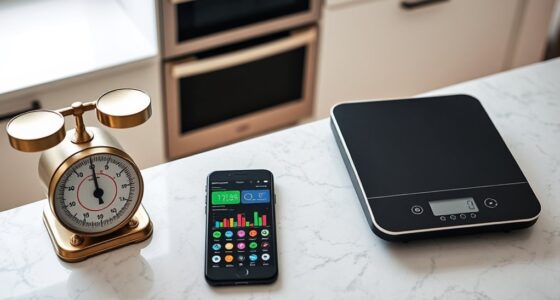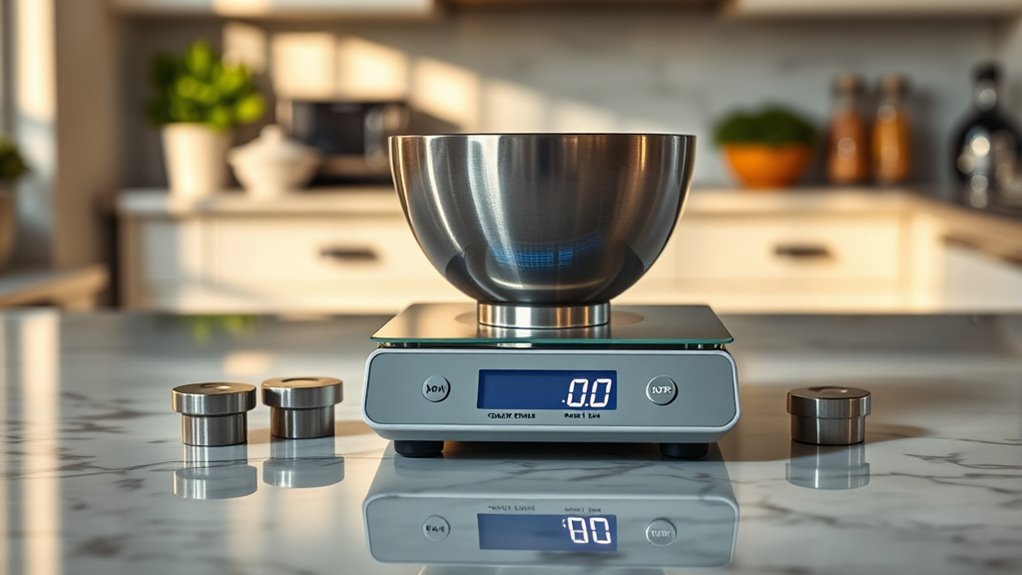
To guarantee your kitchen scale stays accurate, regularly calibrate it using known weights or calibration tools. For digital scales, enter calibration mode and follow prompts to verify accuracy, substituting calibration weights if needed. For analog scales, turn the calibration screw or dial to zero or a set mark. Always place your scale on a flat, stable surface and check it periodically. Keep these steps in mind, and you’ll master accounting for precision every time.
Open a free Amazon Business account
Business pricing, bulk buying and tax-exempt orders.
As an affiliate, we earn on qualifying purchases.
Key Takeaways
- Regularly verify your scale’s accuracy using known weights or calibration weights.
- Use the tare function to zero the scale after placing a container before measuring ingredients.
- Follow specific calibration procedures for digital scales, often involving calibration mode and weights.
- For analog scales, adjust the calibration screw or dial until the correct weight is displayed.
- Ensure the scale is on a flat, stable surface and calibrate after bumps or environmental changes for consistent accuracy.
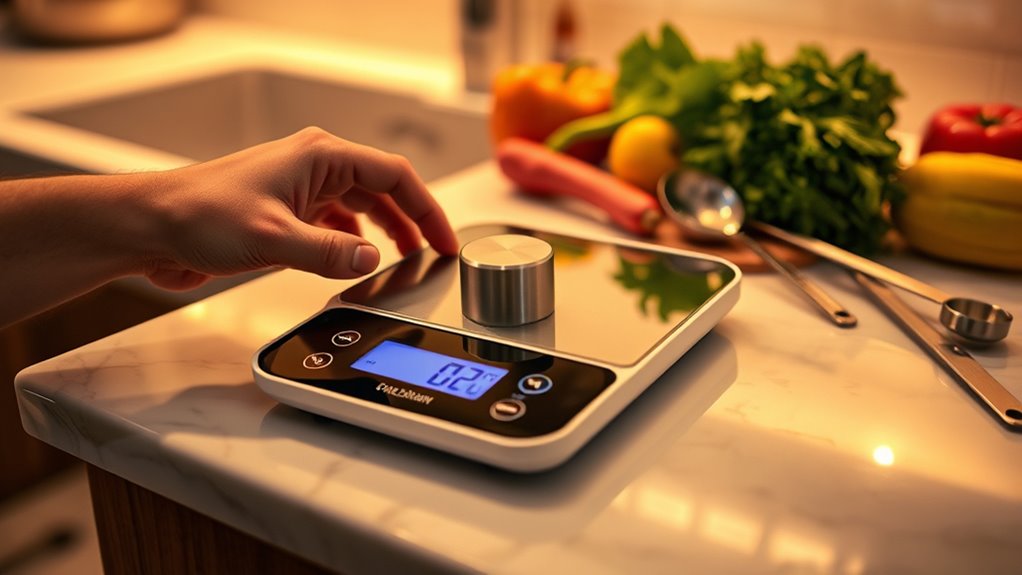
Have you ever wondered if your kitchen scale is accurate? It’s a common concern, especially when you’re trying to follow a recipe precisely or measure ingredients for baking. Ensuring your scale is correctly calibrated guarantees consistent results and prevents waste. Whether you have a digital or an analog scale, understanding how to calibrate it properly is essential. One key feature to familiarize yourself with is the tare function, which allows you to reset the scale to zero after placing a container or other items on it. This function is especially useful when you’re measuring multiple ingredients or need to account for the weight of a bowl. With digital scales, the tare function is typically a button you press once the container is on the platform, instantly resetting the display to zero. Analog scales, on the other hand, often require you to turn a dial or adjust a mechanical component to zero out the weight. Knowing how to use this feature correctly ensures you’re measuring only what you intend to, without the weight of the container skewing your results.
When it comes to calibration, digital scales tend to be more straightforward because they often have built-in calibration modes and require minimal effort to reset. Some digital models even come with calibration weights, making it easier to verify accuracy periodically. Analog scales, however, may need manual adjustments, like turning a calibration screw or knob, which can be a bit trickier. Regardless of your scale type, it’s essential to check its accuracy regularly—especially if you notice discrepancies or if it’s been bumped or dropped. Additionally, understanding the role of contrast ratio in projectors can help you appreciate the importance of accurate calibration in visual devices. To confirm your scale’s accuracy, use a known weight, such as a calibration weight or a package with a labeled weight. Place the weight on the scale, and if it doesn’t show the correct amount, you’ll need to recalibrate. For digital scales, enter calibration mode following the manufacturer’s instructions, then add the known weight to see if it registers correctly. If it doesn’t, use the calibration function to set it right. For analog scales, you might need to adjust the calibration screw or dial until the needle points to the correct weight on the dial. Keep in mind that environmental factors like temperature, humidity, or uneven surfaces can also affect your scale’s accuracy, so always place it on a flat, stable surface during calibration.
digital kitchen calibration weights
As an affiliate, we earn on qualifying purchases.
As an affiliate, we earn on qualifying purchases.
Frequently Asked Questions
How Often Should I Calibrate My Kitchen Scale?
You should calibrate your kitchen scale at least once a month to maintain accuracy, especially if you use it frequently. Follow proper maintenance tips by checking for any debris or damage and keeping it on a flat, stable surface. Always recalibrate after moving the scale or if you notice inconsistent readings. Regular calibration ensures precise measurements, helping you cook and bake with confidence.
Can I Calibrate My Scale Without Calibration Weights?
You can absolutely try DIY calibration without official weights—though it’s like trying to build a spaceship with kitchen tools! Use alternative weights like canned goods or small bags of sugar to check your scale’s accuracy. Place these on the scale, compare readings, and adjust if necessary. Just be cautious: inconsistent weights or uneven surfaces can throw off your calibration, making your DIY efforts more like a shot in the dark.
What Are Signs My Scale Needs Recalibration?
If you notice precision issues or inconsistent readings from your kitchen scale, it’s a sign you need to recalibrate. Your scale may give fluctuating measurements, or you might see significant differences when weighing the same item repeatedly. These signs indicate the scale’s accuracy has diminished, and recalibration will restore its accuracy. Regularly checking your scale helps ensure your measurements stay consistent and reliable for all your cooking needs.
Is Calibration Necessary for Digital and Analog Scales?
Yes, calibration is necessary for both digital and analog scales to guarantee measurement accuracy. Over time, factors like wear and tear can affect their precision. You should regularly perform calibration procedures, which involve using known weights to check and adjust your scale. This helps maintain consistent measurements, whether you’re measuring ingredients or other items, ensuring your scale provides accurate readings every time you use it.
How Do Temperature Changes Affect My Scale’s Accuracy?
Temperature fluctuations can impact your scale’s accuracy because material expansion occurs when temperatures rise, and contraction happens when they drop. These changes can cause slight shifts in the scale’s internal components, leading to inaccurate readings. To maintain precision, keep your scale in a stable environment, away from direct sunlight or drafts. Regular calibration helps counteract these effects, ensuring your measurements stay consistent despite temperature changes.
analog kitchen scale calibration screw
As an affiliate, we earn on qualifying purchases.
As an affiliate, we earn on qualifying purchases.
Conclusion
By regularly calibrating your kitchen scale, you keep it as reliable as a trusted compass guiding your culinary adventures. Think of calibration as fine-tuning a musical instrument—small adjustments lead to perfect harmony. When your scale stays accurate, your recipes turn out just right every time, transforming cooking into an art, not a guessing game. So, make calibration a habit, and let your kitchen be a space where precision and passion blend seamlessly.
As an affiliate, we earn on qualifying purchases.
As an affiliate, we earn on qualifying purchases.
Flea & tick season Picks
flea and tick prevention
As an affiliate, we earn on qualifying purchases.