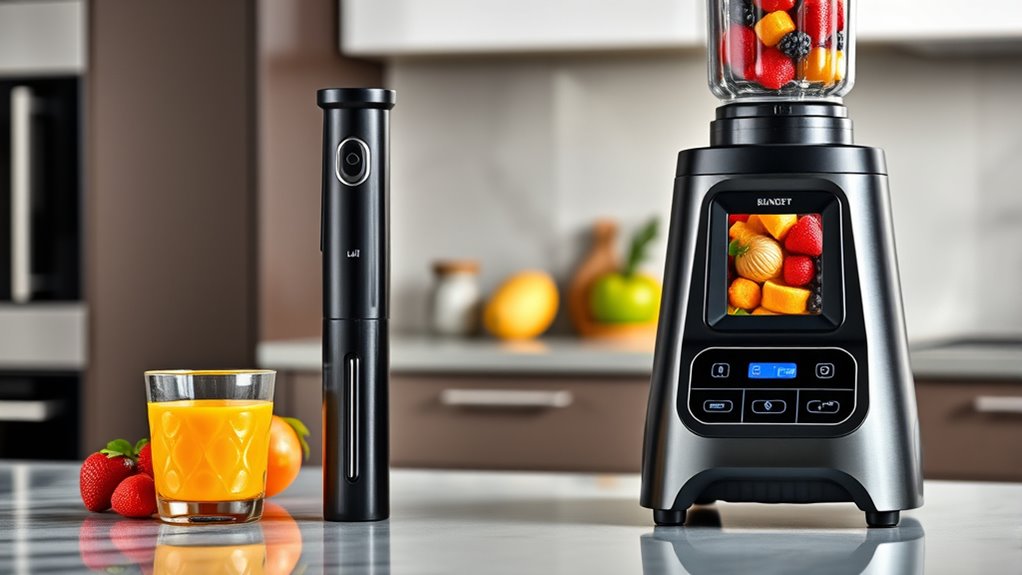

If you’re choosing between handheld immersion blenders and smart blenders, consider your needs. Handheld models are lightweight, easy to clean, and great for quick tasks like soups and smoothies, with motor power ranging from 100-300 watts. Smart blenders offer higher power and advanced features for complex recipes, plus larger size and more parts to clean. To find out which suits your kitchen best, keep exploring the differences and benefits of each option.
Key Takeaways
- Handheld immersion blenders are lightweight, simple to clean, and ideal for quick, small-batch tasks, while smart blenders are more powerful and feature-rich.
- Handheld blenders typically have lower wattage (100–300W) suitable for soft ingredients, whereas smart blenders often exceed 1000W for tough ingredients.
- Smart blenders come with preset programs, digital interfaces, and multiple functions, unlike the basic operation of handheld models.
- Cleaning handheld blenders is easier due to fewer parts; smart blenders may require more time for cleaning due to their multiple components.
- The choice depends on blending needs: handheld for convenience and speed, smart blenders for versatility and advanced features.
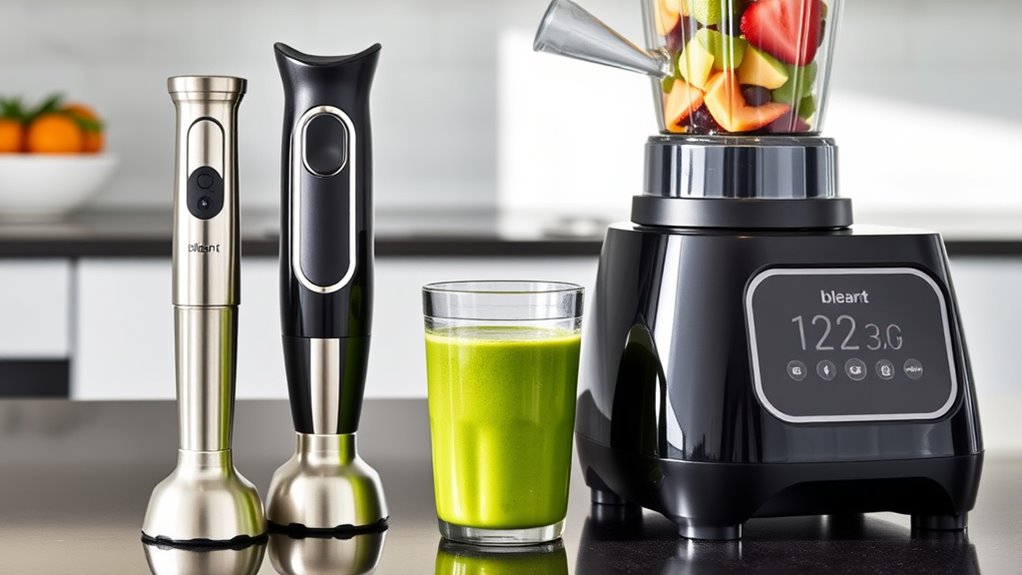
When choosing a blender, understanding the differences between handheld and smart models can help you make an informed decision. One of the key factors to evaluate is motor power. Handheld immersion blenders typically have smaller motors, usually between 100 to 300 watts, which are sufficient for blending soft ingredients, soups, or smoothies in small batches. Smart blenders, on the other hand, often boast more powerful motors, sometimes exceeding 1000 watts, allowing them to handle tougher ingredients like nuts, ice, or dense vegetables with ease. If you frequently need to blend heavy or frozen items, a smart blender’s increased motor power can save you time and effort, providing smoother results without straining the device.
The power capacity of the motor also influences the durability and longevity of the blender, especially with frequent use. Ease of cleaning is another vital aspect that distinguishes these two types of blenders. Handheld immersion blenders are generally straightforward to clean because they have fewer parts. Usually, you only need to rinse the blending arm and motor handle under running water or place the detachable parts in the dishwasher. This simplicity means less hassle and quicker cleanup after each use. Conversely, smart blenders often come with multiple components, such as blending jars, lids, and digital interfaces, which can complicate cleaning. Some smart models have dishwasher-safe parts, but others require hand washing, which can be more time-consuming. Your routine and preferences for cleaning should influence your choice, especially if you value convenience.
Another element to evaluate is versatility. Handheld immersion blenders excel at quick tasks like pureeing soups directly in the pot, making smoothies in a cup, or blending small amounts of ingredients. They are compact, lightweight, and easy to store, making them ideal for small kitchens or for those who need a quick, on-the-spot blending solution. Smart blenders, however, often come with preset programs, digital touchscreens, and the ability to create complex recipes, making them more versatile for culinary experimentation. They can often perform multiple functions, such as chopping, blending, and even heating, depending on the model.
Ultimately, your choice between a handheld or smart blender hinges on your blending needs, kitchen space, and how much you prioritize motor power and ease of cleaning. If you need a simple, quick device for everyday tasks, a handheld immersion blender might be your best bet. But if you want a more powerful appliance that can handle a variety of recipes and offers advanced features, a smart blender is worth considering. Both have their advantages, so understanding your specific requirements will make sure you pick the right tool for your kitchen.

Walfos Silicone Trivet Mats - 4 Heat Resistant Pot Holders, Multipurpose Non-Slip Hot Pads for Kitchen Potholders, Hot Dishers, Jar Opener, Spoon Holder, Food Grade Silicone & BPA Free (Black)
- Heat Resistant Range: -104℉ to 446℉
- Non-Slip Design: Prevents slipping and sliding
- Food Grade Silicone: BPA free and durable
As an affiliate, we earn on qualifying purchases.
Frequently Asked Questions
Can Handheld Blenders Handle Hot Soups Safely?
Yes, handheld blenders can handle hot soups safely if you follow safety considerations. Always check the manufacturer’s temperature limitations to make sure the blender can withstand the heat. Avoid overfilling the container and start blending at a low speed to prevent splattering. Properly handling hot liquids reduces risks, so let the soup cool slightly if needed and never immerse the motor unit directly into boiling liquids.
Do Smart Blenders Require Internet Connectivity?
Oh, the irony of smart features—yes, many smart blenders do require internet connectivity to unlock their full potential. You might think, with all their fancy tech, they’d be self-sufficient, but connectivity requirements often mean syncing for recipes, updates, or remote controls. So, if you’re hoping for a truly independent appliance, be prepared to stay connected. Otherwise, some features just won’t work without the internet.
Which Blender Type Is More Energy-Efficient?
You’ll find that handheld immersion blenders are generally more energy-efficient because they use less power and have simpler designs, leading to lower power consumption. Smart blenders often have advanced features that can increase energy use, but some models offer energy-saving modes. If you prioritize energy savings, a handheld immersion blender is usually the better choice, helping you cut down on electricity while still getting your blending tasks done effectively.
Are Smart Blenders Suitable for Commercial Use?
Smart blenders are generally suitable for commercial use due to their advanced features and durability, but you should consider their commercial durability and price comparison. They often cost more upfront, but their consistent performance and programmability can justify the investment in a busy setting. If you prioritize ease of cleaning and smart functions, a smart blender can be a reliable addition to your commercial kitchen, provided it meets your durability needs.
How Easy Is It to Clean Each Type of Blender?
Imagine gliding your hand over a sleek, smooth surface after blending, feeling the ease of cleaning. Both handheld immersion and smart blenders are designed for simple cleanup; they’re typically detergent compatible and dishwasher safe. You can rinse or toss parts in the dishwasher, saving time and effort. Smart blenders may have more intricate components, but overall, both are user-friendly, making cleanup quick and hassle-free for you.
Conclusion
Ultimately, choosing between handheld and smart blenders depends on your needs. If you want versatility and control, a handheld might be your best bet. But if you prefer convenience and tech-savvy features, a smart blender could be worth the investment. Remember, “A stitch in time saves nine”—so, pick the blender that saves you time and effort in the kitchen. Whichever you choose, enjoy blending your way to delicious meals!