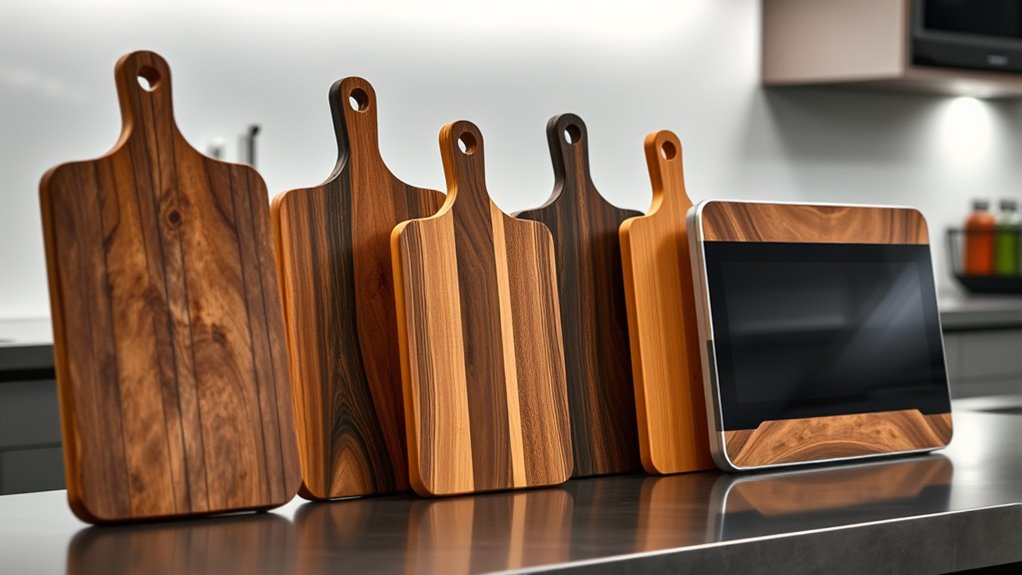

The evolution of cutting boards moves from primitive stone and wood surfaces to modern, smart chopping blocks designed for safety and hygiene. Wooden boards, favored for durability and antimicrobial properties, were a big step forward. Then came plastic and eco-friendly options like bamboo, offering easy cleaning and sustainability. Today, advances include antimicrobial coatings, integrated features, and even sensors that detect bacteria or moisture. To learn more about this fascinating progression, keep exploring how technology continues to shape your kitchen tools.

Get kitchen gear delivered free with Prime
- Fast, free delivery on millions of items
- Prime Video, Amazon Music and more included
- Member-only deals all year
Key Takeaways
- Cutting boards evolved from natural stone, wood, and shells to more durable, hygienic materials like plastics and composites.
- Wooden cutting boards introduced durability, antimicrobial properties, and resistance to knife scarring, enhancing kitchen hygiene.
- Modern innovations include eco-friendly bamboo, antimicrobial coatings, and composite materials combining plastic and wood fibers.
- Design trends incorporate multifunctional features such as juice grooves, handles, reversible surfaces, and integrated compartments.
- Technological advancements now include smart cutting boards with sensors for bacteria, moisture, and data connectivity for improved safety.

Have you ever wondered how cutting boards have evolved over time? It’s a fascinating journey that reflects advances in material innovations and shifting design trends. In ancient times, people used natural surfaces like stone, wood, or even shells for chopping and slicing. These early materials were readily available and served basic purposes, but they weren’t always ideal for durability or hygiene. As societies progressed, so did the desire for more efficient and safer options. The introduction of wooden cutting boards marked a significant step forward. Wood offered a balance of durability, ease of use, and natural antimicrobial properties, making it a popular choice for centuries. Over time, different types of wood, such as maple and bamboo, became trendy because they resisted knife scarring and helped prevent bacterial buildup, aligning with evolving design trends emphasizing hygiene and aesthetics.
In recent decades, material innovations have greatly expanded the variety of cutting boards available. Plastic became a game-changer in the mid-20th century, offering lightweight, inexpensive, and easy-to-clean options. Its versatility led to vibrant colors and various shapes, fitting modern kitchen design trends that prioritize functionality and style. Non-porous plastics also made it easier to sanitize, reducing cross-contamination concerns. More recently, attention to sustainability and health has driven the development of eco-friendly materials like bamboo, which is both renewable and antibacterial. Additionally, composite materials—blending plastic and wood fibers—provide durability and aesthetic appeal, keeping pace with contemporary design trends that favor sleek, minimalistic, and multifunctional kitchen tools. Furthermore, advances in material science continue to influence the development of cutting boards with enhanced features such as antimicrobial coatings or embedded sensors.
Design trends continually influence cutting board shapes and features. Flat, rectangular boards with juice grooves or handles are common, but now you also see innovative designs like reversible boards with different surfaces for vegetables and meats, or integrated features such as built-in compartments or non-slip bases. The focus on aesthetics means that cutting boards aren’t just functional—they’re also decorative pieces in modern kitchens. Some incorporate smart technology, like embedded sensors to monitor bacteria or moisture levels, reflecting the trend towards integrating digital innovations into everyday kitchen tools. Overall, the evolution of cutting boards showcases how material innovations and design trends work hand-in-hand to create safer, more stylish, and more practical kitchen essentials. From primitive stone surfaces to high-tech, eco-conscious, and design-forward options, each step highlights a continuous effort to improve how we prepare food, making our kitchens more efficient and appealing than ever before.
smart cutting board with bacteria sensor
As an affiliate, we earn on qualifying purchases.
As an affiliate, we earn on qualifying purchases.
Frequently Asked Questions
How Do I Properly Disinfect a Cutting Board?
To properly disinfect a cutting board, wash it with hot, soapy water after each use. For added cleanliness, use a diluted bleach solution or white vinegar, especially on plastic boards, which are easier to sanitize than wood. Remember, knife maintenance involves keeping blades sharp to prevent contamination. When comparing board materials, plastic is dishwasher-safe and easier to disinfect, while wood requires more careful cleaning to avoid bacteria buildup.
Are Antimicrobial Cutting Boards Truly More Hygienic?
Yes, antimicrobial cutting boards are more hygienic because their antimicrobial coatings actively reduce bacteria growth. Some might worry about safety, but these coatings are designed to be safe for food contact and enhance hygiene effectiveness. By using antimicrobial boards, you minimize cross-contamination and keep your kitchen cleaner. Just remember to clean them regularly and follow manufacturer instructions to maximize their benefits and ensure safe, hygienic food prep.
What Are the Environmental Impacts of Different Cutting Board Materials?
You should consider the environmental impacts of different cutting board materials. Recyclability considerations matter; plastic boards can often be recycled, but many end up in landfills. Bamboo and wood boards are biodegradable, offering biodegradability benefits that reduce waste. However, they require responsible harvesting. By choosing eco-friendly materials, you help minimize environmental harm, supporting sustainability and reducing your carbon footprint in the kitchen.
Can Smart Chopping Blocks Integrate With Kitchen Appliances?
Did you know 78% of smart home users prefer voice commands for convenience? Smart chopping blocks can indeed integrate with kitchen appliances through voice command and app integration, making meal prep seamless. You can easily sync your smart cutting board with your smart oven or scale, allowing real-time updates and precise cooking control. This tech synergy streamlines your kitchen experience, saving time and enhancing your culinary efficiency.
How Do I Choose the Right Cutting Board for Specific Foods?
To choose the right cutting board for specific foods, consider material considerations like bamboo for vegetables and plastic for raw meats to avoid cross-contamination. Pay attention to size and shape; larger boards give you more space for chopping, while smaller ones are easy to store. For delicate tasks like sushi, opt for a thin, non-porous board. Match your board to your food prep needs for safer, more efficient cooking.
antimicrobial bamboo cutting board
As an affiliate, we earn on qualifying purchases.
As an affiliate, we earn on qualifying purchases.
Conclusion
As you’ve seen, cutting boards have come a long way, from simple wood to high-tech smart devices. Did you know that using the right cutting board can reduce cross-contamination by up to 70%? This highlights how modern innovations not only improve convenience but also enhance safety in your kitchen. Embracing these advancements means you’re making smarter choices every time you chop, slice, or dice—keeping your food safer and your cooking more enjoyable.
reversible plastic chopping board
As an affiliate, we earn on qualifying purchases.
As an affiliate, we earn on qualifying purchases.
integrated compartments cutting board
As an affiliate, we earn on qualifying purchases.
As an affiliate, we earn on qualifying purchases.
Halloween Picks
halloween
As an affiliate, we earn on qualifying purchases.