Self-cleaning juicers make messes a thing of the past thanks to water circulation during their cleaning cycle. As water flows over internal parts, it loosens pulp and residue, reducing buildup and making cleanup quick and effortless. They keep your appliance hygienic, save time, and help preserve juice flavor and nutrients. To discover how to get the most out of these innovative machines, explore more about their features and maintenance tips.
Key Takeaways
- Self-cleaning juicers use water circulation to remove pulp and residue, reducing mess and cleaning time.
- Automated cleaning maintains hygiene, prevents mold buildup, and preserves juice flavor and nutrients.
- Features like adjustable cycles and easy-to-access parts simplify maintenance and minimize manual scrubbing.
- Regular use of self-cleaning functions ensures a cleaner juicer, less cross-contamination, and fresher juice.
- Choosing models with efficient cycles and quiet operation enhances convenience and keeps your kitchen tidy.
How Self-Cleaning Technology Works in Juicers
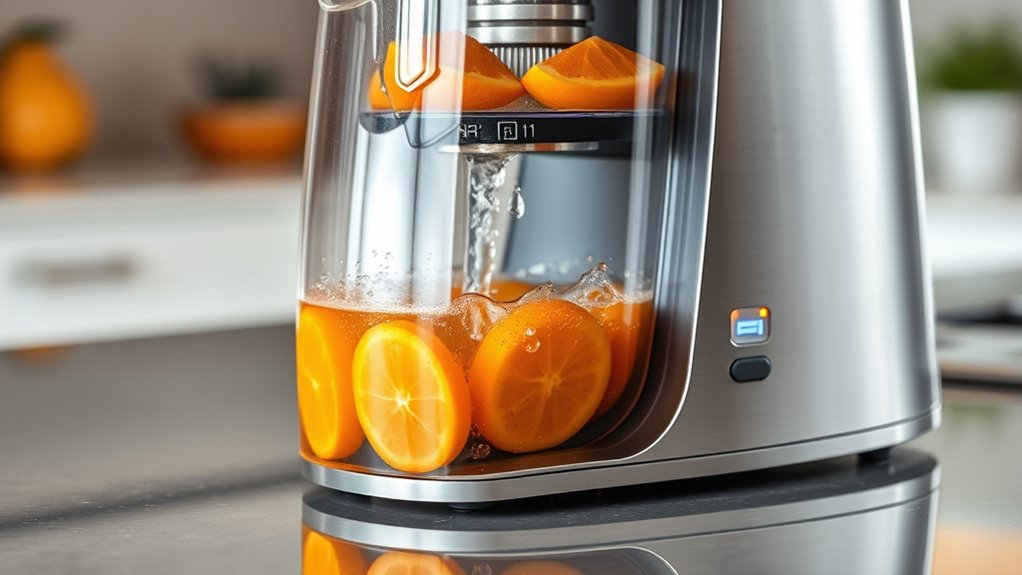
Ever wonder how self-cleaning juicers keep themselves spotless with minimal effort? It all comes down to their clever cleaning mechanism, which relies heavily on water circulation. When you activate the cleaning cycle, water is directed through specific channels inside the juicer. This water flows over the internal components, loosening pulp and residue stuck in the blades and filters. The water then carries away debris, flushing out hard-to-reach areas that manual cleaning might miss. This continuous circulation guarantees a thorough clean without you having to scrub or disassemble parts manually. The process is quick, efficient, and designed to keep your juicer hygienic, reducing the buildup of bacteria and mold. Additionally, incorporating regular calibration ensures the cleaning process maintains optimal performance over time. Proper water flow management is essential for the system to function effectively and prolong the lifespan of your appliance. Maintaining consistent cleaning cycles helps prevent the accumulation of residues that could impair the juicer’s operation, especially as smart appliances incorporate automated cleaning features to enhance user convenience. To ensure the system remains effective, monitoring and adjusting water pressure can optimize cleaning results and prevent unnecessary wear on components.
Benefits of Using a Self-Cleaning Juicer
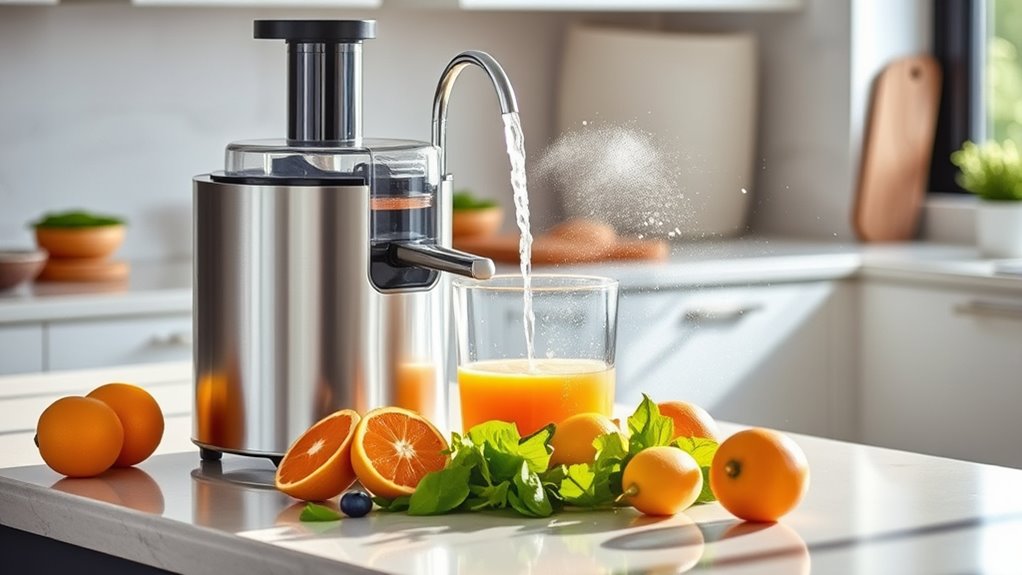
Why should you choose a self-cleaning juicer? Because it makes maintaining your appliance simple and efficient, allowing you to focus on enjoying fresh juice. These juicers help improve juice preservation by minimizing residue buildup that can affect flavor and nutrients over time. With less mess to clean, you’ll find yourself cleaning less frequently, saving time and effort. The automated cleaning process ensures the juicer stays hygienic and ready for your next use, which means fewer worries about cross-contamination or lingering pulp. This convenience encourages frequent juicing, helping you stay consistent with healthy habits. Overall, a self-cleaning juicer enhances your experience by combining ease of use with ideal juice quality, making it a valuable addition to any kitchen.
Features to Look for When Choosing a Self-Cleaning Model
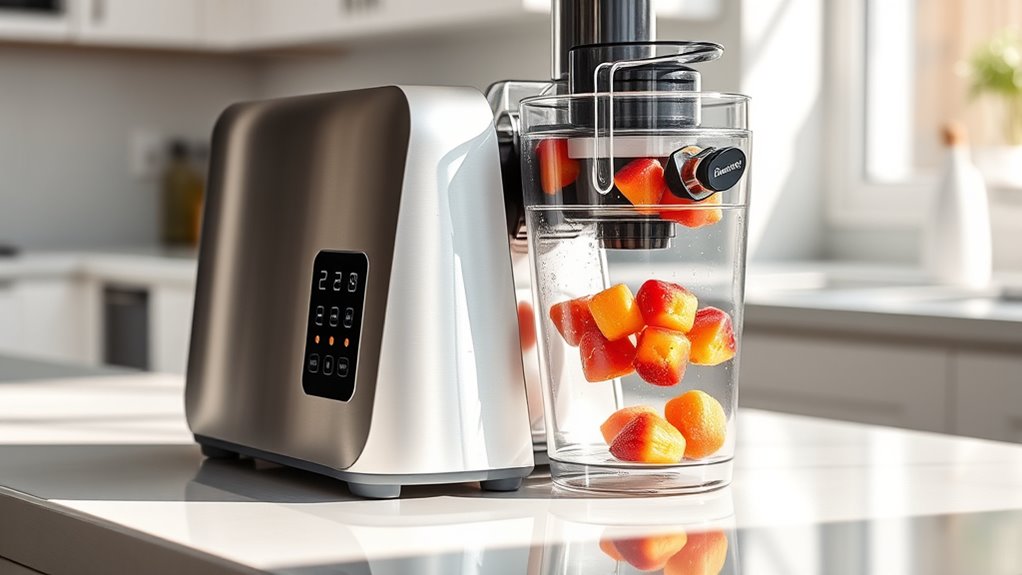
When selecting a self-cleaning juicer, paying attention to its key features guarantees you get a model that meets your needs. First, consider the cleaning frequency—choose a juicer that offers efficient cleaning cycles, so you spend less time on maintenance. Look for models with adjustable or quick-clean options if you prefer faster turnaround times. Noise levels are also important; quieter machines make the cleaning process more pleasant, especially if you use your juicer frequently or in shared spaces. Check reviews or specifications to gauge how loud the device is during self-cleaning. Additionally, understanding the concept of Free Floating components can help you select a model that simplifies cleaning and reduces residue buildup. Considering living space constraints can also influence your choice, as compact designs with accessible parts are easier to maintain in smaller environments. Features like automatic shut-off can provide added safety and convenience during operation. Incorporating easy-to-clean surfaces is also beneficial, as smooth and non-porous materials prevent residue adhesion and facilitate maintenance. By prioritizing these features, you’ll find a model that simplifies your juicing routine while fitting seamlessly into your lifestyle, ensuring fresh juice with minimal mess and fuss.
Tips for Maintaining Your Self-Cleaning Juicer

To keep your self-cleaning juicer performing at its best, regular maintenance is essential. Establish a consistent cleaning schedule—after every use, if possible—to prevent residue buildup and guarantee peak operation. When storing your juicer, follow these storage tips:
- Dry all parts thoroughly to avoid mold and odors
- Keep the appliance in a cool, dry place to prevent damage
- Use the original packaging or a dedicated container for easy access and protection
- Regularly check your juicer’s components for signs of wear or damage to ensure ongoing safety and efficiency
- Incorporate proper storage practices to extend the lifespan of your appliance and maintain optimal performance
- Additionally, avoid exposing your juicer to harsh cleaning chemicals, which may damage sensitive parts and compromise its self-cleaning functions.
Comparing Top Self-Cleaning Juicers on the Market
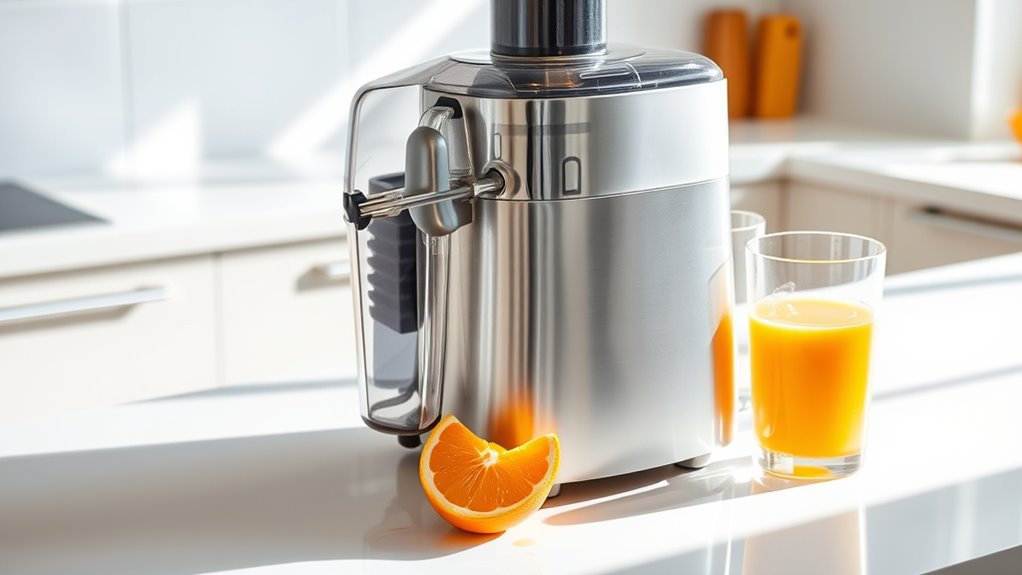
With so many self-cleaning juicers available today, comparing their features and performance can help you find the best fit for your needs. Look for models that excel in juicing efficiency, ensuring you get maximum juice with minimal waste. Some juicers process ingredients quickly, saving you time, while others may take longer but offer smoother results. Noise levels matter too; quieter models let you enjoy fresh juice without disturbing your household. Check customer reviews to see how each juicer performs in real-world use, especially regarding cleaning cycles and ease of operation. By weighing these factors, you can select a self-cleaning juicer that balances efficiency and quiet operation, making your juicing experience more enjoyable and less messy.
Frequently Asked Questions
How Long Does the Self-Cleaning Process Typically Take?
The self-cleaning process usually takes about 2 to 5 minutes, depending on your juicer’s model and process efficiency. During this time, the machine efficiently rinses and cleans itself with minimal effort on your part. You’ll find it’s quick and convenient, saving you time and mess. To optimize cleaning duration, follow the manufacturer’s instructions, ensuring the process runs smoothly and thoroughly every time.
Are There Any Types of Juice or Ingredients That Hinder Self-Cleaning?
Think of your juicer as a busy kitchen sink—picky ingredients and sticky residues can clog its flow. Some ingredients, like dense root vegetables or sticky fruits, may hinder self-cleaning, leaving stubborn residues that need extra scrubbing. To keep things smooth, avoid overly sticky or fibrous produce during self-cleaning cycles, and rinse thoroughly afterward. This way, your juicer stays efficient and ready for the next fresh batch.
Can I Manually Override the Self-Cleaning Feature if Needed?
Yes, you can manually override the self-cleaning process if needed. Most self-cleaning juicers have a manual override feature that allows you to start or stop the cleaning process when necessary. Simply follow the manufacturer’s instructions to activate this feature, usually by pressing a specific button or combination. This gives you control over cleaning, especially if you notice the automatic process isn’t working as expected or need to clean the juicer quickly.
How Energy-Efficient Are Self-Cleaning Juicers Compared to Traditional Models?
Think of self-cleaning juicers as eco-friendly superheroes, saving energy with every use. They typically consume less power than traditional models because they automate cleaning cycles, reducing water and electricity use. This means you enjoy energy savings while minimizing your environmental impact. Overall, self-cleaning juicers are a smart choice for eco-conscious folks, combining convenience with sustainability and helping you do your part for the planet.
What Maintenance Is Required to Keep the Self-Cleaning Mechanism Functioning Properly?
To keep your self-cleaning juicer’s mechanism working well, you should regularly follow the recommended cleaning frequency, usually after each use. Also, inspect components like seals and brushes for any wear or damage, replacing them if necessary. Make sure to clean the filters and nozzles thoroughly, and keep an eye on moving parts. Proper maintenance guarantees your juicer stays efficient, reduces breakdowns, and prolongs its lifespan.
Conclusion
Choosing a self-cleaning juicer is like having a reliable friend who takes care of the mess, so you can enjoy fresh juice without hassle. With its innovative technology, maintaining your juicer becomes effortless, letting you savor healthy drinks more often. By picking the right model and following simple care tips, you’ll keep your appliance running smoothly. Say goodbye to sticky spills and hello to more juice and less cleanup—your kitchen will thank you!