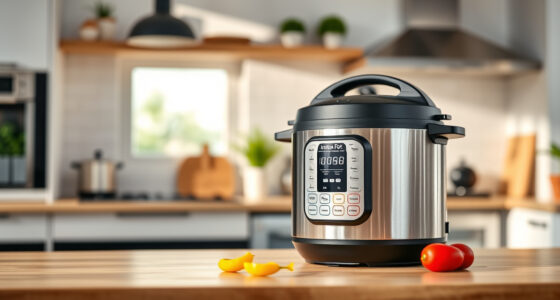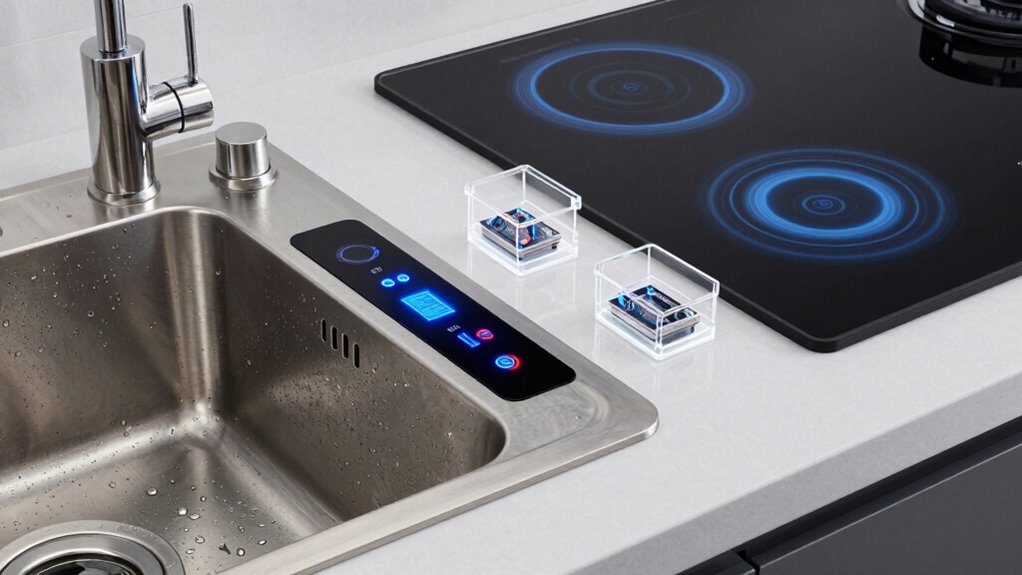
As a smart kitchen owner, it’s essential to control water, heat, and electronics for safety, efficiency, and convenience. Use voice commands or apps to manage faucets, appliances, and temperature settings remotely. Install leak detectors to prevent water damage and smart ovens or cooktops to schedule and monitor cooking. Smart plugs help you track energy use and keep devices in check. Keep exploring to discover how these tools can truly streamline your kitchen experience.
Key Takeaways
- Utilize voice commands to control appliances, water fixtures, and timers for convenience and energy savings.
- Implement smart leak detectors and app-controlled faucets to prevent water damage and conserve water.
- Schedule and remotely monitor smart ovens and cooktops to improve cooking efficiency and reduce heat loss.
- Use energy monitoring features in appliances to optimize power consumption and lower utility costs.
- Integrate smart plugs and hubs for centralized control, enhancing overall kitchen responsiveness and energy management.
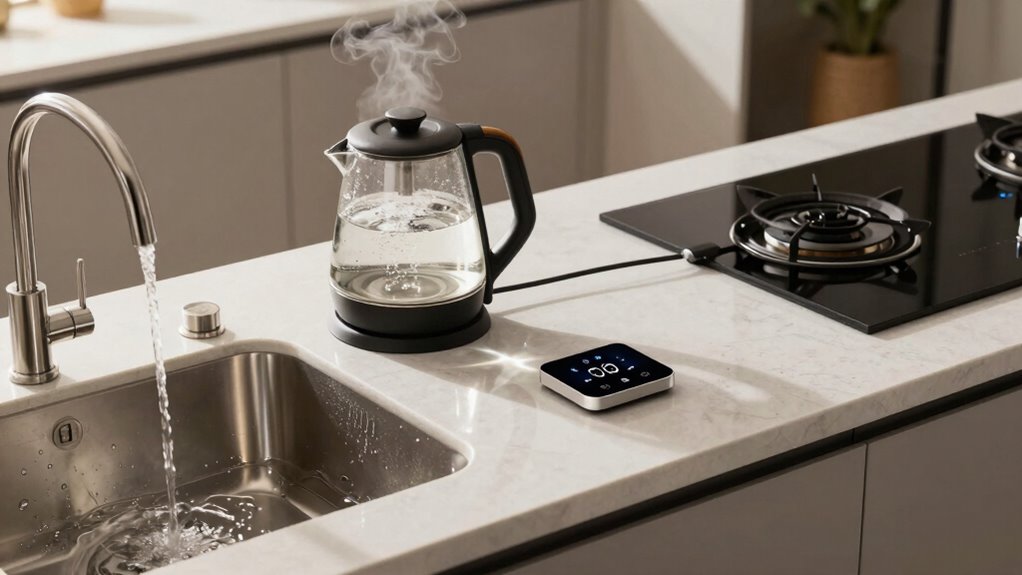
Transforming your kitchen into a smart, efficient space is easier than you might think. With the right tools and knowledge, you can optimize water usage, control heat effectively, and manage electronics seamlessly. One of the most convenient features you can incorporate is voice command technology. By linking your smart devices to a voice assistant, you can control your water fixtures, set timers, and adjust appliances without ever touching a button. This not only simplifies your routine but also promotes energy efficiency, as you can easily turn off appliances or water sources when they’re not needed. For example, you might say, “Turn off the faucet,” or “Start the dishwasher,” saving water and electricity simultaneously.
Understanding how to manage water in a smart kitchen involves more than just voice commands. Smart leak detectors can monitor water flow and alert you immediately if there’s a leak, preventing potential damage and waste. Installing smart faucets that allow you to control flow and temperature through an app or voice command further enhances your water management. These devices help you conserve water by providing precise control, reducing unnecessary wastage, and making it easy to stick to eco-friendly habits. When it comes to heat, smart cooking appliances give you unprecedented control. Smart ovens, induction cooktops, and slow cookers can be scheduled, monitored, and adjusted remotely. You can preheat your oven on your way home or keep food warm without opening the door, which saves energy by avoiding unnecessary heat loss. Additionally, understanding smart water management helps you make informed decisions about your overall kitchen efficiency. Being aware of energy consumption features in your appliances can further optimize your usage. Incorporating energy-efficient devices can significantly reduce your carbon footprint and operational costs. Furthermore, integrating smart device connectivity can streamline your entire kitchen setup, making it more intuitive and responsive to your needs. Moreover, staying informed about smart appliance integration allows for a more cohesive and user-friendly smart kitchen experience.
Managing electronics in a smart kitchen is all about integration and energy efficiency. Smart plugs and hubs allow you to turn devices on or off remotely, set schedules, and monitor energy consumption. This helps prevent standby power drain, which can add up over time. With a centralized control system, you can coordinate multiple appliances to operate during off-peak hours, reducing your overall energy bill. Additionally, many smart appliances come with built-in energy monitoring features, so you can see exactly how much power each device uses and adjust your habits accordingly.
As an affiliate, we earn on qualifying purchases.
Frequently Asked Questions
How Do I Prevent Water Damage to Smart Kitchen Electronics?
To prevent water damage to your smart kitchen electronics, guarantee proper appliance placement away from sinks and water sources. Use water-resistant coatings on devices where possible, and install splash guards or barriers. Regularly inspect for leaks or drips, and keep cords and plugs dry. Taking these precautions minimizes water exposure, extending your electronics’ lifespan and maintaining a safe, efficient smart kitchen environment.
Are There Specific Heat Limits for Smart Kitchen Appliances?
Smart kitchen appliances typically have specific heat limits to guarantee safety and longevity. You should pay attention to temperature regulation, avoiding exposure to excessive heat that can damage internal components. Materials used in these devices are designed for durability within certain ranges, so keep appliances away from direct heat sources like ovens or stovetops. Proper placement and following manufacturer guidelines help prevent overheating and extend their lifespan.
Can Smart Devices Withstand Accidental Spills or Splashes?
Smart devices are designed with water-resistant coatings and spill-proof designs, so they can often withstand accidental spills or splashes. However, you shouldn’t assume they’re completely waterproof—avoid submerging them in water or exposing them to heavy moisture. Always check the manufacturer’s specifications for resistance levels, and take care to keep sensitive electronics dry. Proper maintenance and cautious use help guarantee your smart kitchen devices stay functional longer.
What Safety Features Do Smart Kitchen Gadgets Include for Water and Heat?
Ever wondered how your smart kitchen gadgets stay safe around water and heat? They include smart device durability features like water-resistant seals and heat-resistant materials, plus built-in kitchen safety features such as automatic shut-offs and temperature controls. These safety measures help prevent damage and accidents. So, you can confidently focus on cooking without worrying about spills or high temperatures compromising your smart devices.
How Do I Troubleshoot Connectivity Issues With Kitchen Electronics?
To troubleshoot connectivity issues with your kitchen electronics, start by checking for wireless interference from other devices like microwaves or cordless phones. Move your gadgets closer to the Wi-Fi router or use signal boosters to strengthen the connection. Restart your devices and router, and make sure your firmware is up to date. If problems persist, resetting the smart gadget or consulting support can help resolve persistent connectivity issues.
As an affiliate, we earn on qualifying purchases.
Conclusion
As you navigate your smart kitchen, remember that water, heat, and electronics are like delicate dancers on a stage—each needs careful guidance to perform flawlessly. Picture the gentle hum of your appliances harmonizing with the flickering glow of screens, all kept safe by mindful habits. With your attentive touch, your kitchen transforms into a symphony of convenience and innovation, where every element works in perfect harmony, creating a space as inviting as it is cutting-edge.

Smart Wireless Meat Thermometer Dual Probes with WiFi Bluetooth Combo
- Dual-Probe Precision: Tracks meat and ambient temperatures
- WiFi & Bluetooth Connectivity: Dual wireless options for flexibility
- 200-Foot Bluetooth Range: Monitor from up to 200 feet away
As an affiliate, we earn on qualifying purchases.
As an affiliate, we earn on qualifying purchases.

TP-Link Tapo Smart Plug Mini, Matter Compatible, Compatible with Alexa, Google Home & Samsung SmartThings, Energy Monitoring, 15A, UL Certified, 2.4G Wi-Fi Only, Tapo P110M(4-Pack)
- Matter-Certified Compatibility: Works with major smart home platforms
- Energy Monitoring: Tracks and visualizes energy consumption
- Cost Estimation: Provides energy cost insights and billing integration
As an affiliate, we earn on qualifying purchases.
As an affiliate, we earn on qualifying purchases.