Kitchen tech terms like smart oven, induction cooktop, and app integration can seem confusing if their functions aren’t explained. A smart oven connects to Wi-Fi, allowing remote control and recipe suggestions, while an induction cooktop heats cookware quickly and safely using magnetic fields. Understanding these terms helps you make smarter choices and get the most from your appliances. Keep exploring to *discover* how these technologies can truly enhance your cooking experience.

Get kitchen gear delivered free — and shop member deals
- Fast, free delivery on millions of items
- Access to Prime Big Deal Days deals on October 6–7
- Prime Video, Amazon Music and more included
Key Takeaways
- Many users know terms like “induction” or “Wi-Fi-enabled” but lack understanding of how these features improve safety and efficiency.
- “Smart appliances” often refer to remote control and automation, yet users may not fully grasp their benefits or setup process.
- Terms like “adaptive learning” or “automatic adjustments” describe advanced features that enhance cooking precision without user awareness.
- Kitchen tech jargon often emphasizes convenience, but users might not understand the underlying technology, such as magnetic fields or app integration.
- Recognizing terms like “temperature regulation” or “energy efficiency” helps users optimize appliance use and troubleshoot issues effectively.
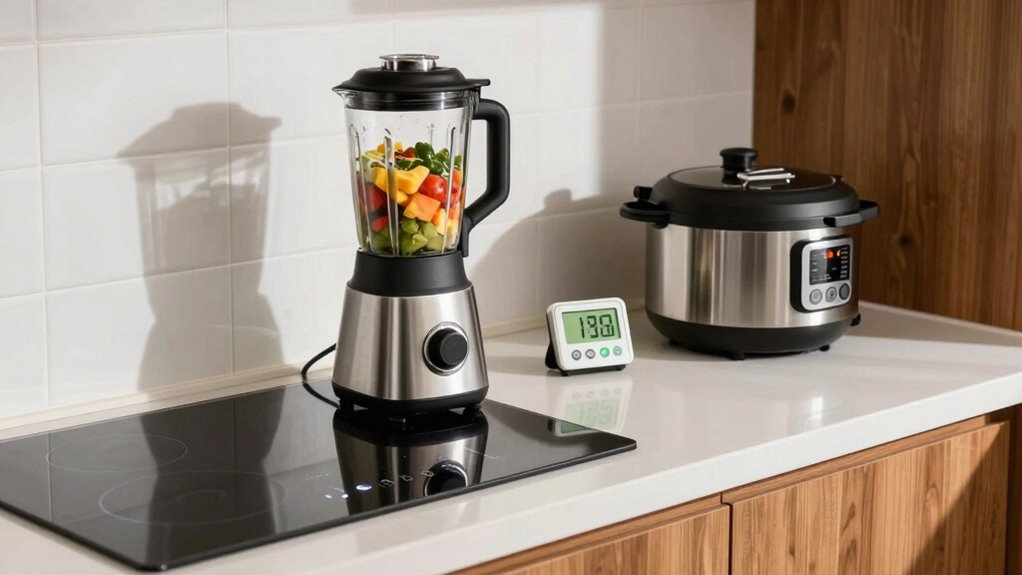
Have you ever felt overwhelmed by all the unfamiliar kitchen tech terms everyone seems to toss around? It’s easy to get lost in the jargon, especially when new gadgets promise to make cooking easier but come with confusing names. Take a smart oven, for example. You might hear about it and wonder what makes it “smart.” Unlike a traditional oven, a smart oven connects to your Wi-Fi, allowing you to control it remotely through an app or voice commands. It can automatically adjust cooking times, temperature, and even suggest recipes based on what you’re preparing. It’s like having a personal chef assistant in your kitchen. But the real benefit lies in its convenience and precision—no more guesswork or overcooked meals.
Then there’s the induction cooktop, which often confuses people because it sounds similar to regular electric stoves. An induction cooktop heats up by creating a magnetic field that directly stimulates the cookware. Instead of heating the surface of the stove, it heats the pot or pan itself, which means faster cooking times and better energy efficiency. You might notice that the surface stays relatively cool even as it heats the cookware, which makes it safer and easier to clean. Many home cooks prefer induction because it offers precise temperature control, reducing the risk of burning food or accidentally leaving the stove on. Additionally, understanding kitchen tech terms can help you make smarter appliance choices and fully leverage their features. Knowing about induction technology can also help you select compatible cookware and maximize performance.
A deeper understanding of kitchen appliances can also help you troubleshoot issues and enhance your overall cooking experience. Understanding these terms helps you appreciate how they improve your cooking experience. A smart oven simplifies meal prep, gives you more control, and can even learn your preferences over time. Meanwhile, induction cooktops deliver quick, precise heat and enhance safety in the kitchen. Both of these appliances use technology to optimize your time and effort, but their names can sometimes obscure their true functions. Once you grasp what they do, you’ll see how they can become invaluable tools in your culinary routine.
As an affiliate, we earn on qualifying purchases.
Frequently Asked Questions
How Do Smart Kitchen Devices Connect to Wi-Fi?
You connect smart kitchen devices to Wi-Fi by following their setup process, often through an app. They typically use Wi-Fi protocols like Wi-Fi 802.11ac or 802.11n for seamless smart home integration. You’ll need to confirm your device is in pairing mode, then connect it to your network by entering your Wi-Fi credentials. This allows your smart device to communicate with your home network and other connected devices effortlessly.
What Is the Difference Between Convection and Conventional Ovens?
Did you know that convection ovens cook food 25% faster than conventional ones? Convection ovens use a fan and exhaust system to circulate hot air, creating even cooking across multiple cooking modes. Conventional ovens rely solely on radiant heat from the top and bottom elements. When choosing oven settings, convection mode is great for roasting and baking, while traditional settings suit casseroles and delicate baked goods.
Are Voice-Activated Kitchen Gadgets Secure From Hacking?
Voice-activated kitchen gadgets can be vulnerable to hacking due to voice recognition vulnerabilities, which could allow unauthorized access. While they offer convenience, privacy concerns remain since these devices might inadvertently record or share sensitive data. To stay secure, you should regularly update the device firmware, disable features you don’t need, and be cautious about voice commands in public or shared spaces. Always review privacy policies before connecting these gadgets to your network.
How Energy-Efficient Are Latest Kitchen Appliances?
The latest kitchen appliances are quite energy-efficient, thanks to improved technology and better insulation. You’ll notice lower energy consumption, which saves you money over time. Check appliance ratings to verify efficiency levels before purchasing. Modern appliances often feature Energy Star ratings, indicating they meet high standards for energy use. By choosing these models, you help reduce your carbon footprint while enjoying smart, effective kitchen tools that don’t waste power.
What Maintenance Is Required for Home Automation Systems?
You need to regularly clean and check your home automation systems, ensuring the smart hub integration runs smoothly. Keep firmware updates current, as they improve security and functionality. Also, verify all connected devices are functioning correctly, and reset or troubleshoot any issues promptly. This maintenance helps prevent glitches, enhances performance, and prolongs your system’s lifespan, making your smart home more reliable and efficient.
induction cooktop with temperature control
As an affiliate, we earn on qualifying purchases.
As an affiliate, we earn on qualifying purchases.
Conclusion
In the end, understanding these kitchen tech terms isn’t just about sounding knowledgeable—it’s about truly appreciating the subtle art of modern cooking. As you navigate your culinary journey, remember that every term is a gentle whisper of innovation, guiding you toward better results. Embrace the language, even if it feels unfamiliar at first. Sometimes, the quietest words hold the most meaning, helping you transform simple ingredients into something truly extraordinary.
app-controlled kitchen appliances
As an affiliate, we earn on qualifying purchases.
As an affiliate, we earn on qualifying purchases.
energy-efficient induction stove
As an affiliate, we earn on qualifying purchases.
As an affiliate, we earn on qualifying purchases.
Fall Picks
fall essentials
As an affiliate, we earn on qualifying purchases.