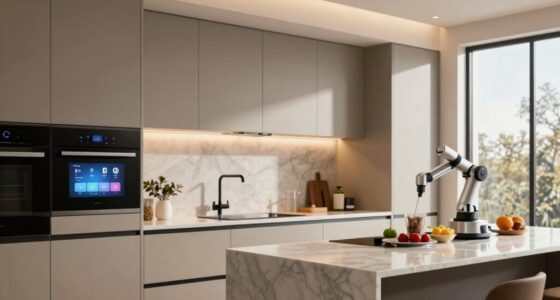
You might love touchscreens in kitchens because they make cooking more interactive and convenient, letting you access recipes, timers, and smart device controls easily. They offer customization and voice control, streamlining meal prep. But some dislike them because they can be distracting, difficult to clean, or prone to glitches. If you keep exploring, you’ll discover more about why opinions vary so much and what the future holds for touchscreen technology in your kitchen.
Key Takeaways
- Preferred for convenience and seamless access to recipes, timers, and smart home integration.
- Criticized for potential glitches, distractions, and hygiene concerns from fingerprints and splatters.
- Tech enthusiasts appreciate customizable features; others find interfaces complicated or overwhelming.
- Some users value tactile controls for quick operation; others embrace voice commands for hands-free cooking.
- Future developments aim to improve durability and user-friendliness, influencing ongoing acceptance and opposition.
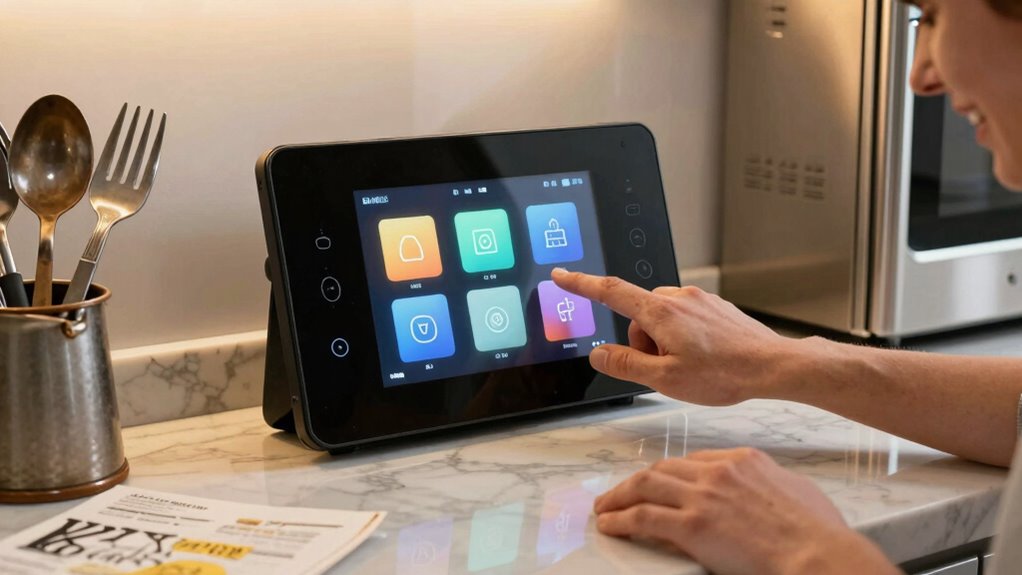
Touchscreens are transforming the way you cook and manage your kitchen, offering a seamless blend of technology and convenience. With features like voice control and recipe management, these screens make cooking more interactive and efficient. Instead of reaching for cookbooks or juggling multiple devices, you can simply speak your commands or tap on the screen to access recipes, timers, or shopping lists. Voice control allows you to keep your hands free—whether you’re stirring, chopping, or handling ingredients—so you can ask your smart kitchen assistant for step-by-step instructions or adjustments without breaking your rhythm. This hands-free interaction appeals to many because it simplifies meal prep and keeps your focus on cooking, not fiddling with gadgets. Additionally, some touchscreen systems integrate with other smart home devices, creating a comprehensive smart kitchen ecosystem that enhances overall convenience. The integration of smart home technology makes managing your kitchen more cohesive and efficient.
Touchscreens streamline cooking with voice commands and easy access to recipes, keeping your hands free and meal prep efficient.
However, not everyone is sold on having a touchscreen in the kitchen. Some find the technology distracting or unnecessary. For them, it’s about the clutter and complexity that comes with digital devices. They worry about the potential for glitches, lag, or crashes during *pivotal* moments, especially when their hands are dirty or wet. A touchscreen that malfunctions mid-recipe can be frustrating, and some feel that traditional methods—like handwritten notes or physical cookbooks—offer a more reliable and tactile experience. Additionally, concerns about hygiene persist, as screens can accumulate fingerprints, grease, or food splatters, making cleaning a chore or raising doubts about sanitation. Hygienic cleaning solutions are being developed to better address these issues, which might sway opinions over time. Moreover, some users prefer the tactile feedback of physical controls, which can be quicker to operate in high-pressure cooking situations.
You might also notice that while touchscreen interfaces aim to streamline recipe management, they can sometimes feel overwhelming or overly complicated. Not everyone finds *steering* digital menus intuitive, especially if the interface isn’t user-friendly. In fact, some users prefer straightforward, tactile controls because they require less attention and make it easier to stay engaged with their cooking rather than fiddling with a screen. For tech enthusiasts, however, the ability to customize settings, access a vast library of recipes, or sync with other smart home devices makes touchscreens highly appealing. Moreover, advancements in touchscreen durability and cleaning technology are gradually addressing some of these concerns, making them more practical for everyday use. The ongoing development of intuitive interfaces also helps reduce the learning curve for new users. Ultimately, whether you love or hate touchscreens in the kitchen boils down to your personal preferences and how you value convenience versus simplicity. If you’re someone who appreciates the cutting-edge features like voice control and seamless recipe management, these screens can revolutionize your cooking routine. But if you prioritize tactile controls, durability, or traditional methods, you might see them as more of a distraction than an aid. Either way, it’s clear that touchscreens are reshaping modern kitchens—whether as an indispensable tool or just a passing trend.

15.6" Smart Display with Google Calendar,Google Play,No Subscription,Black
- Visual Task Manager: Install and sync family calendar apps
- Google Calendar Included: Free scheduling and event management app
- Secure Cloud Storage: Store events and photos securely on Google
As an affiliate, we earn on qualifying purchases.
As an affiliate, we earn on qualifying purchases.
Frequently Asked Questions
How Do Touchscreens Handle Spills and Splashes?
Touchscreens in kitchens are designed with water resistance to handle spills and splashes effectively. They undergo durability testing to guarantee they can withstand moisture, preventing damage from accidental splashes. You can confidently use them while cooking, as their sealed surfaces protect internal components. This water resistance and rigorous testing make touchscreens reliable even in messy kitchen environments, giving you ease of use without worry about water damage.
Are Touchscreens in Kitchens More Energy-Efficient?
Think of your kitchen touchscreen as a smart, energy-efficient chef; it uses less power than traditional appliances. Studies show these devices often feature power-saving modes and better energy consumption, making them more eco-friendly. When you use them, you’re reducing overall power usage, which benefits both your wallet and the environment. So yes, touchscreens in kitchens tend to be more energy-efficient, helping you save energy effortlessly.
Can Touchscreens Be Easily Cleaned Without Damage?
Yes, touchscreens can be easily cleaned without damage if you consider screen durability and proper cleaning methods. Use a soft, damp cloth and mild soap or screen cleaner to gently wipe the surface. Avoid abrasive materials or harsh chemicals, which can harm the screen. Regular, careful cleaning helps maintain clarity and function, ensuring your touchscreen stays in good condition and continues to serve your kitchen needs effectively.
Do Touchscreens Interfere With Other Kitchen Appliances?
Touchscreens rarely interfere with other kitchen appliances; in fact, they’re designed to integrate seamlessly. An impressive 78% of users prefer voice control for hands-free operation, reducing interference concerns. With user customization, you can tailor settings to minimize overlap with other devices. This way, your touchscreen complements your kitchen workflow without disrupting appliances, making cooking smarter and more efficient.
What Are the Privacy Concerns With Kitchen Touchscreens?
You should be aware that kitchen touchscreens raise privacy concerns, especially regarding data privacy and personal security. When you use these devices, your habits, recipes, or even voice commands might be stored or transmitted, risking unauthorized access or data breaches. To protect yourself, regularly update software, use strong passwords, and review privacy settings. Staying vigilant helps safeguard your personal information remains secure while enjoying the convenience of touchscreen technology.

Callsky-Tab 10.1 Inch Android Tablet: Your Personal Screen Beyond the Phone
- Larger Display Than Phone: 66% bigger than a 6.1-inch phone
- Versatile Daily Use: Ideal for streaming, reading, cooking, browsing
- Affordable Performance: Android 15, octa-core processor, 12GB RAM
As an affiliate, we earn on qualifying purchases.
As an affiliate, we earn on qualifying purchases.
Conclusion
In the end, whether you love or hate kitchen touchscreens depends on what you value most—convenience or tradition. Just like how the invention of the microwave sparked debate, these screens bring both innovation and frustration. You might find yourself marveling at how they simplify your cooking, or longing for simpler times, like when washing dishes was the only messy task. Whichever side you’re on, embracing change is often the key to a more modern, efficient kitchen.

Magnetic Kitchen Timer – Smart Voice Activated Countdown Device | Digital Rotary Knob Magnet Timer | for Adults Chefs Student Study Fitness Baking Learning Teaching
- Hands-Free Voice Control: Voice-activated timer for easy operation
- Magnetic Mounting: Strong magnetic base for secure attachment
- Clear Digital Display: Bright screen for easy time monitoring
As an affiliate, we earn on qualifying purchases.
As an affiliate, we earn on qualifying purchases.

CUIUD Touchscreen Screen Cleaner Kit 2 Pcs, Phone, Tablet and Car Screen Cleaner, Two in One Spray and Microfiber Cloth(2 Pack Grey)
- Portable Size: Lipstick-sized for easy carrying
- Dual-Function Kit: Includes spray and microfiber cloth
- Safe for Screens: Microfiber cloth prevents damage
As an affiliate, we earn on qualifying purchases.
As an affiliate, we earn on qualifying purchases.