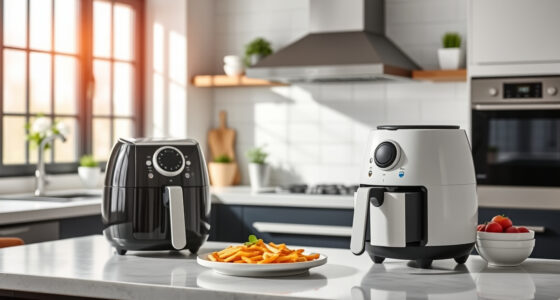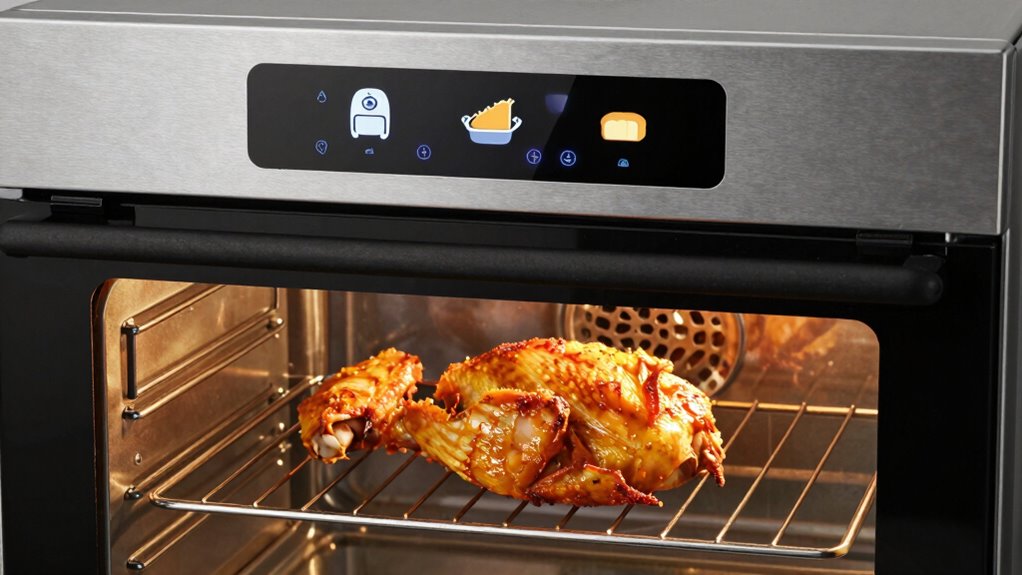
If you want crispy results with less oil, using the air fry mode circulates hot air rapidly to mimic frying. Roast mode uses higher heat to brown and develop deep flavors, perfect for meats and vegetables needing caramelization. Bake mode offers gentle, even heat ideal for baked goods and casseroles, preserving moisture and ensuring uniform doneness. Knowing these differences helps you choose the right setting for your dish—keep going to explore how each mode can elevate your cooking.
Key Takeaways
- Air fry uses rapid air circulation for crispy textures with little oil, mimicking frying.
- Roast employs higher heat and longer cooking for browning and caramelization of meats and vegetables.
- Bake provides gentle, even heat ideal for baked goods, ensuring uniform rising and moisture retention.
- Air fry focuses on crispiness, roast emphasizes flavor development through browning, bake maintains delicate textures.
- Proper mode selection enhances specific dish textures, flavors, and cooking efficiency.
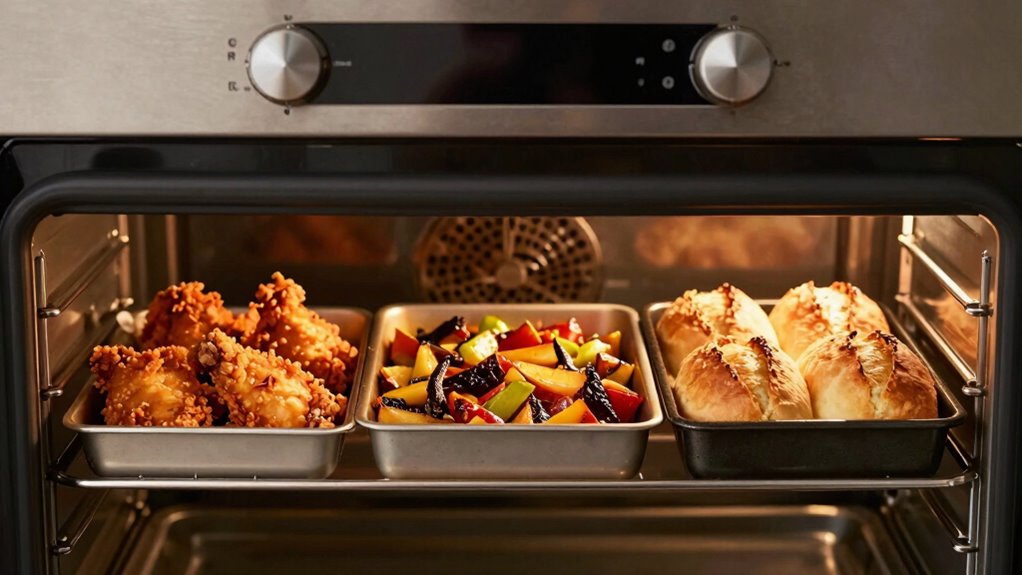
Understanding the differences between air fry, roast, and bake modes can help you make the most of your oven’s capabilities. These settings aren’t just labels; they’re distinct cooking techniques that enhance your kitchen appliances for specific results. When you choose air fry, you’re using a technique that circulates hot air rapidly around the food, creating a crispy exterior similar to deep frying but with less oil. This mode is perfect for preparing items like chicken wings, fries, or even vegetables that benefit from a crunchy texture. It’s a quick, efficient way to achieve that desirable crispness without the mess and calories of traditional frying.
Switching to roast mode involves a different set of cooking techniques. Roasting typically uses higher heat and longer cooking times, which allows the food’s natural flavors to develop deeply. It’s ideal for meats like beef, chicken, or pork, as well as vegetables like carrots and potatoes. When roasting, your kitchen appliances work to create a browned, flavorful exterior while keeping the inside tender and juicy. This mode often involves a combination of dry heat and sometimes convection, making it suited for foods that need caramelization or browning. Additionally, proper heat distribution during roasting ensures that your food cooks evenly and achieves the desired texture.
Baking, on the other hand, is a more gentle, even heat that’s best suited for baked goods like bread, cakes, muffins, and casseroles. When you use the bake setting, your oven’s heating elements or convection fans distribute heat evenly, ensuring consistent results. Baking involves slower, controlled cooking techniques that focus on moisture retention and uniform rising or setting of ingredients. Unlike roasting or air frying, baking emphasizes gentle heat transfer, which allows delicate textures and flavors to develop without burning or over-browning. Additionally, baking techniques can be adapted for both savory and sweet dishes, making it a versatile cooking mode.
Knowing these differences helps you select the right mode for your dish, ensuring ideal results and making your cooking techniques more precise. Modern kitchen appliances often incorporate these modes to streamline your cooking process, but understanding their unique functions lets you adapt recipes and techniques more effectively. For example, if you want crispy chicken with less oil, you’d use the air fry setting. If you’re preparing a roasted turkey or vegetables, the roast mode will give you the caramelized exterior and juicy interior you want. For bread or cakes, sticking to the bake setting ensures even rising and consistent texture.
As an affiliate, we earn on qualifying purchases.
Frequently Asked Questions
Can I Use Air Fry Mode for Baking Cakes?
Yes, you can use air fry mode for cake baking, but it requires some adjustments. Air fry techniques involve rapid circulation of hot air, which can dry out cakes if not monitored carefully. To succeed, use the right pan size, lower the temperature slightly, and check doneness frequently. Keep in mind, air fry mode is great for small or quick-bake cakes, but traditional baking might give more even results for larger cakes.
How Does Preheating Differ Between Air Fry, Roast, and Bake Modes?
In air fry, preheating involves rapid air circulation at a consistent temperature, usually shorter than traditional methods, to quickly heat the chamber. Roast mode preheats similarly but focuses on slightly higher, more steady temperatures with even air flow for browning. Bake mode preheats more gradually, with gentle air circulation to guarantee even heat distribution. Overall, air circulation and temperature variations define how each mode preheats and influences cooking results.
Are Cooking Times the Same Across All Three Modes?
Cooking time variations do exist across air fry, roast, and bake modes. Air fry generally cooks faster due to its high heat and rapid air circulation, making it more efficient for crispy foods. Roast mode typically takes a bit longer, especially for larger cuts or vegetables. Bake mode often has the longest cooking times, ideal for even, slow cooking. A mode efficiency comparison shows air fry is quickest, but each mode suits different recipes.
Which Mode Uses the Most Energy?
You’re asking which mode uses the most energy, and it’s usually the bake mode. Bake tends to consume more energy because it operates at a consistent, often higher temperature for a longer period, making it less efficient than air fry or roast modes. When comparing energy consumption and mode efficiency, air fry generally uses the least, followed by roast, with bake being the most energy-hungry. So, it’s a case of apples and oranges.
Can I Switch Modes During Cooking?
Yes, you can switch modes during cooking, but it’s essential to prioritize mode versatility and cooking safety. Always consult your appliance’s manual first, as abrupt changes might disrupt cooking or cause safety issues. Switching modes can help achieve different textures or doneness, but make certain you understand how each mode affects cooking times and heat distribution. Being cautious ensures safe, effective results without risking damage to your appliance.
As an affiliate, we earn on qualifying purchases.
Conclusion
Now that you understand the real difference between air fry, roast, and bake modes, you’re practically a kitchen superhero. With this knowledge, you’ll turn any meal into a culinary masterpiece faster than you can say “delicious.” Whether you’re crisping up fries, roasting a chicken, or baking a cake, you’ve got the perfect mode for every craving. Get ready to impress, because your cooking game is about to reach legendary status!
As an affiliate, we earn on qualifying purchases.
As an affiliate, we earn on qualifying purchases.