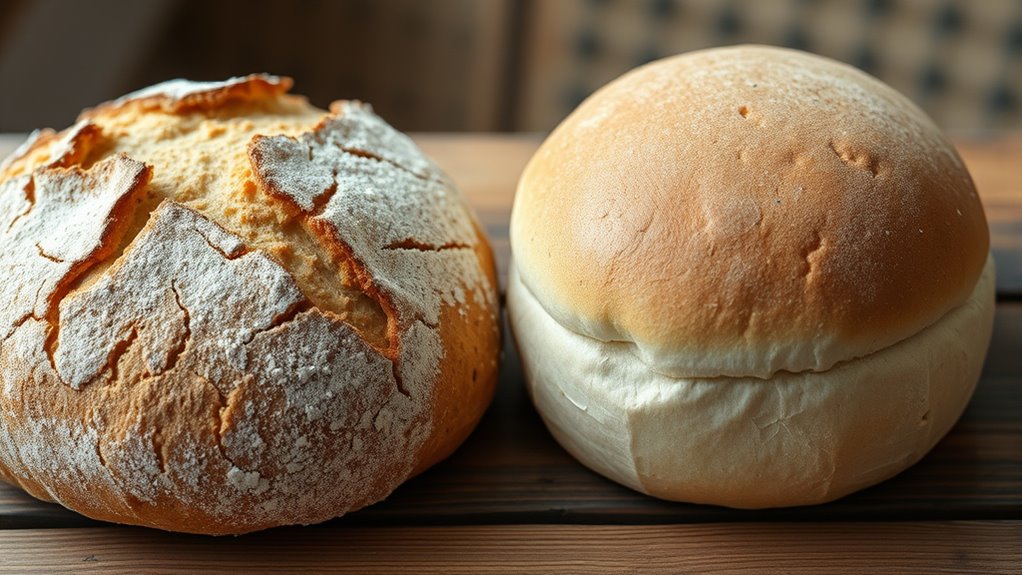

Artisan bread and bread machine bread differ mainly in how they are made, affecting flavor and texture. Artisan bread involves slow fermentation and thorough gluten development, creating a chewy crust and open crumb with complex flavors. Bread machine bread is quicker, with shorter fermentation, resulting in softer crust and denser crumb. Understanding these differences can help you choose the method that best matches your taste and time. Keep exploring to discover more about each baking style.

Get kitchen gear delivered free with Prime
- Fast, free delivery on millions of items
- Prime Video, Amazon Music and more included
- Member-only deals all year
Key Takeaways
- Artisan bread features a chewy crust, open crumb, and complex flavors achieved through slow fermentation and thorough gluten development.
- Bread machine bread is quicker and more convenient, resulting in softer crusts and denser crumbs due to limited fermentation.
- Longer fermentation in artisan baking enhances flavor, texture, and digestibility, unlike the shorter process in bread machines.
- Artisan techniques often involve preferments or sourdough starters, requiring skill and patience; bread machines automate the process.
- Choice depends on preference for handcrafted, flavorful bread versus quick, easy baking with minimal effort.

When it comes to making bread at home, choosing between artisan bread and bread machine bread often depends on your priorities and preferences. Artisan bread is celebrated for its chewy crust, open crumb, and complex flavors, all of which stem from meticulous techniques like gluten development and fermentation. You’ll notice that the process requires you to knead the dough thoroughly, encouraging gluten strands to form. This gluten network gives the bread its structure, elasticity, and ability to hold gas during fermentation. The fermentation process itself is vital: longer, slower fermentations, often done overnight, allow natural enzymes to develop richer flavors and improve the bread’s texture. This slow fermentation not only enhances taste but also makes the bread easier to digest, as the gluten is broken down more thoroughly.
In contrast, bread machine bread is designed for convenience and speed. You simply add ingredients to the machine, select a program, and let it handle the kneading, rising, and baking. While this saves time, it also limits your control over gluten development and fermentation. The machine kneads the dough quickly, which might not allow enough time for the gluten to develop fully or for the fermentation process to deepen flavors. As a result, bread machine bread tends to have a softer crust and a denser crumb compared to artisan loaves. The fermentation in a bread machine is often shorter, which means less complex flavor profiles but a quicker turnaround from start to finish.
If you’re someone who enjoys the craft of bread making and wants to fine-tune every aspect, artisan baking offers a rewarding experience. You can experiment with different fermentation techniques—like using preferments or sourdough starters—to influence gluten development and flavor. These techniques require patience but produce bread with a deeper, more nuanced taste and a satisfying texture. On the other hand, if you’re pressed for time or prefer a straightforward approach, a bread machine can still produce decent bread, though it might lack the artisanal qualities that come from slow fermentation and careful gluten development.
Ultimately, the choice hinges on what matters most to you: the process and the depth of flavor of artisan bread or the convenience and simplicity of bread machine baking. Both methods have their merits, but understanding the role of gluten development and fermentation techniques helps you appreciate what makes each type unique.
As an affiliate, we earn on qualifying purchases.
Frequently Asked Questions
Can Bread Machine Bread Be as Flavorful as Artisan Bread?
Absolutely, bread machine bread can be just as flavorful as artisan bread. By using a variety of ingredients and focusing on flavor complexity, you can elevate your machine-made bread. Experiment with different grains, seeds, herbs, or even sweet additions to boost taste. While it may lack the traditional artisan touch, your creative ingredient choices and proper techniques can make bread machine bread surprisingly rich and flavorful.
How Long Does Each Type of Bread Stay Fresh?
Like a fleeting sunset, both breads don’t stay fresh forever. Typically, artisan bread remains good for 2-3 days when stored in a paper bag, thanks to minimal preservatives. Bread machine bread often lasts slightly longer—up to 4 days—especially if stored in an airtight container. To extend freshness, consider freezing. The preservatives used and storage conditions play vital roles in how long each type stays delicious.
Are There Specific Recipes Better Suited for Bread Machines?
Yes, some recipes are better suited for bread machines, especially gluten-free recipes and sourdough variations. You’ll want recipes with simple ingredient ratios and straightforward mixing instructions, as bread machines handle kneading and rising. Look for recipes specifically designed for machines, which often include step-by-step instructions. This way, you get consistent results with gluten-free or sourdough breads without the hassle of manual kneading or shaping.
Is Artisan Bread More Nutritious Than Bread Machine Bread?
Yes, artisan bread can be more nutritious than bread machine bread because it often uses higher-quality ingredients and fewer preservatives. You’ll find that artisan recipes typically include wholesome flours and natural leavening, which boost nutrient content. In contrast, bread machine bread sometimes contains added preservatives or fillers. By choosing artisan, you’re more likely to enjoy bread with better ingredient quality and richer nutrients, supporting your overall health.
Can I Customize Flavors Easily in Bread Machine Baking?
Yes, you can easily customize flavors in bread machine baking. With ingredient flexibility, you can add herbs, spices, dried fruits, or nuts directly into the dough during the process. Many bread machines have a dedicated cycle for mixing and baking, making it simple to experiment with different flavors. Just adjust the ingredients to suit your taste, and enjoy personalized, flavorful bread every time.
bread machine with gluten development
As an affiliate, we earn on qualifying purchases.
As an affiliate, we earn on qualifying purchases.
Conclusion
So, which bread will you choose—crafted by hand or made with a machine? Each has its unique charm and flavor, but the real question is, what surprises await you when you take that first bite? Will the artisan’s rustic crunch or the bread machine’s convenience win your heart? The answer isn’t just in the bread itself; it’s in the journey of discovery. Ready to see which bread truly transforms your baking experience? The choice is yours.
As an affiliate, we earn on qualifying purchases.
As an affiliate, we earn on qualifying purchases.
Halloween Picks
halloween
As an affiliate, we earn on qualifying purchases.