If you compare bread machine baking to traditional methods, you’ll notice differences in flavor, texture, and appearance. Bread machines provide convenience, producing consistent, softer loaves with a mild aroma, while traditional baking allows for richer flavors and more artistic shapes. Your choice depends on whether you prefer quick, hands-off results or a crafted loaf with deeper aroma and character. Stick around to discover more insights that can help you choose the best method for your taste buds.
Key Takeaways
- Traditional baking often yields more complex aromas and deeper flavors due to longer fermentation and manual ingredient adjustments.
- Bread machine loaves tend to be softer, with a uniform crumb, offering a milder taste compared to the richer, more nuanced flavors of handmade bread.
- Fresh ingredients and proper storage significantly impact flavor quality in both methods, influencing aroma and overall taste experience.
- Longer fermentation times in traditional baking enhance flavor development, while bread machines provide convenience with consistent, softer textures.
- Artistic shaping and toppings in traditional baking can elevate visual appeal and flavor, whereas bread machines produce consistent, professional-looking loaves.
The Baking Process: From Kneading to Baking

When you bake bread, the process begins with preparing the dough, which involves mixing ingredients and kneading to develop gluten. Once your dough is ready, the fermentation process kicks in, allowing yeast to produce carbon dioxide and flavor compounds. Proper fermentation is key to achieving the bread’s texture and taste. Ingredient sourcing plays a crucial role here; high-quality flour, yeast, and other components influence how well the dough ferments and rises. If your ingredients are fresh and well-chosen, the fermentation process proceeds smoothly, resulting in a better crumb structure and enhanced flavor. High-quality ingredients significantly impact the fermentation outcome and overall bread quality. Additionally, sustainable sourcing practices can contribute to better ingredient freshness and flavor. Understanding how different baking techniques affect fermentation can help you refine your process and achieve more consistent results. Incorporating proper temperature control during fermentation can further optimize yeast activity, leading to superior bread texture and flavor. Whether you’re using a bread machine or traditional baking methods, understanding how these elements interact helps you control the final outcome and craft delicious, well-textured bread.
Ingredient Quality and Its Impact on Flavor
High-quality ingredients are vital for achieving rich, complex flavors in your bread. The grain quality you choose directly influences the depth and character of your loaf, with whole grains offering nuttier, more robust tastes compared to refined flours. Ingredient freshness also plays a key role; fresh flour and yeast ensure active fermentation and vibrant flavors. When ingredients are fresh, your bread develops a better aroma and a more satisfying taste. Proper storage of ingredients can prevent stale flavors and preserve their quality over time. Using quality storage methods can help maintain ingredient freshness and prevent flavor degradation. Additionally, selecting freshly milled grains enhances the overall flavor profile of your baked bread. Incorporating advanced storage techniques, such as vacuum sealing or controlled humidity, can further extend ingredient freshness. For optimal results, understanding ingredient preservation techniques can help you maintain the highest quality ingredients. Poor-quality or stale ingredients can result in bland or off-flavors, regardless of whether you’re using a bread machine or traditional methods. By prioritizing high grain quality and ingredient freshness, you give yourself the best chance to craft flavorful, aromatic bread that’s a true reflection of your baking efforts.
Texture and Crumb Structure: Comparing the Loaves
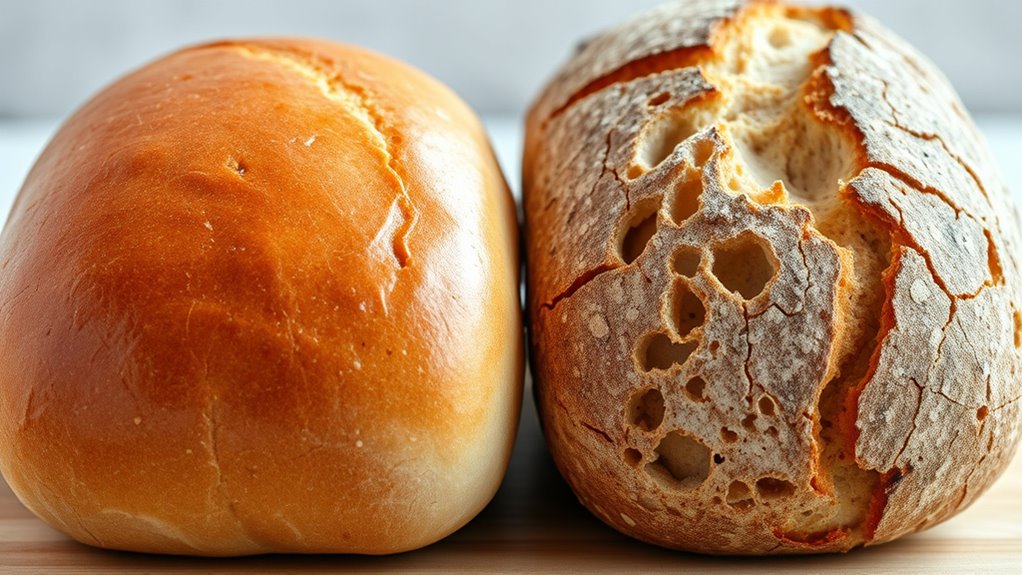
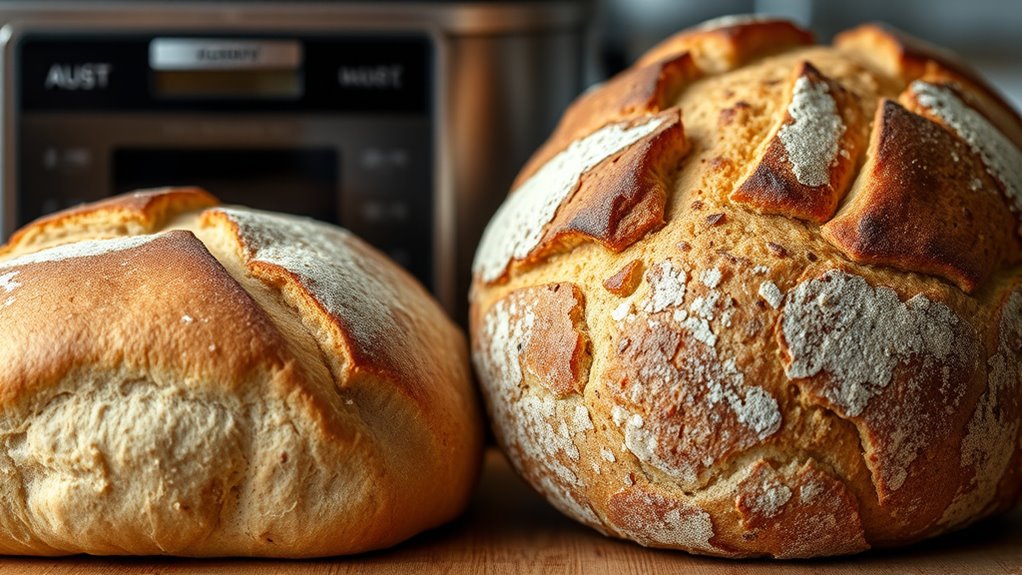
The choice of baking method substantially influences the final texture and crumb structure of your bread. With a bread machine, you often get a more uniform crumb due to consistent kneading and controlled temperature. The dough elasticity tends to be well-developed, resulting in a soft, airy interior. In contrast, traditional baking allows for more variability; you can manually adjust kneading and fermentation, which impacts dough elasticity and the final crumb. The loaf’s texture in a traditional oven might be slightly denser but can develop a more complex, open crumb. Crust coloration also differs: bread machines typically produce a softer crust, while traditional baking often results in a thicker, more caramelized crust. Both methods influence the bread’s overall mouthfeel and visual appeal. Additionally, understanding the baking process can help bakers tailor their techniques to achieve desired results. Proper temperature control during proofing and baking is essential for consistent outcomes, especially when aiming for specific textures. Furthermore, baking techniques such as scoring and steam application can enhance crust development and overall loaf appearance. Recognizing how each method impacts the bread’s final texture can guide bakers in choosing the most suitable approach for their preferences.
Crust Development: Color, Thickness, and Crunch
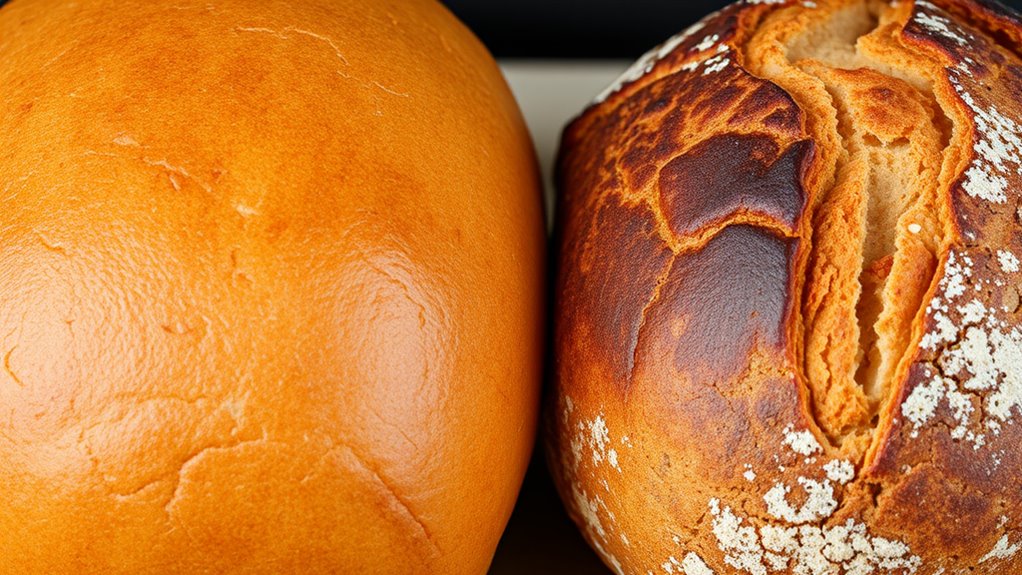
Crust development plays a crucial role in defining the overall appeal of your bread, influencing its flavor, texture, and visual attractiveness. The oven temperature you choose directly affects the crust’s color and thickness—higher heat promotes a deeper, richer hue and a crisper crunch. With traditional baking, you can adjust the oven temperature more precisely, allowing you to control the crust’s characteristics. Bread baked in a bread machine often results in a softer, thinner crust due to lower or less consistent oven temperatures. Achieving the perfect crust involves balancing oven heat and baking time. For a thicker, crunchier crust, crank up the oven temperature slightly or use steam to enhance crust development. Understanding heat distribution in traditional ovens can help you optimize heat for better crust formation. Proper baking techniques also ensure an evenly developed crust and enhance the overall texture. Additionally, crust formation can be influenced by the use of toppings like seeds or sugar, which contribute to a more complex flavor profile. Incorporating oven temperature control is essential for customizing the crust to your preferred style. Ultimately, your choice of oven temperature shapes the final look and texture of your bread’s crust.
Aroma and Freshness: Sensory Experience Differences
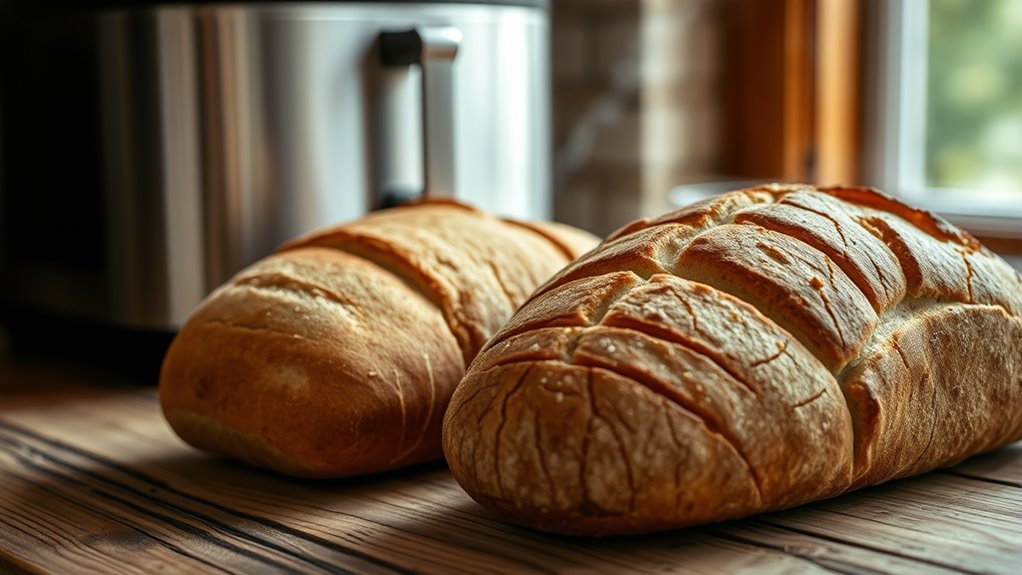
While the crust’s appearance signals the bread’s doneness, its aroma and freshness engage your senses on a deeper level. Bread aroma plays a vital role in your overall experience, often hinting at the bread’s flavor quality and baking method. Traditional baking tends to produce a richer, more complex bread aroma because of longer fermentation times and open-air baking, which enhances freshness preservation. In contrast, bread machine bread may have a milder aroma, sometimes lacking the depth of traditionally baked loaves. Freshness is also more noticeable in hand-crafted bread, which retains moisture and flavor better over time. The aroma and perceived freshness greatly influence how satisfying the bread feels, making the sensory experience more vivid and memorable when you bake traditionally. Additionally, the baking process itself impacts the development of aroma compounds, further differentiating the sensory qualities of each method. The fermentation time used in traditional baking also contributes significantly to the development of complex flavors and aromas. Moreover, the impact of baking environment can alter how aromas develop and are perceived, adding another layer to the sensory experience. Proper storage techniques also play a crucial role in maintaining aroma and freshness after baking. Incorporating ideal storage conditions can help prolong the desirable qualities of freshly baked bread.
Time and Convenience: How Each Method Fits Into Daily Life
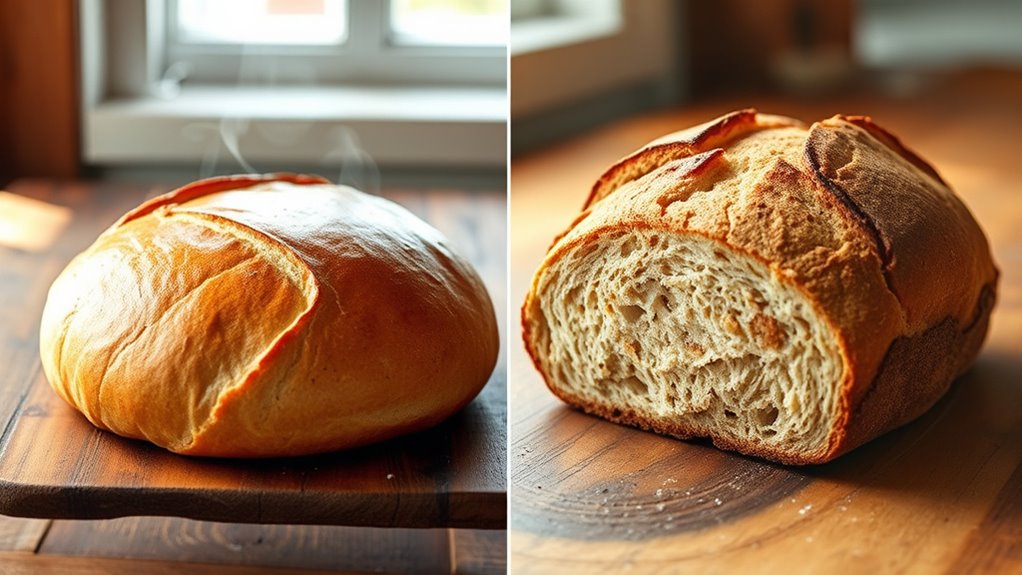
You want fresh bread without sacrificing too much time in your day. Bread machines typically save you effort with simple setups, while traditional baking often requires more preparation and planning. Consider how each method aligns with your daily schedule and ease of use to find the best fit. Incorporating smart habits such as preparing ingredients in advance or setting timers can further streamline your baking process.
Preparation Time Differences
Preparation time can vary considerably between bread machines and traditional baking, affecting how easily each method fits into your daily routine. A bread machine typically requires minimal hands-on effort—just add ingredients and press start—saving you time. However, it can be noisy during operation, which might be disruptive if you’re multitasking. Traditional baking involves more prep work, like kneading and shaping dough, but often takes less overall time if you’re experienced. The traditional oven heat requires preheating, adding to total preparation time. If you value quick setup and minimal disruption, a bread machine offers convenience. Conversely, if you’re comfortable with more involved steps, traditional baking might fit better into your schedule, especially when you can optimize preheating and kneading processes.
Ease of Use Comparison
When it comes to fitting bread-making into your daily routine, ease of use depends largely on the method you choose. A bread machine simplifies the process by handling kneading, rising, and baking with minimal input, making it ideal for busy days. You just add ingredients, select a cycle, and wait. Traditional baking requires more steps and attention, such as kneading by hand or using a stand mixer, shaping the dough, and monitoring proofing times. It’s more time-consuming but offers more control over ingredients and technique. If convenience and speed are your priorities, a bread machine fits seamlessly into your schedule. However, if you enjoy hands-on baking and flexibility, traditional methods require more effort but can be rewarding. Your choice depends on your lifestyle and baking preferences.
Daily Scheduling Flexibility
Both bread machines and traditional baking methods can be adjusted to fit into a busy schedule, but they do so in different ways. Bread machines offer convenience with minimal hands-on time—set it and forget it—while you can still customize proofing techniques, like delaying the start to fit your day. Traditional baking gives you more flexibility with ingredient substitutions and proofing schedules, but it requires more planning and active involvement. You might proof dough overnight or adjust rising times to match your routine. If your days are unpredictable, a bread machine can be a lifesaver. Conversely, if you prefer control and customization, traditional baking allows you to tweak proofing and ingredients to suit your schedule, even with last-minute changes.
Visual Appeal: Presentation and Aesthetic Considerations

When it comes to presentation, the uniformity of bread shapes can make a big difference. Bread machines often produce consistent results, while traditional baking allows for more creative garnishing options. Considering these factors can help you choose the method that best fits your aesthetic goals.
Uniformity of Shape
The uniformity of shape substantially impacts the visual appeal of your bread, making it look more professional and inviting. Achieving consistent dough consistency is vital, as uneven dough can cause irregular shapes. When shaping your loaf, using proper techniques ensures each piece of dough molds evenly, resulting in a more polished appearance. Bread machines often produce more uniform shapes because they handle kneading and shaping automatically, reducing the chances of errors. With traditional baking, your shaping techniques become essential; precise, practiced motions help maintain evenness. Pay attention to the dough’s texture and how you shape it, smoothing out any irregularities. Consistent shaping and dough handling lead to a more aesthetically pleasing loaf, elevating your bread’s presentation regardless of the baking method.
Creative Garnishing Options
Creative garnishing can transform a simple loaf into a stunning centerpiece that captures attention and enhances its overall appeal. Artistic toppings and decorative techniques allow you to elevate your bread’s presentation effortlessly. To make your loaves stand out, consider these ideas:
- Use contrasting colors with edible flowers or herbs for visual pop.
- Apply scoring patterns with a sharp blade to create intricate designs.
- Drizzle icing or glaze in artistic swirls or shapes for added elegance.
- Sprinkle seeds, nuts, or coarse salt strategically to add texture and visual interest.
Tasting Results: Flavors, Mouthfeel, and Overall Satisfaction
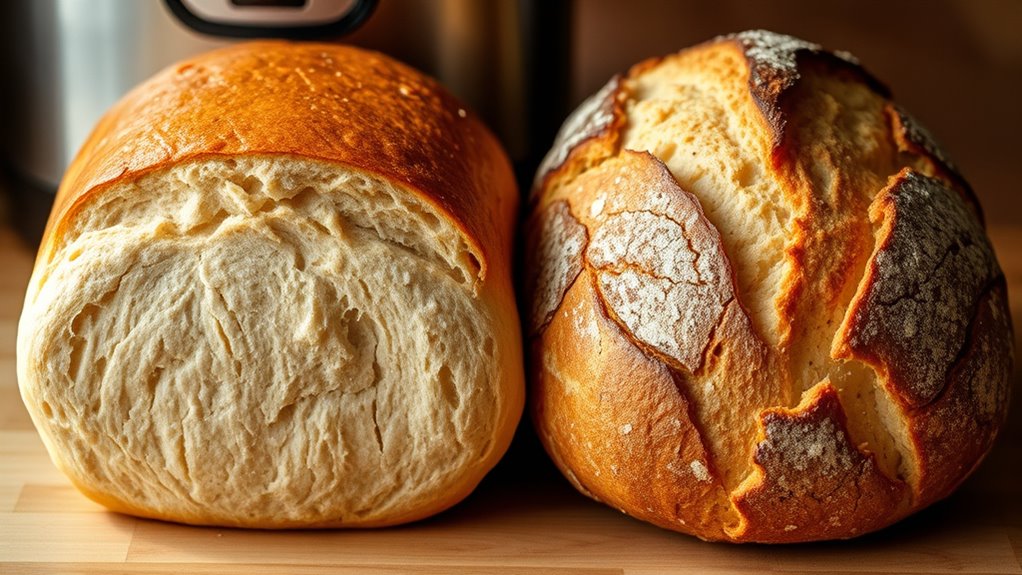
Tasting results reveal noticeable differences in flavor, mouthfeel, and overall satisfaction between bread made with a bread machine and traditional baking methods. You’ll notice that ingredient influence plays a key role in these variations. Bread from a bread machine often has a consistent flavor, but may lack the depth achieved through manual mixing and kneading, which enhances flavor development. Traditional baking allows for better flavor enhancement as you can adjust ingredients and baking times. Mouthfeel also differs: machine-made bread tends to be softer and more uniform, while hand-crafted loaves may have a more complex, textured bite. Overall, your satisfaction depends on your preferences for flavor complexity and texture. Both methods can produce delicious bread, but the subtle differences in ingredient influence profoundly impact the tasting experience.
Which Method Reigns Supreme? Final Thoughts and Recommendations
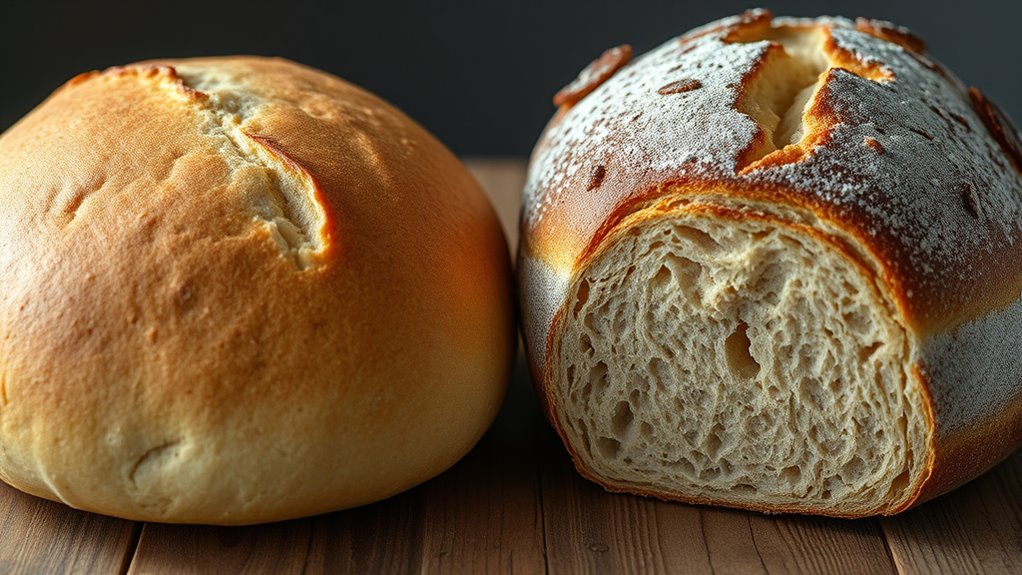
Choosing between a bread machine and traditional baking ultimately depends on what you value most in your bread. If convenience and consistency matter, a bread machine offers ease and minimal effort. Conversely, if you prefer control over ingredients and baking process, a traditional oven suits you better. Consider these key points:
- Time Investment: Bread machines save time; traditional ovens require more effort.
- Flavor Control: Traditional baking allows customization of ingredients and techniques.
- Texture and Crust: Traditional ovens often produce a crisper crust and varied textures.
- Skill Level: Bread machines are user-friendly; traditional baking demands more experience.
Ultimately, neither method is inherently superior—your choice depends on your priorities, skills, and lifestyle. Both can produce delicious bread, but select the one that aligns with your baking style.
Frequently Asked Questions
How Do Bread Machine Settings Influence Bread Texture and Crust?
Your bread machine settings directly impact dough consistency and crust thickness. For softer bread with a tender crust, choose settings with longer kneading and rising times, ensuring the dough is well-developed. To get a thicker crust, opt for a darker crust setting or higher bake temperature. Adjusting these settings helps you customize your bread’s texture, giving you control over the final product’s crust and overall feel.
Can Ingredient Substitutions Affect the Taste Differences Between Methods?
Yes, ingredient variations can considerably affect taste differences between bread machine and traditional baking methods. When you substitute ingredients, like different flours or sweeteners, it alters the flavor impacts and overall flavor profile. These changes can result in noticeable differences in taste, texture, and crust, regardless of the method used. So, experimenting with ingredient variations lets you customize your bread to match your preferred flavor and achieve consistent results across both baking styles.
What Are the Energy Consumption Comparisons for Each Baking Method?
You might find it interesting that bread machines generally consume less power, making them more energy-efficient than traditional ovens. When comparing power consumption, bread machines often use about 300-500 watts, whereas conventional ovens can use 2000 watts or more during baking. This difference impacts energy efficiency markedly, especially if you bake frequently. So, if saving energy is a priority, a bread machine could be the smarter choice for your baking needs.
How Do Storage and Shelf Life Differ Between Machine-Baked and Traditionally Baked Bread?
You’ll find that traditionally baked bread generally has a shorter storage duration, often lasting 2-3 days before mold growth begins. In contrast, machine-baked bread, with its sometimes tighter seal and preservatives, may stay fresh a bit longer, around 4-5 days. Proper storage in airtight containers helps delay mold growth for both, but you should still consume bread promptly to enjoy ideal freshness and prevent spoilage.
Are There Specific Bread Types Better Suited for Each Baking Method?
You might find it amusing, but certain breads shine with specific methods. Gluten-free options often turn out better in a bread machine, where moisture control isn’t as precise, while artisanal styles like sourdough thrive with traditional baking, showcasing complex flavors. So, if you want a rustic loaf, go traditional; for quick, gluten-free delights, your bread machine’s fine. Each method lends itself best to different bread types, surprisingly enough.
Conclusion
Whether you prefer the effortless convenience of a bread machine or the hands-on satisfaction of traditional baking, each method offers unique delights. While the machine delivers consistent, quick results, traditional baking lets you craft a personalized loaf with richer flavor and texture. Ultimately, it’s about what matters most to you—time or craftsmanship. Whichever path you choose, your perfect loaf is within reach, blending tradition and innovation in every slice.