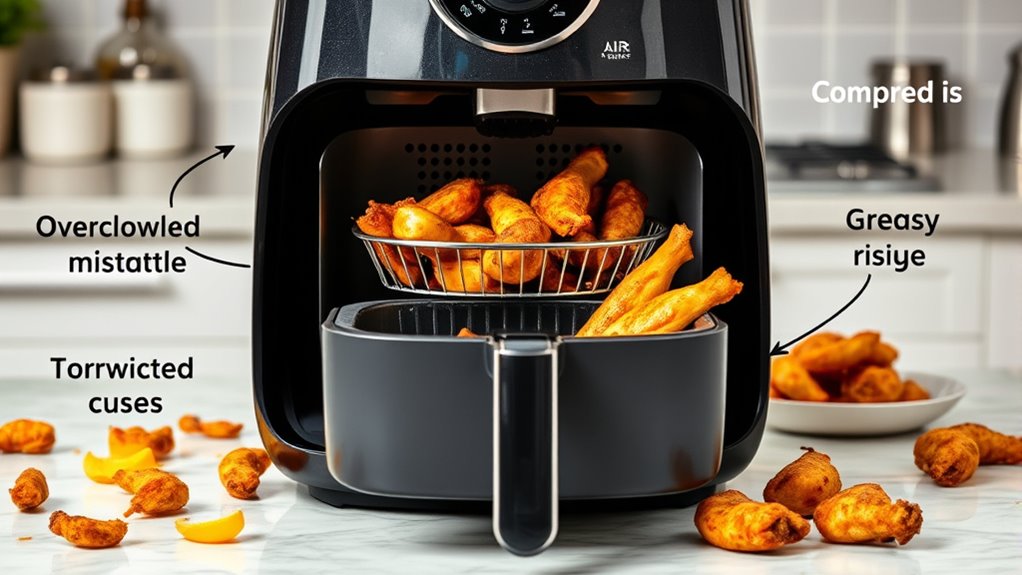

To avoid common air fryer mistakes, don’t overcrowd the basket, as it blocks airflow and causes uneven cooking. Always preheat for better crispiness, and use the right amount of oil—not too much or too little. Follow recommended times and temperatures, and remember to shake or flip food midway. Keep your appliance clean and check that your food is cooked through. Sticking to safety tips and adjusting recipes can improve results—continue exploring for more helpful tips.
Key Takeaways
- Avoid overcrowding the basket to ensure proper air circulation and crispy, even cooking.
- Preheat the air fryer when recommended to improve heat distribution and reduce cooking time.
- Use the correct amount of oil for a crispy texture without causing smoke or sogginess.
- Regularly shake or flip food during cooking for consistent browning and avoid uneven results.
- Choose appropriate, oven-safe cookware and clean the appliance thoroughly after each use.
Overcrowding the Basket

Overcrowding the basket is a common mistake that can sabotage your air frying results. When you pack too much food into the basket, it blocks air circulation, which is essential for even cooking and crispy textures. Remember, the basket capacity is designed to hold a specific amount of food; exceeding it reduces airflow and leads to uneven browning. If you overcrowd, you’ll likely end up with soggy or undercooked spots, defeating the purpose of using an air fryer. To get the best results, cook in smaller batches if necessary, ensuring that air can circulate freely around each piece. Proper air circulation guarantees that heat reaches all surfaces, giving you perfectly cooked, crispy food every time. Additionally, understanding the importance of airflow can help you optimize your cooking process for consistent, delicious outcomes. Maintaining adequate airflow is especially crucial for achieving the ideal texture in fried foods.
Not Preheating the Air Fryer
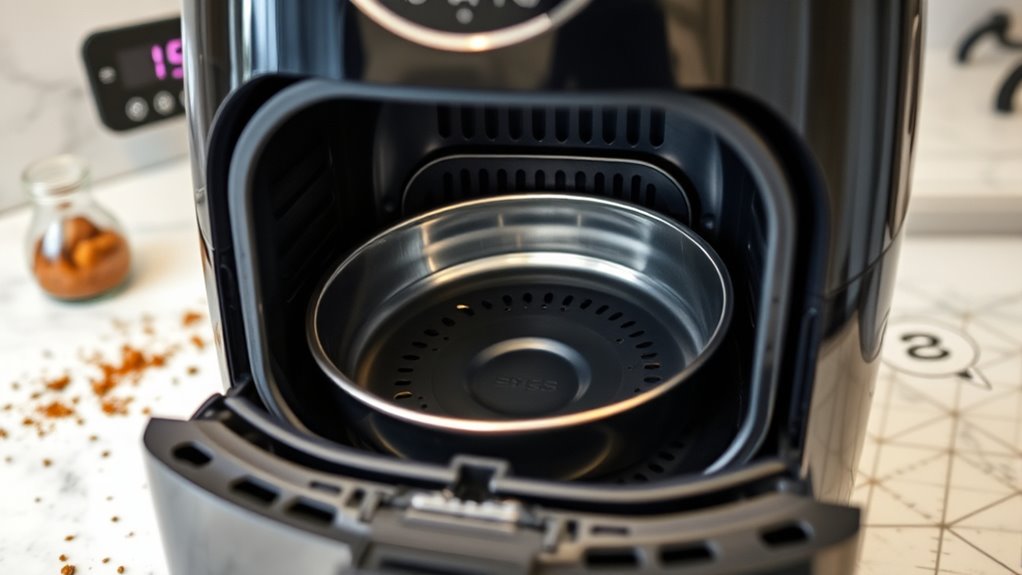
Skipping preheating can lead to uneven cooking and less crispy results. Preheating guarantees the air fryer is at the right temperature from the start, improving texture and flavor. However, some foods, like delicate fish, may not need preheating, so it’s good to know when to skip it. Incorporating connected equipment can help monitor and optimize preheating times for better results. Additionally, understanding your home energy setup can ensure efficient use of your appliance without overloading circuits.
Ensuring Proper Warm-Up
While preheating can enhance cooking results, ensuring proper warm-up without fully preheating your air fryer is still essential. An adequate air fryer warm-up helps stabilize the appliance’s temperature, leading to more consistent cooking. Even if you skip full preheating, running the air fryer for a few minutes before adding food can improve results. This step allows the interior components to reach a suitable temperature, reducing cooking time and ensuring even browning. Remember, the preheat importance isn’t just about reaching a specific temperature; it’s about giving your air fryer a chance to prepare for the task ahead. Proper warm-up minimizes the risk of uneven cooking and helps you achieve better, more predictable outcomes with every use. Understanding appliance warm-up can help you make informed decisions for optimal cooking performance. Incorporating preheating techniques can further enhance your cooking consistency and efficiency, especially when you understand the air fryer’s temperature stabilization process. Being aware of cooking cycle optimization can also contribute to better results. Additionally, recognizing how sound cues indicate when your air fryer is ready can further improve your cooking process.
Benefits of Preheating
Preheating your air fryer offers several key benefits that can markedly improve your cooking results. It helps guarantee even heat distribution, which boosts air fryer efficiency and results in consistently cooked foods. Additionally, preheating preserves flavor by sealing in juices and seasonings quickly, preventing moisture loss. This step reduces cooking time and promotes crispy textures without overcooking. To better understand, consider this comparison:
| Effect | Benefit |
|---|---|
| Improved Heat Distribution | Ensures even cooking and better texture |
| Faster Cooking | Saves time and energy |
| Flavor Preservation | Locks in taste and moisture |
| Consistent Results | Achieves reliable, high-quality dishes |
Preheating primes your air fryer for superior performance, making your cooking both efficient and flavorful. Proper preheating techniques can further optimize your results and prevent common mistakes.
When to Skip Preheat
There are situations where skipping the preheat step won’t negatively affect your cooking results. If you’re preparing items like frozen foods or small, thin pieces that cook quickly, you might want to skip preheat. Knowing when to skip preheat depends on signs preheat is unnecessary, such as when you’re in a hurry or cooking foods that don’t require a crispy exterior. For example, if your air fryer is already hot from a recent use, preheating again isn’t needed. Additionally, if you’re cooking at lower temperatures or for shorter durations, skipping preheat can save time without sacrificing quality. Trust your judgment—if your air fryer feels hot enough and the food is cooking evenly, you can confidently skip the preheat step to streamline your meal prep.
Using Too Much Oil or No Oil at All
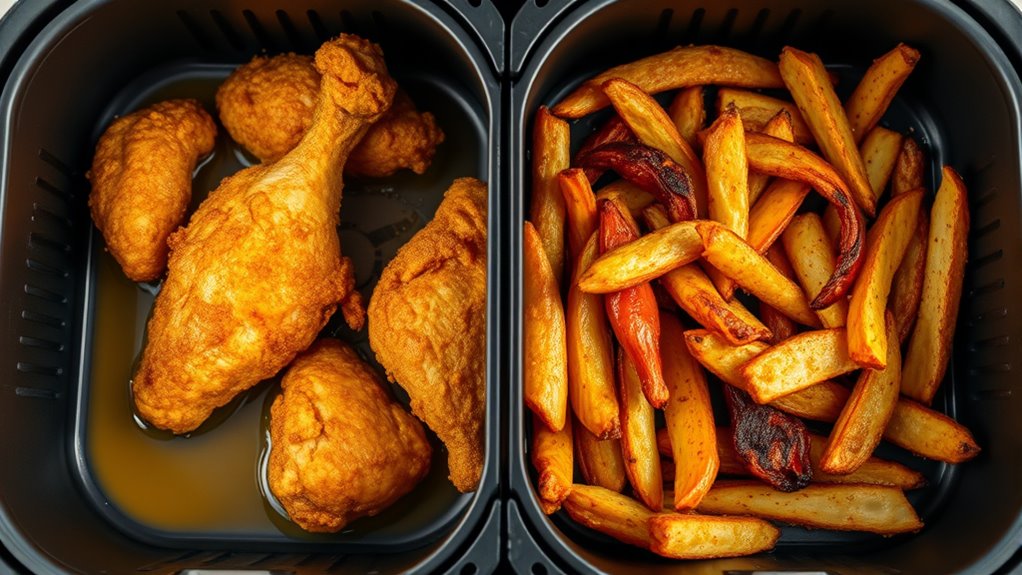
Using the right amount of oil is essential for achieving crispy, evenly cooked results in your air fryer. Too much oil can cause excess smoke and soggy textures, while too little can lead to dry, bland food. Pay attention to the oil quantity you use, and avoid pouring it directly onto food. Instead, lightly coat ingredients with cooking spray or a small amount of oil using a spray bottle. This helps create a crisp exterior without making the dish greasy. Remember, a little oil goes a long way in an air fryer. Overusing oil can also cause messes and damage to your appliance. Aim for a light, even coating to get the best texture and flavor without the drawbacks of over-oiling or skipping oil entirely.
Ignoring the Recommended Cooking Times and Temperatures
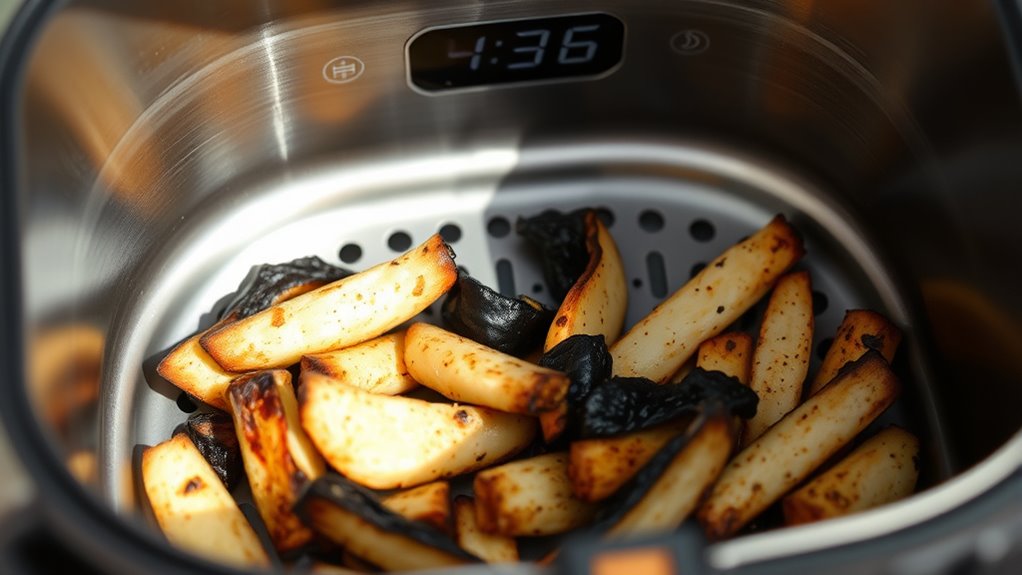
Ignoring the recommended cooking times and temperatures can lead to undercooked or burnt food, ruining your meal and wasting ingredients. Your air fryer is calibrated for specific cooking temperatures to guarantee safe, evenly cooked results. If you don’t follow these guidelines, you risk overcooking or undercooking your dishes. Making proper timing adjustments based on the type and thickness of food is essential for ideal results. Pay attention to the suggested cooking temperature and time, but also be ready to tweak them slightly if needed. Monitoring your food as it cooks allows you to make small adjustments that improve texture and flavor. Sticking to the recommended times and temperatures helps you avoid common mistakes and ensures delicious, perfectly cooked meals every time. Additionally, understanding specific cooking guidelines for different foods can further enhance your results and prevent mishaps.
Forgetting to Shake or Turn Food During Cooking
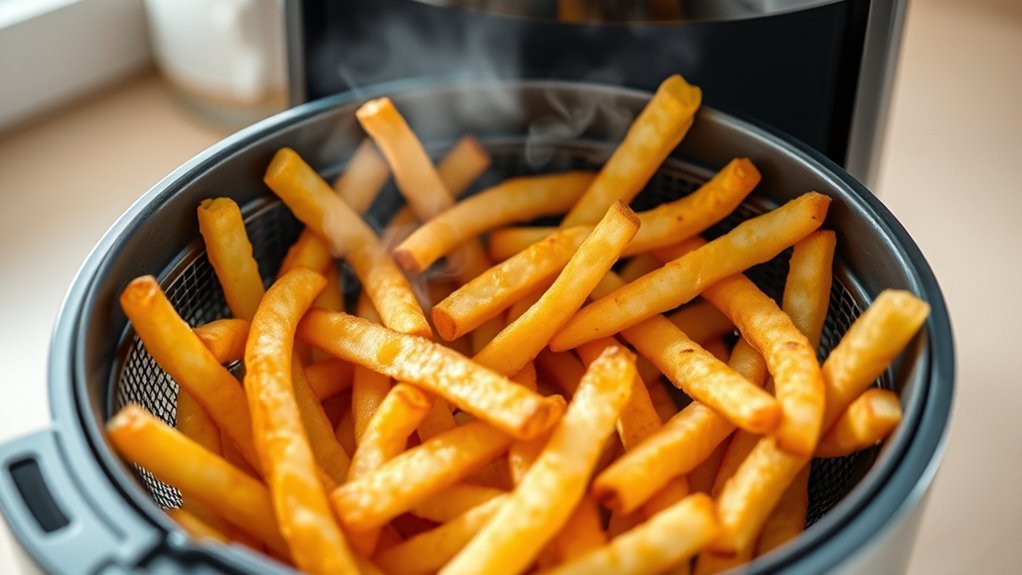
If you forget to shake or turn your food during cooking, it can lead to uneven results. Regularly flipping guarantees the food cooks evenly and stays crispy all over. Plus, it helps prevent sticking and sticking-related issues that can ruin your meal. Remembering to monitor cooking progress ensures your food is cooked to perfection and maintains its desired texture. Additionally, proper technique during flipping can further improve the overall outcome of your dish. Incorporating simple routines like setting timers or using visual cues can make flipping an easy habit to develop. Using the air fryer technology effectively also plays a role in ensuring consistent results and even browning. Being aware of common mistakes in air frying can help you troubleshoot and perfect your cooking process.
Prevents Uneven Cooking
Have you ever noticed that your air fryer food comes out unevenly cooked? This often happens when you forget to shake or turn the food during cooking. Regularly repositioning your items helps guarantee proper air circulation and even heat distribution. Without this, some parts get overcooked while others remain underdone. Proper air circulation is essential for achieving evenly cooked results. Additionally, understanding the free floating nature of airflow in many small appliances ensures you optimize your cooking process for consistent, delicious outcomes. Recognizing how hydraulics impact airflow can further improve your cooking efficiency. Using the correct oil can also influence heat transfer and cooking consistency, further preventing uneven results. Being aware of cooking techniques can help you master your air fryer and improve overall results.
Ensures Crispiness Consistency
When you forget to shake or turn your food during cooking, it can lead to uneven crispiness. To achieve consistent results, guarantee proper airflow optimization by periodically tossing or flipping your food. This helps prevent hot spots and promotes even browning. Keep in mind that air fryer capacity can impact how often you need to shake; overcrowding blocks airflow and hampers crispiness. For best results, follow these tips:
- Shake or turn food every 5-10 minutes
- Avoid overcrowding the basket
- Use a spatula or tongs for even coating
- Maintain space for air circulation
- Remember that airflow efficiency is crucial for achieving uniform crispiness and maximizing your air fryer’s performance. Regularly flipping your food ensures uniform crispiness and maximizes your air fryer’s efficiency. This simple step keeps the heat evenly distributed, resulting in perfectly crispy dishes every time.
Minimizes Food Sticking
Neglecting to shake or turn your food during cooking increases the risk of sticking to the basket or tray. To prevent this, regularly toss or flip your food halfway through the cooking process. This not only helps with even cooking but also reduces sticking. Proper seasoning techniques, like lightly coating foods with oil or a marinade, can further prevent sticking by creating a barrier between the food and the basket. Additionally, follow storage tips by keeping ingredients dry and at room temperature before cooking, which minimizes moisture that can cause sticking. Using a non-stick spray or lining the basket with parchment paper can also help. Remember, turning or shaking your food is key to avoiding stuck bits and ensuring a smooth, mess-free air frying experience.
Using the Wrong Cookware or Accessories
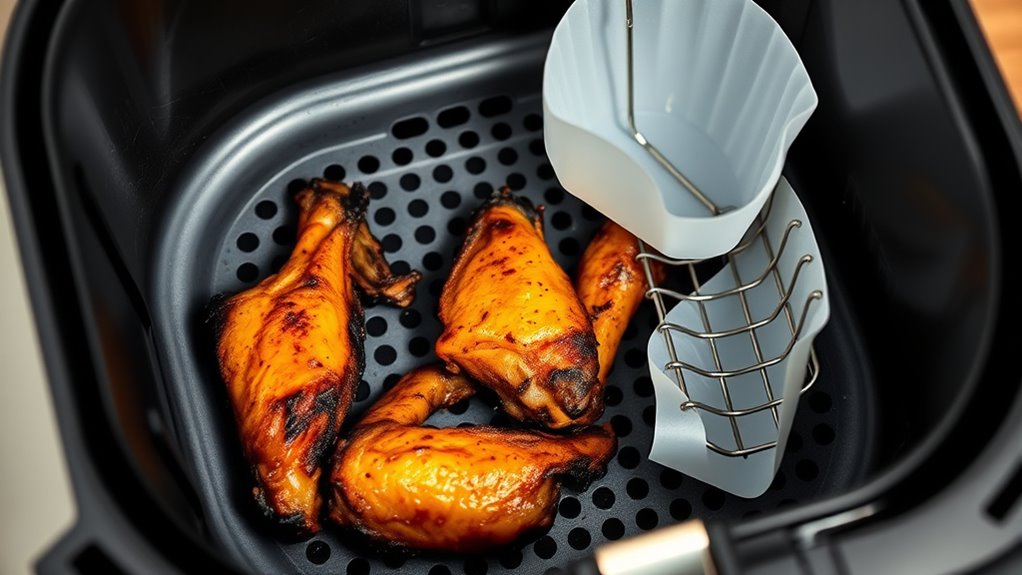
Using the wrong cookware or accessories in your air fryer can lead to poor results or even damage your appliance. To guarantee safe and effective cooking, pay attention to cookware compatibility and accessory safety. Not all materials work well in an air fryer, and improper accessories can pose fire hazards or block airflow.
Consider these tips:
- Use cookware labeled as oven or air fryer safe
- Avoid non-stick pans with damaged coatings
- Select accessories that fit comfortably without blocking vents
- Check for heat-resistant materials like silicone or stainless steel
- Be aware of deep-sky imaging principles when choosing materials to ensure safe and optimal performance. Incorporating thermal properties into your selection can help improve heat distribution and prevent overheating.
Not Cleaning the Air Fryer Properly

Regularly cleaning your air fryer is essential to keep it functioning efficiently and safely. Proper cleaning maintenance prevents grease buildup and food residue that can cause odors or affect cooking performance. Neglecting this step can lead to decreased air fryer longevity, as debris may clog vents or damage components over time. To avoid these issues, clean the basket, tray, and interior after each use with warm, soapy water, and wipe down the exterior regularly. Use a soft brush or cloth to remove stubborn grease. Remember, a well-maintained air fryer not only lasts longer but also cooks more evenly. Consistent cleaning is a simple yet vital habit to ensure your appliance performs at its best and stays safe for everyday use.
Neglecting to Check Food for Doneness
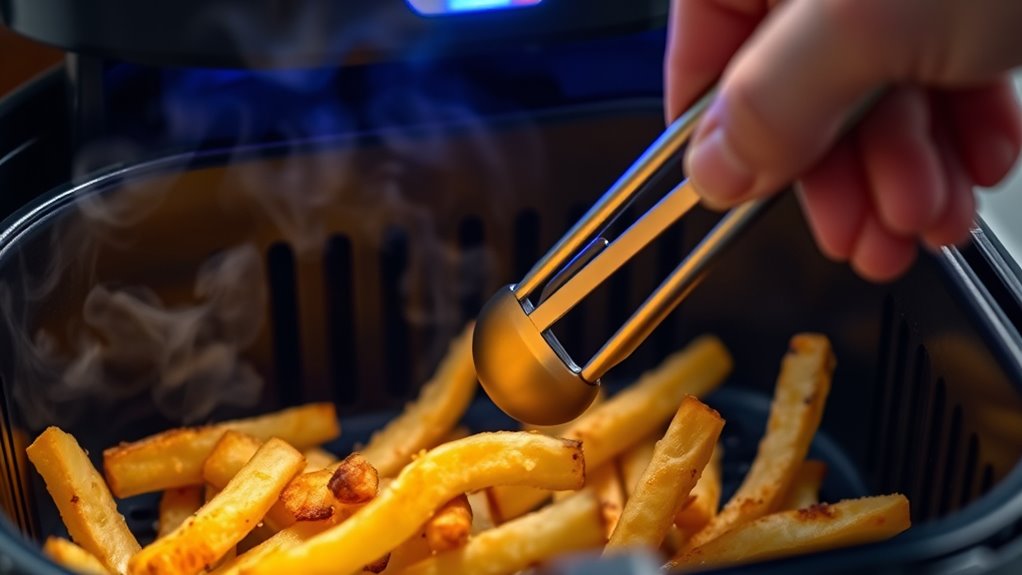
Don’t assume your food is ready just because the timer goes off. Use visual inspection tips to check for the right color and texture, and don’t forget to use a food thermometer for precise doneness. These steps help prevent undercooked or overcooked meals, ensuring safe and delicious results.
Visual Inspection Tips
Neglecting to visually check your food for doneness can lead to undercooked or overcooked results. Regular visual inspection helps you gauge doneness without relying solely on timers. When doing so, look for these signs:
- Color change or browning on the surface
- Crispiness or texture of the exterior
- Juices or steam escaping from the food
- Overall size and shape, indicating even cooking
Performing a visual inspection is a simple form of appliance maintenance that ensures your air fryer works efficiently and your food cooks properly. Keep an eye out for any uneven browning or signs of burning, which could mean your appliance needs cleaning or adjustment. Staying attentive helps you avoid mistakes and achieve perfectly cooked meals every time.
Use of Food Thermometer
Have you ever finished cooking your food in the air fryer and wondered if it’s truly done? Relying solely on appearance can be misleading. Using a food thermometer guarantees you check the food’s temperature for accurate doneness, preventing undercooked or overcooked meals. Proper food temperature guarantees safety and consistent results, boosting your cooking accuracy.
| Cooking Tip | Why It Matters |
|---|---|
| Check with a thermometer | Ensures food reaches safe internal temperature |
| Avoid guesswork | Reduces risk of undercooked or dry food |
| Use a probe for thick cuts | Ensures even cooking throughout |
| Record temperatures | Helps refine your cooking process |
Neglecting this step might compromise safety and quality, so always verify with a thermometer.
Relying Too Heavily on Recipes Without Adjustments
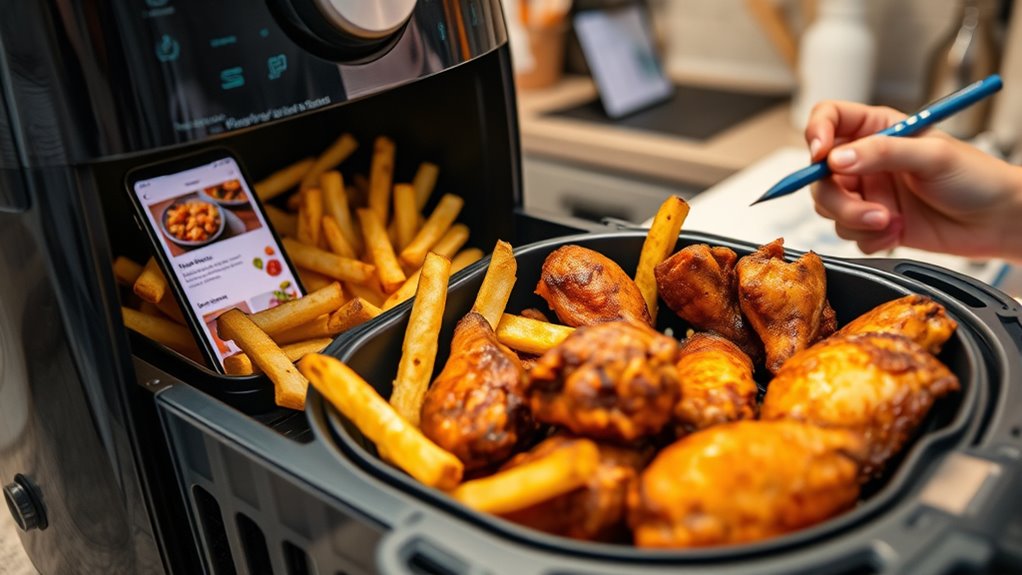
Relying strictly on recipes without making adjustments can lead to less-than-ideal results with your air fryer. Every model and ingredient varies, so it’s important to adapt recipes for the best outcome. Failing to do so can result in overcooked or undercooked food, or bland flavor. To improve, consider these tips:
Adjust recipes to your air fryer’s performance for better, tastier results.
- Make recipe adjustments based on your specific air fryer’s performance
- Tweak cooking times and temperatures as needed
- Use flavor customization to enhance dishes
- Observe and learn from each attempt, refining your approach
Ignoring Safety Precautions and Manufacturer Guidelines
Ignoring safety precautions and manufacturer guidelines can turn a simple air frying session into a hazardous situation. Failing to follow instructions may lead to safety hazards like fires, burns, or appliance damage. Always read the manufacturer instructions before use, including recommended temperatures and cooking times. Never override safety features or ignore warnings, as they are designed to protect you. Here’s a quick reminder:
| Safety Precautions | Manufacturer Guidelines | Common Mistakes to Avoid |
|---|---|---|
| Keep away from water | Use recommended accessories | Using damaged cords |
| Do not leave unattended | Proper cleaning procedures | Overloading the basket |
| Use heat-resistant gloves | Preheat when needed | Ignoring venting tips |
Adhering to these guidelines helps ensure safe, effective air frying every time.
Frequently Asked Questions
How Can I Ensure Even Cooking Without Overcrowding the Basket?
To guarantee even cooking, avoid overcrowding the basket, which can hinder air circulation. Leave enough space between food pieces so hot air can circulate freely. Check your air fryer’s basket capacity and don’t fill it beyond the recommended level. If you’re cooking large amounts, do it in batches. Proper airflow promotes consistent crispiness and thorough cooking, making sure every item turns out perfectly.
What Are the Signs That My Air Fryer Needs Cleaning?
You’ll notice your air fryer needs cleaning if airflow blockages occur or if you see residue buildup on the basket or heating element. These signs can cause uneven cooking or longer cook times. Regularly check for grease, crumbs, or other debris, and clean the basket and interior with warm, soapy water. Keeping your air fryer clean guarantees ideal airflow, prevents residue buildup, and keeps it functioning efficiently.
How Can I Prevent Food From Sticking to the Air Fryer Basket?
Think of your air fryer basket as a stage where food performs without sticking. To prevent this, always spray non-stick sprays or use basket liners before cooking. These act as a barrier, making cleanup easier and ensuring your food releases smoothly. Remember, a well-prepared basket is the secret to perfectly cooked, non-sticky results every time, turning your air frying experience into a flawless performance.
Is It Necessary to Use Oil Every Time I Cook With an Air Fryer?
You don’t always need oil when cooking with an air fryer, but it can help with crispiness and prevent sticking. Oil necessity depends on the food; for example, a light coating of cooking spray or a small amount of oil can improve results. For foods prone to sticking or that need extra crunch, using oil is recommended. However, for healthier meals, you can skip oil altogether and still get great results.
How Do I Adapt Recipes for Different Air Fryer Models?
To adapt recipes for different air fryer models, first check your air fryer’s capacity to make certain it fits the recipe’s ingredients. Then, adjust cooking times and temperatures based on your specific model’s performance, as some may cook faster or slower. Keep an eye on the food as it cooks, and consider reducing or increasing time slightly. This approach helps you achieve perfect results regardless of your air fryer’s brand or size.
Conclusion
By avoiding these common air fryer mistakes, you’ll get perfectly cooked meals every time. Did you know that 60% of air fryer users report uneven cooking due to overcrowding or neglecting preheating? Keep your basket clear, follow recipes, and clean your appliance regularly. With a little attention, you’ll enjoy healthier, crispy favorites without frustration. Master these tips, and your air fryer will become your go-to kitchen hero!