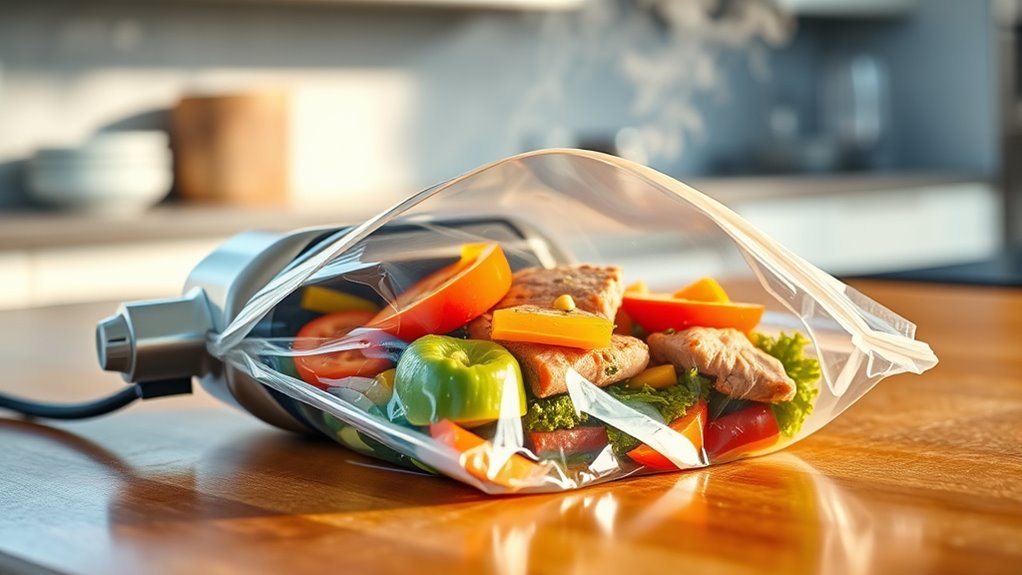
Using just bags for sous vide isn’t enough if you want the best results. A vacuum sealer removes excess air, guarantees a tight seal, and prevents water from entering the bag. This helps maintain consistent temperatures, reduces spoilage, and improves food safety. It also extends the shelf life and makes meal prep easier. If you want to discover why a vacuum sealer can make a difference, keep exploring the benefits it offers for your sous vide cooking.

Get kitchen gear delivered free with Prime
- Fast, free delivery on millions of items
- Prime Video, Amazon Music and more included
- Member-only deals all year
Key Takeaways
- Vacuum sealing provides a more reliable airtight environment than zip-top bags, ensuring consistent cooking results.
- Using a vacuum sealer extends food freshness and reduces spoilage during long sous vide sessions.
- Bags alone may risk water infiltration or air re-entry, compromising safety and preservation.
- Vacuum sealers facilitate batch cooking, portioning, and flavor infusion, enhancing convenience.
- For optimal safety, consistency, and storage, a vacuum sealer is generally recommended over just using bags.
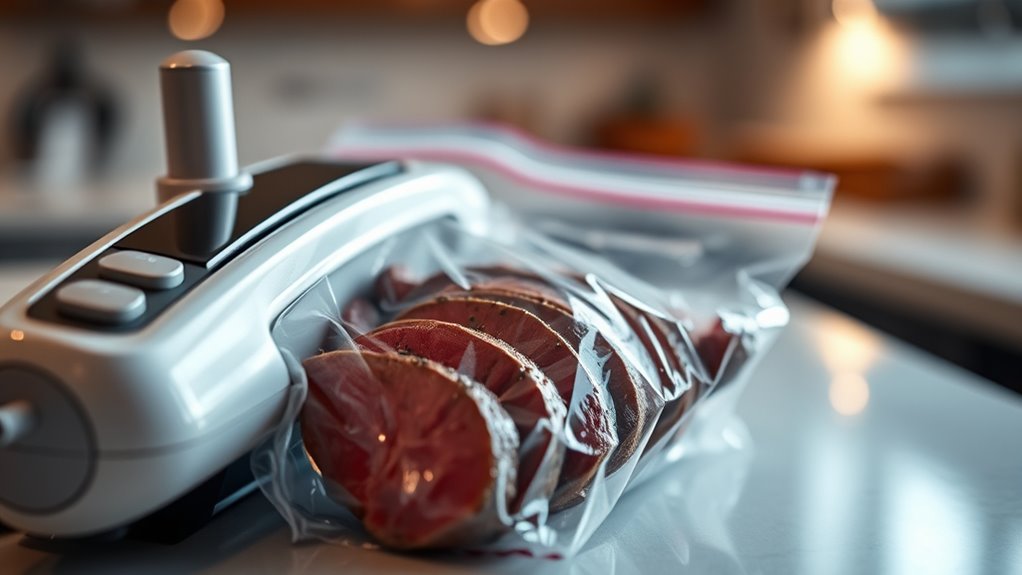
A vacuum sealer is an essential tool for anyone serious about sous vide cooking, as it guarantees your food is airtight and properly sealed for precise temperature control. When you’re cooking sous vide, maintaining a consistent temperature is key to achieving perfect results, and a good seal prevents water from seeping into the bag or air from getting in. This not only improves food safety but also enhances food preservation, allowing you to store cooked or raw ingredients for longer periods without spoilage. Plus, using a vacuum sealer simplifies your meal prep, making cooking more convenient because you can prepare multiple bags in advance, seal them, and store them in the fridge or freezer until ready to cook.
Many home cooks wonder if high-quality bags alone can do the job or if a vacuum sealer is necessary. While it’s true that you can use zip-top or resealable bags for some sous vide applications, they often fall short in guaranteeing an airtight, secure seal. These bags can sometimes allow air to escape or seep back in, which compromises food preservation and the precision of your cooking. Without a proper vacuum, you risk water infiltration or uneven heat transfer, leading to less consistent results. A vacuum sealer removes all the excess air from the bag, creating an airtight environment that’s ideal for sous vide. This not only preserves flavors and textures but also ensures your food is cooked evenly and safely.
Using high-quality bags alone may not guarantee an airtight seal for perfect sous vide results.
In addition to food preservation, a vacuum sealer enhances cooking convenience. It allows you to batch cook and store multiple portions, saving you time during busy weeknights. You can season your ingredients beforehand, seal them, and then cook them later without worry. This method also makes portion control easier because you’re sealing individual servings, reducing waste and making reheating straightforward. The convenience extends to cleaning up, as sealed bags are less messy and easier to handle compared to loose ingredients or messy zip-top bags. Overall, investing in a vacuum sealer streamlines your sous vide process, making it more reliable and efficient.
Using a vacuum sealer also supports food safety by reducing the risk of bacterial growth associated with air exposure and spoilage. While high-quality bags are useful, they’re no substitute for a vacuum sealer if you want the best results. The combination of airtight sealing and food preservation benefits makes a vacuum sealer indispensable for serious sous vide enthusiasts. It ensures your food stays fresh longer, cooking remains precise, and your overall experience becomes more convenient and enjoyable. If you’re committed to elevating your sous vide game, a vacuum sealer is well worth the investment.
As an affiliate, we earn on qualifying purchases.
Frequently Asked Questions
Can I Use Regular Zip-Top Bags for Sous Vide Cooking?
You can use regular zip-top bags for sous vide, but make certain they’re food-safe and freezer-grade to prevent leaks. Check their durability—thin or cheap bags may puncture or tear, risking food safety and ruining your cook. For peace of mind, investing in vacuum-sealed bags or heavy-duty freezer bags offers better durability. Always double-check the bag’s safety and strength to keep your sous vide cooking reliable and safe.
How Long Can I Store Sous Vide Food in Bags?
Imagine the gentle whisper of freshness—your sous vide creations can stay safely in bags for up to 1-2 weeks if refrigerated. For longer storage, freezing extends the window to several months, but always prioritize food safety. Properly sealed, your food remains flavorful and safe, allowing you to savor perfectly cooked meals at your own pace. Just remember, the key is timely consumption to ensure quality and safety.
Are There Health Risks With Using DIY Vacuum Sealers?
DIY vacuum sealers can pose health risks if you neglect proper DIY safety measures. Poor seal integrity may allow bacteria or air to enter, increasing spoilage or contamination risks. Always verify your DIY device is built correctly and tested thoroughly. If you’re unsure about your seal’s integrity, it’s safer to use professionally-made vacuum sealers, which guarantee better safety and reliable seal integrity, reducing potential health hazards.
What Are the Cost Differences Between Bags and Vacuum Sealers?
The cost comparison shows that bags are generally cheaper upfront, making them a budget-friendly option for sous vide cooking. However, investing in a vacuum sealer might save you money long-term, especially if you cook often, since it allows you to reuse bags and ensures better sealing. Consider your equipment investment and frequency of use to determine if paying more initially for a sealer is worth it.
Do Vacuum Sealers Affect the Taste or Texture of Sous Vide Meals?
A vacuum sealer acts like a guardian for your food, preserving flavor and texture during sous vide cooking. It enhances flavor by removing air, preventing oxidation, and locking in juices, which results in more vibrant taste. Plus, it helps maintain the desired texture, ensuring your meals stay tender and consistent. Without a sealer, bags alone can sometimes allow air in, diminishing the overall quality of your sous vide creations.
As an affiliate, we earn on qualifying purchases.
Conclusion
In the end, whether you opt for a vacuum sealer or just use bags, remember that a stitch in time saves nine. While a vacuum sealer can guarantee a tighter seal and better results, high-quality bags often do the trick for most home cooks. Trust your needs and budget, because sometimes, good enough is better than perfect. After all, it’s the effort that counts as much as the equipment.
vacuum sealer bags for sous vide
As an affiliate, we earn on qualifying purchases.
As an affiliate, we earn on qualifying purchases.
As an affiliate, we earn on qualifying purchases.
Halloween Picks
halloween
As an affiliate, we earn on qualifying purchases.