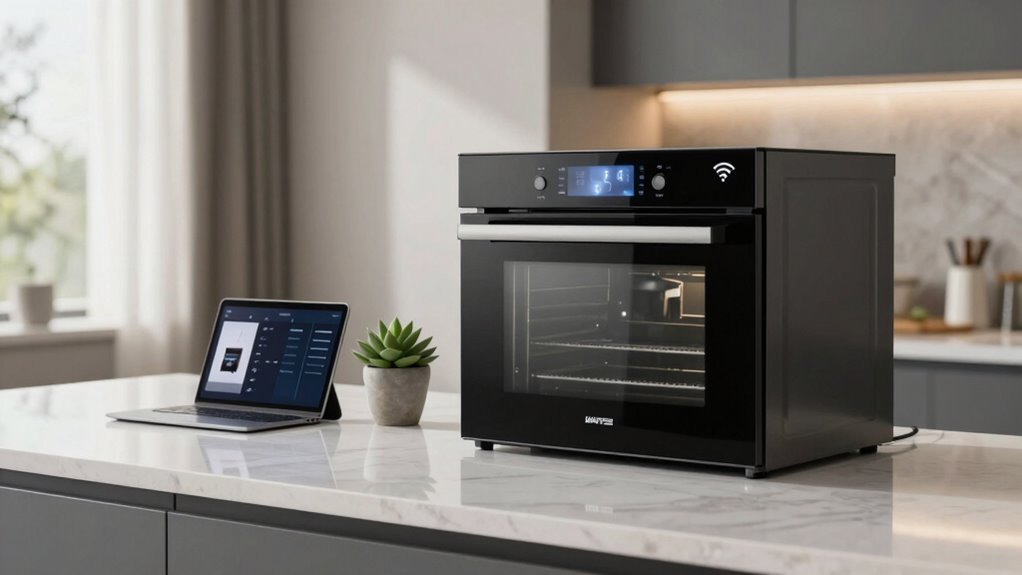
Many people ignore smart appliance settings like voice control and energy monitoring, but these features can dramatically boost your convenience and efficiency. Enabling voice commands allows hands-free operation and seamless automation, while energy monitoring helps you identify wasteful devices and reduce bills. By activating these options, you release your appliances’ full potential and create a smarter, more efficient home. To discover how you can enhance your smart setup, keep exploring these essential but often overlooked features.

Get kitchen gear delivered free with Prime
- Fast, free delivery on millions of items
- Prime Video, Amazon Music and more included
- Member-only deals all year
Key Takeaways
- Enable voice control to operate appliances hands-free and create personalized routines for seamless automation.
- Activate energy monitoring to track consumption, identify inefficiencies, and optimize energy use.
- Regularly review and adjust smart settings to maximize appliance efficiency and performance.
- Integrate appliances with other smart home systems for comprehensive automation and convenience.
- Utilize energy-saving modes and schedules to reduce waste and lower utility costs.
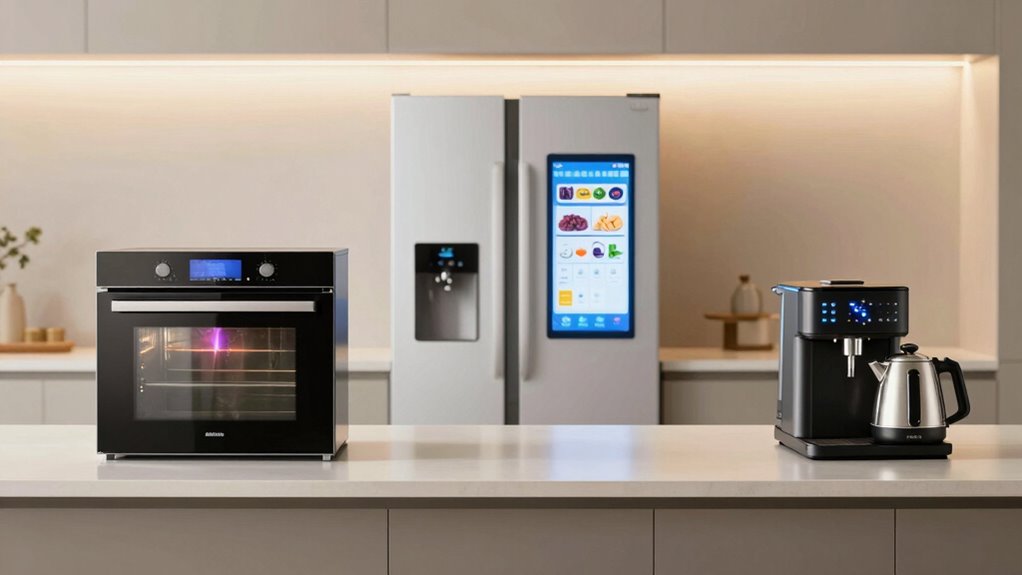
Voice control is more than just a futuristic gimmick. When you enable this feature, you can operate your appliances hands-free, which is especially useful during busy mornings or when your hands are full. With simple voice commands, you can start your dishwasher, adjust your thermostat, or turn on your oven. This not only streamlines your daily routines but also helps you stay focused on other tasks without fumbling for buttons or remote controls. Plus, voice control often integrates with other smart home systems, allowing you to create customized routines. For example, you could say, “Good morning,” and have your coffee maker start brewing, your shades open, and your thermostat set to a comfortable temperature. Ignoring voice control means missing out on this level of convenience and automation. Paying attention to smart appliance integration can unlock even more seamless control across your devices. Additionally, exploring home automation options can further enhance how your appliances communicate and work together, creating a truly connected living space. Recognizing the importance of device interoperability can significantly improve the overall efficiency of your smart home setup.
Energy monitoring is another feature that most people overlook but shouldn’t. Many smart appliances come equipped with energy monitoring capabilities that provide real-time data on how much power your devices consume. By paying attention to these readings, you can identify which appliances are energy hogs and adjust your usage accordingly. For instance, you might discover your refrigerator consumes more energy than necessary, prompting you to check its settings or maintenance needs. Understanding your energy consumption helps you make smarter decisions, reduce your utility bills, and lessen your environmental impact. Some appliances even allow you to set energy-saving modes or schedules based on monitored data, optimizing their efficiency without sacrificing performance. Overlooking energy monitoring means you could be wasting money on appliances that could operate more efficiently, and you might not even realize it. This awareness can lead to more sustainable habits and better long-term savings.
Incorporating these settings into your routine doesn’t require much effort, but the benefits are substantial. Voice control makes daily tasks easier and more natural, while energy monitoring empowers you with insights to cut costs and improve sustainability. Many people aren’t aware that these features are available or don’t bother to activate them, but doing so transforms your smart appliances from basic tools into intelligent assistants that truly work for you. By paying attention to these often ignored settings, you maximize your appliances’ potential, making your home smarter, more efficient, and more aligned with your lifestyle.
smart home voice control devices
As an affiliate, we earn on qualifying purchases.
As an affiliate, we earn on qualifying purchases.
Frequently Asked Questions
How Often Should I Update My Smart Appliance Firmware?
You should update your smart appliance firmware whenever updates are available, ideally every few months. Regular firmware updates are essential for appliance maintenance because they fix bugs, improve performance, and enhance security. Ignoring these updates can leave your device vulnerable and less efficient. Stay proactive by checking for firmware updates regularly through your device’s settings or app, ensuring your smart appliances run smoothly and safely over time.
Can I Customize Notification Alerts for Specific Appliance Issues?
Of course, you can customize notification alerts for specific appliance issues—because who wants to be bombarded with useless updates? You just need to explore your smart appliance’s settings and set up custom notifications for appliance alerts. This way, you’ll only get alerted when something truly important happens, saving you from unnecessary panic and keeping your smart home running smoothly without the chaos of generic alerts.
Are There Energy-Saving Settings I Overlook in My Smart Appliances?
Yes, you might overlook energy-saving settings that can boost your appliance efficiency and reduce energy consumption. Check your smart appliances for options like eco modes, schedule energy-efficient operation times, and enable standby power saving. These settings not only lower your utility bills but also help the environment. Regularly reviewing and adjusting these options guarantees you’re maximizing your appliances’ efficiency and making the most of their energy-saving potential.
How Secure Are the Default Privacy Settings on Smart Appliances?
Your smart appliances’ default privacy settings might not be as secure as you think. They often come with generic privacy policies and basic data encryption, leaving your personal info vulnerable. Until you dig into these settings, you could be unknowingly exposing sensitive data. It’s essential to review and customize privacy policies and enable stronger data encryption options, ensuring your smart home remains safe from potential breaches. Don’t leave your security to chance.
Can I Integrate Multiple Smart Appliances for Synchronized Operation?
Yes, you can integrate multiple smart appliances for synchronized operation by checking device compatibility and using a central hub or app. Make sure your devices support common standards like Zigbee or Z-Wave, which facilitate seamless automation routines. Once compatible, you can create automation routines that sync your appliances, enabling coordinated actions like adjusting lights and thermostats together, enhancing convenience and energy efficiency in your smart home setup.
As an affiliate, we earn on qualifying purchases.
Conclusion
Don’t let those overlooked settings drift into the shadows like forgotten treasures. When you take a moment to explore and tweak your smart appliances, you’re revealing a symphony of convenience and efficiency, turning your home into a well-tuned orchestra. Think of these features as secret ingredients in your everyday recipe—hidden, yet essential for flavor. Embrace the full potential of your devices, and watch your home transform into a smart sanctuary where every note plays just right.
As an affiliate, we earn on qualifying purchases.
As an affiliate, we earn on qualifying purchases.
Halloween Picks
halloween
As an affiliate, we earn on qualifying purchases.