Use quick release when you need to prevent overcooking delicate foods like seafood or vegetables and want to stop the cooking immediately. It’s also ideal for quick meal prep and when dishes reach desired doneness early. Natural release is better for gentler pressure reduction, especially with soups, stews, or soft ingredients, to preserve moisture and texture. Knowing when to choose each method helps you get perfect results—keep exploring to learn more about mastering these techniques.
Key Takeaways
- Use quick release for delicate foods like seafood and vegetables to prevent overcooking and mushiness.
- Opt for natural release when cooking meats or legumes to maintain moisture and tenderness.
- Quick release rapidly stops cooking, ideal when dish reaches desired doneness early.
- Natural release gradually reduces pressure, preserving flavor and preventing texture loss in sensitive ingredients.
- Always ensure pressure is fully released before opening the lid to ensure safety, regardless of the method used.
Understanding the Pressure Release Methods

Understanding the pressure release methods is essential for safe and effective use of your pressure cooker. You need to monitor the pressure gauge to ensure it’s at the right level before releasing steam. When steam venting, always do it carefully to avoid burns or accidents. Natural release involves letting the pressure decrease on its own, which is safer for foods that might foam or splatter. You can also control the venting process by choosing the appropriate method based on the recipe and food type. Recognizing how your pressure cooker’s steam venting works helps you choose the right method for your recipe. Always keep your hands and face away from the vent, and wait until the pressure gauge indicates it’s safe to open. Safety considerations in pressure cooking emphasize proper release techniques to prevent accidents. Properly understanding pressure release techniques ensures both safety and optimal cooking results. Additionally, understanding pressure buildup and how it interacts with different foods can help prevent over-pressurization and potential hazards.
When to Use Quick Release

Use quick release when you want to prevent overcooking or cut down on overall cooking time. It’s ideal for delicate foods that can easily turn to mush if left too long under pressure. Knowing when to use this method helps you achieve perfect texture and flavor every time. Additionally, understanding effective timing strategies ensures optimal results with your pressure cooker. Being aware of pressure release techniques can also enhance safety and efficiency during cooking. To optimize your cooking process, mastering pressure control can make a significant difference in your results. Being familiar with cooking time adjustments helps you tailor your approach for different recipes and ingredients.
Prevents Overcooking
When you want to prevent overcooking delicate ingredients, quick release is your best option. It quickly releases steam buildup, stopping the cooking process immediately. Proper valve positioning is essential; verify the valve is set to vent to avoid continued heat. Using quick release helps you control the timing precisely, especially for delicate foods like seafood or vegetables. Detecting passive voice can further improve clarity and effectiveness in your instructions.
Reduces Cooking Time
Quick release not only prevents overcooking but also helps cut down cooking time considerably. When you use quick release, you stop the pressure buildup instantly, which halts the cooking process immediately. This is especially helpful when your dish reaches the desired doneness sooner than expected or when you want to avoid overcooking delicate ingredients. Releasing pressure quickly allows excess cooking liquid to escape faster, preventing the dish from becoming too watery or mushy. By stopping the cooking process in its tracks, you save valuable time, making your meal prep more efficient. It’s an ideal method when you need to serve your food promptly or want to avoid unnecessary continued cooking, especially in recipes where timing is critical for perfect results.
Suitable for Delicate Foods
Because delicate foods can easily become overcooked or mushy, quick release is often the best choice to preserve their texture. Using quick release stops the cooking process immediately, protecting the food’s integrity and flavor infusion. This method is ideal when you want to maintain a tender, yet firm, texture.
Here are three situations where quick release suits delicate foods:
- Seafood – prevents overcooking and maintains moisture.
- Vegetables – preserves crunch and vibrant color.
- Eggs – keeps yolks and whites at the perfect consistency.
Choosing quick release for these foods ensures you retain their delicate texture and flavorful qualities, avoiding mushiness and overprocessing.
When to Opt for Natural Release

You should consider natural release when you want a gentle pressure reduction that helps prevent food loss. It’s especially useful for dishes with delicate ingredients that might break apart or overcook with quick pressure drops. Choosing natural release at the right time guarantees your meal stays intact and flavorful.
Gentle Pressure Reduction
Gentle pressure reduction, or natural release, is ideal when cooking delicate foods that can easily break apart or overcook with sudden changes in pressure. During this process, you allow the pressure to decrease gradually as the pressure buildup subsides naturally. This prevents abrupt steam venting, which can damage fragile ingredients or cause splattering. Use natural release for dishes like soups, stews, or seafood, where gentle cooling preserves texture and flavor. Additionally, knowing the net worth of culinary personalities can inspire confidence in your cooking journey. Here are key points to consider:
- Wait patiently for pressure to drop without opening the lid prematurely.
- Avoid rapid steam venting, which can disturb delicate foods.
- Use natural release when cooking sensitive ingredients that need gentle pressure reduction for maximum results.
Prevents Food Loss
Opting for natural release helps prevent food from losing its moisture and essential flavors. When you let the pressure subside gradually, the cooking liquid stays inside the pot, maintaining the food’s juiciness and tenderness. This method minimizes steam condensation on the lid, reducing the risk of excess liquid escaping and drying out your dish. Rapid release often causes rapid evaporation of the cooking liquid, which can lead to dry or overcooked food. By choosing natural release, you give the steam time to escape slowly, preserving the dish’s moisture content. Proper pressure release techniques ensure your meal maintains its optimal taste and texture. Additionally, natural release can help food overcooking that might occur if pressure drops too quickly. Using natural release can also help prevent pressure fluctuations, ensuring a more consistent cooking process. Incorporating safe pressure management can further enhance the effectiveness of this method and protect your cookware.
Ideal for Sensitive Ingredients
Sensitive ingredients—such as seafood, delicate vegetables, or soft fruits—benefit most from natural release because their textures and flavors can easily be compromised by rapid pressure changes. Using natural release allows gentle cooling, preserving the integrity of these ingredients. This method also enhances flavor infusion, as the gradual reduction in pressure helps flavors meld without rushing liquid evaporation. Additionally, pressure release techniques can reinforce the importance of proper pressure release methods for optimal results. Consider these points: 1. Prevents overcooking and maintains delicate textures. 2. Minimizes the risk of flavor loss due to rapid evaporation. 3. Ensures even heat distribution, protecting fragile ingredients. Employing pressure management is crucial for delicate items, as it helps prevent sudden temperature swings that could damage their structure. Opting for natural release in these cases helps you retain the quality of sensitive ingredients, ensuring they come out tender, flavorful, and perfectly cooked.
Effects of Release Methods on Different Types of Foods
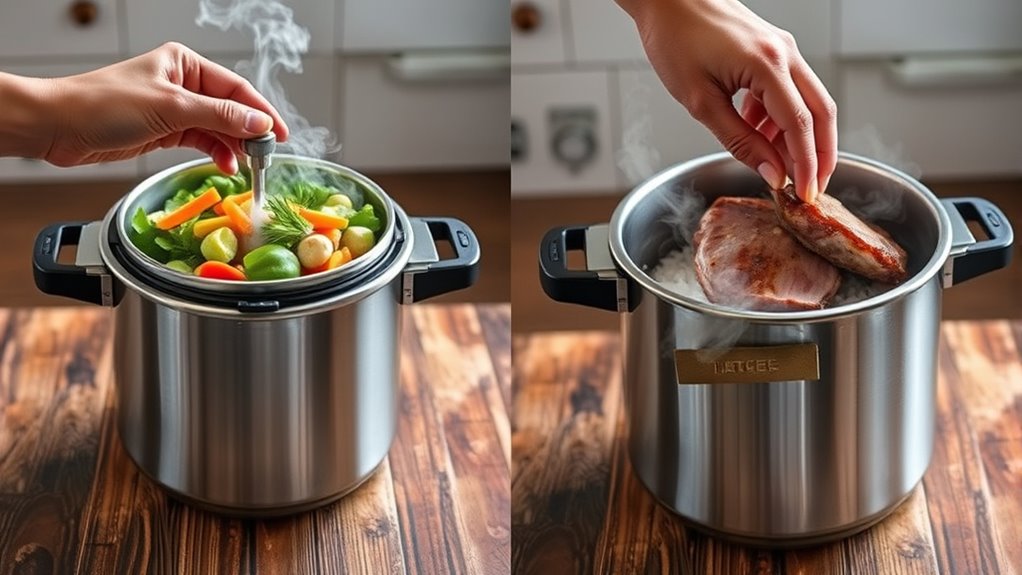
The choice of release method considerably impacts how different foods respond during pressure release. When you use quick release, delicate foods like seafood or vegetables often retain more flavor, but their textures can become softer or less firm quickly. Rapid pressure reduction** can sometimes cause sudden temperature drops, affecting flavor preservation in sensitive ingredients. Additionally, the rapid change in pressure can lead to uneven cooking or texture loss in certain foods. Natural release, on the other hand, allows gradual pressure reduction, helping preserve the integrity of tougher cuts of meat or beans by minimizing texture modification. Moreover, natural release helps stabilize flavors in dishes by allowing residual heat to gently finish cooking, maintaining a better texture for grains and legumes. Selecting the appropriate method depends on the food’s nature and desired outcome, ensuring optimal cooking results and flavor retention. Understanding how pressure build-up and release mechanisms** influence cooking outcomes can help optimize results for various recipes.
Safety Precautions During Pressure Release

Safety precautions during pressure release are essential to prevent accidents and injuries. Always guarantee your pressure cooker is in good condition through regular equipment maintenance to avoid malfunction during release. When releasing pressure, keep your face and hands away from the steam vent to prevent burns. Use a long-handled utensil if needed to carefully control the pressure release process. Be aware that affiliate disclosures ensure transparency about potential earnings from links during your shopping experience. Proper pressure management is vital for safety and consistent cooking results. Understanding the pressure build-up inside the cooker helps you choose the appropriate release method for safety and efficiency. 1. Verify the pressure has fully dropped before opening the lid. 2. Use the proper release method for your recipe—quick or natural. 3. Avoid forcefully opening the lid if there’s still pressure inside.
Following these steps minimizes risk and promotes pressure safety, ensuring a safe cooking experience every time.
How to Perform a Quick Release Safely
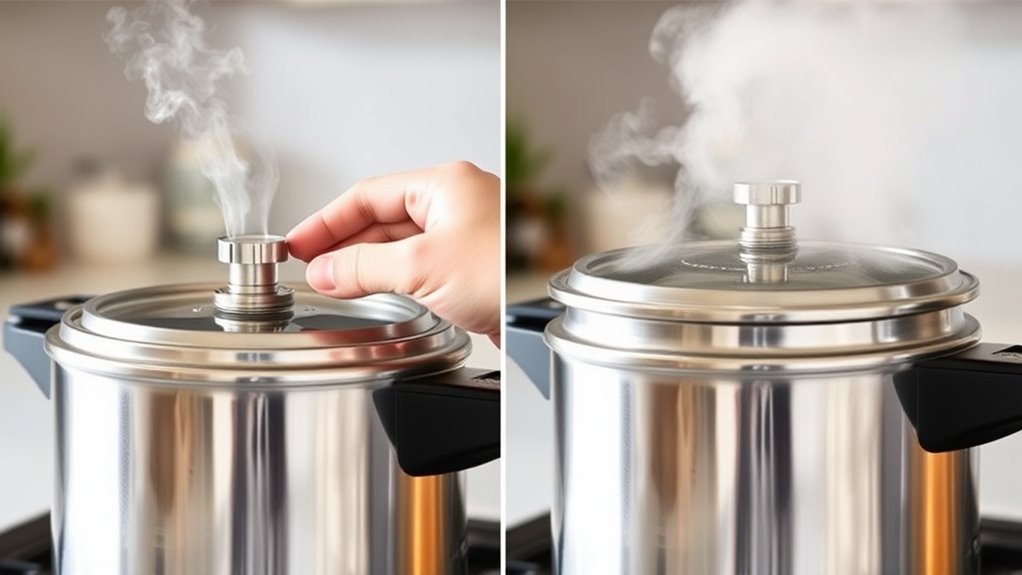
When performing a quick release, you need to act swiftly and carefully to release pressure safely. First, turn the valve or press the release button, depending on your model. Keep your hands and face away from the steam vent to avoid burns from hot cooking liquids. Timing adjustments are essential—wait until the hissing sound subsides and the pressure indicator drops before opening the lid. Use a utensil if needed, and never force the lid open. To help you stay organized, here’s a quick reference:
| Step | Action | Caution |
|---|---|---|
| 1 | Activate quick release | Keep hands clear of steam |
| 2 | Wait for steam to stop | Avoid burns from hot liquids |
| 3 | Check pressure indicator | Ensure pressure is gone |
| 4 | Open lid carefully | Prevent splashing |
| 5 | Adjust timing for liquids | Prevent over- or undercooking |
Signs That Indicate Natural Release Is Complete
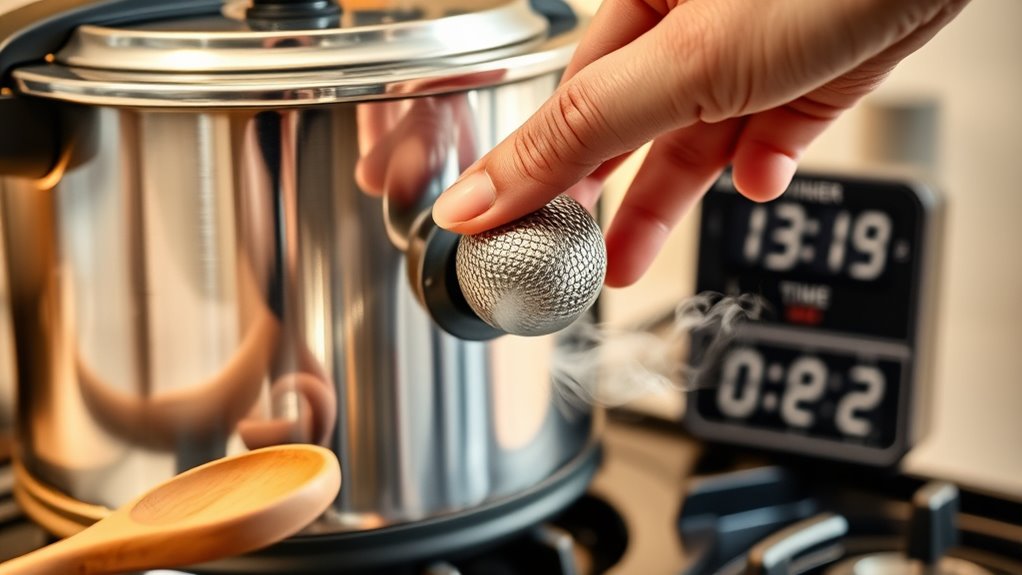
Knowing when natural release is complete requires paying close attention to specific signs. First, the pressure build-up inside the cooker will decrease, and the pressure indicator may drop or stay steady. Second, you’ll notice steam venting slowing down or stopping altogether, signaling that the pressure has mostly released. Third, the float valve or pressure indicator will release or drop, confirming that the cooker has returned to normal pressure. These signs show that the natural release process has finished, and it’s safe to open the lid. Relying on these cues helps prevent accidents and ensures your food is cooked perfectly without rushing the process. Always wait patiently until these signs are clear before proceeding.
Tips for Achieving Perfect Results With Pressure Release Techniques

Achieving perfect results with pressure release techniques depends on your timing and method. Always monitor the pressure valve closely; it indicates when pressure drops safely. For quick releases, carefully turn or lift the steam vent to release steam rapidly, but do so away from your face to avoid burns. Use the natural release method when you want gentle, even cooling, especially for delicate foods like seafood or grains. Confirm the steam vent is fully open if you’re doing a quick release, and wait until the pressure indicator drops. Keep a close eye on the pressure valve throughout to prevent over-release or under-release. Proper timing and attention to the steam vent help you avoid overcooking or undercooking and achieve consistent, perfect results every time.
Frequently Asked Questions
Can I Switch Between Quick and Natural Release During Cooking?
Yes, you can switch between quick and natural release during cooking, but do so carefully for safety reasons. Usually, you start with natural release to guarantee safety and even cooking, then switch to quick release if you need to speed up the process. Always follow your pressure cooker’s instructions to avoid accidents. This approach balances safety considerations and cooking efficiency, giving you control over the texture and doneness of your food.
How Does Altitude Affect Pressure Release Times?
When you’re high up, pressure release times take longer because altitude lowers atmospheric pressure, making the cooker work harder. You’ll need to make altitude adjustments to guarantee proper cooking. Cooking time variations increase, so be patient and allow extra time for natural release or quick release as needed. Keep in mind, it’s not rocket science, but patience is key to avoid undercooked or overcooked food at higher elevations.
Are There Foods That Shouldn’T Be Pressure Released Quickly?
You should avoid quick releasing pressure for foods like legumes, grains, and certain meats, as pressure release safety is essential to prevent splattering or burns. These foods might foam or release hot liquids, risking appliance maintenance issues or injury. Always follow manufacturer instructions for your pressure cooker, and use natural release when cooking delicate or starchy foods to guarantee safety and proper results.
What Are the Risks of Improper Pressure Release?
If you release pressure improperly, you risk accidents like steam burns from sudden pressure release. Pressure buildup inside the cooker can cause hot steam or liquid to escape unexpectedly, leading to injuries or spills. Always follow safety guidelines, use the pressure release method suited for your food, and keep your hands and face clear of the steam vent. Properly discharging pressure ensures your safety and prevents kitchen mishaps.
How Do I Know When the Pressure Cooker Is Fully Depressurized?
Imagine a kettle whistling down; that’s how you’ll know your pressure cooker is fully depressurized. Check the pressure indicator—if it’s no longer in the “pressure” zone—and verify the steam vent stops releasing steam. Once these signs appear, you can safely open the lid. Patience is key, so wait until the indicator shows zero pressure and no steam escapes before opening.
Conclusion
Choosing between quick release and natural release depends on your dish and desired outcome. By understanding when and how to use each method, you’ll guarantee perfectly cooked meals every time. So, next time you’re using your pressure cooker, will you opt for speed or patience? Mastering these techniques not only improves your cooking but also keeps you safe. Happy pressure cooking—your delicious results are just a release away!