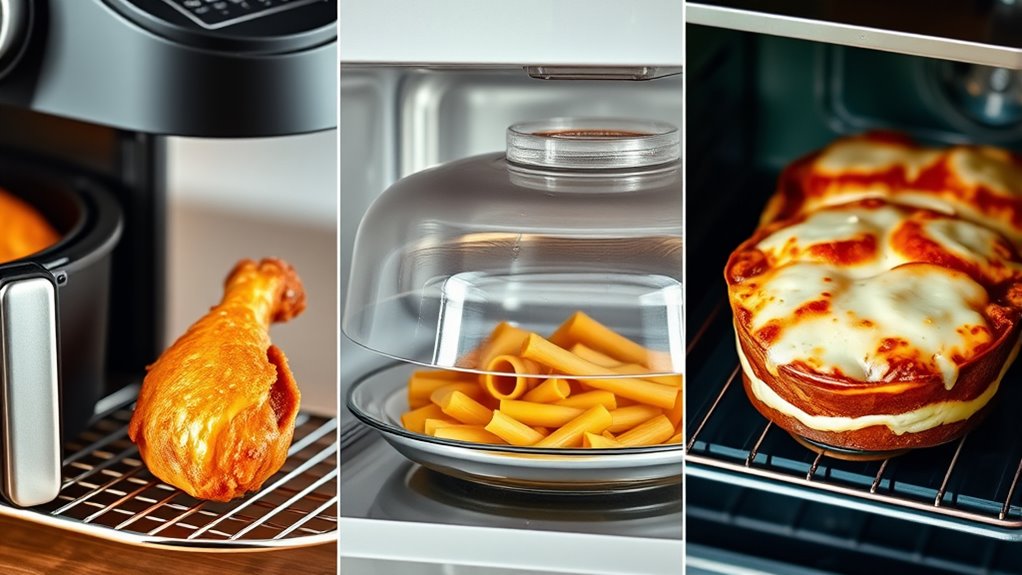

For reheating leftovers, the microwave is your fastest option, perfect for quick meals but can sometimes lead to soggy or uneven textures. An air fryer offers crispiness and better flavor retention, especially for fried or roasted foods, but takes a bit longer and needs careful monitoring. The oven provides gentle, uniform heating ideal for larger portions or baked goods, keeping flavors intact. To get the best tips on choosing the right method, keep exploring what works for your leftovers.
Key Takeaways
- Air fryers offer crispiness and flavor retention but require careful monitoring to prevent overcooking and uneven heating.
- Microwaves provide the fastest reheating, ideal for quick meals, but may affect texture and flavor, especially if not stirred or covered.
- Ovens balance safety and flavor, suitable for larger portions and foods needing gentle, uniform reheating with moisture retention.
- Ensuring leftovers reach an internal temperature of 165°F is essential across all methods for food safety.
- Overcrowding or improper settings in any method can lead to uneven heating, safety issues, and compromised food quality.

Reheating leftovers is a quick and convenient way to enjoy a delicious meal without starting from scratch. Whether you’re using an air fryer, microwave, or oven, it’s essential to consider safety precautions and flavor preservation to ensure your food remains tasty and safe to eat. Each method has its advantages and challenges, so knowing how to optimize them can make a big difference.
Reheating leftovers safely preserves flavor and prevents foodborne illness.
When reheating in an air fryer, you benefit from rapid heat circulation that helps crisp up foods and lock in flavors. To ensure safety, set the right temperature—typically around 350°F (175°C)—and check that leftovers reach an internal temperature of 165°F (74°C) to eliminate bacteria. Keep an eye on your food to prevent overcooking, which can dry out or burn delicate items. Using the air fryer also helps preserve flavor because it’s excellent at maintaining the original texture and taste, especially for fried or roasted foods. Just be cautious not to overcrowd the basket; this can lead to uneven heating and compromise safety by leaving cold spots.
The microwave is the fastest reheating option, perfect when you’re in a rush. To maximize safety, stir or rotate your food during reheating, ensuring even heat distribution and reaching the safe internal temperature. Cover your leftovers with a microwave-safe lid or paper towel to retain moisture and prevent splatters. However, microwave reheating can sometimes diminish flavor and alter textures—soggy rice or rubbery meats are common issues. To combat this, add a splash of water or broth for moist items, and use short, repeated intervals to prevent overheating. While it’s convenient, be mindful that uneven heating can lead to bacteria survival if not properly monitored. Choosing the right reheating method tailored to your food type can also help preserve original flavors and texture.
Using the oven offers a balance between safety and flavor preservation, especially for larger portions or foods that benefit from gentle reheating. Preheat the oven to around 350°F (175°C), and place leftovers in an oven-safe dish, covering it with foil to retain moisture. This method takes longer but helps prevent drying out and preserves original flavors better than a microwave. To ensure safety, verify that the reheated dish reaches 165°F internally before serving. The oven’s slower process allows for more uniform heating, reducing the chance of cold spots that could harbor bacteria. It’s ideal for reheating casseroles, roasted vegetables, or baked goods, where flavor and texture are priorities.
In the end, your choice depends on your time constraints and the type of food. No matter which method you use, always prioritize safety precautions and aim to preserve the flavor and texture of your leftovers. Proper reheating ensures your meal is both enjoyable and safe to consume, making leftovers just as satisfying as their original meal.
Frequently Asked Questions
Which Reheating Method Preserves the Original Texture Best?
You’ll find the air fryer best for preserving the original texture because it maintains moisture retention while crisping up your leftovers. Unlike the microwave, which can make food soggy, or the oven that might dry things out, the air fryer evenly heats and preserves the crispiness. So, if you want your leftovers to stay close to their original texture, the air fryer’s your best bet.
Are There Leftovers That Shouldn’T Be Reheated in an Air Fryer?
You should avoid reheating foods like soups, stews, or dishes with a lot of liquids in the air fryer because it can compromise food safety and cause messes. Also, delicate items like bread or baked goods might not retain their original texture well. For ideal texture preservation and safety, use a microwave or oven for these leftovers. The air fryer is best for crispy or fried foods to restore their crunch.
How Do You Reheat Soups Safely Without Overcooking?
Think of reheating soup as gently reviving a delicate bloom. To do it safely, transfer your soup into microwave-safe or stovetop reheating containers, avoiding metal or plastic that can spoil the flavor. Use medium heat and stir often to prevent overcooking or scorching. Always check storage safety—consume leftovers within 2-3 days, and reheat to an internal temperature of 165°F to keep your soup fresh and safe.
Can Microwave Reheating Cause Nutrient Loss?
Microwave reheating can cause some nutrient loss, but it depends on how you do it. The microwave impact on nutrient retention is generally minimal if you reheat quickly and avoid overcooking. Using medium power and stirring your food helps preserve vitamins and minerals. So, while some nutrients may degrade slightly, proper microwave techniques help you retain most of the food’s nutritional value.
What’s the Best Way to Reheat Fried Foods to Maintain Crispiness?
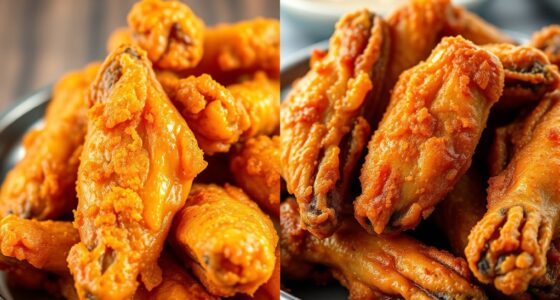
Imagine biting into perfectly crispy fried chicken, every crunch intact. To reheat fried foods and keep that crispness, use baking techniques like an oven or air fryer. Preheat to around 375°F, then spread the food in a single layer. The heat restores crispiness while preserving flavor retention. Avoid microwaves for this purpose, as they tend to steam and soggify your fried treats, losing that satisfying crunch.
Conclusion
When it comes to reheating leftovers, choosing the right method can make a big difference in taste and texture. The air fryer heats food quickly and crisps it up, while the microwave is the fastest but can make things soggy. The oven offers even heating but takes longer. Curiously, a recent survey found that 65% of people prefer using an air fryer for leftovers because of its crispy results, making it a popular choice for satisfying reheats.