A smart range hood that thinks for you can automatically detect smoke, steam, and odors, adjusting its ventilation without manual effort. Voice controls, app scheduling, and adaptive sensors make cooking cleaner and more convenient, especially when your hands are full or messy. These vents learn your routines, optimizing airflow to keep your kitchen fresh efficiently. If you want effortless, intelligent kitchen ventilation, exploring these smart features could be a game-changer—there’s more to discover ahead.

Get kitchen gear delivered free — and shop member deals
- Fast, free delivery on millions of items
- Access to Prime Big Deal Days deals on October 6–7
- Prime Video, Amazon Music and more included
Key Takeaways
- Smart range hoods automatically detect smoke, steam, and odors for consistent, hands-free ventilation.
- Voice control and app integration enable easy, remote operation and scheduling without manual adjustments.
- Adaptive sensors optimize airflow based on cooking activity, improving air quality and energy efficiency.
- Learning features tailor ventilation patterns to user routines, reducing manual intervention over time.
- Seamless integration with smart home systems simplifies maintenance and enhances overall kitchen convenience.
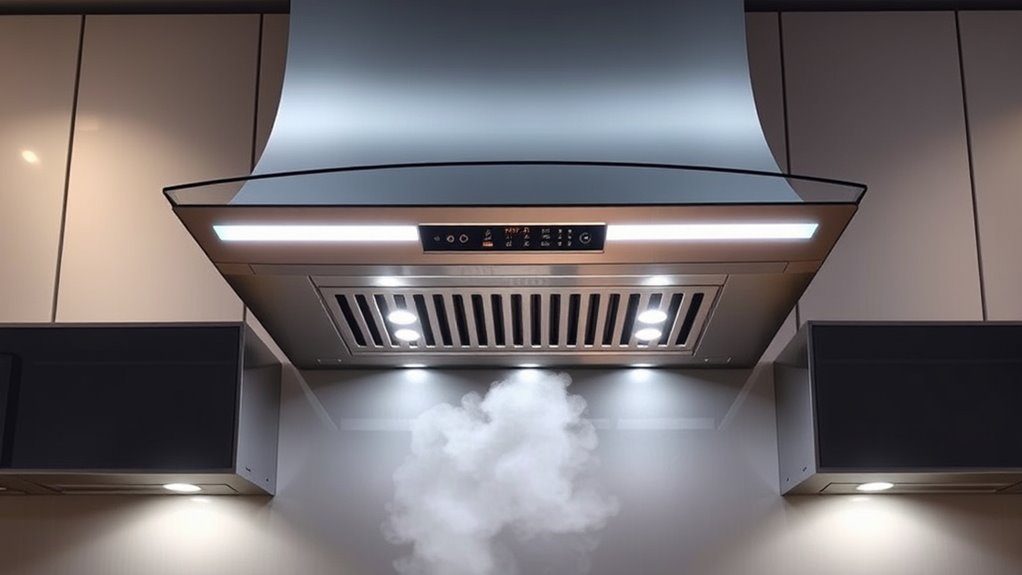
Smart range hoods and fans are transforming how you manage kitchen ventilation by combining advanced technology with everyday convenience. Instead of manually adjusting vents or turning switches on and off, you can rely on automatic ventilation features that respond to your cooking activity. These systems detect smoke, steam, and odors in real-time, automatically activating to clear the air without you needing to lift a finger. This seamless operation keeps your kitchen fresh and comfortable, especially during busy cooking sessions when you might forget to turn on or adjust your vent. By automating this process, smart range hoods reduce the hassle and guarantee ideal air quality at all times. Additionally, they can learn from your usage patterns, further optimizing their performance over time. Voice control takes this convenience even further. With simple voice commands, you can turn your range hood on or off, adjust fan speeds, or activate specific modes without stopping what you’re doing. Imagine telling your smart home assistant, “Hey, turn on the vent,” or “Increase the fan speed,” and watching it respond instantly. This hands-free approach is especially useful when your hands are dirty, full of ingredients, or if you’re multitasking in the kitchen. Voice control integrates smoothly with smart home ecosystems, allowing you to customize your ventilation preferences easily and effortlessly. It’s like having a personal assistant dedicated to maintaining your kitchen’s air quality. Beyond just automatic ventilation and voice control, these smart systems often come with additional features that enhance your cooking experience. Some include app controls, so you can manage your range hood remotely from your phone, or set schedules to pre-activate the vent before you start cooking. Others monitor air quality continuously and adjust their operation accordingly, ensuring you always have a clean and comfortable environment. These features eliminate guesswork, letting you focus more on your cooking and less on managing ventilation manually. The integration of smart technology also means your range hood can learn your habits over time, optimizing its performance based on your routines. If you often cook certain dishes that produce a lot of steam, your vent can automatically increase its power during those times, then scale back when you’re done. This intelligent operation saves energy and keeps your kitchen air healthier without any extra effort on your part. As smart appliances continue to evolve, their ability to integrate seamlessly with other connected devices enhances the overall cooking environment and simplifies maintenance. In short, smart range hoods and fans are not just gadgets; they’re intelligent appliances designed to simplify your life. With automatic ventilation, voice control, and adaptive features, they make managing kitchen air quality effortless. You don’t have to worry about forgetting to turn on the vent or adjusting fan speeds manually – your smart system takes care of it all. If you’re looking for a more connected, efficient, and convenient cooking environment, investing in a smart range hood might just be the upgrade you need.
smart range hood with voice control
As an affiliate, we earn on qualifying purchases.
As an affiliate, we earn on qualifying purchases.
Frequently Asked Questions
Can Smart Range Hoods Integrate With Existing Home Automation Systems?
Yes, smart range hoods can integrate with your existing home automation systems. You can control them using voice control, making it easy to turn on or adjust settings without lifting a finger. Additionally, remote monitoring allows you to keep an eye on your vent’s performance from anywhere. This seamless integration enhances convenience and efficiency, ensuring your kitchen stays fresh and connected to your smart home ecosystem.
How Energy-Efficient Are Smart Range Hoods Compared to Traditional Models?
Smart range hoods markedly surpass traditional models in energy efficiency, markedly reducing power consumption and promoting substantial energy savings. They intelligently adjust their operation based on cooking activity, avoiding unnecessary running time. This smart system minimizes waste, maximizes efficiency, and lowers your utility bills. With precise control and adaptive features, smart hoods save energy seamlessly, making them a smarter, more sustainable choice for your home.
What Maintenance Is Required for Smart Range Hood Sensors?
You need to regularly check your smart range hood sensors for proper sensor calibration to guarantee accurate operation. Keep an eye on software updates from the manufacturer, as they often include important improvements and bug fixes. Clean the sensors gently with a soft, damp cloth to remove dust and grease buildup. By maintaining calibration and staying current with updates, you’ll keep your smart vent functioning smoothly and efficiently.
Are Smart Range Hoods Compatible With All Stove Types?
Smart range hoods are versatile, but they might not be compatible with every stove type, especially vintage or coil stovetops. Think of it like trying to fit a square peg in a round hole. Your cooking styles and hood materials matter too; some hoods work best with electric or induction stoves, while others suit gas stoves. Always verify manufacturer compatibility to ensure your smart vent becomes a seamless part of your kitchen.
Do Smart Fans Require Professional Installation or DIY Setup?
Smart fans can often be installed with DIY setup if you’re comfortable with basic electrical work and follow the manufacturer’s instructions. However, for maximum safety and performance, especially with complex systems or existing electrical wiring, you might prefer professional setup. Consider your experience level and the complexity of your kitchen setup before deciding. If unsure, consulting a professional ensures proper installation and peace of mind.
automatic kitchen ventilation fan
As an affiliate, we earn on qualifying purchases.
As an affiliate, we earn on qualifying purchases.
Conclusion
Imagine your kitchen filled with fresh, crisp air every time you cook, thanks to a vent that anticipates your needs. With smart range hoods and fans, you’re not just venting; you’re creating a cleaner, healthier space effortlessly. No more guessing or adjusting—just seamless comfort that thinks for you. So, why settle for ordinary when your kitchen can breathe smart? Embrace the future and transform your cooking experience today.
As an affiliate, we earn on qualifying purchases.
sensor-based kitchen exhaust fan
As an affiliate, we earn on qualifying purchases.
As an affiliate, we earn on qualifying purchases.
Halloween Picks
halloween
As an affiliate, we earn on qualifying purchases.