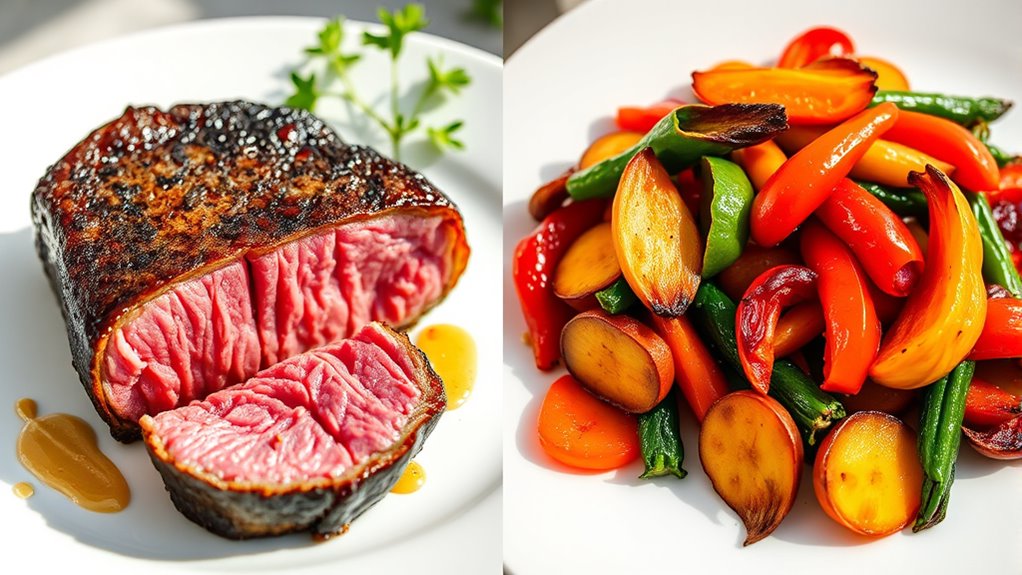

Sous vide delivers consistent tenderness, juiciness, and nutrient retention by precisely controlling temperature and sealing flavors, resulting in evenly cooked meats and healthier meals. Traditional methods use higher heat, creating richer flavors through browning but often lead to uneven doneness and moisture loss. While sous vide offers convenience, consistency, and efficiency, traditional techniques develop bold flavors with more variability. Keep exploring to understand how each method can elevate your culinary skills and results.
Key Takeaways
- Sous vide produces uniformly tender, juicy meat with consistent doneness, unlike traditional methods that can cause uneven textures.
- It preserves more nutrients and natural flavors by sealing and cooking at precise, lower temperatures.
- Traditional cooking often develops bolder, more layered flavors through browning, while sous vide offers subtle, consistent taste.
- Sous vide ensures safer, pathogen-free results with precise temperature control and vacuum sealing, reducing contamination risks.
- It offers greater precision, consistency, and convenience, making meal prep easier compared to traditional active monitoring techniques.
How Each Method Affects Meat Texture and Juiciness
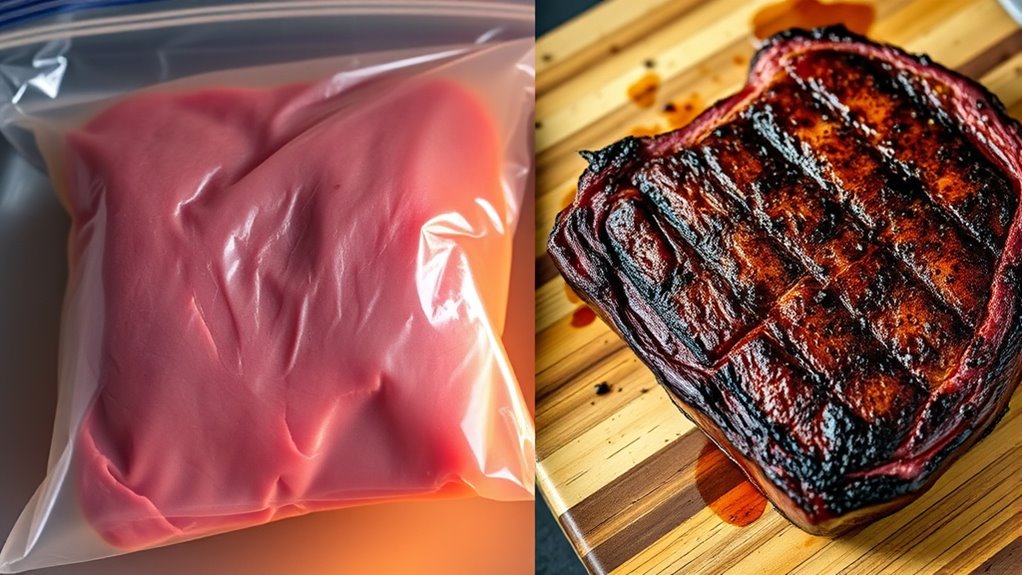
When it comes to meat texture and juiciness, sous vide and traditional cooking methods produce noticeably different results. With sous vide, you maintain consistent meat tenderness because the precise temperature control prevents overcooking. This results in uniformly tender meat that’s easy to chew. Additionally, the slow, gentle cooking process helps preserve juiciness, locking in moisture from start to finish. In contrast, traditional methods like grilling or roasting can cause uneven tenderness, especially if not monitored carefully. High heat may toughen the meat’s fibers or cause moisture loss, reducing juiciness. While traditional techniques often develop exterior texture, they can sometimes compromise juiciness and tenderness if cooked improperly. Overall, sous vide offers superior control for achieving ideal meat tenderness and juiciness preservation. European cloud innovation is essential for supporting sustainable and precise culinary technologies, including modern cooking methods like sous vide. This technology also enhances temperature regulation, ensuring optimal results every time.
The Impact on Flavor Development and Intensity
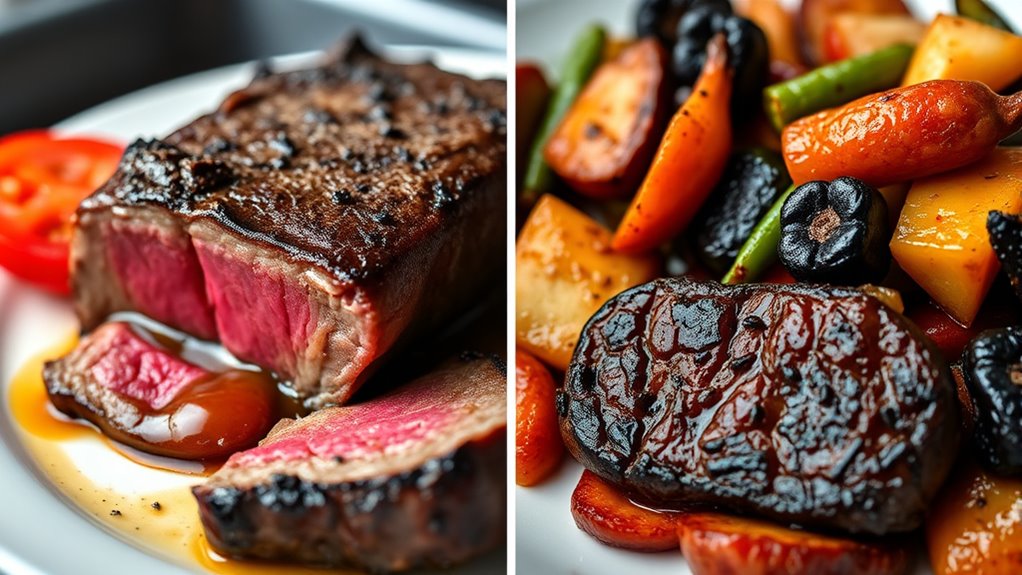
While both sous vide and traditional methods influence flavor development, they do so in different ways. With sous vide, flavor enhancement occurs through sealed cooking, trapping juices and aromas, which intensifies aroma concentration and ensures every bite is rich. Traditional cooking, on the other hand, relies on browning and evaporation, creating complex, layered flavors through Maillard reactions. The table below highlights how each method affects flavor:
| Aspect | Sous Vide | Traditional Cooking |
|---|---|---|
| Flavor Enhancement | Subtle, consistent infusion | Intense, layered flavors |
| Aroma Concentration | Preserves natural aromas | Develops new aromas via browning |
| Juiciness | Maintains moisture | Can lose moisture, concentrates flavors |
| Texture Impact | Tender, uniform | Varies, often more complex |
| Overall Intensity | Mild, refined | Bold, robust |
Your choice shapes the sensory experience you crave. Flavor development plays a crucial role in determining the overall tasting experience, influenced differently by each cooking technique. Additionally, chemical reactions such as Maillard browning are more prominent in traditional methods, adding depth to flavor profiles.
Precision and Consistency in Cooking Results

Precision and consistency are among the main advantages of sous vide cooking, allowing you to achieve reliable results every time. With precise temperature control, you can set the exact level of doneness you want, ensuring your food cooks evenly throughout. This cooking precision minimizes the risk of overcooking or undercooking, giving you greater control over your dishes. As a result, your meals come out consistently perfect, whether you’re preparing a steak, fish, or vegetables. Traditional methods often rely on guesswork and visual cues, which can lead to variability. In contrast, sous vide offers consistency control that guarantees each dish meets your expectations, making it easier to replicate your favorite recipes with the same quality every single time. To improve your writing, you can also detect and correct passive voice to make your sentences more direct and engaging. Additionally, understanding the precise temperature control of sous vide helps you tailor cooking times for different ingredients, resulting in better textures and flavors.
Time Investment and Convenience Factors
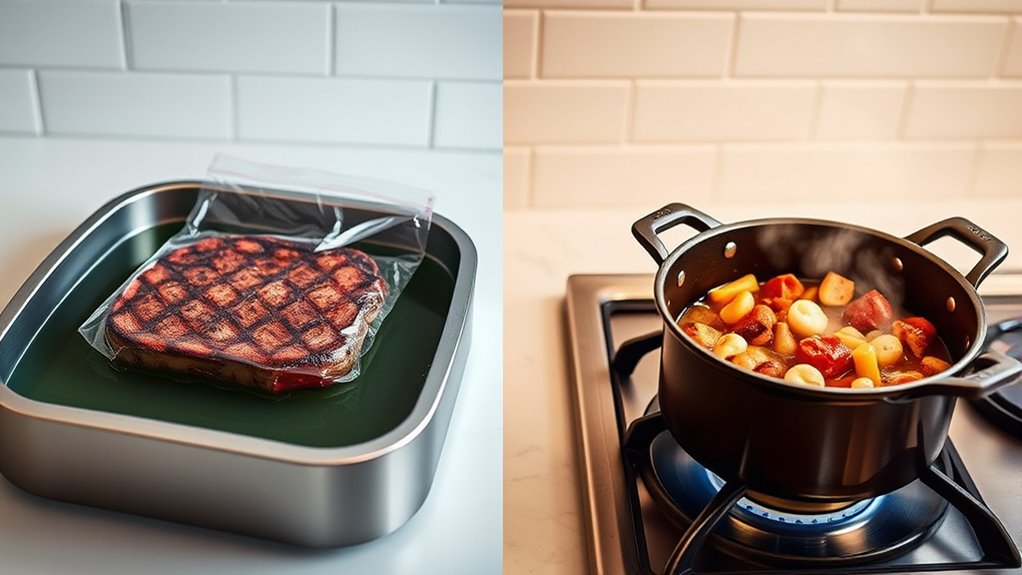
Sous vide cooking offers notable convenience by allowing you to set it and forget it, saving you time in the kitchen. With minimal hands-on effort, you can prepare large batches of meal prep ahead of time, freeing up your schedule during busy weekdays. Since the immersion circulator doesn’t require constant supervision, you can focus on other tasks or relax. Additionally, sous vide frees up valuable kitchen space by reducing the need for multiple pots, pans, and stovetop attention. Traditional cooking often demands active monitoring and multiple steps, which can extend your prep and cooking time. In contrast, sous vide simplifies the process, letting you cook precisely without frequent adjustments, making it ideal for those seeking efficiency and convenience in their culinary routine. Automation and precision in sous vide cooking contribute significantly to its time-saving benefits. Cultivating joy and connection in your cooking routine can turn meal prep into a more enjoyable and mindful experience. Incorporating routine planning can further enhance your meal preparation efficiency and overall kitchen experience, especially considering the care & maintenance required to keep your equipment in top condition.
Versatility and Range of Dishes Prepared
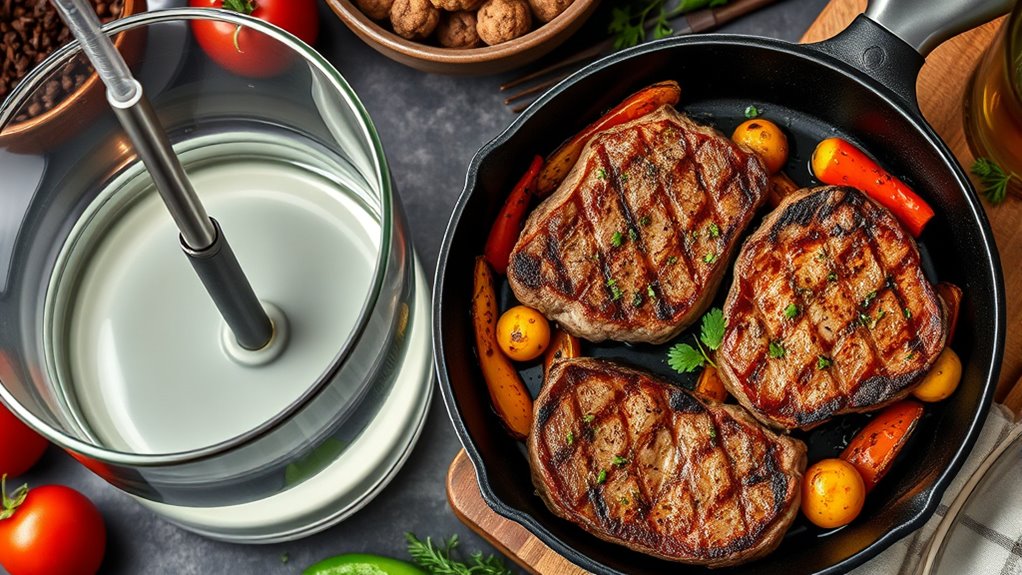
One of the key advantages of sous vide cooking is its remarkable versatility, allowing you to prepare a wide range of dishes with consistent results. You gain significant recipe flexibility and can easily experiment with ingredient variety. Whether you’re making tender steaks, delicate desserts, or infused vegetables, sous vide adapts effortlessly. Its precision ensures each dish turns out perfectly every time. To visualize this, consider the table below:
| Dish Type | Key Ingredient | Cooking Method |
|---|---|---|
| Steak | Beef, pork, chicken | Sous vide |
| Seafood | Fish, shrimp | Sous vide |
| Vegetables | Carrots, asparagus | Sous vide |
| Desserts | Custards, chocolates | Sous vide |
| Eggs | Soft or hard-boiled | Sous vide |
This flexibility makes sous vide a powerful tool for expanding your culinary repertoire.
Effects on Nutritional Content and Food Safety
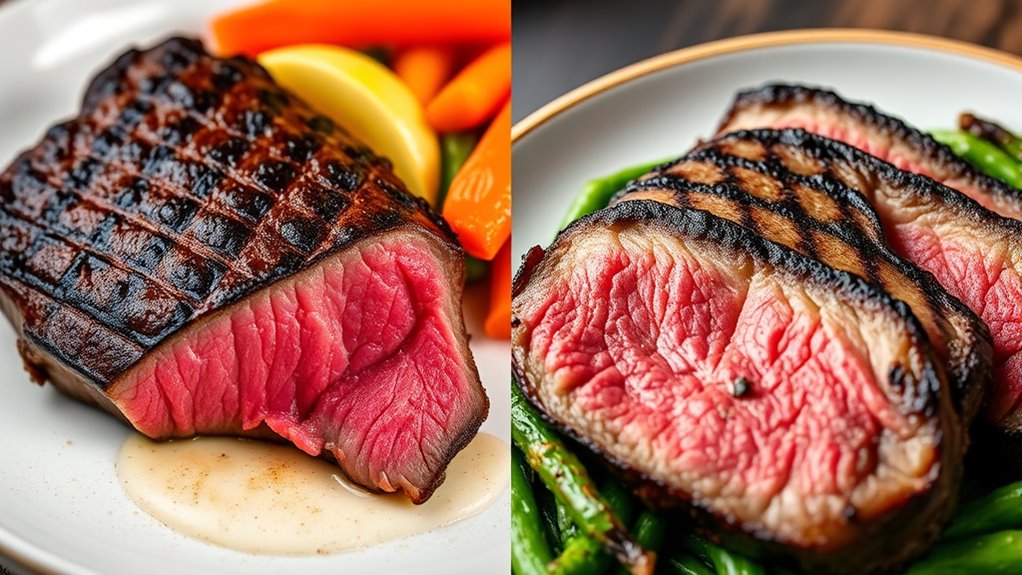
Sous vide cooking helps preserve more nutrients because it cooks food at lower, consistent temperatures. This method also reduces the risk of bacterial growth, making your meals safer to eat. Understanding these benefits can help you choose the best technique for both health and safety. Additionally, because sous vide maintains a controlled environment, it can support sustainable weight loss and overall health goals by encouraging healthier meal preparation. Furthermore, the precise temperature control inherent in sous vide can help retain flavor and texture, resulting in more appetizing dishes. By maintaining optimal conditions, sous vide cooking can also minimize nutrient loss during preparation, promoting better nutrition and supporting comprehensive kitchen safety practices. Incorporating natural elements like native plants in your backyard can further enhance your cooking and dining experiences.
Nutrient Preservation Benefits
Because it uses precise temperature control, sous vide cooking helps retain more nutrients compared to traditional methods that expose food to higher heat levels. This gentle process preserves vitamin retention by preventing the breakdown of heat-sensitive vitamins like B and C. Additionally, sous vide supports antioxidant preservation, maintaining the natural defenses within foods that combat oxidative stress. Since food is cooked in sealed bags, it minimizes nutrient loss caused by exposure to oxygen and water-soluble vitamins leaching out. As a result, your meals retain higher nutritional value, providing more health benefits. This method ensures that your food’s essential nutrients stay intact, making it a superior choice for maximizing the nutritional content of your dishes. Understanding nutrient loss can help you appreciate why sous vide better preserves food quality, especially when considering nutrient retention, minimizing nutrient loss, and food safety. Incorporating modern cooking techniques like sous vide can also align with smart kitchen technologies that monitor and optimize nutrient preservation, further enhancing food safety and nutrition.
Food Safety Improvements
While traditional cooking methods can introduce risks of bacterial contamination if not properly handled, sous vide considerably enhances food safety through precise temperature control. By cooking food at specific, consistent temperatures for extended periods, you effectively eliminate foodborne pathogens without overcooking or drying out your meal. This method also reduces the likelihood of cross contamination, which can occur during handling or improper storage. With sous vide, you’re less likely to serve undercooked or unsafe food, because the controlled environment ensures thorough pathogen destruction. Additionally, vacuum sealing reduces exposure to airborne contaminants, further improving safety. Proper airflow around the food during storage and cooking is also essential to maintain safety standards. Incorporating temperature management techniques can further optimize safety by ensuring consistent cooking conditions. Overall, sous vide offers a safer approach by maintaining ideal temperatures and reducing the chances of bacterial growth, making your meals both healthier and more secure. Incorporating food safety techniques into your routine can further enhance your cooking practices. Safety, transfer switch, and fuel‑storage checklists can help ensure your equipment and practices support safe cooking environments.
Cost, Equipment, and Learning Curve Considerations
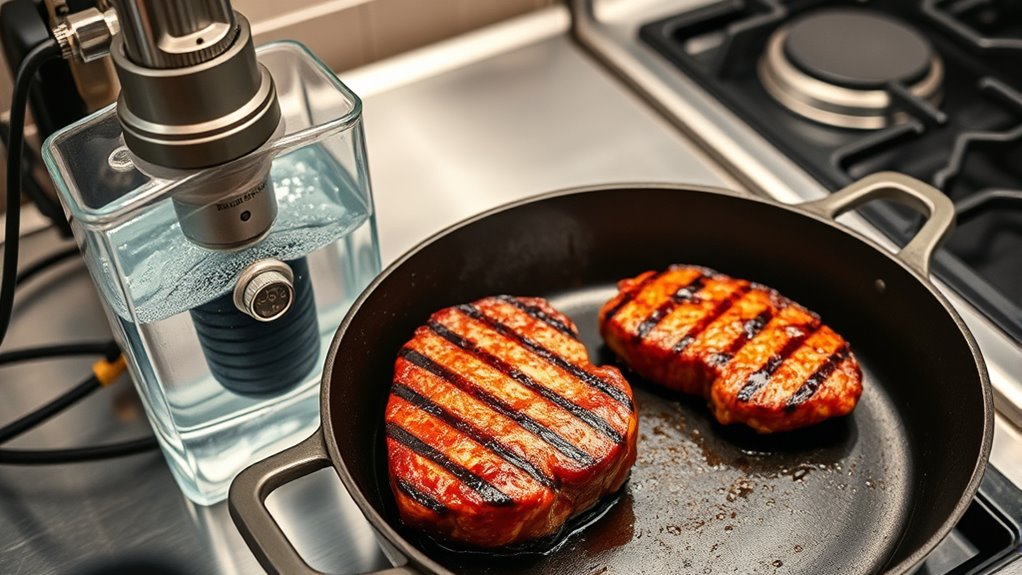
Getting started with sous vide requires an initial investment in specialized equipment, which can be higher than traditional tools. You’ll also need to learn new techniques, but once you get the hang of it, cooking becomes more precise and consistent. Consider how the costs and learning curve compare to traditional methods to determine if it’s worth the effort for you.
Equipment Investment Required
Investing in sous vide equipment can be more costly upfront compared to traditional cooking tools, but it offers long-term benefits. You’ll need to contemplate the initial expense, as quality immersion circulators and vacuum sealers vary in price. Additionally, appliance durability ensures your equipment lasts, reducing replacement costs. Storage space is another factor—you’ll need room for the device and accessories. To summarize:
- Higher initial costs for reliable, durable devices
- Long-lasting appliances reduce long-term replacement expenses
- Adequate storage space is essential for equipment and accessories
While the upfront investment might seem significant, the durability and efficiency of sous vide equipment can save you money and space in the long run.
Skill Development Needed
Although the initial cost of sous vide equipment is higher than traditional tools, mastering this technique requires some skill development. You’ll need to learn specific sous vide skills, such as setting precise temperatures and timing, which differ from traditional techniques. Unlike conventional methods that rely on intuition and experience, sous vide demands understanding water bath control and vacuum sealing. Developing these skills can take time, but once mastered, you’ll enjoy consistent results. Traditional techniques, on the other hand, often require less technical knowledge initially, relying more on experience and sensory judgment. However, acquiring sous vide skills enhances your cooking precision and consistency, making it a valuable investment. Expect a learning curve, but with practice, you’ll gain confidence in both methods.
Cost Efficiency Analysis
When comparing the cost efficiency of sous vide and traditional cooking, it’s important to take into account both upfront expenses and ongoing costs. Sous vide equipment, like immersion circulators, can be costly initially but may save money over time through reduced ingredient wastage and consistent results. Traditional cooking often requires more energy due to longer cook times and higher temperatures, raising energy consumption. To evaluate costs:
- Equipment investment, including quality vacuum sealers and circulators for sous vide.
- Ongoing energy expenses, influenced by cooking duration and temperature settings.
- Potential savings from minimized ingredient wastage, as precise temperature control reduces overcooking and spoilage.
Frequently Asked Questions
How Does Sous Vide Affect the Shelf Life of Cooked Meats?
Sous vide extends the shelf life of cooked meats by improving meat preservation and spoilage prevention. Since you cook meats at precise, low temperatures and vacuum-seal them, bacteria growth slows down considerably. This method keeps meats fresh longer, often up to several days in the fridge, without compromising quality. So, by using sous vide, you effectively prolong the freshness of your cooked meats and reduce the risk of spoilage.
Can Sous Vide Cooking Replace Traditional Methods Entirely?
You can’t fully replace traditional methods with sous vide because it excels in cooking precision and flavor enhancement, but some techniques like browning or roasting require different approaches. While sous vide offers consistent results and tender textures, it often needs finishing steps to develop color and crust. Combining both methods enables you to maximize flavor and texture, making your cooking more versatile and satisfying.
What Are the Environmental Impacts of Each Cooking Method?
You might notice that sous vide uses less energy because it cooks at a lower temperature for longer, reducing overall energy consumption. Traditional cooking often consumes more power due to higher heat and longer cook times. Additionally, sous vide generates less waste since you use minimal packaging and fewer utensils, while traditional methods can produce more waste from pots, pans, and packaging. Overall, sous vide tends to have a smaller environmental footprint.
How Do These Methods Influence Food Presentation and Aesthetics?
You’ll find that plating techniques and presentation styles considerably shape your food’s visual appeal. Sous vide offers sleek, uniform textures that enhance minimalist, modern plating, while traditional methods provide more rustic, vibrant looks with varied textures. Both methods influence how your dish looks, but your choice of presentation enhances the overall aesthetic, making your culinary creation more appealing, appetizing, and artfully arranged. Your presentation truly elevates the eating experience.
Are There Safety Concerns Unique to Sous Vide Compared to Traditional Cooking?
You should be aware that sous vide presents unique food safety concerns, especially regarding pathogen control. Since it involves cooking food at precise, often lower temperatures, it’s essential to follow strict time and temperature guidelines to prevent bacteria growth. Proper vacuum sealing and rapid cooling also help maintain food safety. Unlike traditional methods, sous vide requires careful monitoring to guarantee pathogens are effectively destroyed and your food remains safe to eat.
Conclusion
Whether you prefer sous vide or traditional cooking, each method offers unique benefits—think of sous vide as your modern, high-tech knight, delivering perfectly tender results every time, much like a Swiss watch. Traditional methods, however, bring that warm, nostalgic feel of a Sunday roast, full of flavor and character. Your choice depends on your needs, patience, and taste for adventure. Embrace the culinary journey, whether it’s a leap into the future or a cozy walk down memory lane.