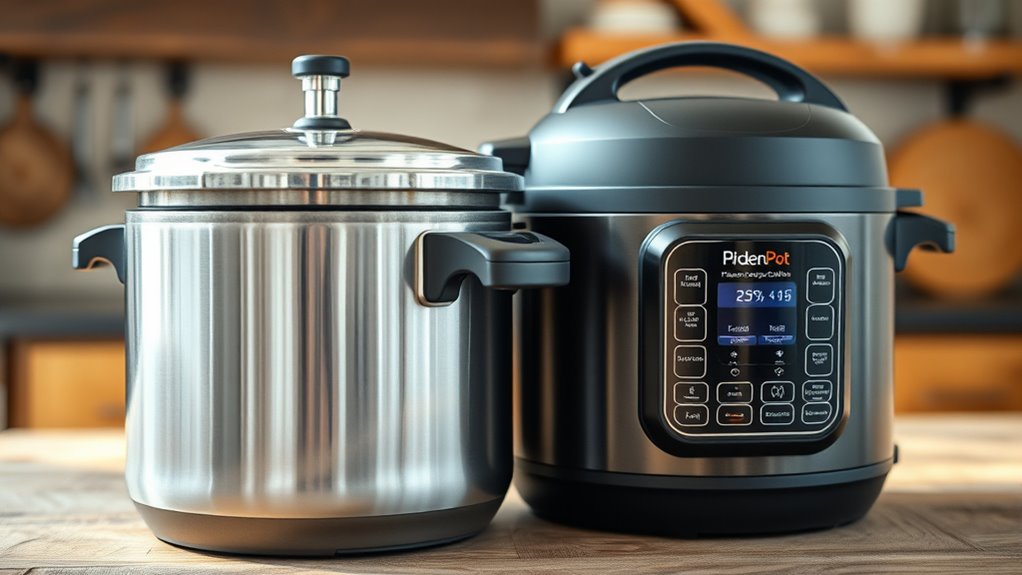

Choosing between a stovetop and electric pressure cooker depends on your priorities. If you want more control and lower energy costs, a stovetop model might suit you better, but it requires your attention for safety and adjustments. If you prefer convenience and built-in safety features, an electric cooker is a good option, offering automatic controls and ease of use. To determine which fits your style and safety needs best, consider the details that follow.
Key Takeaways
- Stovetop pressure cookers offer manual control and lower energy costs, ideal for experienced cooks who prefer hands-on cooking.
- Electric pressure cookers provide automatic safety features and convenience, suitable for users valuing ease and safety.
- Stovetop models heat quickly and allow flexible stove control, while electric models often cook faster with programmable settings.
- Manual safety management makes stovetop cookers riskier without proper knowledge; electric models automatically regulate pressure.
- Choice depends on your preference for control and safety versus convenience and automated features.
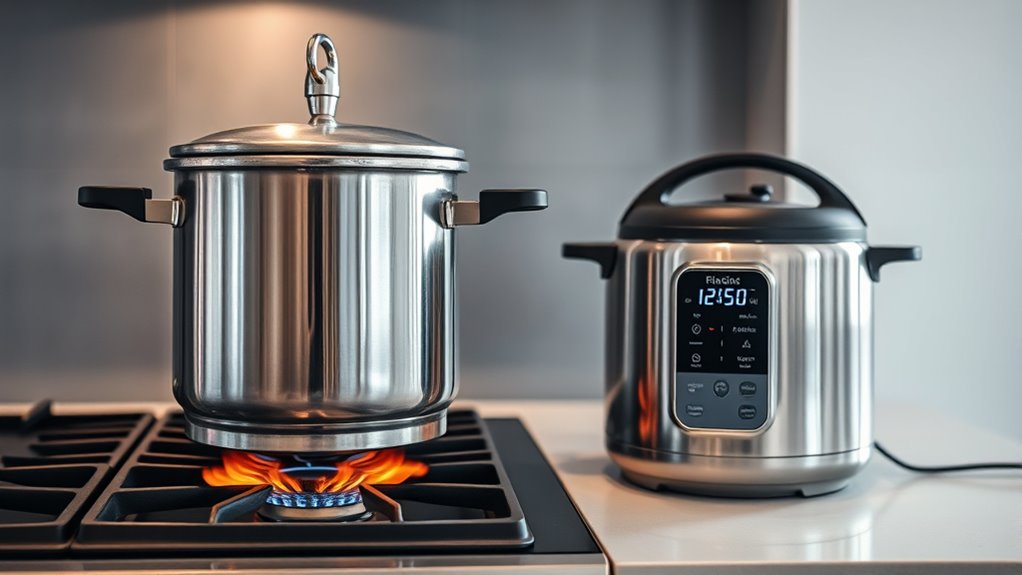
When choosing between a stovetop pressure cooker and an electric model, understanding their differences can help you make the right decision for your cooking needs. One of the key aspects to consider is manual safety. Stovetop pressure cookers rely heavily on your ability to manage pressure manually, which means you need to be familiar with safety procedures, such as releasing pressure properly and inspecting the appliance regularly. They often come equipped with safety valves and locking mechanisms, but ultimately, your awareness and attentiveness determine safe operation. Electric pressure cookers, on the other hand, incorporate automatic safety features that regulate pressure and temperature without requiring constant monitoring. These models typically have built-in sensors that prevent over-pressurization and automatically shut off when cooking is complete, reducing the risk of accidents. If you prioritize manual control and feel comfortable managing safety features yourself, a stovetop model might suit you better. Conversely, if you prefer a more hands-off approach with built-in safeguards, an electric cooker offers peace of mind. Additionally, manual safety features depend heavily on user awareness and proper handling, making it crucial to understand your comfort level and experience with pressure cooking.
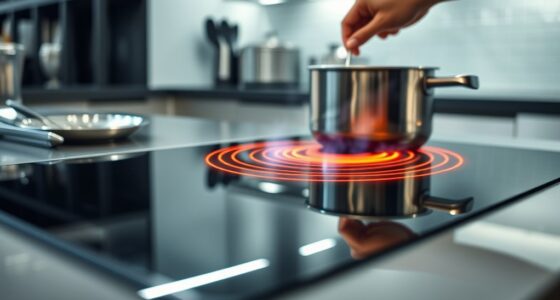
Energy efficiency is another significant factor. Stovetop pressure cookers tend to be more energy-efficient because they heat up quickly and maintain high pressure without relying on electricity’s constant input. They use your stove’s heat, which can be more flexible if you’re cooking multiple dishes or using a gas or electric stove that allows precise heat control. Electric pressure cookers are designed to be energy-efficient too, especially since they trap heat effectively and often cook faster than traditional methods. However, they draw power consistently during cooking, which may lead to higher energy consumption over time. If you’re concerned about conserving energy and want to reduce electricity bills, stovetop models generally have the edge. On the other hand, electric models are often more convenient, with programmable timers and automatic shut-offs that can save energy by preventing overcooking and unnecessary power use.
Choosing between the two ultimately depends on your cooking style and preferences. If manual safety and energy efficiency are your top priorities, a stovetop pressure cooker offers more control and potentially lower energy costs. But if you value convenience, safety features, and ease of use, an electric model provides those benefits. Both types are capable of preparing meals quickly and efficiently, but understanding these core differences ensures you pick the appliance that best fits your kitchen routine. With a clear grasp of safety and energy consumption, you’ll be better equipped to select the pressure cooker that enhances your home cooking experience.

IMUSA 7 Quart Stovetop Aluminum Presure Cooker with safety valves for risk-free opening
- Cooking Capacity: 7-quart large cooking space
- Material and Finish: Durable aluminum with polished exterior
- Safety Features: Automatic regulator and safety valves
As an affiliate, we earn on qualifying purchases.
As an affiliate, we earn on qualifying purchases.
Frequently Asked Questions
Which Pressure Cooker Is More Energy-Efficient?
You’ll find that electric pressure cookers tend to be more energy-efficient because they have better insulation and precise temperature controls, reducing overall energy consumption. They use less power compared to stovetop models, which often require more energy to heat and maintain pressure. By choosing an electric cooker, you improve appliance efficiency, saving energy and reducing your utility bills. So, if energy efficiency matters most, an electric pressure cooker is the smarter choice.
Can Electric Pressure Cookers Replace Slow Cookers?
Yes, electric pressure cookers can replace slow cookers, especially if you value manual operation and portability. Imagine coming home after a busy day to a warm, delicious meal ready without extra effort. Electric models often have slow-cook functions, so you can set it and forget it. Their convenience and versatility make them a practical alternative, letting you enjoy tender dishes without needing separate appliances.
Are Stovetop Pressure Cookers Safer Than Electric Ones?
Stovetop pressure cookers are generally safer than electric ones because they have straightforward safety features like pressure release valves and locking lids. You retain more user control over cooking time and pressure adjustments, reducing risks. Electric models often include automatic safety mechanisms, but some users find them less intuitive. Ultimately, your safety depends on proper usage and maintenance, regardless of the type you choose.
How Long Do Electric Pressure Cookers Typically Last?
Think of your electric pressure cooker as a reliable car—if well cared for, it can last about 5 to 10 years. Durability concerns and maintenance requirements influence its lifespan. Regularly cleaning the seals and checking the safety valves help extend its life, but eventually, parts may wear out. Proper care guarantees your appliance stays efficient, giving you dependable performance over the years without unexpected breakdowns.
Is There a Significant Difference in Cooking Time?
Yes, there’s a noticeable difference in cooking time. Electric pressure cookers often have faster cooking speeds thanks to pre-programmed settings, making meal prep quicker and more convenient. Stovetop models may take a bit longer to reach pressure but can be more responsive during cooking. Your choice depends on how much time you want to save and the level of control you prefer for your meal prep routines.
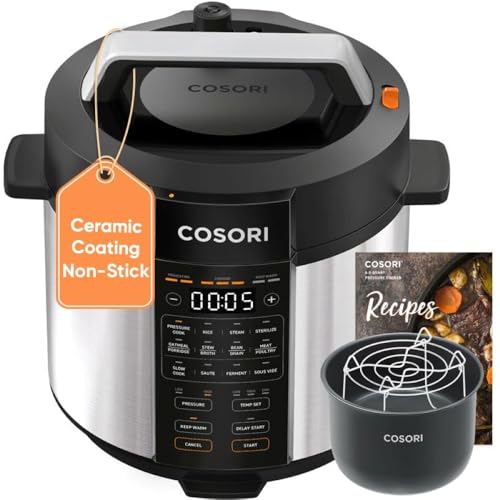
Cosori Pressure Cooker 6QT, 9-in-1, Ceramic Coating Pot, 12 Safety Features
- 9 Cooking Functions: Multiple cooking modes in one device
- Enhanced Safety Design: Safer venting with seal/vent button and angled release
- Easy to Clean: Fingerprint-resistant stainless steel, dishwasher-safe parts
As an affiliate, we earn on qualifying purchases.
As an affiliate, we earn on qualifying purchases.
Conclusion
Ultimately, whether you choose a stovetop pressure cooker or an electric one, think of your kitchen as a stage where your culinary story unfolds. Picture the steam rising like a gentle cloud, fueling your creativity. The stovetop offers the thrill of control, while the electric promises convenience. Whichever you pick, you’re harnessing the power to turn simple ingredients into comforting, flavorful meals—making every cooking moment a warm, inviting escape.

OLIXIS 10-In-1 Electric Pressure Cooker, 3 Quart Multi Cooker for Rice, Stew and Steam, Small Programmable Stainless Steel Pot with Slow Cook Function and Ceramic Inner Pot
- Versatile Cooking Presets: 10 smart cooking modes including rice and stew
- Fast Pressure Cooking: Cooks 70% faster with high-pressure tech
- Delay Start Timer: Set up to 24 hours in advance
As an affiliate, we earn on qualifying purchases.
As an affiliate, we earn on qualifying purchases.
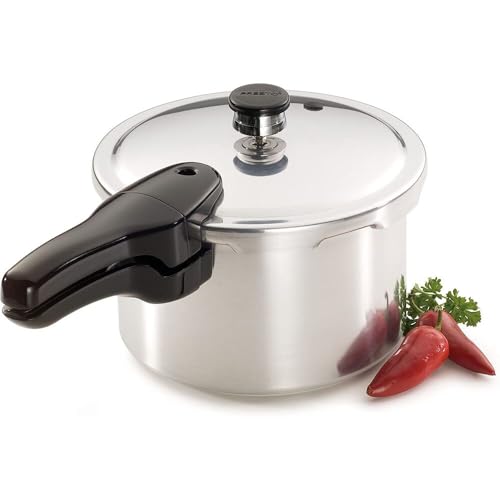
Presto 01241 4-Quart Aluminum Pressure Cooker
- Includes Pressure Cooker: 4-quart aluminum pressure cooker
As an affiliate, we earn on qualifying purchases.
As an affiliate, we earn on qualifying purchases.