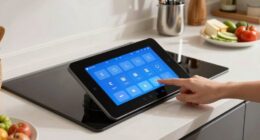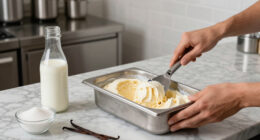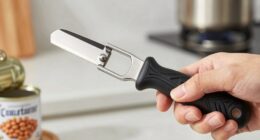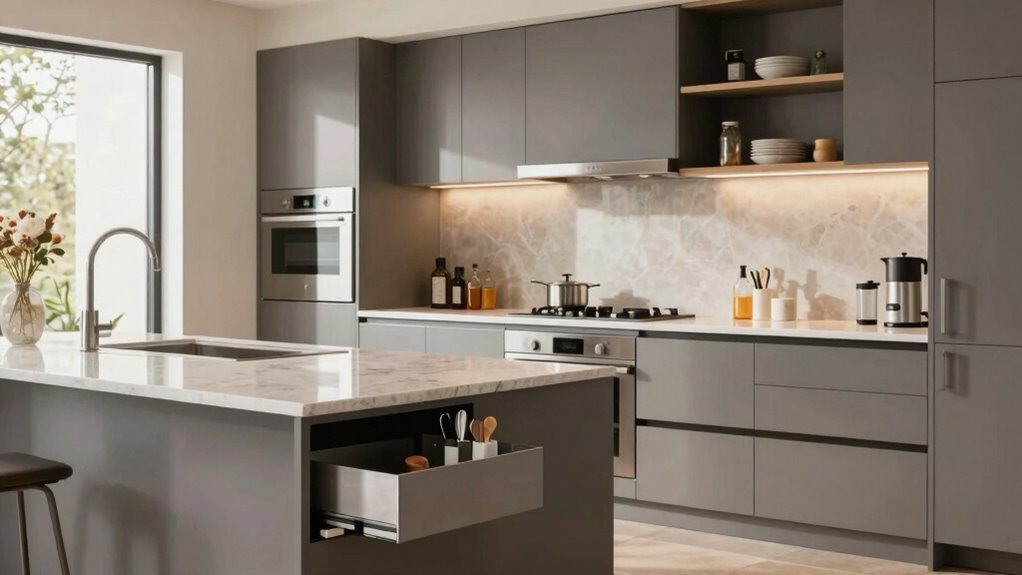
To build a kitchen around convenience, focus on creating a smooth workflow by placing the fridge, stove, and sink in a functional work triangle. Arrange appliances and tools close to where you use them most to minimize unnecessary movement. Maximize storage with pull-out shelves, drawers, and vertical racks, keeping essentials within easy reach. Design zones for prep, cooking, and cleaning to reduce clutter and streamline routines. Keep your space intuitive and practical—more tips await to turn your kitchen into an efficient space.
Key Takeaways
- Prioritize the placement of frequently used appliances within easy reach to streamline daily routines.
- Design the work triangle with the refrigerator, stove, and sink in close proximity to minimize movement.
- Organize storage zones for prep, cooking, and cleaning to reduce clutter and improve efficiency.
- Keep countertops clear of unnecessary items, reserving space for active tasks and quick access.
- Choose ergonomic tools and layouts that support natural movement and reduce physical strain during cooking.
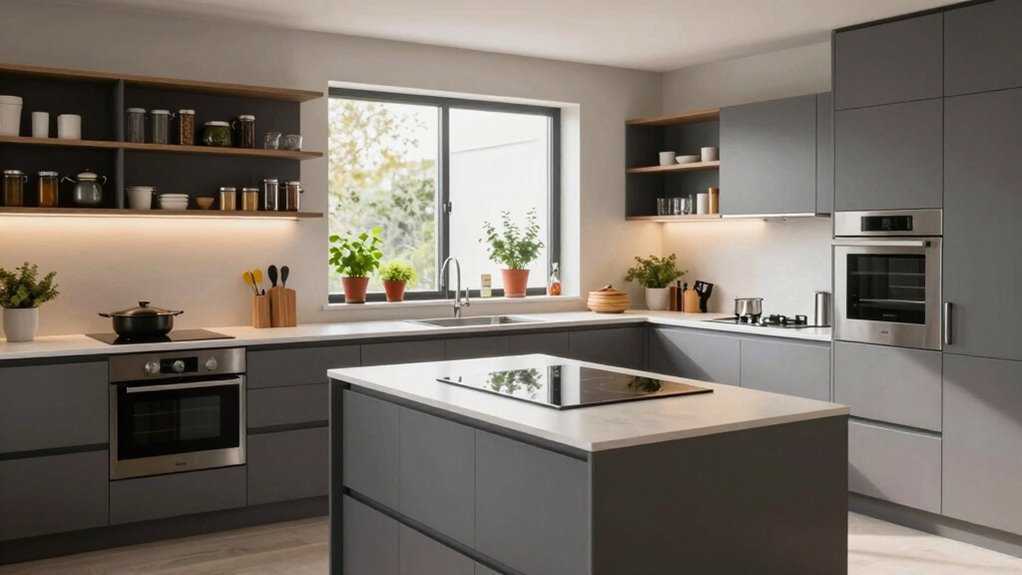
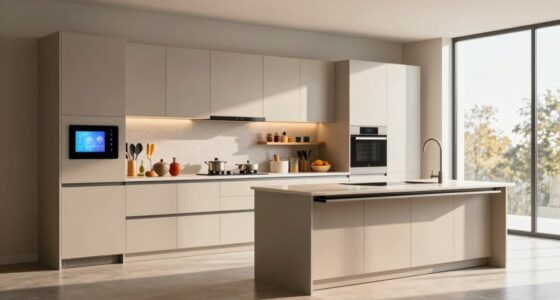
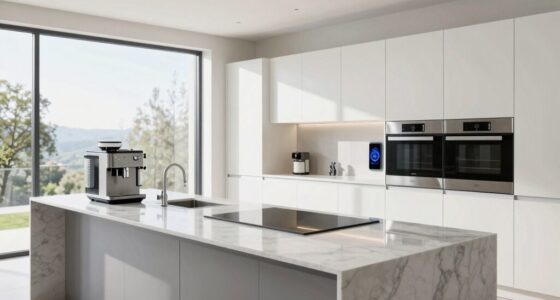
When designing a kitchen, prioritizing convenience over novelty can make everyday cooking and cleaning more efficient and enjoyable. The key is to establish a layout that streamlines your daily tasks, and this starts with thoughtful appliance placement. You want your most-used appliances—such as the stove, refrigerator, and sink—to form a functional work triangle, minimizing movement and reducing clutter. Place your refrigerator where you can access it easily without interrupting your workflow, ideally near the prep area but not blocking traffic paths. The stove and oven should be positioned close enough to the refrigerator so you can retrieve ingredients quickly, yet with enough space to work comfortably. The sink should be centrally located, facilitating easy transfer of ingredients from prep to cooking, and close to the dishwasher for efficient cleanup. By arranging appliances based on your habits, you create a kitchen that feels intuitive and reduces unnecessary steps. Considering your daily routines and how you move through the kitchen can help you better optimize your space for convenience. Incorporating ergonomic principles into your layout can further enhance comfort and efficiency. Additionally, choosing ergonomically designed tools and accessories can help prevent strain during prolonged use. Moreover, evaluating your workflow patterns can help you identify the most logical placement for each zone, making your kitchen even more user-friendly.
Storage optimization is equally essential for a convenient kitchen setup. Instead of filling every available space with decorative or seldom-used items, focus on maximizing storage for everyday essentials. Use cabinets and drawers strategically—place pots, pans, and utensils near the stove for easy access, and keep frequently used ingredients in accessible cabinets close to the prep area. Incorporate storage solutions like pull-out shelves, lazy Susans, and drawer dividers to make organization seamless, so you spend less time searching for what you need. Vertical storage, such as wall-mounted racks or hooks, can free up counter space and keep tools within arm’s reach. Also, consider dedicated zones for different activities—prep, cooking, baking, and cleaning—so everything related to each task is grouped together. This arrangement reduces clutter and increases efficiency, especially during busy meal prep times.
Your goal should be to create a space where everything has a purpose and is within easy reach. Keep countertops clear of unnecessary items, reserving surface space for active tasks. When you plan appliance placement and storage, think about your daily routines and how you move through the kitchen. Avoid placing appliances in awkward spots that require unnecessary bending or reaching, and ensure that storage areas aren’t overcrowded, which can slow you down. By focusing on convenience rather than novelty, you build a kitchen that supports your habits and makes cooking less of a chore and more of a pleasure. When every element is thoughtfully placed, your kitchen becomes a true extension of your workflow, making every meal prep smoother and more enjoyable.
As an affiliate, we earn on qualifying purchases.
Frequently Asked Questions
What Are the Best Budget-Friendly Appliances for Convenience?
For budget-friendly convenience, opt for smart gadgets like a smart plug or voice-activated assistant to control devices easily. Multi-functional appliances such as a slow cooker with multiple settings or a blender that doubles as a food processor save space and money. These tools streamline your cooking process, making daily tasks quicker and more efficient without breaking the bank. Prioritize versatile, affordable appliances that enhance your kitchen’s functionality.
How Can I Maximize Storage in a Small Kitchen?
To maximize storage in a small kitchen, you should focus on smart storage solutions and compact gadgets. Use vertical space by installing shelves or hanging racks, and opt for multi-functional furniture like fold-out counters. Incorporate compact gadgets that save space, such as stackable containers and slim appliances. These strategies keep your kitchen organized and efficient, making the most of limited space without sacrificing functionality.
What Safety Features Should I Prioritize in My Kitchen?
Think of your kitchen as a fortress—safety comes first. Prioritize childproof locks on cabinets and drawers to keep dangerous items out of reach. Install smoke alarms and a fire extinguisher to boost fire safety, ensuring quick response in emergencies. Keep knives and hot appliances out of children’s reach, and consider anti-slip mats to prevent falls. These features create a secure environment where convenience and safety go hand in hand.
How Do I Choose Durable, Easy-To-Clean Materials?
To choose durable, easy-to-clean materials, focus on practical options like quartz countertops and stainless steel appliances, which resist stains and scratches. For aesthetic choices, incorporate decorative accents that complement these materials, adding personality without sacrificing functionality. Prioritize surfaces that require minimal maintenance, making your kitchen more convenient. By blending durability with style, you guarantee your kitchen stays beautiful and practical for everyday use.
What Are Common Mistakes to Avoid When Designing for Convenience?
Avoid common mistakes like ignoring ergonomic placement and neglecting a custom layout. Think of your kitchen as a well-orchestrated symphony—each element should work seamlessly. For example, placing frequently used items within easy reach prevents unnecessary movement. Overlooking these details can turn your kitchen into a maze. Prioritize ergonomic placement and create a custom layout that streamlines tasks, saving you time and effort every day.
As an affiliate, we earn on qualifying purchases.
Conclusion
Remember, your kitchen should feel like a trusted friend, not a flashy stranger. When I redesigned my space, I focused on accessibility and practicality, and now cooking feels effortless—like slipping into a favorite pair of shoes. According to a study, 70% of people find that convenient layouts boost their kitchen use. Prioritize function over flash, and your kitchen will become a reliable, joyful hub—where every meal begins with ease, not frustration.
kitchen work triangle appliances
As an affiliate, we earn on qualifying purchases.
As an affiliate, we earn on qualifying purchases.
As an affiliate, we earn on qualifying purchases.