Before buying more kitchen tech, assess your current outlets and how they’re placed. Check the power needs of new appliances and compare them to your circuit limits to avoid overloads. Be mindful of outlets that are far apart or blocked, which can lead to unsafe extension cord use. Upgrading or adding outlets may require professional help to keep everything safe and functional. Keep these considerations in mind to make smarter choices—you’ll discover more tips ahead.
Key Takeaways
- Assess existing outlets’ locations and capacity to ensure they support new appliances safely.
- Identify potential overload risks by evaluating circuit amperage and appliance power requirements.
- Plan for additional outlets or dedicated circuits for high-wattage devices to prevent tripping breakers.
- Consider outlet accessibility and placement for convenient, safe appliance use during cooking and prep.
- Consult a professional electrician to optimize outlet placement and upgrade wiring if necessary.
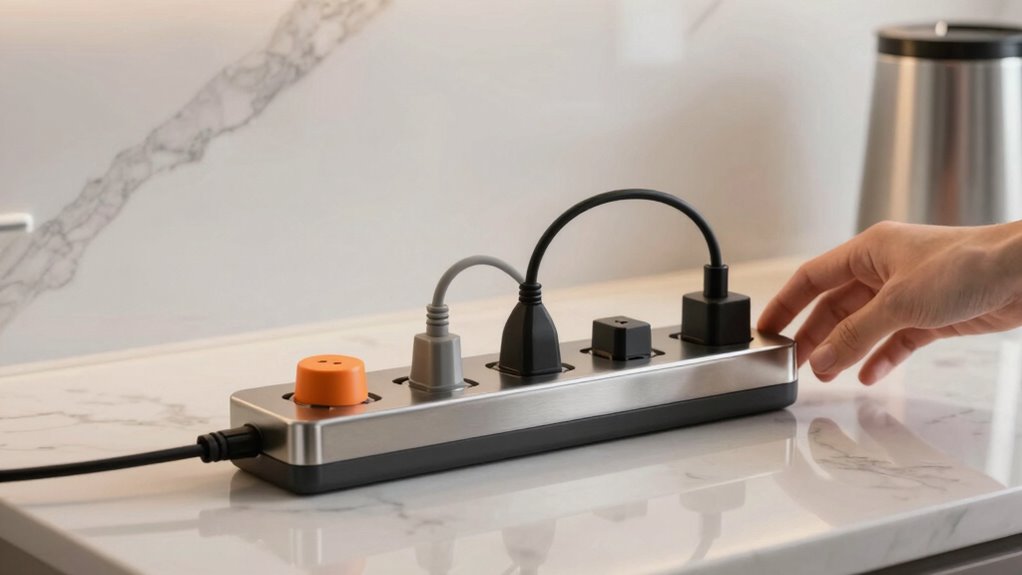
As you consider adding more gadgets and appliances to your kitchen, it’s vital to evaluate your current power outlet setup first. Your existing outlets and circuits might already be close to their limits, especially if your kitchen is older or has limited wiring. To avoid overloads and potential hazards, you need to understand your circuit capacity—how much electricity your wiring can safely handle—and how your outlets are positioned. Proper outlet placement isn’t just about convenience; it’s about ensuring each new appliance has a safe, accessible power source without overburdening existing circuits.
Start by inspecting how many outlets are already in your kitchen. Count their locations and see if they’re conveniently placed for your typical cooking and prep activities. If your outlets are clustered in one area, you might find yourself plugging multiple high-power appliances into a single outlet, which can overload the circuit. It’s vital to understand the circuit capacity—most standard household circuits are rated for 15 or 20 amps—but that doesn’t mean you should max them out. High-wattage appliances like microwaves, blenders, or even an electric kettle can draw significant current, and plugging several of these into the same circuit risks tripping the breaker or damaging your wiring.
Inspect your kitchen outlets to prevent overloads and ensure safe placement for high-power appliances.
Before buying new tech, consider whether your existing outlets can support the additional load. If you notice that outlets are far apart or hard to reach, that could lead to unsafe extension cord use or overloading a single outlet. In such cases, it might be wise to consult an electrician to evaluate whether your current wiring can handle more outlets or if you need to upgrade your circuit capacity. An electrician can also advise on ideal outlet placement, ensuring your new outlets are positioned where they’ll be most useful, such as near countertop workspaces or appliance stations.
If you plan to add multiple new appliances or tech gadgets, don’t forget to account for their power requirements. Check labels or manuals to see their wattage or amperage draw, and compare this with your circuit’s capacity. Overloading a circuit not only trips breakers but can also cause long-term damage to your wiring or appliances. To stay safe, you might need to install dedicated circuits or outlets for high-power devices. Additionally, understanding circuit capacity is crucial to prevent potential electrical hazards and ensure your kitchen remains safe as you upgrade your tech. Recognizing the importance of electrical safety can help you avoid costly repairs and keep your household secure.
As an affiliate, we earn on qualifying purchases.
Frequently Asked Questions
Can Existing Outlets Support New Kitchen Appliances Without Upgrades?
Your existing outlets might support new kitchen appliances if the appliance placement aligns with available outlets and if outlet accessibility is convenient. Check the wattage capacity of your outlets to guarantee they can handle the power requirements of new appliances. Avoid overloading circuits, and consider adding outlets or upgrading your wiring if you notice frequent tripping or if outlet accessibility is limited, making it difficult to plug in or unplug appliances safely.
Are GFCI Outlets Suitable for All Kitchen Areas?
Like a knight in shining armor, GFCI outlets are perfect for kitchen areas prone to moisture. They’re suitable for all kitchen zones, ensuring GFCI compliance and safety. Just check outlet compatibility with your existing wiring before installation. GFCI outlets protect you from electrical shocks, especially near sinks and countertops. So, yes, they’re a smart choice everywhere in your kitchen, providing peace of mind with modern safety standards.
How Many Outlets Are Needed for a Fully Equipped Kitchen?
For a fully equipped kitchen, you’ll need around 10-15 outlets, considering appliance placement and outlet accessibility. Make sure outlets are conveniently located near countertops, sinks, and appliances like the refrigerator and microwave. Install GFCI outlets in wet areas for safety. Plan for enough outlets to avoid overloading circuits and to keep cords tidy. This setup helps you operate all your kitchen tech efficiently while maintaining safety and accessibility.
Do Smart Outlets Require Special Wiring or Compatibility?
Smart outlets generally don’t require special wiring, but you should check their wireless compatibility with your existing smart home system. Most smart outlets plug into standard outlets without wiring modifications, making installation straightforward. However, some models might need a compatible hub or specific wiring if they’re part of a more advanced setup. Always review the product instructions to verify your current wiring and wireless setup support the smart outlet’s features.
What Safety Precautions Should I Consider When Adding Outlets?
Don’t put all your eggs in one basket—safety first when adding outlets. Make certain of proper outlet placement, avoiding high-moisture areas, and follow grounding requirements to prevent shocks. Turn off the power before working, and use GFCI outlets where needed. If you’re unsure about wiring or grounding, hire a licensed electrician. Taking these precautions keeps your kitchen safe and prevents future hazards from creeping in unnoticed.
high wattage kitchen appliance extension cord
As an affiliate, we earn on qualifying purchases.
As an affiliate, we earn on qualifying purchases.
Conclusion
Before you dash to buy that shiny new gadget, take a moment to think about your outlets. Think of your kitchen’s power supply like a trusty old steam engine—if you overload it, everything stalls. Planning ahead saves you from a modern-day Tower of Babel of cords. So, be smart, stay organized, and keep your power outlets clear. After all, a well-placed socket is like a secret passage—hidden but essential for your kitchen’s smooth sailing.
As an affiliate, we earn on qualifying purchases.
dedicated circuit breaker for kitchen
As an affiliate, we earn on qualifying purchases.
As an affiliate, we earn on qualifying purchases.