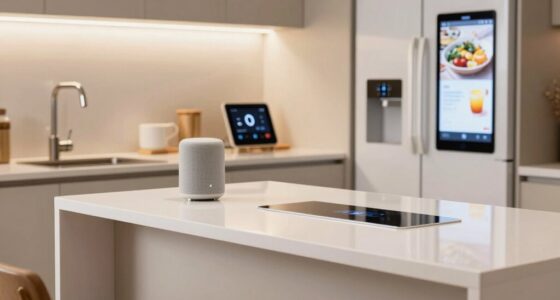
To set up your kitchen devices for smooth operation, start by guaranteeing your Wi-Fi is strong and stable, and update all firmware and apps before installation. Follow manufacturer instructions carefully for pairing and connecting devices, making sure they’re compatible with your existing ecosystem. Position appliances away from heat and moisture, and consider creating a dedicated network for your gadgets. Test devices after setup and troubleshoot any issues to guarantee seamless integration. Keep exploring for more tips to optimize your smart kitchen.

Get kitchen gear delivered free — and shop member deals
- Fast, free delivery on millions of items
- Access to Prime Big Deal Days deals on October 6–7
- Prime Video, Amazon Music and more included
Key Takeaways
- Ensure all devices are compatible and updated with the latest firmware and apps.
- Connect devices to a dedicated, stable Wi-Fi network or band for reliable communication.
- Properly position devices away from heat, moisture, and electrical overload risks.
- Use manufacturer instructions for seamless pairing and synchronization of smart appliances.
- Test device functions and control options via apps or voice commands to confirm smooth integration.

Setting up your kitchen devices properly is essential to guarantee they work efficiently and last longer. When you’re connecting multiple gadgets, smart device integration becomes a key factor in creating a seamless cooking environment. Before you start, ensure your Wi-Fi network is strong and stable, as many smart appliances rely on internet connectivity for full functionality. If you’re pairing smart devices, like a smart oven or connected refrigerator, follow the manufacturer’s instructions carefully to link them to your home network. Proper integration not only simplifies your cooking process but also allows you to control and monitor devices remotely, making your kitchen smarter and more efficient.
Proper setup and smart device integration ensure your kitchen runs smoothly and efficiently.
As you connect your devices, keep safety precautions in mind. For example, unplug appliances before installing or making any adjustments. Avoid overloading electrical outlets with multiple high-power devices, and consider using surge protectors to prevent damage during power fluctuations. When handling smart devices, ensure your hands are dry and avoid exposing sensitive electronics to water or moisture. Always read safety labels and user manuals thoroughly to understand any specific precautions. Proper placement of devices is also crucial; keep them away from heat sources or areas prone to splashes, which could compromise their functionality or safety. Additionally, understanding smart device compatibility**** can help prevent frustration during setup and ensure all appliances work harmoniously.
When setting up smart devices, pay attention to compatibility. Some appliances might require specific apps or firmware updates to work smoothly with your existing ecosystem. Updating these devices before full installation ensures they operate correctly and reduces the risk of connectivity issues later. Additionally, researching device synchronization can help you understand how to connect multiple gadgets efficiently. It’s also beneficial to familiarize yourself with network management practices to optimize your Wi-Fi setup and minimize interference. As you integrate multiple smart devices, consider creating a dedicated network or using a separate Wi-Fi band for your kitchen gadgets. This minimizes interference and enhances responsiveness, ensuring your devices communicate effectively without lag or disconnection.
Finally, test each device thoroughly once set up. Run your smart oven, fridge, or other appliances through their primary functions to confirm they’re responding correctly. Check that your smartphone or voice assistant can control them reliably. If you encounter issues, revisit the setup instructions or consult customer support to troubleshoot. Properly setting up your kitchen devices with attention to smart device integration and safety precautions not only improves your cooking experience but also prolongs the lifespan of your appliances. With a little care and planning, you’ll create a connected, safe, and efficient kitchen that makes everyday tasks easier and more enjoyable.
As an affiliate, we earn on qualifying purchases.
Frequently Asked Questions
Can All Kitchen Devices Connect to a Single Smart Hub?
Not all kitchen devices connect to a single smart hub because of device compatibility issues. Before you start your smart hub setup, check if your devices are compatible with the hub’s system. Some devices may require specific protocols or brands, limiting integration. To guarantee smooth operation, choose a smart hub that supports a wide range of devices and double-check compatibility. This way, you’ll create a seamless, connected kitchen environment.
What Should I Do if Devices Have Incompatible Wi-Fi Frequencies?
Think of incompatible Wi-Fi frequencies like puzzle pieces that don’t fit together. If your devices have incompatible Wi-Fi frequencies, you should first check if your router supports dual-band Wi-Fi (both 2.4 GHz and 5 GHz). Then, connect each device to the correct band, ensuring device compatibility. You might also consider using a Wi-Fi extender or a mesh network to unify the signals and improve overall connectivity.
How Do I Troubleshoot Connectivity Issues Between Devices?
To troubleshoot connectivity issues, start by checking device pairing to guarantee all devices are properly connected. Look for signal interference from other electronics or Wi-Fi networks that might disrupt communication. Move devices closer together or away from sources of interference. Restart your router and devices, then re-pair them if needed. Updating firmware or software can also improve connectivity. These steps help restore smooth operation and reliable device communication.
Are There Safety Concerns When Linking Multiple Kitchen Gadgets?
Think of your kitchen as a modern laboratory—safety comes first. When linking multiple gadgets, always follow safety precautions, like avoiding overloading outlets and ensuring proper electrical grounding. Be cautious about water and electrical connections, and never bypass safety features. Regularly inspect cords and plugs for damage. By prioritizing these safety measures, you keep your kitchen both efficient and secure, turning your culinary space into a safe haven for all your cooking experiments.
How Often Should I Update Device Firmware for Compatibility?
You should update your device firmware whenever the manufacturer releases new updates, typically every few months. Regular firmware updates improve device compatibility, enhance security, and fix bugs, ensuring your kitchen gadgets work seamlessly together. Ignoring updates can lead to compatibility issues or security vulnerabilities. So, stay proactive by checking for firmware updates regularly and installing them promptly, keeping your devices functioning smoothly and safely in your kitchen.
Wi-Fi extender for smart appliances
As an affiliate, we earn on qualifying purchases.
As an affiliate, we earn on qualifying purchases.
Conclusion
By taking the time to properly set up and coordinate your kitchen devices, you’ll create a space that functions as smoothly as a well-rehearsed orchestra. When everything works together seamlessly, cooking becomes less of a chore and more of an enjoyable experience. Think of your kitchen as a symphony, where each device plays its part perfectly in tune. With patience and attention, you’ll turn your kitchen into a harmonious hub of productivity and creativity.
As an affiliate, we earn on qualifying purchases.
dedicated Wi-Fi router for smart home
As an affiliate, we earn on qualifying purchases.
As an affiliate, we earn on qualifying purchases.
Fall Picks
fall essentials
As an affiliate, we earn on qualifying purchases.