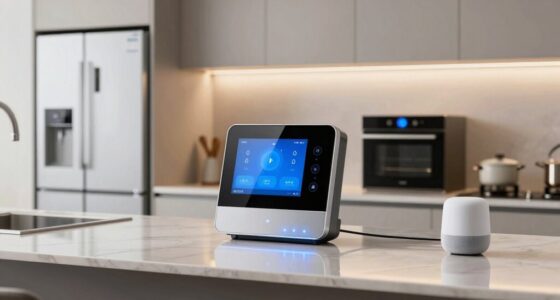
Before adding more gadgets, you need a solid plan for your smart kitchen to stay organized and avoid costly compatibility issues. A clear blueprint helps you choose devices that work well together, ensuring seamless communication and control. It also prevents clutter and frustration from incompatible gear, saving you time and money in the long run. Thinking ahead guarantees your system remains flexible and scalable. Keep exploring how to create a successful smart kitchen that truly fits your needs.
Key Takeaways
- A clear plan prevents clutter and ensures appliances work together efficiently, avoiding unnecessary gadgets.
- Planning ensures device compatibility and seamless communication across brands and protocols.
- It simplifies user interface design, making controls intuitive and reducing setup confusion.
- A well-thought-out system supports future expansion, avoiding costly upgrades or replacements later.
- Strategic planning aligns devices with specific needs, maximizing functionality and long-term value.
Are you ready to transform your kitchen into a modern, efficient space? Before you start adding the latest gadgets, it’s essential to have a clear plan in place. A smart kitchen isn’t just about collecting high-tech devices; it’s about ensuring those devices work seamlessly together and serve your needs. Without a thoughtful plan, you risk clutter, frustration, and wasted money. The foundation of a successful smart kitchen begins with understanding appliance compatibility. Not every smart device plays nicely with others, especially when it comes to different brands, operating systems, or communication protocols. You need to verify that your chosen appliances can connect via the same Wi-Fi network or compatible smart home platforms. Otherwise, you might find yourself with a collection of gadgets that refuse to sync or require complex workarounds. A well-planned approach helps you select devices designed for interoperability, making your kitchen smarter and easier to manage. Additionally, assessing **device interoperability** ensures that your gadgets can work together smoothly without added hassle. Equally important is **user interface design. When you’re controlling multiple smart appliances, a confusing or inconsistent interface can quickly become a major headache. A good plan involves choosing devices with intuitive, user-friendly controls, whether they’re accessed through a single app or voice commands. Simplified interfaces reduce the learning curve and make it easier to operate your kitchen’s technology efficiently. Think about how you want to interact with your devices—are voice commands your preferred method, or do you favor a touchscreen? Ensuring that the user interface design aligns with your habits and preferences helps you avoid frustration and maximizes convenience. It’s also worth considering whether the app’s layout is straightforward, with clear icons and easy navigation. When devices have a cohesive and simple interface, you’ll find managing your smart kitchen becomes second nature, rather than a chore. Additionally, understanding smart home protocols can help prevent compatibility issues and streamline your setup process. It’s also beneficial to consider future scalability** so your system can grow with your needs over time.
smart kitchen device compatibility kit
As an affiliate, we earn on qualifying purchases.
As an affiliate, we earn on qualifying purchases.
Frequently Asked Questions
How Do I Prioritize Which Smart Devices to Install First?
Start by evaluating your daily routines and identify which smart devices will improve your user experience the most. Prioritize devices that are compatible with your existing systems to avoid integration issues. Focus on essential gadgets first, like smart lighting or a voice assistant, then expand gradually. This approach ensures a smooth setup, maximizes functionality, and creates a cohesive smart kitchen that truly enhances your cooking and living experience.
What Budget Considerations Should I Keep in Mind?
When considering your budget, focus on cost-effective upgrades that offer the most value. Start with essential devices that improve functionality, then allocate funds for future expansions. Practice budget planning by setting clear spending limits and researching prices to avoid overspending. Prioritize devices that save time or energy, ensuring your investments enhance your kitchen efficiently without breaking the bank. This approach helps you build a smart kitchen that’s both affordable and practical.
How Can I Ensure My Smart Kitchen Is Secure From Hacking?
Think of your smart kitchen as a fortress—strengthen it by ensuring data encryption for all devices, making stolen information useless. Implement network segmentation to isolate your smart appliances from your main home network, limiting hackers’ access. Regularly update device firmware and use strong, unique passwords. These steps create a resilient defense, turning your kitchen into a secure culinary haven rather than an easy target for cyber threats.
What Existing Kitchen Layouts Are Most Compatible With Smart Technology?
You’ll find open-concept and galley kitchen layouts most compatible with smart technology because they allow seamless appliance integration and easy space optimization. These designs provide straightforward pathways for wiring and device placement, making it simpler to connect smart gadgets without clutter. By choosing a layout that supports efficient use of space and appliance integration, you guarantee your smart kitchen functions smoothly and looks organized, enhancing your overall cooking experience.
How Do I Future-Proof My Smart Kitchen Investments?
To future-proof your smart kitchen investments, focus on smart appliance compatibility and voice control integration. Choose devices that adhere to universal standards, ensuring they work seamlessly with your existing systems and can easily adapt to new technologies. Prioritize open platforms and voice assistants like Alexa or Google Assistant, so you can add or upgrade gadgets without hassle. This strategy keeps your kitchen tech current and flexible for evolving smart home trends.
interoperable smart home appliances
As an affiliate, we earn on qualifying purchases.
As an affiliate, we earn on qualifying purchases.
Conclusion
A smart kitchen without a plan is like a ship without a compass—adrift amidst a sea of gadgets. By charting your course first, you guarantee each device serves a purpose, guiding you toward efficiency and harmony. Remember, technology is the wind in your sails, but your plan is the steady anchor that keeps you on course. Embrace the blueprint, and your kitchen becomes a vessel of both innovation and intention.
As an affiliate, we earn on qualifying purchases.
voice controlled smart kitchen devices
As an affiliate, we earn on qualifying purchases.
As an affiliate, we earn on qualifying purchases.