Searing plays a crucial role in elevating your sous vide dishes by adding flavor, texture, and visual appeal. It creates a rich Maillard crust that enhances the aroma and develops complex, savory notes that sous vide alone can’t achieve. This step provides a satisfying crispy exterior that contrasts beautifully with the tender interior, making your dish more enjoyable. If you keep exploring, you’ll discover how mastering searing can turn simple cooked meat into a gourmet experience.
Key Takeaways
- Searing creates the Maillard reaction, enhancing flavor, aroma, and visual appeal of sous vide-cooked meat.
- It provides a crispy, textured exterior that contrasts with the tender interior for a more satisfying eating experience.
- Proper searing locks in moisture and prevents a flat, dull appearance by developing appealing browning.
- Using high heat and dry surfaces ensures efficient browning without overcooking the delicate interior.
- Mastering searing techniques elevates the overall quality from simply cooked to gourmet-level dish.

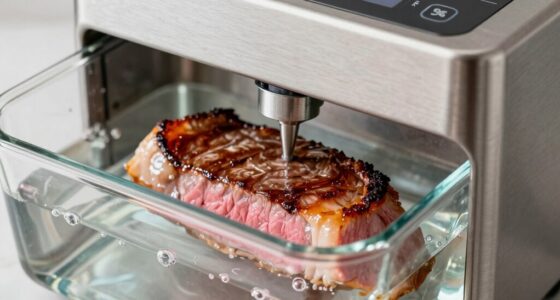
Have you ever wondered why your perfectly cooked sous vide meat lacks that irresistible crust? The answer lies in the essential step of searing, which plays a crucial role in transforming tender, evenly cooked meat into a culinary masterpiece. Searing isn’t just about appearance; it’s about releasing flavor development and achieving that satisfying texture enhancement that makes each bite memorable. When you sear after sous vide cooking, you create a Maillard reaction—a chemical process that occurs when the surface temperature rises high enough to develop complex, savory flavors and appealing browning. This reaction is what gives your meat that rich, smoky aroma and deep, caramelized taste that simply can’t be achieved through sous vide alone.
Searing after sous vide creates a flavorful Maillard reaction and a perfect crispy crust.
Searing also considerably enhances the texture, providing a delightful contrast to the tender interior. While sous vide delivers uniform doneness and a juicy, soft center, the sear adds a crispy, slightly charred exterior that elevates the entire dish. This combination of textures—smooth and tender inside with a crisp, flavorful crust—creates a sensory experience that keeps diners coming back for more. Without this step, a perfectly cooked piece of meat can feel flat and lack that satisfying mouthfeel that a good crust provides.
To maximize flavor development and texture enhancement, you need to sear properly. This means getting your pan hot enough—ideally, a surface temperature of around 400°F (200°C)—so the exterior browns quickly without overcooking the interior. Using high-smoke-point fats like vegetable oil or clarified butter helps prevent burning while achieving a crisp crust. Remember, patience is key; don’t rush the process. A quick, intense sear over high heat for about 1-2 minutes per side is usually enough to develop the desired crust without compromising the perfect doneness achieved through sous vide. Additionally, understanding the importance of browning reactions can help you refine your searing technique for optimal flavor and texture. Proper surface moisture removal is also essential, as excess moisture on the surface can hinder browning and lead to steaming rather than searing. Patting the meat dry with paper towels removes excess moisture, ensuring a better sear and more flavorful crust. Proper temperature control during searing is essential to prevent overcooking or burning. Mastering the searing process is key to elevating your dish from good to extraordinary. So, by mastering the art of searing, you turn a perfectly cooked piece of meat into an unforgettable culinary experience—rich in flavor, with a tempting texture that invites the first bite.
As an affiliate, we earn on qualifying purchases.
Frequently Asked Questions
What Temperature Is Ideal for Searing After Sous Vide?
You should sear your sous vide cooked meat at around 400°F (204°C) for a quick, flavorful crust. This high temperature guarantees a perfect sear without overcooking. When experimenting with marinade variations, a quick sear helps lock in flavors. Remember, proper equipment maintenance, like cleaning your pan, prevents sticking and uneven searing. Keep your tools in top shape for consistent, delicious results every time.
How Long Should I Sear for Optimal Texture and Flavor?
You should sear your meat for about 1-2 minutes per side to achieve ideal texture and flavor. Use high heat and a thin layer of oil for a quick, even sear. Incorporate marinating techniques beforehand to enhance flavor, and let the meat rest for a few minutes after searing to allow juices to redistribute. This process guarantees a flavorful crust while keeping the interior tender.
Can I Sear Before or During Sous Vide Cooking?
You can sear before or during sous vide cooking, but searing beforehand enhances flavor and creates a beautiful crust, while searing during can add a smoky touch. Use kitchen tools like a cast iron skillet or torch for best results. Just keep in mind that searing prior to sous vide helps lock in juices and flavor, making your dish more delicious overall. Adjust your method based on your desired flavor profile.
What Types of Oil Are Best for Searing?
You should choose oils with high smoke points for searing, like avocado oil, grapeseed oil, or refined canola oil, as they withstand high heat without burning. These oils are ideal for searing techniques because they develop a flavorful crust without smoking excessively. Avoid oils like extra virgin olive oil, which have lower smoke points, to prevent burning and guarantee a perfect, caramelized sear that enhances your sous vide dish.
How Do I Prevent Over-Searing and Burning?
Coincidentally, avoiding over-searing and burning is easier when you pay attention to marinade compatibility and your searing equipment options. Use a high-smoke-point oil and keep the heat moderate, especially if your marinade contains sugars or spices that burn easily. Choose a cast-iron skillet or a torch for precise control. Keep an eye on the meat, and sear just until you get a golden crust—less is more to prevent overdoing it.
As an affiliate, we earn on qualifying purchases.
Conclusion
Searing truly elevates your sous vide dishes, adding that perfect crust and flavor. Did you know that a well-seared surface can increase caramelization compounds, boosting flavor complexity by up to 30%? By mastering the searing step, you guarantee every bite is both tender and irresistibly crispy. So next time, don’t skip it—your taste buds will thank you for the extra touch of perfection that makes your sous vide meal stand out.
As an affiliate, we earn on qualifying purchases.
As an affiliate, we earn on qualifying purchases.