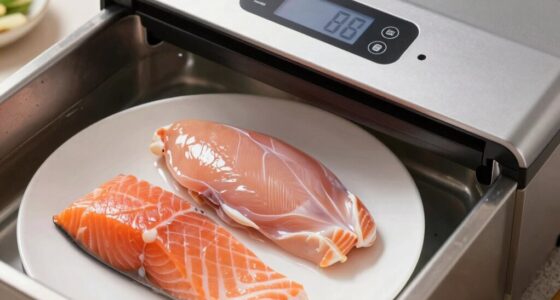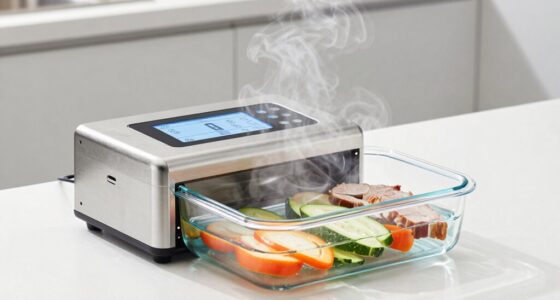
If you sear food the wrong way after sous vide, you risk burning the surface before the inside reaches the right temperature, resulting in a bitter, charred flavor. Too much heat can create a tough crust and ruin delicate textures, while insufficient drying causes steaming instead of browning. Using improper tools or rushing the process can also lead to uneven sears and soggy surfaces. Keep going to discover how to perfect your searing technique for restaurant-quality results.

Get kitchen gear delivered free — and shop member deals
- Fast, free delivery on millions of items
- Access to Prime Big Deal Days deals on October 6–7
- Prime Video, Amazon Music and more included
Key Takeaways
- Over-seering burns the surface before internal temperature stabilizes, leading to a burnt taste and tough crust.
- Insufficiently hot or uneven pans cause poor crust development, resulting in dull, grayish, or soggy surfaces.
- Using too high heat or rushing the process can create bitterness and mask delicate flavors from sous vide.
- Improper technique can produce a crispy exterior with a compromised, undercooked interior.
- Poor surface drying or incorrect tools lead to steaming instead of proper searing, reducing flavor and texture.
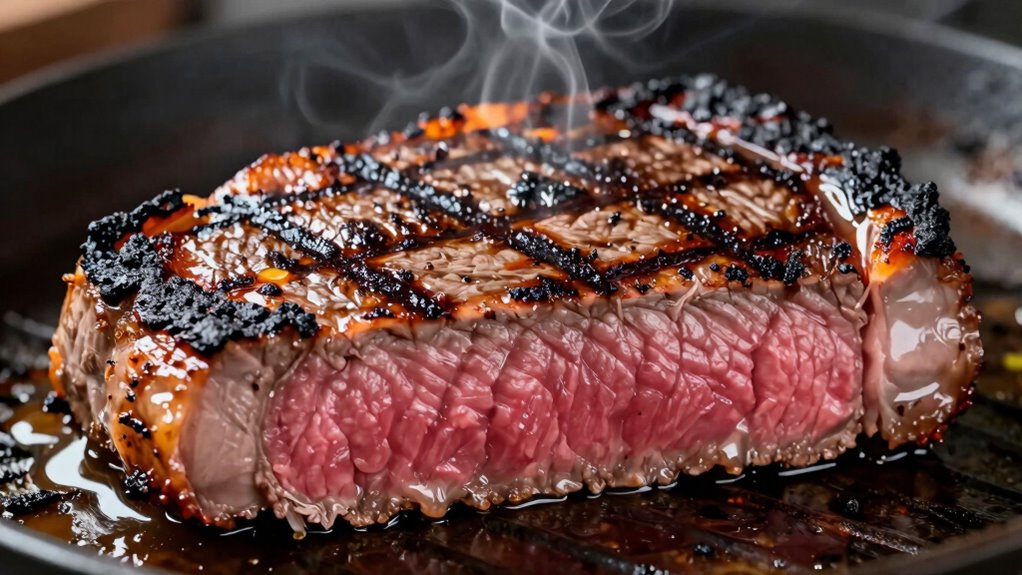
Searing food after sous vide might seem straightforward, but doing it the wrong way can ruin your dish. When you rush the process or use improper techniques, you risk compromising both flavor enhancement and texture modification. Instead of achieving a beautifully caramelized crust and tender interior, you might end up with a burnt exterior or a soggy, unappealing surface. This mistake can turn what should be a restaurant-quality meal into a disappointing mess.
One common error is over-searing or applying heat too aggressively. If you crank up the heat excessively, you’ll quickly burn the surface before the internal temperature has had a chance to stabilize. Burnt flavors overpower the dish, leaving a bitter, charred taste that masks the subtle, delicate flavors developed during the sous vide process. Additionally, high heat can cause the proteins on the surface to seize up too rapidly, leading to a tough, chewy crust rather than a crispy, flavorful one. Proper searing requires a balance—hot enough to develop that desirable Maillard reaction but controlled enough not to ruin the interior or create an unpleasant, burnt taste.
Over-searing burns the surface and masks delicate flavors, ruining the perfect balance of a well-cooked dish.
Another mistake is not drying the surface thoroughly before searing. Moisture is your enemy here. When the surface is damp, the water boils away rapidly, preventing browning and leading to steaming instead of searing. This results in a dull, grayish exterior with no flavor enhancement or appealing texture. You won’t develop that rich, caramelized crust that adds depth to the dish. Instead, you end up with a soggy, unappealing surface that fails to deliver the expected flavor boost and textural contrast. Proper surface preparation is essential because moisture management directly influences the success of your sear. Additionally, understanding how temperature control impacts the Maillard reaction can help you fine-tune your searing process for optimal results.
Using the wrong tools can also cause issues. A pan that’s not hot enough or a utensil that doesn’t conduct heat efficiently can prevent achieving an even, crispy crust. Cast iron skillets are ideal because they hold and distribute heat evenly, helping you get that perfect sear. If you’re using a non-stick pan, you might not get the desired crust, and the surface could stick or burn easily. The goal is to create a quick, high-heat environment that fosters both flavor enhancement and texture modification without overcooking the meat.
In the end, searing after sous vide is about precision, patience, and technique. When you avoid these common pitfalls, you’ll unlock the full potential of your dish—rich flavors, tender textures, and that perfect, crispy exterior. Done right, searing elevates your meal from good to exceptional, but done wrong, it can undo all the careful work done during the sous vide process. Paying attention to equipment safety and proper technique ensures a successful sear every time.
As an affiliate, we earn on qualifying purchases.
Frequently Asked Questions
Can Improper Searing Affect Food Safety?
Improper searing can indeed affect food safety by increasing food contamination and cross contamination risks. When you don’t sear at the right temperature or use clean equipment, bacteria might survive or transfer between foods. This can lead to foodborne illnesses. Always guarantee your searing process is thorough, your tools are sanitized, and you handle food carefully to minimize these risks and keep your meal safe to eat.
Does Wrong Searing Ruin the Texture of Sous Vide Food?
A bad sear can definitely ruin the texture of your sous vide food. If you use incorrect searing techniques or set the wrong cooking temperature, it can create a tough, uneven crust or scorch the surface. Remember, “a little knowledge is a dangerous thing.” To avoid this, make certain your searing technique is precise, and your heat is just right. Proper searing preserves the tender interior while adding a perfect, flavorful crust.
How Can I Fix Over-Seared or Burnt Dishes?
If your dish is over-seared or burnt, start by removing it from the heat immediately to prevent further damage. Use gentler searing techniques next time, like lower heat and shorter cooking times, to avoid burning. Focus on heat control, ensuring you don’t rush the process. Rest your food briefly to let any residual heat settle, and consider trimming burnt parts if needed. Practice makes perfect with searing techniques!
Is It Safe to Consume Improperly Seared Sous Vide Food?
You should be cautious, as improperly seared sous vide food isn’t necessarily unsafe, but it can pose risks. About 20% of foodborne illnesses stem from improper cooking temperatures. When you don’t use proper searing techniques, bacteria might survive on the surface. To stay safe, make certain your cooking temperature is high enough to kill pathogens, and use proper searing methods to create a safe, flavorful crust without overdoing it.
Does Incorrect Searing Impact the Flavor Profile Significantly?
Incorrect searing can cause flavor alteration and ruin the surface crust you’re aiming for. If you sear too quickly or at too high a temperature, you might burn the exterior, creating a bitter taste, or fail to develop that desirable caramelized crust. This impacts the overall flavor profile, making your dish less appealing. To avoid this, make sure your pan is hot but not smoking, and sear evenly for the best results.
As an affiliate, we earn on qualifying purchases.
Conclusion
So, next time you’re searing after sous vide, remember that precision matters. Searing the wrong way can ruin an otherwise perfect dish, leaving you with a burnt crust or uneven texture. But isn’t the goal to elevate your culinary game, not sabotage it? Pay attention to your technique, and your efforts will pay off with a beautifully seared, flavorful meal. After all, isn’t cooking about mastering the art as much as the science?
digital meat thermometer for sous vide
As an affiliate, we earn on qualifying purchases.
As an affiliate, we earn on qualifying purchases.
As an affiliate, we earn on qualifying purchases.
Fall Picks
fall essentials
As an affiliate, we earn on qualifying purchases.