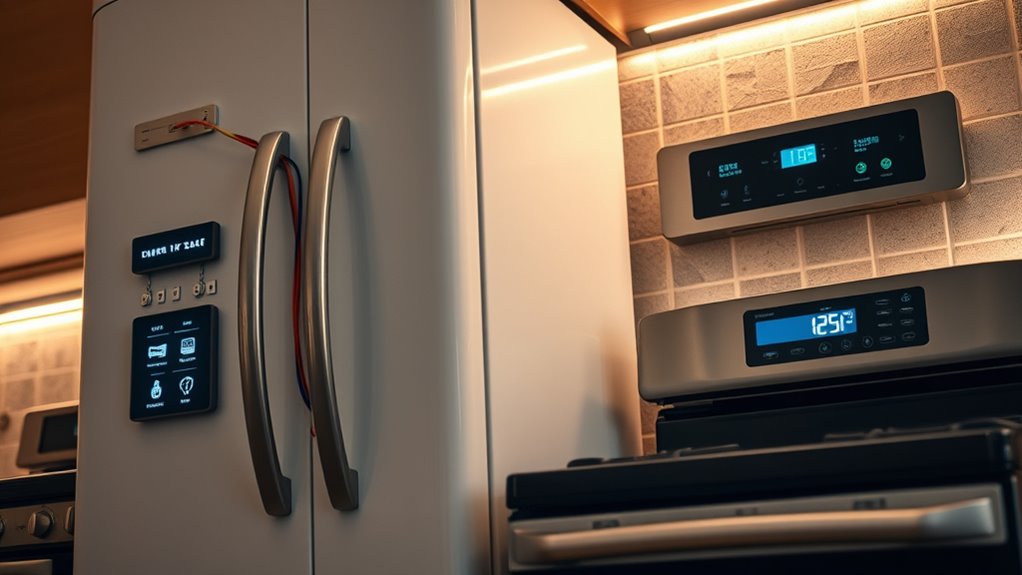

Upgrading your kitchen with DIY smart retrofit solutions is an affordable way to enhance convenience, energy efficiency, and safety without replacing your appliances. You can add smart plugs, controllers, or voice-activated devices to existing appliances, allowing you to control them remotely or via voice commands. These upgrades are simple to install and integrate seamlessly with your smart home system. Keep exploring to discover easy tips for transforming your old appliances into modern smart tools.

Get kitchen gear delivered free — and shop member deals
- Fast, free delivery on millions of items
- Access to Prime Big Deal Days deals on October 6–7
- Prime Video, Amazon Music and more included
Key Takeaways
- Retrofit existing appliances with smart plugs or controllers to enable voice commands and remote operation easily.
- Integrate smart hubs or voice assistants like Alexa or Google Assistant for seamless voice-controlled kitchen management.
- Use energy monitoring features to track appliance usage, optimize schedules, and reduce electricity costs.
- Install user-friendly smart outlets that allow simple setup and automation without replacing current appliances.
- Enhance safety and convenience through remote control options, automations, and easy-to-follow installation steps.
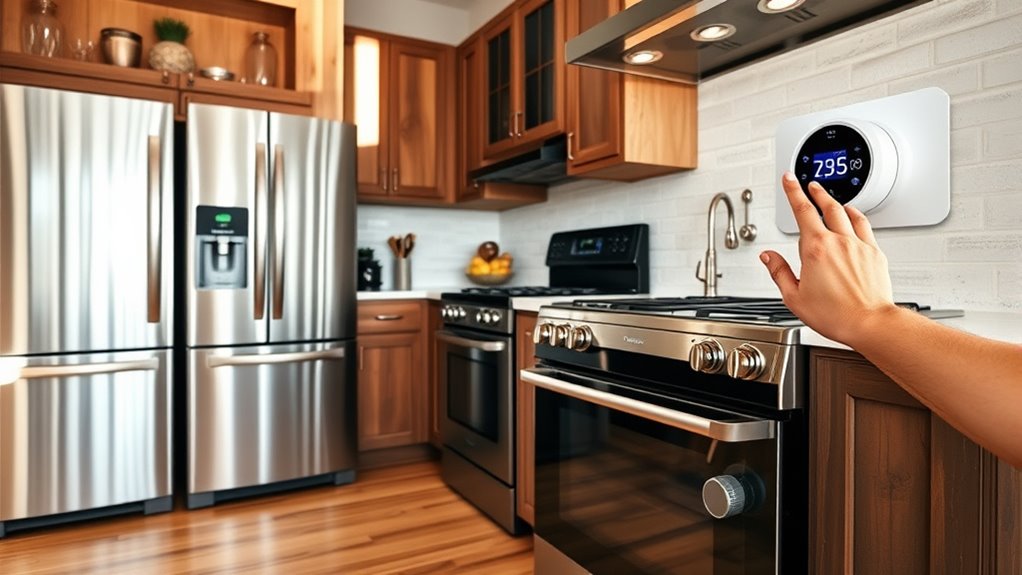
Upgrading your kitchen with smart technology doesn’t have to be complicated or expensive. If you want to modernize your space without replacing all your appliances, retrofitting your existing ones is a practical solution. One of the easiest ways to do this is by adding voice control features. With minimal effort, you can connect devices like your refrigerator, oven, or even your coffee maker to a smart home hub. Using voice commands, you can start your coffee, check the oven’s temperature, or get updates on your fridge’s contents—all without lifting a finger. This not only enhances convenience but also helps you stay organized and efficient in your daily routines.
Transform your kitchen with easy, affordable smart tech and voice control for modern convenience.
When it comes to energy efficiency, retrofitting your old appliances can markedly reduce your energy consumption, saving you money while helping the environment. Many smart plugs and controllers are designed to be compatible with older appliances, allowing you to schedule their operation or monitor their energy use. For instance, by plugging your traditional dishwasher or microwave into a smart outlet, you can set specific times for them to turn on or off, avoiding unnecessary energy waste. Additionally, some retrofit kits include energy monitoring features, giving you real-time insights into how much power your appliances are using. Armed with this information, you can make smarter choices about when and how to operate them, which can lead to noticeable savings on your utility bills over time.
Installing voice control isn’t complicated; most smart home platforms are user-friendly and come with straightforward instructions. You’ll typically need to connect a smart hub or a voice assistant device like Amazon Alexa or Google Assistant. Once integrated, you can control your retrofitted appliances simply by speaking commands. This hands-free operation is especially handy when your hands are full or when you want to streamline your cooking process. Plus, voice control adds a layer of safety, as you can turn off appliances remotely if needed, reducing the risk of accidents or energy waste. Integrating smart automation into your kitchen can further enhance how your appliances work together seamlessly.
Retrofitting your appliances for smart technology is a cost-effective way to bring modern convenience into your kitchen. It allows you to enjoy the benefits of voice control, like hands-free operation, and boosts energy efficiency by enabling smarter management of your devices. You don’t have to buy all-new appliances to enjoy these upgrades; instead, you can enhance what you already have. With just a few simple tools and some setup time, you’ll transform your kitchen into a smarter, more efficient space that fits seamlessly into your busy life.
As an affiliate, we earn on qualifying purchases.
Frequently Asked Questions
What Are the Best Budget-Friendly Smart Kitchen Retrofit Options?
You can start with budget-friendly upgrades like smart plugs to control your appliances remotely or add affordable retrofit options such as smart light bulbs for improved lighting control. Consider installing Wi-Fi-enabled thermostats or motion sensors to boost efficiency without breaking the bank. These simple, low-cost solutions make your kitchen smarter, giving you convenience and energy savings while staying within your budget.
How Do I Ensure Compatibility Between Old Appliances and New Smart Devices?
To guarantee compatibility between your old appliances and new smart devices, you need to check appliance compatibility, review retrofit integration options, and verify device specifications. You should compare connectivity standards like Wi-Fi, Bluetooth, or Zigbee, confirm power requirements, and read manufacturer instructions. By doing so, you streamline retrofit integration, prevent technical issues, and make sure your smart upgrades work seamlessly with your existing appliances.
Are There Safety Concerns With Retrofitting Appliances Yourself?
Yes, there are safety concerns when you retrofit appliances yourself. You risk electrical hazards if you don’t follow proper wiring protocols, potentially causing shocks or fires. Additionally, improper modifications can lead to appliance damage, reducing their lifespan or causing malfunctions. To stay safe, you should understand electrical systems, use the right tools, and consider consulting a professional if you’re unsure about any step in the retrofit process.
Can I Retrofit Appliances Without Professional Electrical Wiring?
You can retrofit appliances without professional electrical wiring if you prioritize DIY safety and verify appliance compatibility. However, you should only attempt this if you have decent electrical skills and understand the wiring involved. Always turn off power, follow manufacturer instructions, and use proper tools. If unsure about any step, it’s safer to consult a professional to avoid risks like electrical shocks or damage.
What Maintenance Is Required for Retrofitted Smart Kitchen Appliances?
Think of it like tuning a vintage radio; your smart appliances need regular care. You should periodically check for firmware updates to keep them running smoothly and guarantee they’re secure. Appliance calibration might be necessary if you notice inconsistent performance or inaccurate readings. Routine cleaning and inspecting power connections help prevent issues. Staying proactive with these simple maintenance steps keeps your retrofitted appliances functioning at their best and extends their lifespan.
As an affiliate, we earn on qualifying purchases.
Conclusion
So, now that you’ve taken the first steps to upgrade your kitchen, imagine what’s next. With just a few simple tweaks, your space could become smarter, more efficient, and even more enjoyable to cook in. But there’s a whole world of possibilities waiting just around the corner—more gadgets, more integrations, more surprises. Are you ready to keep pushing the boundaries? Your smart kitchen adventure is only just beginning.
As an affiliate, we earn on qualifying purchases.
As an affiliate, we earn on qualifying purchases.
Fall Picks
fall essentials
As an affiliate, we earn on qualifying purchases.