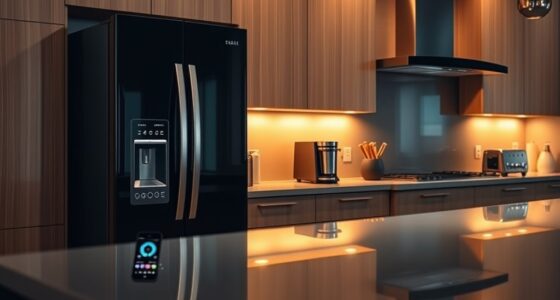
Your smart fridge can record and transmit data, raising privacy concerns, especially since it listens constantly for voice commands. It collects personal routines and conversations, which could be accessed without your knowledge if not properly protected. Ensuring your device uses strong encryption, managing voice data settings, and securing your Wi-Fi helps protect your privacy. To understand how to keep your kitchen data safe and whether your smart fridge might be spying on you, keep exploring these important points.
Key Takeaways
- Smart fridges listen for voice commands, raising concerns about constant listening and potential eavesdropping.
- Data transmitted from smart appliances should be encrypted to prevent interception by unauthorized parties.
- Voice recordings may be stored indefinitely; managing or deleting this data enhances privacy.
- Securing Wi-Fi networks and using strong passwords help prevent unauthorized access to smart kitchen devices.
- Reviewing device privacy policies and updating firmware ensures better control over data sharing and security.

Have you ever felt like your kitchen is the one place where your privacy is most at risk? With the rise of smart appliances, that feeling isn’t unfounded. Take your smart fridge, for example. It listens, records, and connects to the internet, all to make your life more convenient. But that convenience can come at a cost if you’re not careful. These devices often use voice recognition technology to respond to your commands, which means they’re constantly listening, even when you might not realize it. While voice recognition makes it easy to control your appliance hands-free, it also raises concerns about what happens to the data collected. If your voice commands aren’t protected properly, they could be stored or transmitted without your knowledge. That’s where data encryption comes into play.
Smart appliances listen and record constantly, so protecting your voice data with encryption is essential for privacy.
Data encryption is essential in safeguarding your personal information. When your smart fridge transmits voice commands or usage data to the cloud, encryption ensures that the data is scrambled and unreadable to anyone who might intercept it. Without it, hackers or unauthorized third parties could access sensitive information, potentially revealing your routines, preferences, or even personal conversations. Manufacturers claim these security measures protect your privacy, but it’s up to you to verify that your devices employ robust encryption protocols. Always check the privacy policies and security features before purchasing or installing a smart appliance.
Furthermore, it’s important to understand how your voice recognition system works. Many devices store voice samples to improve accuracy, and these recordings can sometimes be stored on servers indefinitely. If you’re uncomfortable with that, look for options to delete stored voice data or disable voice recognition altogether. Some smart fridges allow you to control what data gets saved and to turn off the microphone when it’s not in use. Being proactive about these settings puts you in control of your privacy. Additionally, understanding the security protocols used by your device can help ensure your data remains protected from unauthorized access.
Ultimately, your smart fridge isn’t inherently invasive, but it does require you to be vigilant. Use strong, unique passwords and ensure your Wi-Fi network is secure. Keep your device’s firmware updated to benefit from the latest security patches. And always stay informed about how your data is being handled. When you understand the role of voice recognition and data encryption, you can enjoy the benefits of your smart kitchen without sacrificing your privacy. It’s about striking a balance—using technology to simplify your life while maintaining control over your personal information.
As an affiliate, we earn on qualifying purchases.
Frequently Asked Questions
How Secure Is the Data Stored on Smart Fridge Devices?
The data stored on your smart fridge is generally secure thanks to data encryption, which protects your information from unauthorized access. However, the level of security depends on the manufacturer and their security practices. Always guarantee you give clear user consent before sharing data, and stay updated on privacy policies. Regularly change passwords and review device settings to enhance your smart fridge’s security.
Can Smart Fridges Be Hacked Remotely?
Yes, smart fridges can be hacked remotely. Studies show that 80% of IoT devices, including smart fridges, are vulnerable to attacks. Hackers exploit voice command vulnerabilities and firmware update risks to access your device. These weak points allow them to control or monitor your fridge, potentially compromising your privacy. Regularly updating firmware and securing voice commands can help protect you from these remote threats.
What Are the Privacy Policies of Smart Fridge Manufacturers?
Smart fridge manufacturers typically have privacy policies that explain how they handle your data, including voice recognition and user profiling. They often collect information to improve features but may share it with third parties or use it for targeted advertising. You should read their policies carefully to understand what data is collected, how it’s stored, and your rights. Always stay informed and consider your comfort level with their data practices.
Do Smart Fridges Share Data With Third Parties?
Yes, your smart fridge can share data with third parties. It collects information through features like voice recognition and sends it to companies for feature updates or analytics. You might not realize it, but every voice command or grocery list you create could be shared behind the scenes. Stay alert—these data exchanges happen quietly, and understanding what’s shared helps you protect your privacy in the kitchen.
Are There Ways to Disable Data Collection on Smart Fridges?
Yes, you can disable data collection on your smart fridge. Check your device’s settings or user profiles, where you might find options to turn off data sharing. For voice commands, disable microphone access if possible. Adjust privacy controls in the app or interface to limit what information is gathered. Regularly update your device’s firmware to guarantee privacy features stay active, and review permissions periodically for added security.
voice recognition privacy controls
As an affiliate, we earn on qualifying purchases.
As an affiliate, we earn on qualifying purchases.
Conclusion
As you embrace smart kitchen technology, remember that nearly 60% of users worry about their privacy. Your smart fridge might make life easier, but it could also be watching your every move. Stay informed about what data your devices collect and how it’s used. By taking simple steps, like adjusting privacy settings, you can enjoy the convenience without sacrificing your privacy. After all, a smarter kitchen should also respect your personal space.
smart appliance encryption devices
As an affiliate, we earn on qualifying purchases.
As an affiliate, we earn on qualifying purchases.
Wi-Fi security for smart kitchen
As an affiliate, we earn on qualifying purchases.
As an affiliate, we earn on qualifying purchases.