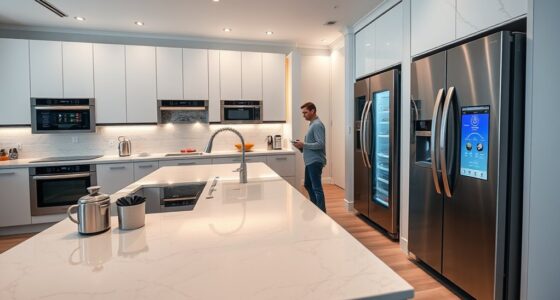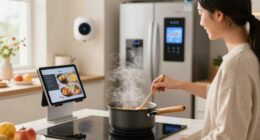
To integrate appliances into your smart home kitchen, start by choosing compatible devices that work with your voice assistant or smart hub. Connect them via Wi-Fi and setup apps for control and automation. Automate tasks like preheating ovens or scheduling coffee makers to save energy. Prioritize security by updating firmware and managing device permissions. For tips on setup, security, and future trends, explore ways to create a seamless, secure, and efficient smart kitchen environment.
Key Takeaways
- Choose compatible smart appliances that work with your preferred voice assistants and home automation systems.
- Ensure devices connect via Wi-Fi and support protocols like Zigbee or Z-Wave for seamless integration.
- Automate tasks such as preheating ovens or scheduling appliances to optimize energy use and convenience.
- Implement security measures including network encryption, device permissions, and regular updates to protect your smart kitchen.
- Maintain appliances regularly and stay updated on future trends like AI-driven optimization for a smarter kitchen experience.

Tovala Smart Oven Pro, 6-in-1 Countertop Convection Oven – Steam, Toast, Air Fry, Bake, Broil, and Reheat – Smartphone Control Steam & Air Fryer Oven Combo
Versatile 6-in-1 Toaster Oven Air Fryer Combo – Unleash your culinary skills with our air fryer toaster oven…
As an affiliate, we earn on qualifying purchases.
As an affiliate, we earn on qualifying purchases.
Understanding the Basics of Smart Kitchen Appliances
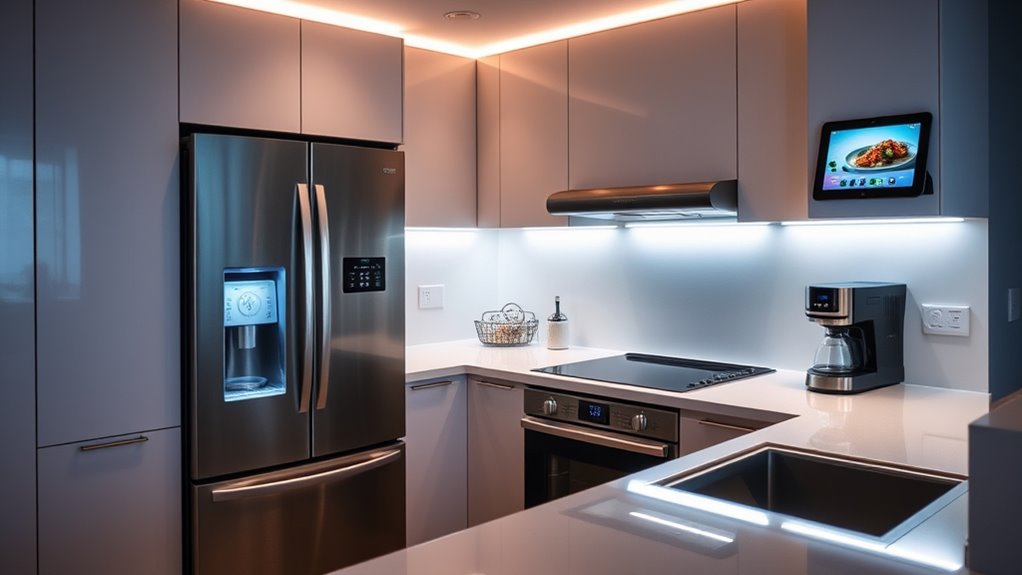
Have you ever wondered how smart kitchen appliances work? These devices come with smart appliance features that let you control and monitor them remotely, often through your smartphone or voice commands. They connect to your home Wi-Fi, enabling seamless communication within your smart home ecosystem. By understanding their core functions, you can automate routine tasks, like setting the oven to preheat or starting the coffee maker in the morning. The kitchen automation benefits go beyond convenience; they help save energy, reduce waste, and improve overall efficiency. Knowing the basics of these appliances helps you make informed decisions when integrating new devices, ensuring your kitchen becomes a smarter, more connected space that simplifies daily life. Simple, room-by-room solutions can help you organize your entire kitchen setup effectively. Additionally, understanding how energy management integrates with appliances can maximize your home’s overall efficiency and sustainability, especially as smart devices are designed to optimize energy consumption and reduce waste. Incorporating smart home integration options can further enhance the convenience and functionality of your kitchen appliances, making everyday tasks even more effortless. Moreover, many smart appliances are compatible with advanced home automation systems that further enhance energy savings and convenience.
smart coffee maker compatible with Alexa
As an affiliate, we earn on qualifying purchases.
As an affiliate, we earn on qualifying purchases.
Choosing Compatible Devices for Your Smart Home Ecosystem

Selecting compatible devices is essential to creating a seamless smart home ecosystem. To guarantee smooth integration, consider these key factors:
Choosing compatible devices ensures a seamless, integrated smart home experience.
- Voice control compatibility – Make sure devices work with your preferred voice assistants like Alexa or Google Assistant for effortless control. Additionally, verifying that your voice control system supports the specific devices you choose can prevent future connectivity issues. Ensuring compatibility with popular voice assistant platforms can simplify setup and daily use.
- Energy efficiency – Choose appliances that focus on energy savings, reducing your utility bills and environmental impact.
- Standard protocols – Opt for devices supporting common connectivity standards like Zigbee or Z-Wave to guarantee compatibility across your ecosystem. Understanding the wireless communication protocols used can help you select appliances that are durable and safe for smart integration.
- Reliable power tool and equipment knowledge – Understanding the power tool specifications and safety requirements can help you select appliances that are durable and safe for smart integration. This knowledge ensures you choose devices that meet safety standards and perform reliably over time.
![[New] Zigbee Starter Kit | Smart Home for Home Assistant by Pulcro.io](https://m.media-amazon.com/images/I/41Wvz7-Ce6L._SL500_.jpg)
[New] Zigbee Starter Kit | Smart Home for Home Assistant by Pulcro.io
🧠 Smart Home Starter Kit – Includes Zigbee USB dongle, 2 smart plugs, 2 contact sensors, and a…
As an affiliate, we earn on qualifying purchases.
As an affiliate, we earn on qualifying purchases.
Setting Up and Connecting Smart Kitchen Devices
Before setting up your smart kitchen devices, make sure they’re compatible with your existing ecosystem to avoid issues later. Once confirmed, you can connect them easily using the app, ensuring seamless integration. This step guarantees your devices work together smoothly and simplifies management. Additionally, reviewing the device’s operating instructions can help troubleshoot potential setup issues and optimize performance. Ensuring color accuracy in your devices can enhance the visual interface and improve user experience.
Device Compatibility Checks
Making certain your smart kitchen devices are compatible is an essential first step to a smooth setup. To do this effectively, consider these key points:
- Verify brand interoperability to ensure devices from different manufacturers work seamlessly together.
- Check if your appliances support firmware updates, which fix bugs and enhance compatibility.
- Confirm your devices are compatible with your preferred smart home hub or platform, avoiding potential connectivity issues.
- Consult reliable backup power guides to ensure your smart kitchen system remains operational during outages and maintains safety. Additionally, reviewing system integration best practices can help you optimize device communication and performance.
Seamless App Integration
Once you’ve confirmed your smart kitchen devices are compatible, the next step is to set up their apps for smooth operation. Start by downloading each device’s app and linking them to your Wi-Fi network. This allows you to control appliances via voice control or remote monitoring easily. Make sure to enable any integrations or skills needed for voice assistants like Alexa or Google Assistant. Use the app to customize settings and create routines, making daily tasks more efficient.
| Step | Action |
|---|---|
| 1 | Download device apps |
| 2 | Connect devices to Wi-Fi |
| 3 | Enable voice control features |
| 4 | Link apps to voice assistants |
| 5 | Set up remote monitoring |

Emerson SmartVoice 5.3QT Air Fryer, 1000+ Voice Commands, 6-in-1 Digital Cooker, Compact Countertop Design, Oil-Free Healthy Cooking, Easy-Clean Nonstick Basket, 1500W
🗣️ HANDS-FREE COOKING WITH 1000+ VOICE COMMANDS – Upgrade from traditional air fryers with this advanced offline voice…
As an affiliate, we earn on qualifying purchases.
As an affiliate, we earn on qualifying purchases.
Automating Your Kitchen Tasks With Smart Technology
Smart technology is transforming how you manage everyday kitchen tasks, making them faster and more efficient. With voice commands, you can effortlessly control appliances like your oven, dishwasher, or lighting, freeing up your hands for other tasks. Smart devices also help optimize energy efficiency by adjusting settings based on usage patterns, reducing waste and lowering bills. Additionally, home automation systems can be integrated to create seamless workflows between different appliances and devices. Here are three ways to automate your kitchen:
- Use voice-activated assistants to start cooking timers or adjust temperatures.
- Schedule appliances to run during off-peak hours for better energy use.
- Set smart sensors to monitor inventory and suggest restocking before supplies run out. Incorporating energy management can further enhance these efficiencies by analyzing your usage habits and providing actionable insights. Moreover, leveraging connected devices allows for a more integrated and responsive kitchen environment. Implementing smart home ecosystems can unify these features, making your kitchen not only smarter but also more intuitive to your needs.
Enhancing Security and Privacy in a Connected Kitchen
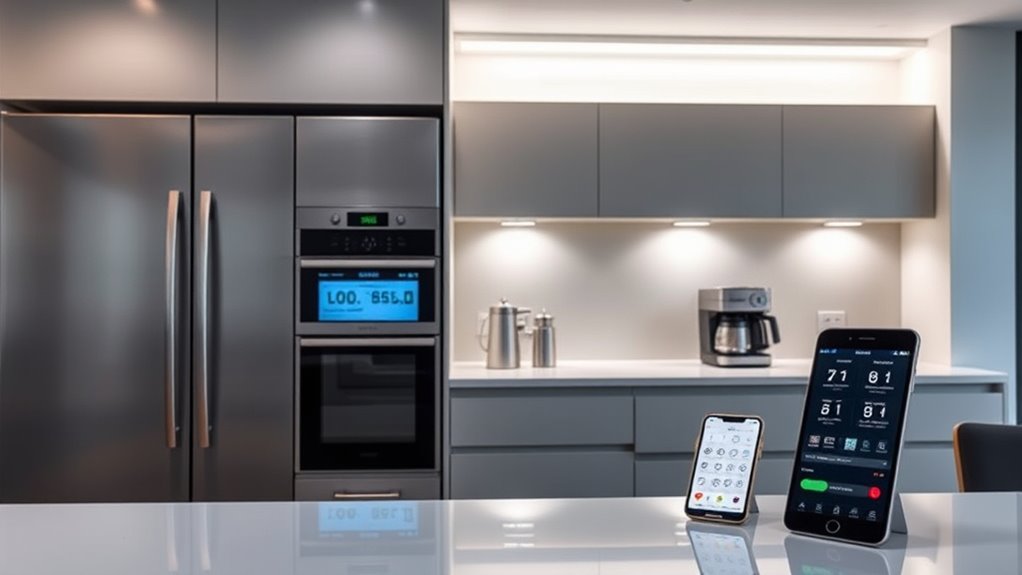
To keep your connected kitchen secure, you need to protect your network connections from unauthorized access. Managing device permissions carefully guarantees only trusted gadgets can access your data. Additionally, safeguarding your personal information helps prevent privacy breaches and keeps your smart kitchen safe. Understanding network security protocols can further strengthen your defenses against cyber threats in a connected environment. Implementing necessary cookies ensures essential security features remain active, supporting the overall integrity of your smart home. Incorporating Free Floating concepts can help you design a more resilient and sustainable smart kitchen setup. Staying informed about sector performance metrics can help you identify potential vulnerabilities and opportunities in your smart home investments. Regularly updating your firmware and encryption methods further enhances security by shielding your devices from potential vulnerabilities.
Securing Network Connections
Securing network connections in a connected kitchen is essential to protect your personal data and maintain privacy. To do this effectively, consider these key steps:
- Use secure wireless protocols like WPA3 to encrypt data and prevent unauthorized access.
- Implement network segmentation by creating separate networks for your smart appliances and personal devices, limiting exposure if one device is compromised.
- Regularly update your router’s firmware and device software to patch vulnerabilities and improve security.
Managing Device Permissions
Have you ever considered how granting or restricting device permissions can directly impact your privacy and security in a connected kitchen? Managing user permissions guarantees you control who can access or operate your appliances. By setting clear device control rules, you prevent unauthorized users from changing settings or accessing sensitive functions. Regularly review permissions to ensure only trusted individuals have control, especially for shared households. Limiting device control minimizes the risk of accidental or malicious actions that could compromise your privacy or disrupt your kitchen’s operation. Use your smart home app to assign permissions based on roles, such as family members or guests. Proper management of these permissions keeps your connected kitchen secure and helps maintain your privacy effectively. Additionally, understanding the importance of privacy policies and how they relate to your device permissions can further safeguard your personal data. Being aware of security best practices is essential in maintaining a safe connected environment.
Protecting Personal Data
Protecting your personal data in a connected kitchen is essential because smart devices constantly collect and transmit sensitive information. To keep your data safe, focus on these key steps:
- Use strong data encryption so your information stays secure during transmission and storage.
- Implement robust user authentication, like two-factor verification, to prevent unauthorized access.
- Regularly update device firmware and security settings to patch vulnerabilities and maintain privacy.
Tips for Maintaining and Troubleshooting Smart Appliances

Regular maintenance is essential to keep your smart appliances functioning smoothly and prevent unexpected issues. One of the most important steps is staying current with software updates, which often include bug fixes and security improvements. Check your device’s app or settings regularly for available updates and install them promptly. When troubleshooting, start with common troubleshooting tips like restarting the appliance, checking Wi-Fi connections, and ensuring it’s properly connected to your network. Keep an eye on error messages or unusual behaviors, and consult the user manual or manufacturer’s support resources. Regularly cleaning and inspecting your appliances can also prevent problems. By maintaining your smart appliances proactively, you’ll extend their lifespan and ensure they operate efficiently within your smart home ecosystem.
Future Trends in Smart Kitchen Integration

As smart appliances become more reliable through ongoing updates and maintenance, their integration into the kitchen environment is poised to become even more seamless and sophisticated. Future trends include:
- Voice control will become more intuitive, allowing you to manage appliances effortlessly with simple commands.
- Energy efficiency will be prioritized, with appliances optimizing power use based on your habits and real-time data.
- AI integration will enable appliances to predict your needs, suggest recipes, and adjust settings automatically for better convenience and sustainability.
These advancements will make your kitchen smarter, more responsive, and eco-friendly, transforming how you cook and manage household tasks. You’ll enjoy greater control and efficiency, all while reducing energy consumption and enhancing your overall experience.
Frequently Asked Questions
How Can I Ensure My Smart Kitchen Appliances Are Energy-Efficient?
To guarantee your smart kitchen appliances are energy-efficient, focus on monitoring their energy consumption regularly. Choose appliances with high efficiency ratings and look for those labeled Energy Star. Use smart scheduling features to run appliances during off-peak hours, and turn off devices when not in use. Maintaining your appliances properly also boosts efficiency, helping you save on energy costs while reducing your environmental impact.
What Safety Features Should I Look for in Smart Kitchen Devices?
You should look for smart kitchen devices with essential safety features like fire safety alerts and automatic shutoff. Child lock options are vital to prevent accidents, especially if you have kids. Make certain appliances have easy-to-use controls and clear indicator lights. Prioritize devices that connect to your smart home system for real-time safety notifications. These features help keep your kitchen safe and give you peace of mind during everyday use.
Can I Control Smart Kitchen Appliances Remotely When Away?
Yes, you can control smart kitchen appliances remotely when you’re away. In fact, over 60% of smart home users enjoy the convenience of remote access, allowing them to monitor and operate devices from anywhere. Just be aware of security concerns—ensure your Wi-Fi network is secure and use strong passwords. This way, you can enjoy peace of mind knowing your appliances are safe and accessible whenever you need them.
How Do I Update or Upgrade My Smart Kitchen Device Firmware?
To update or upgrade your smart kitchen device firmware, start by checking the manufacturer’s app or website for the latest firmware updates. Confirm your device is compatible with the update to avoid issues. Usually, you can initiate firmware updates through the app, which will guide you step-by-step. Keep your device connected to Wi-Fi during the process to guarantee a smooth upgrade and maintain peak device performance.
Are There Any Accessibility Options for Users With Disabilities?
Yes, many smart kitchen devices offer accessibility options for users with disabilities. You can customize voice commands to better suit your needs and enable visual accessibility features like high-contrast displays or screen readers. These options help you operate appliances more easily, ensuring an inclusive experience. Check your device settings to activate these features, and consult the user manual or support resources for specific customization options tailored to your needs.
Conclusion
Bringing smart appliances into your kitchen transforms it into a symphony of convenience and innovation. As you connect and automate your devices, you’ll find your culinary space evolves into a well-oiled machine, making everyday tasks feel effortless. Just like a finely tuned orchestra, your smart kitchen plays in harmony, enhancing your lifestyle. Embrace these technologies, and watch your kitchen become not just smarter, but truly the heart of your home.