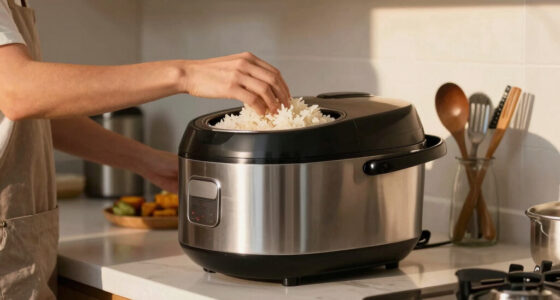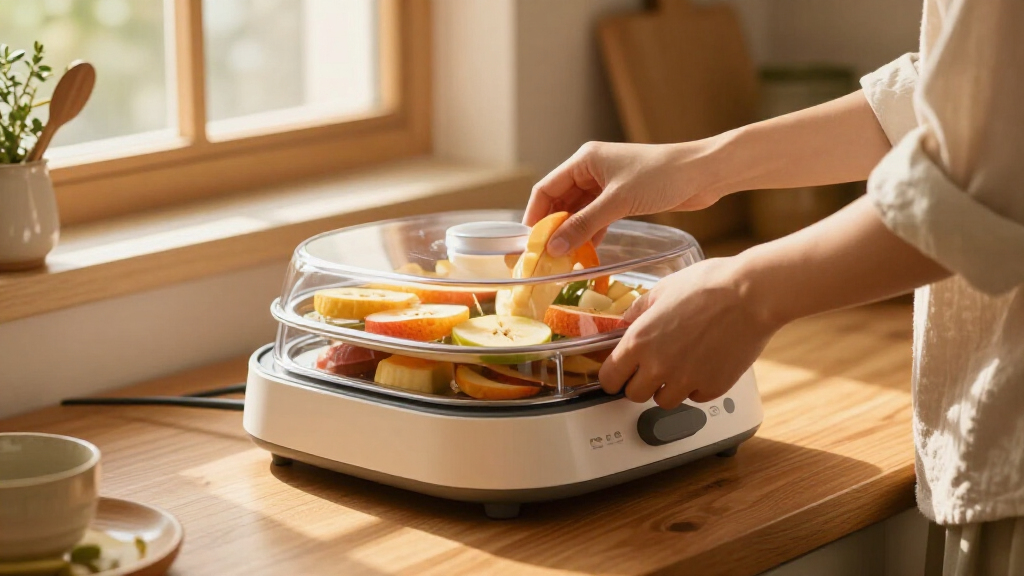
Compact food dehydrators trade drying capacity for counter space, and that tradeoff defines the whole category: you want enough tray area and even airflow to dry jerky, fruit, and herbs properly, without surrendering half your kitchen. The Magic Mill Pro takes my top spot because it combines stainless steel trays, a 600W heating element, and precise digital controls in a footprint that still fits an apartment counter. If budget rules, the NESCO FD-5TC Snackmaster delivers reliable stackable drying for a fraction of the price, while the Cosori 5-Tray Stainless Steel model is the pick for anyone who wants metal trays and clean temperature control without paying premium prices. The biggest splits in this category are plastic versus stainless trays, fixed versus adjustable temperature, and front-load versus stackable designs — each affects durability, evenness, and how much food you can actually dry at once. Read on for the full breakdown of all 15 models.
Open a free Amazon Business account
Business pricing, bulk buying and tax-exempt orders.
Create a free accountAs an affiliate, we earn on qualifying purchases.
Complete the kit


Key Takeaways
- Adjustable temperature was the single biggest differentiator: fixed-heat models like the NESCO FD-5TC and Presto Dehydro are fine for herbs and fruit leather but struggle with safe jerky preparation.
- Stainless steel trays appeared on four models (both Magic Mills, the Cosori 3.1 ft², and the 4-tray digital unit), and they consistently cost more but eliminate the plastic-odor and staining issues buyers complain about with BPA-free plastic trays.
- Several listings are near-duplicates — the two ‘Small Food Dehydrator Dryer’ units and the Reemix/FOHERE/Rosewill stackables share the same basic 5-tier chassis, so price and warranty terms, not specs, should decide between them.
- Digital timers (48H on the Magic Mill Pro, Rosewill, and 4-tray stainless model) matter most for long jobs like jerky and dog treats, where unattended overnight drying is the norm.
- Compact stackables under $60 all share a weak point: uneven drying between top and bottom trays, meaning you’ll rotate trays manually — a dealbreaker for set-and-forget users.


| compact food dehydrator | Temperature Range | Number of Trays | Power | Timer |
|---|---|---|---|---|
| NESCO FD-5TC Snackmaster Food | 95°F to 160°F | 5 | 420W | 1–24 hours |
| Reemix 5-Tier Compact Food Deh | 95°F–167°F | — | — | 1–48 hours |
| Small Food Dehydrator Dryer fo | 95°F–158°F | 5 | — | — |
| Compact Food Dehydrator with 4 | 70°F to 190°F | 4 | Not specified by manufacturer | Digital timer |
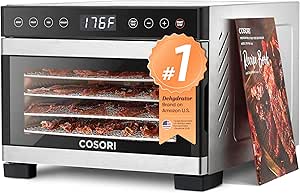
| Magic Mill Pro Food Dehydrator | 95°F–176°F | — | 600W | Up to 48 hours |
| Presto 06300 Dehydro Electric | — | 4 (expandable to 8) | — | — |
| Small Food Dehydrator for Jerk | 95–158°F | 5 | 250W | — |
| FOHERE Food Dehydrator | 95–158°F | — | 400W | 0–48 hours, digital |
| Rosewill Compact Food Dehydrat | 95–158°F | 5 stackable | 400W | 0.5–48 hours |
| Small Food Dehydrator Dryer fo | 104–158°F | — | — | — |
| NutriChef Electric Countertop | — | 5 stackable | — | — |
| Cosori Food Dehydrator | 95–165°F | 5, expandable to 7 | 350W | — |
| Elite Gourmet Digital Food Deh | 95–158°F | 5 collapsible | 350W | Up to 48 hours |
| Magic Mill Food Dehydrator Mac | 95–167°F | 5 adjustable | 240W | Up to 48 hours |
| Cosori Food Dehydrator | 95–176°F | — | — | — |
More Details on Our Top Picks
NESCO FD-5TC Snackmaster Food Dehydrator
The NESCO FD-5TC Snackmaster stands out as the most balanced option in this roundup because it nails the compact brief without gutting capability. The 95°F to 160°F adjustable range covers everything from delicate herbs to safe jerky preparation, and the 24-hour timer means you can run overnight batches without babysitting. Compared with the Reemix 5-Tier below, you give up the touch-panel LCD and the wider 167°F ceiling, but you gain a proven stackable design with nesting trays that shrink the footprint for storage — a real advantage if cabinet space is tight. The tradeoff is capacity: five trays handle small-to-medium batches only, and the plastic construction feels less premium than the stainless Compact Dehydrator with 4 Steel Trays. Still, for most kitchens, this is the sweet spot of price, size, and versatility.
Pros:- Adjustable temperature and 24-hour timer handle nearly every drying task
- Nesting trays collapse for genuinely compact storage
- Even heat distribution gives consistent results without tray rotation
- BPA-free trays for food safety
Cons:- Limited to small-to-medium batch sizes
- Plastic trays are less durable than stainless alternatives
- No digital display for temperature settings
Best for: First-time dehydrator owners who want reliable, versatile drying for jerky, fruit, and herbs without a big countertop commitment
Not ideal for: Bulk preservers or hunters processing large batches of jerky — five trays fill up fast
- Number of Trays:5
- Tray Dimensions:12″ x 9.5″
- Temperature Range:95°F to 160°F
- Power:420W
- Timer:1–24 hours
- Material:BPA-free plastic
Our verdict“If you want one compact dehydrator that does everything reasonably well, this is the safest bet in the lineup.”
Reemix 5-Tier Compact Food Dehydrator
Where the Reemix 5-Tier earns its slot is value: you get a touch panel with an LCD display, a 48-hour timer, and a temperature range stretching to 167°F — features the cheaper NESCO FD-5TC only partially matches, and at a lower ceiling. The stainless steel base also sets it apart from all-plastic budget models like the FOHERE 5-Tray stacker, giving you a sturdier foundation where heat concentrates. That wider temperature range matters for anyone drying thicker jerky cuts that need sustained higher heat. The compromises are real, though: the trays are still plastic, there are no included accessories like the mesh screens Magic Mill Pro throws in, and total drying area is modest. Compared with the Small Food Dehydrator Dryer, its longer 48-hour timer is the difference between starting a second cycle at 2 a.m. and sleeping through a long fruit dry.
Pros:- Touch panel with LCD display for precise, easy control
- 48-hour timer supports long, unattended drying runs
- Stainless steel base is sturdier than all-plastic budget rivals
- Temperature range up to 167°F handles jerky safely
Cons:- No included accessories or expandability
- Total capacity still limits large batches
Best for: Budget shoppers who want digital controls and long-run timers without paying stainless-steel prices
Not ideal for: Buyers who expect included extras like fruit roll sheets or mesh screens — you get none here
- Number of Tiers:5
- Tray Material:BPA-free plastic
- Base Material:Stainless steel
- Temperature Range:95°F–167°F
- Timer:1–48 hours
- Control Type:Touch panel with LCD display
Our verdict“The most feature-per-dollar option here for casual dehydrators who want digital precision on a budget.”
Small Food Dehydrator Dryer for Healthy Food (904JY)
This is the cheapest credible entry point in the roundup, and its job is simple: let you test whether dehydrating fits your routine before spending more. Adjustable temperature from 95°F to 158°F plus overheating protection puts it a step above bare-bones fixed-heat dryers, and the removable BPA-free trays make cleanup painless — a genuine perk at this price, since some entry models force you to wash the whole unit. The catches matter, though. Unlike the Reemix, there’s no digital timer, so you’re tracking cycles manually, and the fan only pushes hot air above roughly 122°F, meaning low-temperature herb drying is unreliable. The 0.79-inch gap between layers also restricts thicker items like apricot halves. Compared with the NESCO FD-5TC, it’s the training-wheels version — fine for apple chips and herbs, frustrating for serious projects.
Pros:- Very low cost of entry for first-time dehydrating
- Adjustable temperature with overheating protection
- Removable BPA-free trays simplify cleanup
- Compact footprint fits small kitchens
Cons:- Fan only produces hot air above about 122°F, limiting low-temp drying
- No timer means manual cycle tracking
- Narrow 0.79-inch layer gap can’t fit thicker foods
Best for: Curious beginners and occasional snack-makers who want to try dehydrating for minimal investment
Not ideal for: Herb enthusiasts or anyone needing low-temperature drying below 122°F — the fan won’t cooperate
- Model:904JY
- Tray Size:11.4″ x 7.5″
- Number of Trays:5
- Temperature Range:95°F–158°F
- Gap Between Layers:0.79 inches
- Material:BPA-free food-grade
- Safety Features:Overheating protection
Our verdict“A low-risk way to sample the hobby — just don’t expect it to handle delicate or thick-cut jobs.”
Compact Food Dehydrator with 4 Stainless Steel Trays and Digital Timer
This model’s standout trick is its 70°F starting temperature — the lowest floor in this batch, which makes it the pick for preserving herbs, greens, and live-culture foods where heat destroys flavor and nutrients. Both the NESCO FD-5TC and the Reemix start at 95°F, which is too warm for basil or parsley. The 304 stainless steel trays also mean no plastic contact with food and easier sanitizing, an edge over the plastic-tray majority here, while the 190°F ceiling beats every rival for fast jerky runs. The price of that specialization is capacity: four 10.2 x 8.1-inch trays give you the smallest total drying area in the lineup, and the manufacturer doesn’t publish wattage, which makes running-cost comparisons guesswork. For small households focused on quality over quantity, the trade is worth it; bulk preservers should look at the Magic Mill Pro instead.
Pros:- 70°F low setting is ideal for delicate herbs and greens
- 304 stainless steel trays: durable, food-safe, easy to sanitize
- 190°F maximum enables faster jerky and meat drying
- Digital timer with clear display
Cons:- Smallest capacity in the roundup at four trays
- No published wattage, making energy expectations unclear
Best for: Culinary herb growers and small households who prioritize low-temperature drying and all-metal food contact
Not ideal for: Anyone drying large batches — four small trays fill up before a single apple harvest is done
- Number of Trays:4
- Tray Dimensions:10.2 x 8.1 inches
- Temperature Range:70°F to 190°F
- Material:304 stainless steel, BPA-free
- Timer:Digital timer
- Power:Not specified by manufacturer
Our verdict“The niche champion for low-and-slow herb work in an all-stainless, apartment-friendly footprint.”
Magic Mill Pro Food Dehydrator
The Magic Mill Pro is the upgrade path in this roundup — the machine you buy after outgrowing a budget five-tray unit. Its 600W rear-mounted fan eliminates the tray rotation that front-fan and bottom-fan models demand, and its seven stainless trays give it the largest drying surface in this batch by a wide margin over the 4-tray stainless compact. The included accessories — two mesh screens and a fruit roll tray — are things the Reemix and NESCO FD-5TC make you buy separately, and the 48-hour timer plus 24-hour keep-warm function means a long fruit run finishes even if you’re out. Tradeoffs: it’s the priciest option here thanks to the full steel build, it eats more counter space than anything else in this lineup, and there’s no adjustable tray spacing for bulky items. For committed home dehydrators, that’s an acceptable bill.
Pros:- 600W rear fan dries evenly without rotating trays
- Seven stainless steel trays offer the largest capacity here
- Includes mesh screens and fruit roll tray rivals omit
- 48-hour timer plus 24-hour keep-warm for unattended runs
Cons:- Highest price in the lineup due to full stainless build
- No adjustable tray spacing limits bulky items
- Largest footprint — less ‘compact’ than stackable rivals
Best for: Enthusiasts who dehydrate weekly and want capacity, even drying, and metal construction in one package
Not ideal for: Casual snack-makers and tiny kitchens — you’ll pay a premium for capacity and power you won’t use
- Power:600W
- Temperature Range:95°F–176°F
- Timer:Up to 48 hours
- Trays:7 stainless steel trays
- Additional Accessories:2 mesh screens, 1 fruit roll tray
- Material:Stainless steel
- Keep Warm Duration:Up to 24 hours
- Safety Certifications:ETL Listed
Our verdict“The buy-once choice for serious home dehydrators who still want a countertop-friendly machine.”
Presto 06300 Dehydro Electric Food Dehydrator
Among the most affordable ways into home dehydration, the Presto 06300 stands out for doing the basics well: a top-mounted fan that moves air downward evenly across trays, meaning you never rotate trays mid-cycle. That’s the same no-rotation promise NESCO’s FD-5TC makes, but the Presto undercuts it on price while adding a genuinely thoughtful storage story — the trays nest inside the base and the cord wraps underneath, so it shrinks to a fraction of its working height in a cabinet. The catch is that capacity starts at just four trays, and expanding to eight means buying add-on trays separately, plus the accessory ecosystem is limited to three specific part numbers. Compared with the five-tray FOHERE, you get fewer trays out of the box in exchange for a lower entry cost and better storage. Skip it if you want digital controls or precise timers.
Pros:- Top-mounted fan delivers even drying with no tray rotation needed
- Trays nest inside the base with a cord wrap for genuinely compact storage
- Expandable from 4 to 8 trays as your needs grow
- Very low entry price for a fan-driven unit
Cons:- Starts at only 4 trays, and every expansion tray costs extra
- No timer or temperature display — it’s a set-it-and-walk-away basic unit
- Locked into Presto’s specific accessory part numbers
Best for: Budget-minded first-timers and small households who want a proven, no-frills dehydrator that stores compactly
Not ideal for: Buyers who want to dry large batches immediately — you’ll pay extra to expand beyond four trays, and there’s no timer
- Model:06300-05
- Number of trays:4 (expandable to 8)
- Fan position:Top-mounted
- Storage:Nesting trays with cord wrap
- Tray rotation:Not required
- Compatible accessories:Fruit sheets (06313), mesh screens (06314), extra trays (06315)
Our verdict“A smart buy for small households that value even airflow and cabinet-friendly storage over digital bells and whistles.”
Small Food Dehydrator for Jerky, Fruit, Herbs & Pet Treats
This little unit makes the most sense for buyers whose main goal is small-batch projects — a tray of apple chips, a handful of herbs, or DIY dog treats. At 250W, it draws less power than anything else in this lineup, and its 72-hour continuous run rating matters if you slow-dry treats at low temperatures overnight. The dial-based temperature control spans 95–158°F, which covers the pet-treat and herb range, but there’s no timer or display — a real step down from the Rosewill’s 48-hour programmable timer if you like unattended operation. Compared with the similarly sized FOHERE, you trade digital precision and faster 400W drying for a lower price, simpler knob operation, and lighter energy draw. The see-through BPA-free trays let you check progress without lifting the lid, a small nicety for beginners still learning drying times.
Pros:- 72-hour continuous operation rating suits long, low-temperature runs
- Very energy-efficient at 250W
- See-through BPA-free trays for monitoring progress
- Dishwasher-safe components and simple knob control
Cons:- Small batch capacity only — not built for volume
- No digital timer or temperature display
- Plastic trays may wear faster than stainless alternatives like the Cosori’s
Best for: Pet owners and casual snack-makers running small batches who want simple, low-energy operation
Not ideal for: Anyone drying for a family or in volume — the small trays cap output, and there’s no timer for unattended runs
- Power:250W
- Number of trays:5
- Tray material:BPA-free plastic
- Temperature range:95–158°F
- Maximum operation time:72 hours
- Controls:Analog temperature dial
- Color:Black
Our verdict“The right pick if your dehydrating is mostly pet treats, herbs, and single-serving snacks rather than bulk food preservation.”
FOHERE Food Dehydrator, 5 BPA-Free Tray Dehydrators, 11.42″ Stackable Trays
The FOHERE lands in a sweet spot this lineup rewards: 400W of drying power plus digital temperature and timer controls at a price closer to the basic units. That 0–48 hour timer is the headline feature — set it for overnight jerky or fruit leather and it shuts off on its own, something the analog Presto 06300 and the B0FM23GL9V simply can’t do. The 11.42-inch trays are among the larger round trays here, and the adjustable 0.59–0.98-inch tray spacing handles thicker cuts better than fixed-gap designs. It’s quieter than most budget stackables, though FOHERE doesn’t publish a decibel figure, so sensitive kitchens should temper expectations. The real weakness is what’s missing: no fruit-roll sheets, no mesh inserts, and no stated warranty, whereas Presto at least offers a defined accessory path. If you want set-and-forget precision without stepping up to the 600W Magic Mill Pro, this is the value play.
Pros:- Digital temperature and 0–48 hour timer enable true unattended drying
- 400W motor dries faster and more evenly than 250W budget models
- Large 11.42-inch trays with adjustable spacing for thicker foods
- Stackable design keeps the footprint small in storage
Cons:- No included accessories like fruit-roll sheets or mesh screens
- No published warranty or noise specification
- Plastic trays won’t match stainless options for longevity
Best for: Value-focused buyers who want digital timer precision and 400W drying power without paying premium prices
Not ideal for: Accessory-oriented users — no fruit sheets or mesh inserts are included or clearly available, and warranty terms are unstated
- Power:400W
- Tray count:5 stackable
- Tray size:11.42 inches
- Adjustable tray height:0.59–0.98 inches
- Temperature range:95–158°F
- Timer:0–48 hours, digital
- Material:BPA-free
Our verdict“The best price-to-precision ratio here for buyers who need a programmable timer and faster drying on a budget.”
Rosewill Compact Food Dehydrator, 5 Stackable Trays with Adjustable 48H Timer and Temperature Control
Rosewill’s compact dehydrator is the easiest on-ramp in this batch, pairing 360° hot air circulation with an adjustable 0.5–48 hour timer and a one-year warranty — that last detail matters for newcomers who don’t want to gamble on an unbranded unit. The half-hour timer increments give beginners finer control than the FOHERE’s hour-based dialing, useful when drying delicate herbs that over-dry quickly. Tray height adjusts to fit bulkier items like flower petals or thick jerky slices, something the fixed-gap B0FNMZMVL6 can’t match with its 0.79-inch spacing. Operation is quiet and cleanup is simple, both beginner-friendly traits. Tradeoffs exist: 400W is fine for five trays but slows down if you’re ambitious, and there’s no digital display, so you’re reading settings off knobs rather than a screen. Against the Elite Gourmet’s digital readout, you give up visual precision but gain warranty coverage and airflow claims.
Pros:- 360° hot air circulation dries evenly without hot spots
- Half-hour timer increments from 0.5 to 48 hours for precise cycles
- Adjustable tray height accommodates thicker or bulkier foods
- Backed by a 1-year warranty, rare at this price
Cons:- 400W can feel slow when trays are fully loaded
- No digital display for settings
- Tray height adjustment is manual and takes effort
Best for: First-time dehydrator owners who want forgiving controls, a timer, and warranty backing while they learn
Not ideal for: Impatient bulk dryers — 400W across five trays means longer cycles, and settings aren’t displayed digitally
- Power:400W
- Number of trays:5 stackable
- Temperature range:95–158°F
- Timer:0.5–48 hours
- Airflow:360° hot air circulation
- Material:Food-grade, BPA-free
- Warranty:1 year
Our verdict“A confident first dehydrator that trades digital polish for warranty peace of mind and beginner-friendly flexibility.”
Small Food Dehydrator Dryer for Healthy Food
If counter space is the deciding factor, this model’s 10.23 x 10.23-inch trays make it the smallest footprint in this batch, edging out even the FOHERE’s 11.42-inch trays. That size makes it a natural fit for apartment kitchens, RVs, or dorm setups where a full-size unit like the Cosori 5-tray would be a nonstarter. The adjustable 104–158°F range handles jerky and most fruits fine, though the higher 104°F floor is a real limitation — herb gardeners drying basil or parsley at low temps will prefer the Rosewill or the B0FM23GL9V, both of which go down to 95°F. On the plus side, overheating protection adds a safety layer budget units rarely include, and removable trays rinse clean in seconds. Note the fixed 0.79-inch layer gap and the requirement to keep clearance from the wall during use, which eats into the space savings a little. It’s a niche pick, but a sensible one for the space-starved.
Pros:- Smallest footprint in the lineup with 10.23-inch trays
- Built-in overheating protection for safer unattended use
- Adjustable temperature across a practical range
- Removable BPA-free trays clean up quickly
Cons:- Temperature floor of 104°F excludes low-and-slow herb drying
- Very limited capacity for anything beyond single-person snacks
- Needs clearance from the wall, reducing its space advantage
Best for: Apartment dwellers, RV owners, and anyone with minimal counter space who dries in small quantities
Not ideal for: Herb enthusiasts and raw-food dryers — the 104°F minimum temperature is too high for delicate low-temp drying
- Model:740MJY
- Tray dimensions:10.23 x 10.23 inches
- Layer gap:0.79 inches (fixed)
- Temperature range:104–158°F
- Material:BPA-free
- Safety features:Overheating protection
- Design:Compact, removable trays
Our verdict“Choose this when counter space matters more than capacity or temperature flexibility — and skip it if you dry herbs at low heat.”
NutriChef Electric Countertop Food Dehydrator – Multi-Tier Food Preserver with 5 Stackable Trays
For shoppers who want to try dehydration without committing much money, this NutriChef keeps things as simple as it gets: one button, a dial thermostat, and five stackable trays. That simplicity is the whole pitch — unlike the Magic Mill digital model, there’s no timer or display, which means you’ll need to track drying times yourself and switch it off manually. The 180°F ceiling is actually generous for the price, edging past the Cosori 5-tray unit at 165°F for jerky safety, though without precise readouts you’re trusting the dial. Cleaning is straightforward since the trays pop apart, and the footprint stays modest on a counter. The tradeoff is capacity and precision: five trays go quickly if you’re batching apple season, and there’s no automation to speak of.
Pros:- Very affordable entry point for experimenting with dehydration
- 180°F max temperature handles jerky safely
- One-button operation removes guesswork for beginners
- Removable stackable trays clean up easily
Cons:- No timer or digital display, so nothing shuts off automatically
- Small total capacity compared with expandable rivals like the Cosori
Best for: First-time dehydrator buyers on a tight budget who want plug-and-dry simplicity for occasional fruit or herb batches
Not ideal for: Anyone who wants set-and-forget operation — with no timer, you must monitor and shut it off manually
- Number of Trays:5 stackable
- Maximum Temperature:180°F
- Operation:One-button with adjustable thermostat
- Tray Material:Removable plastic
- Color:Black
Our verdict“A reasonable starter unit if price is the deciding factor and you don’t mind babysitting your batches.”
Cosori Food Dehydrator, 5 BPA-Free Trays, 165°F Temperature Control, 350W
This Cosori earns the value crown by doing the fundamentals better than anything near its price. The 95–165°F adjustable range covers herbs through jerky, the 350W heating element is stronger than the Magic Mill’s 240W for faster turnaround, and operation stays under 47 dB — quiet enough to run overnight in a small apartment. Its smartest feature is expandability up to 7 trays, which the fixed five-tray NutriChef and Elite Gourmet can’t match, letting capacity grow with your hobby. Build quality feels like a step above budget stackables, with solid construction that doesn’t wobble. The catches: extra trays cost more money, the 48-hour run limit means restarting very long jobs, and there’s no digital timer, so you’re managing timing the old-fashioned way — a real convenience gap versus the Magic Mill.
Pros:- Expandable from 5 to 7 trays as your needs grow
- Runs under 47 dB for overnight use
- 350W power outpaces most 5-tray competitors
- Full 95–165°F range handles delicate herbs and jerky alike
Cons:- Additional trays sold separately, adding hidden cost
- No digital timer or display for automated shutdown
Best for: Hobbyists drying regular small-to-medium batches who want quiet overnight operation and room to expand later
Not ideal for: Buyers who want full automation — no included timer or display means manual monitoring
- Temperature Range:95–165°F
- Power:350W
- Number of Trays:5, expandable to 7
- Tray Diameter:12.2 in outer / 11.6 in inner
- Noise Level:Under 47 dB
Our verdict“The best balance of price, power, and flexibility for most people starting a dehydration habit.”
Elite Gourmet Digital Food Dehydrator, 5 SlimStore Trays, Adjustable Timer
The SlimStore trays are the standout trick here: they collapse flat when the machine isn’t in use, solving the storage problem that plagues round stackables like the NutriChef, which hog a cabinet shelf year-round. Add a 48-hour timer and you get true set-and-forget drying — an upgrade over the timerless Cosori value pick — plus even airflow across 410 square inches of drying space and dishwasher-safe cleanup. The temperature tops out at 158°F, which is fine for fruit and herbs but falls short of the 165°F+ most jerky recipes want, pushing meat drying toward the Magic Mill or Cosori stainless model instead. Plastic trays also won’t shrug off drops the way metal ones do. For apartment dwellers who dehydrator-store-seasonally, though, the collapsing design is genuinely hard to beat.
Pros:- Collapsible trays shrink the footprint for storage
- 48-hour timer enables unattended overnight drying
- Dishwasher-safe parts make cleanup painless
- Even airflow across 410 sq in of drying space
Cons:- 158°F max temperature limits jerky and meat applications
- Plastic trays are less durable than the stainless steel on pricier models
Best for: Apartment dwellers and small-kitchen cooks who need a dehydrator that disappears into a drawer between uses
Not ideal for: Jerky enthusiasts — the 158°F ceiling sits below recommended safe meat-drying temperatures
- Power:350W
- Number of Trays:5 collapsible
- Tray Diameter:12.5 inches
- Total Drying Space:410 sq in
- Temperature Range:95–158°F
- Timer:Up to 48 hours
- Tray Material:BPA-free plastic
Our verdict“The one to pick when cabinet space is scarcer than counter space and you mostly dry produce and herbs.”
Magic Mill Food Dehydrator Machine with 5 Stackable Stainless Steel Trays, Digital Timer & Temperature Control
This Magic Mill sits in a sweet spot between budget plastic stackables and pricier stainless units. The digital timer and temperature readout give you precision the NutriChef and Cosori can’t offer — set 160°F for eight hours and walk away. Its stainless steel trays clean more thoroughly than plastic and won’t hold odors after a garlic or jerky batch, and the 167°F ceiling clears the safety bar for meat. Where it lags is raw power: at 240W versus the Cosori’s 350W, dense or wet loads take noticeably longer, and there are no preset programs — the Cosori stainless model includes jerky, fruit, vegetable, and yogurt presets for the same hands-off experience with less guesswork. Still, for buyers who want durable metal surfaces and digital control without premium pricing, the equation works.
Pros:- Digital timer and temperature control for precise, unattended drying
- Stainless steel trays resist odors and clean thoroughly
- 167°F max temperature is safe for jerky
- Adjustable trays fit thicker items like fruit leather
Cons:- 240W motor dries slower than 350W competitors
- No preset programs, so every batch requires manual settings
Best for: Dried-food regulars who want stainless trays and precise digital control at a mid-tier price
Not ideal for: Impatient batch-cookers — the 240W motor is slower than similarly priced rivals on large loads
- Power:240W
- Number of Trays:5 adjustable
- Tray Material:Stainless steel
- Temperature Range:95–167°F
- Timer:Up to 48 hours
- Body Material:BPA-free plastic and stainless steel
Our verdict“The sensible middle choice if digital precision and metal trays matter more than raw speed.”
Cosori Food Dehydrator, 5 Stainless Steel Trays, 3.1 ft² Drying Space
Of the fifteen machines in this roundup, this Cosori behaves most like a shrunken pro unit. The rear-mounted fan delivers horizontal airflow — the same design philosophy as the Magic Mill Pro — meaning no tray rotation and more consistent results than the top-down heat of budget stackables. It’s also the only compact option here with one-touch presets for jerky, fruit, vegetables, and yogurt, plus the widest temperature range at 95–176°F. The bundled accessories (fruit roll sheet, mesh screen, recipe book) would cost extra elsewhere. The tradeoffs are real, though: 3.1 square feet across five 9×10 trays is less total space than the round Elite Gourmet’s 410 square inches, and at 10.8 pounds with a boxy footprint, it’s less tuck-away-able than collapsible designs. You’re paying a premium for consistency and polish, not capacity.
Pros:- Rear fan design eliminates tray rotation for even drying
- Presets for jerky, fruit, vegetables, and yogurt remove guesswork
- Widest temperature range here at 95–176°F
- Includes fruit roll sheet, mesh screen, and recipe book
Cons:- 3.1 ft² of drying space is modest for the price
- Boxy fixed shape stores less easily than collapsible rivals
Best for: Serious home dehydrators who want preset-driven, evenly dried results and already know their favorite recipes
Not ideal for: High-volume canners and garden preservers — the fixed five small trays can’t keep up with bulk harvests
- Temperature Range:95–176°F
- Timer Range:30 min – 48 hours
- Tray Count:5 stainless steel
- Tray Size:9 x 10 inches
- Drying Space:3.1 ft²
- Dimensions:13.9 x 11.3 x 8.9 inches
- Weight:10.8 lbs
- Presets:Jerky, Fruit, Vegetables, Yogurt
Our verdict“The most refined compact dehydrator in the lineup — buy it for consistency and presets, not for volume.”
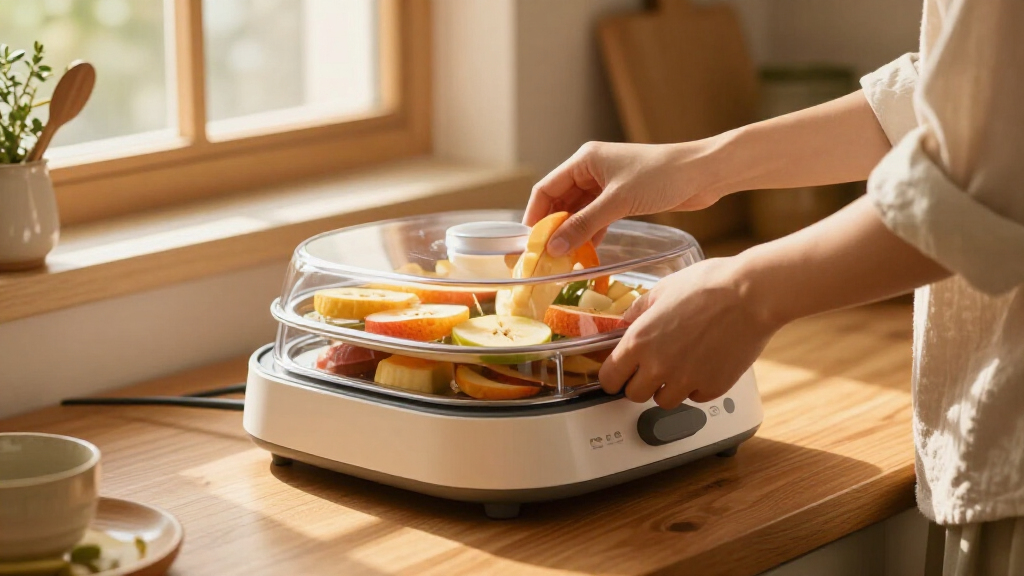
How We Picked
Since the entire point of a compact dehydrator is saving space, I weighted counter footprint and capacity together — a slim machine that only dries one handful of apple slices fails its purpose just as much as a bulky one. From there, temperature control separated the field quickly: models with adjustable thermostats and digital timers ranked above fixed-heat units because they open up jerky, yogurt, and low-heat herbs that single-setting machines can’t handle safely or well. Tray material was the next filter, since stainless steel resists staining and odor absorption while plastic racks in this price range rarely survive years of fruit and meat juices.
I also factored in wattage relative to tray count (a 350W unit pushing five trays dries slower and less evenly than a 600W one), ease of cleaning, and how honestly each machine handles the compactness claim — some ‘compact’ models are only compact compared to commercial units. Finally, I flagged near-identical listings and ranked the version with the better price, warranty, or feature set. The ranking favors machines that do fewer things well over feature-stuffed units with weak airflow.
Factors to Consider When Choosing Compact Food Dehydrators
Before clicking buy on the cheapest five-tray stackable you find, a few category-wide realities will change which model actually belongs in your kitchen.Stackable vs. Front-Load: The Shape Decision Most Buyers Skip
Stackable units (most of this list) win on compactness because they grow or shrink with your needs — remove trays for a small batch and the machine takes up less vertical space. The catch is that stackables dry unevenly, with bottom trays running hotter, so you’ll rotate trays every few hours on long jobs. Front-load box-style units like the Magic Mill Pro distribute airflow with a rear fan, drying evenly enough that you can walk away overnight. If you dehydrate weekly and value your time, even airflow is worth extra counter depth; if you dehydrate occasionally and store the machine in a cabinet, stackability wins. Many buyers underestimate how often they’ll rotate trays, then abandon the machine out of frustration. Match the design to your patience level, not just your counter size.
Adjustable Temperature Is Non-Negotiable for Jerky
Food safety guidance calls for drying meat at 160°F, and fixed-heat units that simply blow warm air can’t guarantee that. This is the most common mistake I see: someone buys a $40 single-setting dehydrator, then discovers it can’t safely make the beef jerky that prompted the purchase. Adjustable thermostats also let you run herbs at 95°F so they dry instead of cooking, preserving flavor and color. If your plan is fruit and herbs only, a fixed-heat model is genuinely fine and saves money. But if jerky or pet treats are anywhere on your list, pay the premium for digital temperature control. The 48-hour timers on higher-ranked models pair with this — low-and-slow meat drying often runs 8–12 hours, and a timer with auto-shutoff prevents over-drying while you sleep.
Plastic vs. Stainless Trays: The Longevity Question
BPA-free plastic trays are standard on budget models and perfectly safe, but ‘BPA-free’ doesn’t mean stain-proof or odor-proof — tomato slices and beef marinades leave permanent marks and smells within a season of regular use. Stainless trays cost $30–60 more upfront and shrug off both, plus they’re often dishwasher-safe in a way plastic racks aren’t. The hidden middle ground: some plastic-tray models sell replacement racks cheaply, which softens the math. If you dehydrate a few times a year, plastic is the rational choice. If you’re drying garden harvests every August weekend, stainless pays for itself in year two. Also check mesh sheet availability — small-pile fruits and herbs need fine mesh or liners that not every brand offers.
Wattage vs. Tray Count: The Power-to-Load Ratio
A 350W motor pushing five stacked trays has to fight convection physics: heat rises, the top tray lags, and total drying time stretches well past recipe estimates. That’s why the 600W Magic Mill Pro outperforms similarly sized units despite comparable footprints. Underpowered machines don’t just dry slower — longer run times mean more energy consumed and more texture inconsistency between trays. When comparing listings, divide wattage by tray count as a rough power ratio; anything under about 70W per tray will test your patience on juicy foods like watermelon or pineapple. Fan placement matters too: bottom-mounted fans (common on cheap stackables) pull food drippings through the motor, which shortens lifespan and makes cleanup gross. Rear-mounted fans cost more and earn it.
Watch for Duplicate Machines Under Different Brand Names
This category has a peculiar problem: several listings in this roundup are essentially the same white-label 5-tier stackable sold under different brand names with minor cosmetic changes. The practical consequence is that spec-sheet comparison is useless between them — price, warranty length, and customer support quality become the only real differentiators. Before buying, search the model’s exact tray dimensions and wattage; if they match a cheaper sibling, you’ve found a clone. This also means glowing reviews on one brand often apply to its twins, and so do the complaints. Buying the cheapest version of a clone is usually smart, provided the seller has a trackable warranty. If two clones differ by more than about $20, you’re paying for the logo.
Real Capacity Math: Ignore the Marketing Numbers
Manufacturers quote tray count, but trays vary from 11 to 13 inches in diameter, and drying area scales with the square of that difference — a 13-inch tray holds roughly 40% more than an 11-inch one. Square footage figures (like Cosori’s 3.1 ft² claim) are the honest metric, so convert when possible. Also think in terms of input volume: 2 pounds of tomatoes collapses to a few ounces, so what feels like tiny capacity often handles a surprising amount of produce. The genuine capacity constraint is height between trays — thick items like jerky strips or halved figs need clearance that tight-stack designs don’t allow. Check whether your model supports extra tray purchases, because expanding a stackable later is the cheapest capacity upgrade in the category.
Frequently Asked Questions
Can a compact dehydrator really make beef jerky safely?
Yes, but only if the model has an adjustable thermostat that reaches 160°F, which rules out fixed-heat budget units like the basic NESCO and Presto designs. Safe jerky requires holding meat at that temperature long enough to kill bacteria, and single-setting machines can’t verify or maintain it. The Magic Mill Pro, both Cosori models, and the Rosewill all qualify, with the Magic Mill’s 600W element recovering heat fastest after you open the unit to check progress. A 48-hour timer with auto-shutoff helps too, since jerky runs 6–12 hours and over-drying makes it brittle. If jerky is your primary goal, treat adjustable temperature as a hard requirement rather than a nice-to-have.
Why are several of these dehydrators nearly identical — which one should I buy?
Because a handful of factories produce the same 5-tier stackable chassis for multiple brands, listings like the Reemix, FOHERE, Rosewill, and the generic ‘Small Food Dehydrator’ units share cores, wattage, and tray dimensions. When you spot clones, decide on price, warranty length, and whether the seller stocks replacement parts — those are the only variables that differ meaningfully. A $10 saving matters less than a brand that actually answers warranty claims, so skim recent reviews for support complaints before committing. If two clones are priced within a few dollars, pick the one with the longer stated warranty. And if one clone includes extras like fruit-roll sheets or mesh liners, that bundled value usually beats a slightly lower sticker price on the bare version.
How much counter or cabinet space do I actually need?
Most compact stackables in this roundup have a footprint around one square foot but stand 12–14 inches tall fully assembled, and they shrink when you remove trays for storage — that’s their core advantage over box-style units. The Magic Mill Pro trades some of that flexibility for a fixed cabinet shape with front-loading trays, which means it needs permanent counter space or a deep cabinet slot. Measure the cabinet shelf height before buying any stackable if storage is the plan, because adding expansion trays later raises the height. Also leave a few inches of clearance around any dehydrator while running: these machines vent warm, moist air, and trapping it against a cabinet wall extends drying times. A good rule is to budget double the machine’s footprint during use.
Is it worth paying extra for stainless steel trays on a compact model?
It depends entirely on usage frequency and what you dry. Stainless trays resist the staining and odor absorption that plague plastic racks after repeated exposure to marinades, tomatoes, and berries, and they handle scrubbing and dishwasher cycles without warping. Occasional users drying apples a few times a season will never notice the difference, making plastic the rational budget choice. Regular users — especially jerky makers and garden-preservation folks — will replace or resent plastic trays within a couple of years, at which point stainless would have already broken even. The Cosori stainless and Magic Mill models represent the accessible end of metal-tray pricing, so the premium is smaller here than in full-size machines. One caution: verify the trays themselves are fully stainless, as some listings pair a steel body with coated racks.
Do I need a timer if I’ll be home while it runs?
If you’re genuinely present and attentive, a timer is convenience rather than necessity — but few people babysit an 8-hour apple run, and that’s where auto-shutoff earns its keep. Over-dried fruit becomes leathery and bitter, over-dried herbs crumble to powder, and the only fix is starting over. Timers also protect against power-flow interruptions during unattended sessions and let you start a batch before bed or work. The 48-hour timers on the Magic Mill Pro, Rosewill, and 4-tray stainless model cover even the longest jerky and dog-treat runs. If you’re choosing between two similarly priced clones where one has a timer and one doesn’t, that feature alone justifies the pick. The exception: dried-fruit leather is forgiving enough that a basic untimed model is fine for that single use case.
Conclusion
Mapping these 15 models to buyer types is straightforward once the tradeoffs are clear. For best overall, the Magic Mill Pro stands out with its 600W element, stainless trays, rear-mounted airflow, and full digital control — it’s the one machine here that handles jerky, herbs, and fruit without compromise. The Cosori 3.1 ft² stainless model is my best premium-adjacent value: nearly the same capability for noticeably less money, ideal if the Magic Mill is out of reach. For best budget value, the NESCO FD-5TC Snackmaster earns it through proven reliability and a low price, with the honest caveat that its fixed heat limits it to fruit, herbs, and leather. Beginners should start with the Rosewill or FOHERE 5-tier digital units — cheap, timed, and low-risk ways to learn whether dehydrating sticks as a habit. Small-kitchen minimalists who dehydrate sporadically get the most from the Presto Dehydro or the Elite Gourmet SlimStore, which prioritize storage over features. And for pet-treat and jerky makers on a mid-range budget, the Magic Mill 5-tray stackable hits the safety and durability requirements without the Pro’s price. Skip the near-duplicate generic listings unless one is clearly the cheapest clone with a real warranty behind it.
Flea & tick season Picks
flea and tick prevention
As an affiliate, we earn on qualifying purchases.