The right stand mixer for a home baker depends on one question: how much dough do you actually make? After comparing 15 models across bowl capacity, motor power, speed control, and attachment value, the KitchenAid Artisan 5-Qt stands out as the best overall pick for its proven durability and unmatched attachment ecosystem. The CEBORY 6.5-Qt 3-in-1 delivers the best value for frequent bread bakers who need capacity without the premium price, while the Kitchen in the Box 3.2Qt is the smart choice for small kitchens and occasional cookie bakers. The main tradeoff in this category is power and capacity versus counter space and budget — heavy-duty mixers that knead bread dough effortlessly cost more and take up room, while compact models struggle with stiff doughs. Read on for the full breakdown of every pick.

Get kitchen gear delivered free with Prime
- Fast, free delivery on millions of items
- Prime Video, Amazon Music and more included
- Member-only deals all year
Complete the kit


Key Takeaways
- Bowl capacity is the clearest dividing line in this lineup: the 3.2Qt Kitchen in the Box models can’t handle a double batch of cookie dough, while the 6.3–8.4Qt picks (OLIXIS, CEBORY, Aucma, ZACME) handle bread dough without straining.
- Motor wattage alone is misleading — the 660W CEBORY and Aucma outperform similarly rated models because of gear design and bowl geometry, so I weighed real dough-handling ability over spec sheets.
- Only the KitchenAid Classic and Artisan offer a full attachment hub ecosystem (pasta rollers, grinders, etc.), which extends their value far beyond mixing.
- The ZACME 8.4Qt is the only NSF-certified option here, making it the clear pick for home bakers selling goods or running cottage-food operations — but it’s overkill for weekend cookies.
- Duplicate models appear across brands (CEBORY in two colors, four Kitchen in the Box variants), so color and accessory bundles — not performance — are what actually differentiate them.





| stand mixers for home baker | Design | Bowl Material | Capacity | Speeds |
|---|---|---|---|---|
| Kitchen in the Box Stand Mixer | Tilt-head with transparent anti-splash lid | Stainless steel | 3.2 Qt | 6 |
| Kitchen in the Box 3.2 Qt Stan | Tilt-head | Stainless steel | 3.2 qt | 6 |
| CEBORY 3-in-1 Electric Stand M | Tilt-head | Food-grade stainless steel | — | 10 plus pulse |
| Kitchen in the Box Stand Mixer | Tilt-head with anti-splash lid | Stainless steel | 3.2 Qt | 6 |
| OLIXIS 4.2 Qt 10-Speed Tilt-He | Tilt-head | Stainless steel | 4.2 Qt (also available in 6.3 Qt) | — |
| CEBORY 3-in-1 Electric Stand M | Tilt-head | — | — | — |
| OLIXIS 6.3 Qt 10-Speed Tilt-He | — | — | 6.3 qt | — |
| Hamilton Beach 4 Quart Electri | — | Stainless steel | 4 quarts | 7 |
| ZACME 8.4QT Commercial Stand M | — | — | 8.4 QT (8L) | — |
| KitchenAid Classic Series 4.5- | Tilt-head | Stainless steel (dishwasher safe) | — | 10 |
| KitchenAid Artisan 5-Qt Tilt-H | Tilt-head | Stainless steel | 5 qt | 10 |
| Kitchen in the Box 3.2Qt Stand | Tilt-head | Stainless steel | 3.2 qt | 6 |
| VIVOHOME 6-Quart Tilt-Head Sta | Tilt-head | — | — | 10 speeds plus pulse |
| Martha Stewart 5.3-Quart Tilt- | Tilt-head | Stainless steel | — | — |
| Aucma 6.5-QT Stand Mixer | Tilt-head | Stainless steel with dual handles | 6.5 qt | 6 with pulse function |
More Details on Our Top Picks
Kitchen in the Box Stand Mixer, 3.2Qt, 6 Speeds (Purplish-Red)
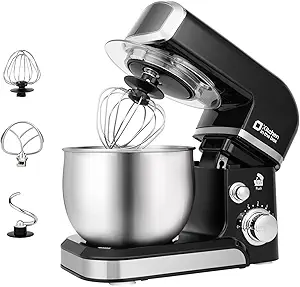
This model stands out for pure portability — at under 7 lbs and under 13 inches wide, it is the easiest machine in this lineup to stash in a cabinet between bakes. Compared with the CEBORY 6.5-Qt, the capacity gap is dramatic: this bowl suits a single loaf or one cake layer, not a weekend batch of cookies. The anti-splash lid and suction feet translate into a cleaner, steadier experience than most mixers this size manage. Compared with the identically sized Kitchen in the Box Black model, the purplish-red finish is the main differentiator — the internals are essentially the same, so choose on color and price. The tradeoff is clear: aluminum attachments and a modest motor mean heavy bread dough is a stretch.
Pros:- Genuinely lightweight at under 7 lbs for easy storage
- Anti-splash lid keeps counters clean during mixing
- Suction feet prevent walking on smooth surfaces
- Tilt-head design gives easy bowl access
Cons:- 3.2-quart capacity limits batch sizes severely
- Aluminum dough hook and beater are less durable than stainless steel
Best for: Apartment dwellers and couples who bake small batches and store appliances after each use
Not ideal for: Bread bakers or families — the 3.2-quart bowl and light motor can’t handle large or stiff doughs
- Capacity:3.2 Qt
- Weight:Under 7 lbs
- Dimensions:12.9 x 7 x 10.2 inches
- Speeds:6
- Bowl Material:Stainless steel
- Attachments:Aluminum dough hook, aluminum flat beater, stainless steel whisk
- Design:Tilt-head with transparent anti-splash lid
- Stability:4 anti-slip suction feet
- Color:Purplish-red
Our verdict“This pick makes the most sense for small-space bakers who value portability over capacity.”
Kitchen in the Box 3.2 Qt Stand Mixer, 6 Speeds (Black)
As an entry point into stand mixing, this option competes directly with its pink and purplish-red Kitchen in the Box siblings — same 3.2-quart bowl, same six speeds, same suction-cup base. The black finish is the neutral choice for kitchens where pastel appliances don’t fit. What the buyer gives up versus the OLIXIS 4.2 Qt is speed granularity and capacity: six speeds cover basics, but there’s no slow-start option for flour-heavy recipes, and the bowl fills fast. The splash guard is a thoughtful inclusion at this size, and the tilt-head makes adding ingredients mid-mix simple. It’s better suited to occasional cakes, whipped cream, and pancakes than to any serious kneading.
Pros:- Very compact footprint fits cramped counters
- Includes all three core attachments plus splash guard
- Suction cups keep the lightweight body anchored
- Neutral black finish suits any kitchen
Cons:- Small capacity caps most recipes at one or two servings
- Six speeds lack fine control for delicate tasks
Best for: First-time bakers and students who want a no-frills stand mixer without a big investment
Not ideal for: Anyone regularly making bread dough — the small motor and bowl will frustrate quickly
- Capacity:3.2 qt
- Weight:Under 7 lb
- Dimensions:12.9 x 7 x 10.2 inches
- Speeds:6
- Bowl Material:Stainless steel
- Design:Tilt-head
- Attachments:Aluminum dough hook, aluminum flat beater, stainless steel whisk
- Stability:4 anti-slip suction cups
- Color:Black
Our verdict“A sensible low-commitment first mixer for light, occasional baking in small households.”
CEBORY 3-in-1 Electric Stand Mixer, 6.5-Qt, 660W, 10 Speeds (Almond Cream)
This model is the capacity play of this batch. With a 6.5-quart bowl and a 660W DC motor, it handles double cookie batches and bread dough that would overwhelm every Kitchen in the Box 3.2-Qt model here. The ten speeds plus pulse give finer control than the OLIXIS’s ten fixed settings, and the DC motor typically runs quieter and cooler than the AC motors in budget rivals like the Aucma 6.5-Qt. The almond cream finish also nods toward the aesthetic of the KitchenAid Artisan at a fraction of the commitment. The tradeoffs are transparency-related: no stated warranty terms and no published noise or durability figures, which makes long-term confidence harder to establish than with established brands.
Pros:- 6.5-quart bowl doubles the capacity of compact picks
- 660W DC motor kneads stiff doughs with headroom to spare
- 10 speeds plus pulse for precise texture control
- Removable accessories simplify cleanup
Cons:- No published warranty specifics
- Noise levels and long-term durability are undocumented
Best for: Frequent home bakers who need large capacity for bread and batch cookies on a budget
Not ideal for: Buyers who want documented warranty coverage and a long track record from a known brand
- Bowl Capacity:6.5 qt
- Power:660 W
- Motor:DC motor
- Speeds:10 plus pulse
- Bowl Material:Food-grade stainless steel
- Design:Tilt-head
- Included Components:Bowl, dough hook, beater, whisk, splash guard
- Color:Almond Cream
Our verdict“The strongest choice in this batch for high-volume baking when brand pedigree matters less than capacity per dollar.”
Kitchen in the Box Stand Mixer, 3.2Qt, 6 Speeds (Pink)
Functionally, this pink model mirrors the purplish-red Kitchen in the Box exactly — same bowl, same six speeds, same suction feet — so the decision between them comes down purely to aesthetics. Where this option earns its own slot is as a deliberate style statement: the pink finish pairs with the kind of pastel kitchen where a black CEBORY or matte OLIXIS would look out of place. The anti-splash lid remains its most practical touch, containing flour clouds that small bowls otherwise amplify. Like its siblings, it handles whipped cream, batters, and light kneading well but labors on dense doughs, and the aluminum attachments won’t match stainless steel for longevity.
Pros:- Cheerful pink finish that earns permanent counter space
- Lightweight body moves easily between counter and cabinet
- Splash lid contains mess during high-speed mixing
- All three essential attachments included
Cons:- Same 3.2-quart capacity limits as its sibling models
- Aluminum attachments are less durable than stainless steel
Best for: Bakers who want a pastel, countertop-worthy appliance for light daily mixing in a compact space
Not ideal for: Households baking for more than two people, or anyone kneading bread weekly
- Capacity:3.2 Qt
- Weight:Under 7 lbs
- Dimensions:12.9 x 7 x 10.2 inches
- Speeds:6
- Bowl Material:Stainless steel
- Attachments:Dough hook, flat beater, egg whisk
- Design:Tilt-head with anti-splash lid
- Stability:4 anti-slip suction cups
- Color:Pink
Our verdict“Choose this over the identical black and purplish-red versions if the color is the point; skip it if capacity is.”
OLIXIS 4.2 Qt 10-Speed Tilt-Head Stand Mixer
This option wins the value argument by packing premium-style features into a compact frame. Ten speeds on a 300W motor cover everything from runny cake batter to stiff pizza dough — far more range than the six-speed Kitchen in the Box models offer. The standout oddity is the 6-in-1 bowl lid, which hides a slicer, egg separator, measuring cup, scale, and serrated edge; it’s genuinely useful for prep-light bakers, though it won’t replace real tools for serious cooks. Compared with the CEBORY 6.5-Qt, capacity and raw power both shrink, so double batches are off the menu. And against a KitchenAid Classic 4.5-Qt, the 300W motor is the clear weak point when the dough gets dense.
Pros:- 10 speeds handle delicate batters through stiff doughs
- 6-in-1 multifunctional lid adds real prep utility
- Available in two sizes (4.2 or 6.3 Qt) and two finishes
- Compact tilt-head design with easy-clean stainless bowl
Cons:- 300W motor is underpowered versus high-end rivals
- 4.2-quart bowl limits large-batch baking
Best for: Budget-conscious bakers who want speed flexibility and bonus prep tools without a premium price
Not ideal for: Serious bread bakers — the 300W motor strains on large dense doughs
- Capacity:4.2 Qt (also available in 6.3 Qt)
- Motor Power:300W
- Speed Settings:10
- Design:Tilt-head
- Bowl Material:Stainless steel
- Included Components:Bowl, dough hook, flat beater, whisk, 6-in-1 bowl cover
- Model:AM-JBJ15CS-4BK-SLD
- Color Options:Black, Blue
Our verdict“The smart middle ground for bakers who want more control than budget six-speed models without paying premium prices.”
CEBORY 3-in-1 Electric Stand Mixer, 6.5-Quart, 660W, 10-Speed, Green
For bakers who keep hitting the ceiling of a small bowl, the CEBORY’s 6.5-quart capacity at a budget price is the main draw. The 660W motor gives it more headroom than the similarly sized OLIXIS 6.3 Qt, which runs on just 300W — that difference matters when kneading a double batch of bread dough. Ten speeds plus pulse cover the usual range, and the included splash guard keeps flour clouds contained, something the Hamilton Beach 4 Quart also offers but at half the capacity. The tilt-head design makes adding ingredients mid-mix straightforward.
The tradeoff is polish: a lesser-known brand means less proven long-term durability and weaker customer support than Hamilton Beach or KitchenAid. Attachments are coated rather than all-metal, so they may wear faster under heavy kneading. Still, for capacity per dollar, this model makes sense for growing households.
Pros:- 6.5-quart capacity handles large batches and double recipes
- 660W motor has real power for kneading dough
- Splash guard and tilt-head design reduce mess and simplify use
- Full attachment set included out of the box
Cons:- Unproven brand durability compared with established names
- No published warranty terms upfront
Best for: Budget-conscious home bakers who regularly make large batches of cookies, bread, or pizza dough
Not ideal for: Buyers who prioritize brand reliability and long-term parts availability — a KitchenAid Classic offers stronger track record
- Brand:CEBORY
- Type:3-in-1 electric stand mixer
- Bowl capacity:6.5 qt
- Power:660 W
- Speed settings:10 speeds plus pulse
- Design:Tilt-head
- Included components:Stainless steel bowl, dough hook, beater, whisk, splash guard
- Color:Green
Our verdict“A capacity-first pick for bakers who need a big bowl and strong motor without paying premium-brand prices.”
OLIXIS 6.3 Qt 10-Speed Tilt-Head Stand Mixer
The OLIXIS stands out for what comes in the box: alongside the standard dough hook, whisk, and flat beater, the bowl cover doubles as a six-piece kitchen tool set. No other mixer in this lineup throws in that many extras, which softens the value proposition for someone building out a starter baking kit. The 6.3-quart stainless bowl matches the CEBORY’s capacity for big batches of cookie dough or bread.
But the 300W motor is the weak link — the same rating as the far smaller Hamilton Beach 4 Quart, but pushing a much bigger bowl. Thick doughs will strain it, and kneading bread flour at volume may require splitting batches. Warranty details must be requested from customer service, which is a hurdle compared with Hamilton Beach’s clear one-year coverage. Compared with the CEBORY’s 660W, this model trades motor strength for accessory count, and that trade works best for light-duty bakers.
Pros:- 6.3-quart bowl accommodates family-size batches
- Bowl cover includes six bonus kitchen tools
- 10 speed settings cover folding through whipping
- Complete attachment trio included
Cons:- 300W motor is underpowered relative to its large bowl size
- Warranty terms not published — must be requested from customer service
Best for: New home bakers setting up a kitchen who want a large bowl and a full starter accessory set in one purchase
Not ideal for: Bread bakers — the 300W motor struggles with large quantities of stiff dough
- Brand:OLIXIS
- Model:AM-JBJ15CS-6BK-SLD
- Capacity:6.3 qt
- Motor power:300 W
- Speed settings:10
- Attachments:Dough hook, wire whisk, flat beater
- Extras:Bowl cover with six built-in kitchen tools
Our verdict“Choose this for the bundled accessories and big bowl, not for raw mixing power.”
Hamilton Beach 4 Quart Electric Stand Mixer with 7 Speeds
Hamilton Beach delivers the fundamentals here: planetary mixing action that rotates attachments around the entire bowl — a feature usually reserved for pricier machines like the ZACME 8.4QT — plus a 300W motor that holds constant speed through thick dough. Seven speeds span gentle folding to full whipping, which is genuinely enough for most home baking; the extra speeds on the OLIXIS or CEBORY mostly go unused in practice.
The catch is capacity. At 4 quarts, a double batch of cookies or a large loaf recipe will overflow it, so households feeding a crowd should look at the CEBORY’s 6.5 quarts instead. The dishwasher-safe bowl and attachments plus a removable splatter shield make cleanup painless, and the one-year warranty, while short, is at least clearly stated — unlike the OLIXIS. For one- to two-person households, this model makes the most sense as a low-risk first stand mixer.
Pros:- Planetary mixing action provides full bowl coverage
- Motor maintains consistent speed under heavy dough loads
- All attachments and bowl are dishwasher safe
- Removable splatter shield keeps counters clean
Cons:- 4-quart capacity caps batch sizes
- Only one year of warranty coverage
Best for: Couples and small households wanting proven brand reliability and easy cleanup without a big spend
Not ideal for: Families baking large batches — the 4-quart bowl limits recipe size
- Brand:Hamilton Beach
- Model:63390
- Capacity:4 quarts
- Power:300 watts
- Speeds:7
- Bowl material:Stainless steel
- Attachments:Dough hook, whisk, flat beater
- Warranty:One year
Our verdict“A dependable, no-drama starter mixer that small kitchens will outgrow only if their batch sizes grow.”
ZACME 8.4QT Commercial Stand Mixer, 800W, NSF/ANSI 8-2023 Certified
Nothing else in this roundup operates at the ZACME’s level. The 800W DC motor with metal gears dwarfs the CEBORY’s 660W and doubles the Hamilton Beach, and it can knead up to 6.6 lbs of dough in a single go — enough for serious bread bakers or cottage bakers selling at farmers markets. The NSF/ANSI 8-2023 certification means it meets commercial sanitation standards, a credential no other mixer here carries. Practical touches like the LED countdown timer and whisper-quiet operation (as low as 48 dBA) let you walk away mid-mix without hovering.
The tradeoffs are size and overkill. This machine’s large footprint will dominate a small countertop, and its commercial-grade capabilities exceed what a weekend cookie baker needs — for them, the Hamilton Beach or OLIXIS covers the same ground for less money. A two-year warranty is decent but should be longer at this tier.
Pros:- Handles up to 6.6 lbs of dough per batch
- Quiet DC motor with durable metal gears
- LED display with countdown timer for hands-off mixing
- NSF/ANSI 8-2023 certified for commercial use
Cons:- Large footprint demands serious counter space
- Commercial features exceed the needs of casual home bakers
Best for: Serious bread bakers, cottage bakers, and bulk bakers who regularly work with multi-kilogram dough batches
Not ideal for: Casual weekend bakers and small kitchens — it’s oversized and over-spec’d for occasional use
- Brand:ZACME
- Capacity:8.4 QT (8L)
- Power:800W DC motor with metal gears
- Max dough capacity:3 kg / 6.6 lbs
- Speed settings:11 levels
- Noise level:≤48 dBA (low) to ≤68 dBA (high)
- Body material:Aluminum die casting
- Certification:NSF/ANSI 8-2023
- Warranty:2-Year Limited Warranty
Our verdict“The pick when capacity and motor strength genuinely matter — overkill for everyone else.”
KitchenAid Classic Series 4.5-Quart Tilt-Head Stand Mixer, White
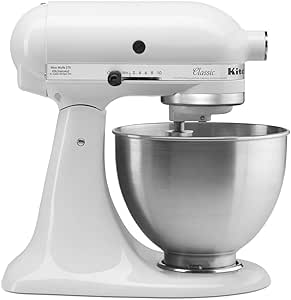
The KitchenAid Classic is the safest bet in this lineup — not because it’s the most powerful or biggest, but because its all-metal construction and decades-long production history mean parts, service, and attachments will be available for years. That ecosystem is the real argument: the hub on the back accepts grinders, pasta rollers, and slicers sold separately, turning it into a modular kitchen system. Neither the CEBORY, OLIXIS, nor Hamilton Beach offers anything comparable.
Be realistic about limits, though. The 4.5-quart bowl sits between the Hamilton Beach’s 4 quarts and the OLIXIS’s 6.3, so it handles single recipes comfortably but not bulk baking — that’s the ZACME’s territory. The three coated attachments are covered, not all-metal, so they need gentler care. And since extras cost extra, the total investment grows if you want the full attachment library. For bakers who value a machine that will outlast trends, this pick makes the most sense.
Pros:- All-metal construction built for longevity
- Huge attachment ecosystem turns it into a multi-use kitchen tool
- 10 speeds with a proven tilt-head design
- Trusted brand with wide parts and service availability
Cons:- Attachment hub accessories sold separately, adding cost
- 4.5-quart capacity is modest for large-batch baking
Best for: Bakers who want a durable, serviceable machine they can expand with attachments over many years
Not ideal for: Budget-limited buyers or bulk bakers — attachments cost extra and the 4.5-quart bowl caps batch size
- Model:K45SS
- Bowl capacity:4.5 qt
- Bowl material:Stainless steel (dishwasher safe)
- Speeds:10
- Construction:Metal
- Design:Tilt-head
- Included accessories:Coated flat beater, coated dough hook, 6-wire whip
- Additional attachments:Sold separately
Our verdict“Buy it for the long haul — reliability and expandability beat raw specs here.”
KitchenAid Artisan 5-Qt Tilt-Head Stand Mixer, KSM150PS, Almond Cream
The Artisan KSM150PS earns the top spot because of what money actually buys here: all-metal gear-driven construction that outlives the plastic-housed competition in this lineup. Compared with the Martha Stewart 5.3-Quart, capacity is nearly identical, but the KitchenAid’s build quality and massive attachment ecosystem (pasta rollers, grinders, and more) make it a platform, not just a mixer. The tilt-head design and 10-speed range handle everything from slow folding to high-speed whipping.
The tradeoff is honest: you pay a premium for the name and the metal, and the 5-quart bowl is smaller than the VIVOHOME 6-Quart for big bread bakers. The motor also works harder on stiff doughs than the 660W budget models here.
Pros:- All-metal construction built for longevity
- 10-speed range covers delicate folding through heavy whipping
- Tilt-head design gives easy bowl and attachment access
- Huge attachment ecosystem turns it into a multi-purpose kitchen tool
Cons:- Premium price far above every other mixer in this roundup
- 5-quart bowl limits large bread and cookie batches
- Motor can strain on very stiff doughs compared to higher-wattage rivals
Best for: Home bakers who want a lifetime-countertop mixer and plan to expand with attachments over the years
Not ideal for: Budget-limited buyers or those needing large-batch bread capacity — the VIVOHOME or Aucma offer more bowl for far less
- Capacity:5 qt
- Bowl Material:Stainless steel
- Speeds:10
- Construction:Metal
- Design:Tilt-head
- Bowl:Dishwasher safe with handle
- Color:Almond Cream
Our verdict“Buy this if you bake regularly and want one mixer to last a decade or more; skip it if budget or big batches come first.”
Kitchen in the Box 3.2Qt Stand Mixer, 6-Speed Lightweight Electric Food Mixer
At under 7 lbs and roughly a foot deep, this is the mixer for someone whose counter space is measured in inches. Unlike the Aucma 6.5-QT or VIVOHOME 6-Quart, which demand permanent counter real estate, the Kitchen in the Box can live in a cabinet and come out when needed. The suction-cup feet are a thoughtful touch — a light mixer needs them to keep from walking across the counter — and the anti-splash lid is something even the KitchenAid Artisan doesn’t include.
The compromise is scale: 3.2 quarts means a single loaf or one cake layer at a time, and the aluminum attachments won’t take the abuse that stainless equivalents in pricier models shrug off. Six speeds cover basics but offer less finesse than the Martha Stewart’s 12 settings.
Pros:- Featherweight at under 7 lbs with a compact footprint for storage
- Suction feet keep it stable despite the light build
- Anti-splash lid contains flour clouds and eases cleanup
- Includes dough hook, flat beater, and whisk for full task coverage
Cons:- 3.2-quart capacity limits recipes to small batches
- Aluminum attachments are less durable than stainless steel
- Only 6 speeds with no pulse option
Best for: Apartment dwellers, RV owners, and 1-2 person households who bake occasionally and store appliances between uses
Not ideal for: Families or batch bakers — the 3.2-quart bowl maxes out well below what cookie-day or bread recipes require
- Capacity:3.2 qt
- Weight:Under 7 lbs
- Dimensions:12.9 x 7 x 10.2 inches
- Speeds:6
- Bowl Material:Stainless steel
- Attachments:Aluminum dough hook, aluminum flat beater, stainless steel whisk
- Design:Tilt-head
- Stability:4 anti-slip suction cups
Our verdict“This pick makes the most sense for small-space bakers who value portability over capacity.”
VIVOHOME 6-Quart Tilt-Head Stand Mixer, Gray
This option stands out for raw capacity per dollar: a 6-quart bowl that handles up to three loaves or 2.2 lbs of flour, driven by a 660W copper motor. That puts it ahead of the KitchenAid Artisan on batch size while costing a fraction as much, and it matches the Aucma 6.5-QT on motor muscle. The included splash guard lets you add ingredients mid-mix without stopping the machine — a genuine workflow win the Kitchen in the Box can only partially replicate with its fixed lid.
The tradeoffs are about refinement rather than function: only 10 speeds plus pulse (versus 12 on the Martha Stewart), a bulky footprint that overwhelms small counters, and aluminum dough hooks and beaters that won’t match all-stainless durability.
Pros:- 6-quart bowl handles up to 3 loaves or 2.2 lbs of flour per batch
- 660W copper motor powers through stiff doughs
- Splash guard allows mid-mix ingredient additions
- Generous accessory bundle including flex edge beater and egg separator
Cons:- Bulky footprint dominates small counters
- Aluminum hook and beater less durable than stainless
- No stated noise figures — budget motors tend to run loud
Best for: Budget-minded bread and cookie bakers who need large-batch capacity without the premium-brand price
Not ideal for: Small-kitchen bakers — the 6-quart bowl and full-size body demand permanent counter space
- Motor Power:660W copper motor
- Bowl Capacity:6 quarts
- Speeds:10 speeds plus pulse
- Design:Tilt-head
- Accessories:Stainless steel whisk, aluminum dough hook, beater, egg separator, splash guard, flex edge beater
- Stability:Suction cups
- Color:Gray
Our verdict“The value play for high-volume home baking when the KitchenAid price isn’t justifiable.”
Martha Stewart 5.3-Quart Tilt-Head Stand Mixer, 12 Speeds
Twelve speed settings is the standout here — more than the KitchenAid Artisan’s 10 and double the Kitchen in the Box’s 6. That granularity matters for bakers who want a true low stir for folding chocolate chips or a precise creep upward for meringues. The silicone-edged flat beater continuously scrapes the bowl, which means less stopping to spatula-clean the sides — a real convenience the standard beaters on the VIVOHOME lack. Capacity of up to 9 dozen cookies per batch puts it in serious-baking territory despite the midsize bowl.
The frustrations are informational: no stated wattage or weight makes it hard to compare motor muscle against the 660W Aucma, and cleanup is tied to dishwasher-safe accessories rather than flexible hand-washing.
Pros:- 12 speed settings offer the finest control in this lineup
- Silicone-edge flat beater scrapes the bowl continuously
- Handles batches up to 9 dozen cookies
- Splash shield with pour chute allows mid-mix additions
Cons:- Wattage and weight not disclosed by the manufacturer
- Cleanup depends on dishwasher-safe accessories
- 6-speed rivals like the Aucma offer pulse function this lacks
Best for: Detail-oriented bakers who want fine speed control and a silicone-edge beater for hands-off bowl scraping
Not ideal for: Spec-driven buyers who need published wattage and weight figures before committing
- Bowl Capacity:5.3 qt
- Bowl Material:Stainless steel
- Speed Settings:12
- Attachments:Stainless steel whisk, dough hook, flat beater with silicone edge
- Design:Tilt-head
- Splash Shield:Removable, with pour chute
- Accessories:Dishwasher-safe, BPA-free
- Max Cookie Batch:Up to 9 dozen
Our verdict“Choose this for precision bakers who care about speed increments more than raw motor specs.”
Aucma 6.5-QT Stand Mixer, 660W 6-Speed Tilt-Head Kitchen Mixer with Dough Hook, Wire Whip & Beater (Black)
When batch size is the deciding factor, the 6.5-quart bowl here is the largest in this group, edging out the VIVOHOME’s 6 quarts while matching its 660W copper motor. The dual handles on the bowl sound minor until you’re lifting a bowl full of bread dough — it’s a genuine ergonomic advantage over single-handle or handleless rivals. The splash guard with an ingredient hatch and a stated noise ceiling of 76dB or less show more transparency than the VIVOHOME, which publishes no noise figures at all.
Where it trails: only 6 speeds versus the Martha Stewart’s 12, and the ABS housing wrapped with a stainless belt looks the part but won’t feel or age like the KitchenAid Artisan’s full-metal body.
Pros:- Largest bowl in the lineup at 6.5 quarts with dual handles for heavy loads
- 660W pure copper motor with pulse function handles stiff doughs
- Capped noise level of 76dB or less is disclosed upfront
- Splash guard with access hatch enables mid-mix ingredient additions
Cons:- Only 6 speeds limits fine control for delicate tasks
- ABS housing feels less premium than all-metal rivals
- 76dB operation is still audible during long mixing sessions
Best for: High-volume home bakers who regularly make multiple loaves of bread or doubled cookie recipes
Not ideal for: Buyers who prioritize build feel — the ABS housing lacks the solidity of all-metal construction
- Capacity:6.5 qt
- Motor Power:660W pure copper
- Speeds:6 with pulse function
- Noise Level:≤76dB
- Bowl Material:Stainless steel with dual handles
- Housing:ABS with stainless steel decoration belt
- Design:Tilt-head
- Attachments:Dishwasher-safe whisk, dough hook, mixing beater, splash guard with access hatch
- Color:Black
Our verdict“The pick for volume-first bakers who want maximum bowl capacity and honest motor specs at a mid-tier price.”

How We Picked
I evaluated each mixer through the lens of a home baker: can it cream butter, whip meringue, and — the real stress test — knead bread dough without overheating or walking across the counter? I compared bowl capacity against typical home batch sizes, speed range and control (a slow-start speed prevents flour clouds), build quality including all-metal versus plastic gearing, and included attachments, since dough hooks, whisks, and beaters add real value when included rather than sold separately.
Ranking also reflected longevity and versatility. KitchenAid’s decades-long parts availability and attachment hub justify its higher placement despite lower wattage on paper, while budget models ranked on whether they punch above their price for occasional bakers rather than daily use. Mixers that struggled with stiff doughs or offered weak speed control were ranked lower regardless of attractive pricing.
| stand mixers for home baker | Bowl Material | Attachments | Design | Color |
|---|---|---|---|---|
| Kitchen in the Box Stand Mixer | Stainless steel | Aluminum dough hook, aluminum flat beater, stainless steel whisk | Tilt-head with transparent anti-splash lid | Purplish-red |
| Kitchen in the Box 3.2 Qt Stan | Stainless steel | Aluminum dough hook, aluminum flat beater, stainless steel whisk | Tilt-head | Black |
| CEBORY 3-in-1 Electric Stand M | Food-grade stainless steel | — | Tilt-head | Almond Cream |
| Kitchen in the Box Stand Mixer | Stainless steel | Dough hook, flat beater, egg whisk | Tilt-head with anti-splash lid | Pink |
| OLIXIS 4.2 Qt 10-Speed Tilt-He | Stainless steel | — | Tilt-head | — |
| CEBORY 3-in-1 Electric Stand M | — | — | Tilt-head | Green |
| OLIXIS 6.3 Qt 10-Speed Tilt-He | — | Dough hook, wire whisk, flat beater | — | — |
| Hamilton Beach 4 Quart Electri | Stainless steel | Dough hook, whisk, flat beater | — | — |
| ZACME 8.4QT Commercial Stand M | — | — | — | — |
| KitchenAid Classic Series 4.5- | Stainless steel (dishwasher safe) | — | Tilt-head | — |
| KitchenAid Artisan 5-Qt Tilt-H | Stainless steel | — | Tilt-head | Almond Cream |
| Kitchen in the Box 3.2Qt Stand | Stainless steel | Aluminum dough hook, aluminum flat beater, stainless steel whisk | Tilt-head | — |
| VIVOHOME 6-Quart Tilt-Head Sta | — | — | Tilt-head | Gray |
| Martha Stewart 5.3-Quart Tilt- | Stainless steel | Stainless steel whisk, dough hook, flat beater with silicone edge | Tilt-head | — |
| Aucma 6.5-QT Stand Mixer | Stainless steel with dual handles | Dishwasher-safe whisk, dough hook, mixing beater, splash guard with access hatch | Tilt-head | Black |
Factors to Consider When Choosing Stand Mixers For Home Bakers
Beyond the specific models above, a few category-wide principles separate a satisfying purchase from a mixer that collects dust. Here’s what I learned comparing these 15 machines side by side.Match Bowl Capacity to Your Real Baking, Not Your Aspirations
The most common mistake home bakers make is buying capacity they’ll never use — or underestimating what they need. A 3.5–4.5 quart bowl handles standard cookie recipes and single loaves comfortably, while 6+ quarts is only necessary if you regularly bake two loaves of bread, large batches for events, or work with hydration-heavy doughs. Remember that a larger bowl with a small motor is worse than a small bowl with adequate power: the motor has to move more mass. Also check minimum batch size — big bowls struggle to cream a single stick of butter because the beater can’t reach small volumes. If you bake small batches often, a compact mixer plus a handheld for tiny jobs is genuinely a better setup than one oversized machine.
Wattage Is Marketing — Gear Design Is Reality
Buyers often compare wattage numbers, but wattage measures power consumption, not mixing performance. A direct-drive motor with metal gears (the KitchenAid approach) transfers torque more effectively than a higher-wattage motor driving plastic gears, which is why some 660W budget mixers outperform 800W ones on bread dough. The honest question to ask: will this machine knead a stiff dough for eight minutes without the head flexing, the bowl slipping, or a burning smell? Suction feet and bowl-locking mechanisms matter as much as the motor — a walking mixer is a safety issue. When a brand doesn’t publish gear material, treat that as information in itself.
Speed Control Quality Separates Good Mixers from Frustrating Ones
Six well-spaced speeds beat ten badly spaced ones. What actually matters is whether the lowest speed is slow enough to incorporate flour without a counter full of dust, and whether speed changes are gradual rather than lurching. A ‘slow start’ or soft-start feature sounds minor until you’ve cleaned powdered sugar off your backsplash once. Higher speed counts (like the Martha Stewart’s 12 settings) are useful mainly for delicate work — whipping egg whites through distinct stages, or slowly building a meringue. For everyday cookie and cake bakers, responsive pulse or fold settings deliver more practical benefit than sheer speed count.
Tilt-Head vs. Bowl-Lift Is an Ergonomics Decision
Every mixer in this roundup is tilt-head except the ZACME, and that’s worth understanding. Tilt-head designs make it easy to add ingredients mid-mix and scrape the bowl, but the hinge is a wear point on cheaper models — a wobbling head means uneven mixing. Bowl-lift designs are more stable under heavy bread dough loads but make bowl access awkward and take more counter height. If you bake bread weekly, a solidly built tilt-head or a bowl-lift is worth the tradeoff; if you mostly make cakes and cookies, the convenience of tilt-head wins. Before buying either, measure your counter-to-cabinet clearance — opened tilt-heads add several inches of height.
The Attachment Ecosystem Multiplies (or Limits) Long-Term Value
A stand mixer is often the gateway to a broader kitchen system, and only some brands treat it that way. KitchenAid’s power hub accepts pasta rollers, meat grinders, spiralizers, and grain mills, meaning a single purchase can eventually replace several appliances. Budget mixers with proprietary or non-existent attachment lines are single-purpose machines — fine, but factor that in when comparing prices. Also check whether spare bowls and replacement beaters are available; a whisk that bends with no replacement path effectively shortens the mixer’s life. Third-party attachments for popular brands are often cheaper than first-party ones, another ecosystem advantage.
Weight, Noise, and Storage Are the Overlooked Dealbreakers
A mixer you have to lift in and out of a cabinet gets used less — this is the strongest argument for lightweight models like the Kitchen in the Box line, which weigh a fraction of a steel-bowl KitchenAid. But lightweight cuts both ways: light mixers need suction feet to avoid dancing across the counter under bread dough. Noise varies more than spec sheets suggest; plastic-bodied budget mixers tend to whine at higher pitches, which matters in open-plan kitchens. Finally, consider bowl material: stainless steel is durable and dishwasher-safe, while coated beater edges chip over time and may need replacement. If counter space is your constraint, prioritize footprint over features — a great mixer stored in the garage is worth nothing.
Frequently Asked Questions
Can a cheap stand mixer actually handle bread dough, or do I need a premium model?
It depends on how often you bake bread and how stiff your doughs are. Occasional sandwich-loaf bakers can get by with a mid-range 6-quart machine like the Aucma or CEBORY, which have enough motor and bowl stability for a weekly knead. The problems start with high-gluten doughs, double batches, or weekly-plus baking — that’s where plastic gears, flexing tilt-heads, and overheating show up on budget models, usually after the warranty period. If bread is your primary use, the KitchenAid Artisan’s metal-gear construction or the ZACME’s commercial build will outlast several cheap replacements. The honest math: two failed budget mixers cost more than one durable one.
Is the KitchenAid Artisan really worth it over the Classic Series?
The differences are real but modest, and whether they’re worth paying for depends on your batch sizes. The Artisan’s 5-quart bowl versus the Classic’s 4.5 gives you room for larger cookie batches and slightly bigger bread doughs, and the Artisan typically comes with a pouring shield and more color options. Both share the same attachment hub and direct-drive motor architecture, so the Classic sacrifices capacity, not capability. If you bake standard single recipes and like the white finish, the Classic is the smarter buy. If you regularly push batch sizes or want the bowl handle — genuinely useful for heavy doughs — step up to the Artisan.
Are the different Kitchen in the Box 3.2Qt versions actually different mixers?
No — the color variants (purplish-red, black, pink, and the base model) are functionally identical machines, differing only in finish and occasionally which accessories are bundled. The pink version, for instance, ships with the egg whisk, dough hook, and flat beater spelled out, but the others include the same core set. What this means practically: buy whichever color or bundle is most convenient and don’t pay more for one variant assuming better performance. The real decision is whether this class of mixer suits you at all — at 3.2 quarts and lightweight construction, it’s built for small-batch cookies, whipping cream, and cake batters, not bread. If that matches your baking, any variant is equally fine.
What capacity do I need if I bake for a family of four?
For a family that bakes weekly, 4.5 to 6 quarts is the sweet spot, and this roundup covers it well with the Hamilton Beach 4-quart at the small end and the OLIXIS 6.3 or Aucma 6.5 at the roomy end. A 4–4.5 quart bowl handles a standard batch of chocolate chip cookies, one cake layer set, or a single loaf of bread. Step up to 6+ quarts if you double recipes for the freezer, bake for school events, or make bread with whole-grain flours that need longer kneading in bigger masses. Going smaller than 4 quarts means you’ll mix in stages, which defeats the purpose of a stand mixer. Going to 8+ quarts, like the ZACME, mostly adds weight and cleaning hassle unless you bake in serious volume.
Do I need a mixer with a stainless steel bowl, and does speed count matter?
Every mixer in this lineup includes a stainless bowl, and that’s the right call — it’s dishwasher-safe, won’t chip like ceramic, and won’t react with acidic doughs. Bowl quality varies more in thickness and base stability than material, so a bowl that locks firmly matters more than marketing language about the steel. On speeds, six well-designed settings cover everything a home baker does: slow folding, creaming, whipping, and high-speed aeration. The 10- and 12-speed models (CEBORY, OLIXIS, Martha Stewart) offer finer control for meringues and macarons, which is a real but narrow benefit. Judge the lowest speed first — if speed one still throws flour, extra speeds are worthless.
Conclusion
Mapping these 15 mixers to real buyers: the KitchenAid Artisan 5-Qt is my best overall pick — it balances capacity, durability, and an attachment ecosystem that keeps it useful for decades. For best value, the CEBORY 6.5-Qt 3-in-1 (in either color, they’re identical) delivers serious bread-baking capacity at a budget price, with the Aucma 6.5-Qt as a close alternative if you prefer its styling. The ZACME 8.4Qt takes best premium — its NSF certification and bowl-lift construction make it the choice for cottage bakers and high-volume homes, though it’s more machine than most kitchens need. Beginners should start with the Hamilton Beach 4-Quart: it’s affordable, simple, and forgiving while you learn what you actually bake. For small kitchens and light bakers, the Kitchen in the Box 3.2Qt wins on portability, and the KitchenAid Classic is the value play within the KitchenAid family. Whatever you choose, match the machine to your real batch sizes — the best mixer is the one that fits your counter, your dough, and how often you’ll actually use it.
Fall Picks
fall essentials
As an affiliate, we earn on qualifying purchases.