Bread maker settings like dough, bake, jam, and others each serve specific functions. The dough setting helps you prepare pizza bases, rolls, or bread without manual kneading, while the bake setting allows you to produce freshly baked bread effortlessly. Other options like jam or gluten-free settings cater to specialized recipes. Selecting the right setting guarantees consistent results, and proper maintenance keeps your machine functioning smoothly. If you keep going, you’ll discover how to master each setting for perfect baked goods.
Key Takeaways
- Each setting serves a specific purpose, such as kneading dough, baking bread, or making jam, to simplify the process.
- The Dough setting automates kneading and rising, ideal for preparing pizza bases, rolls, or bread for baking later.
- The Bake setting produces freshly baked bread, suitable for shaping or adding toppings before baking.
- Proper maintenance of the machine, including cleaning and inspecting parts, ensures consistent and high-quality results.
- Understanding and selecting the right setting, along with ingredient adjustments, helps optimize baking outcomes.

Have you ever wondered how to get the perfect loaf with your bread maker? Understanding the different settings is key to mastering your machine and customizing recipes to your liking. Each setting serves a specific purpose, whether you’re making dough, baking bread, or preparing other treats. For example, the dough setting makes it easy to prepare pizza bases, dinner rolls, or bread that you can bake in your oven later. When using this setting, you don’t need to worry about kneading or rising — your bread maker handles it all. Just remember, if you need to make ingredient substitutions, like swapping out wheat flour for gluten-free alternatives, it’s essential to adjust the liquid ratios accordingly. Additionally, maintenance tips such as cleaning the kneading paddle and checking the baking pan for residue, help keep your machine running smoothly and ensure consistent results.
The bake setting is straightforward but powerful, letting you produce freshly baked bread without much fuss. It’s perfect if you prefer to shape your loaf by hand or want to add toppings before baking. When using different settings, pay attention to the recommended flour types and baking times to prevent overbaking or underbaking. If you experience inconsistent results, it could be due to improper ingredient measurements or the condition of your bread maker. Keeping your machine in good shape involves routine maintenance tips: wipe down the interior after each use, ensure the heating element is clean, and periodically inspect the paddle for wear and tear. These steps help guarantee your baked goods come out perfectly every time.
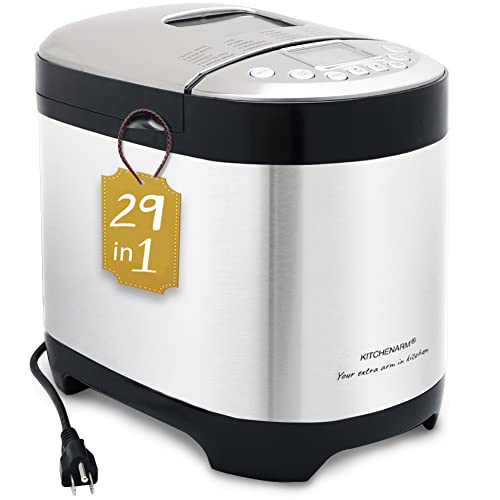
KITCHENARM 29-in-1 SMART Bread Machine with Gluten Free Setting 2LB 1.5LB 1LB Bread Maker Machine with Homemade Cycle – Stainless Steel Breadmaker with Recipes Whole Wheat Bread Making Machine
29-in-1 SMART BREAD MACHINE FOR NEWBIES & PROS – Your healthy homemade bread is just clicks away: pick…
As an affiliate, we earn on qualifying purchases.
As an affiliate, we earn on qualifying purchases.
Frequently Asked Questions
Can I Customize Bread Maker Settings for Specific Recipes?
Yes, you can customize bread maker settings for specific recipes. You should experiment with recipe modifications and setting adjustments to achieve the desired results. Start by adjusting the kneading, rising, or baking times based on your recipe’s needs. Keep notes of your changes, so you can refine your process. With a little trial and error, you’ll master personalized settings that produce perfect bread tailored to your taste.
How Do Different Settings Affect Bread Texture and Crust?
Different settings directly influence your bread’s dough texture and crust coloration. For example, selecting a dough cycle ensures a soft, well-kneaded dough, while using the bake setting affects crust thickness and color. You might think settings are just buttons, but they shape the final product. By adjusting these, you control how chewy or tender your bread is and whether it has a light or golden crust, giving you bakery-quality results at home.
Are There Settings for Gluten-Free or Specialty Breads?
Yes, your bread maker likely has gluten-free cycles and specialty bread options. These settings are designed specifically to handle gluten-free dough, which often requires different mixing and rising times, ensuring a better texture and crumb. Specialty bread options might include options for brioche, whole wheat, or other unique recipes. Using these dedicated settings helps you get consistent, delicious results, whether you’re baking gluten-free or other specialty breads.
How Do I Troubleshoot if My Bread Maker Doesn’T Start?
If your bread maker doesn’t start, check for bread machine troubleshooting tips like ensuring it’s plugged in securely and the outlet has power. For start delay issues, verify if the delay timer is activated, which might prevent immediate start. Reset the machine by unplugging it briefly, then try again. If it still won’t start, consult the user manual or contact customer support, as there could be a motor or control panel problem.
Can I Pause and Add Ingredients During a Cycle?
Yes, you can pause your bread maker to add ingredients using the pause feature. When the cycle is paused, open the lid carefully, add your ingredients, then close the lid securely. Be mindful of the bread maker’s instructions, as some models may have specific guidelines for ingredient addition during a cycle. Using the pause feature guarantees your ingredients are incorporated properly without disrupting the baking process.

Cuisinart Bread Maker Machine, Stainless Steel, 12 Programs, Up to 2 lbs
12 MENU FEATURES: The compact, automatic Cuisinart Bread Maker Machine offers a wide range of options with its…
As an affiliate, we earn on qualifying purchases.
As an affiliate, we earn on qualifying purchases.
Conclusion
Understanding your bread maker’s settings helps you create perfect loaves every time. Did you know that the global bread market is expected to reach over $300 billion by 2025? With a little practice, you’ll confidently choose the right setting for dough, bake, jam, and more, ensuring delicious results. So go ahead, experiment and enjoy the art of homemade bread—your taste buds will thank you!

Elite Gourmet Programmable Bread Maker, 2 Lb, 3 Sizes, 19 Presets, Mint
FOOLPROOF FRESH BREAD AT HOME: Automatic kneading, rising, and baking delivers bakery-quality bread with just one touch —…
As an affiliate, we earn on qualifying purchases.
As an affiliate, we earn on qualifying purchases.

Bread Measuring Cup Bread Making Accessories Measuring Spoon Paddle Removal Tool Kit for Bread Maker Machine Spare Parts
There are two measurement methods for measuring cups: 240milliliters and a quarter cup
As an affiliate, we earn on qualifying purchases.
As an affiliate, we earn on qualifying purchases.