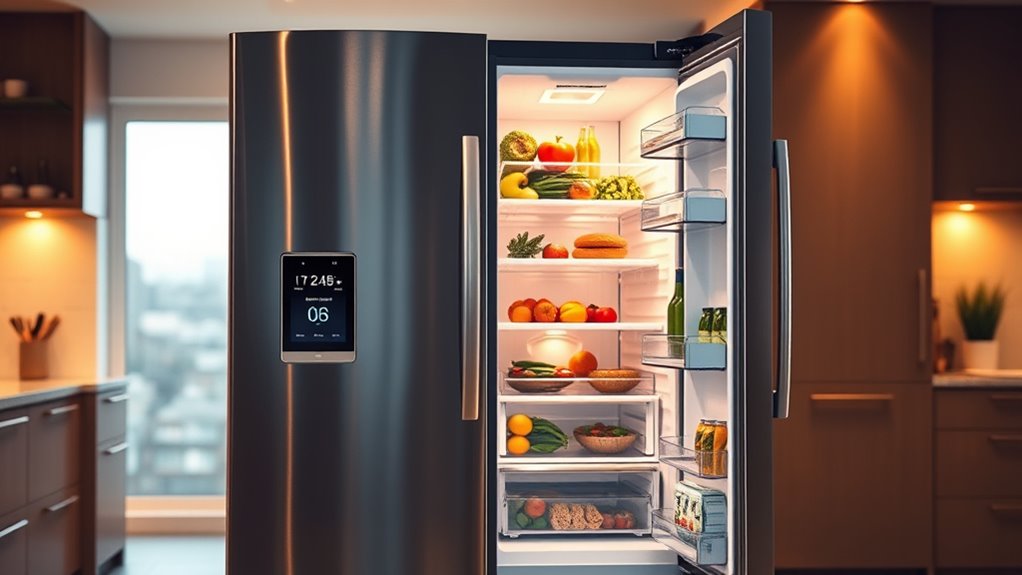

Smart fridges with useful features like energy saving modes and voice control actually make your life easier by lowering energy bills and boosting kitchen organization. Energy saving modes reduce waste without sacrificing performance, while voice control lets you manage your fridge hands-free—perfect when your hands are full or messy. But not all features are worth the extra cost; some are just trendy fluff. Explore further to discover which smart fridge features truly add value to your daily routine.

Get kitchen gear delivered free — and shop member deals
- Fast, free delivery on millions of items
- Access to Prime Big Deal Days deals on October 6–7
- Prime Video, Amazon Music and more included
Key Takeaways
- Energy saving modes effectively reduce electricity bills by optimizing compressor and lighting usage during low activity periods.
- Voice-controlled interfaces enhance convenience by enabling hands-free management of grocery lists, temperature checks, and recipe suggestions.
- Features that improve daily kitchen management, like expiry reminders and supply notifications, offer genuine practical benefits.
- Advanced features with limited real-world impact or high costs may be considered hype and less worth prioritizing.
- Prioritize smart fridge features that streamline routines, save energy, and integrate seamlessly with smart home systems.

Have you ever wondered how smart fridges are transforming your kitchen experience? These appliances are more than just cool boxes; they come packed with features aimed at making your life easier and more efficient. One of the standout features is energy saving modes, designed to reduce electricity consumption without sacrificing performance. When activated, these modes optimize compressor operation, control defrost cycles, and adjust lighting to use less power. If you’re conscious about your energy bill or want to lower your carbon footprint, these modes can make a noticeable difference. They often turn on during periods of low usage or when the fridge detects that you’re away, ensuring you’re not wasting energy when it’s not needed. It’s a simple yet effective way to keep your kitchen greener and your costs down.
Smart fridges save energy by optimizing operation during low usage or absence, lowering bills and reducing your carbon footprint.
Another feature that’s gaining popularity is voice controlled interfaces. With these, you can interact with your fridge hands-free, just by speaking commands. Imagine asking your fridge to display the grocery list, check the temperature inside, or even suggest recipes based on what’s inside. This technology relies on voice assistants integrated into the appliance, allowing you to control and monitor your fridge without touching any buttons. It’s especially handy when your hands are full or messy from cooking. Plus, voice control can help you stay organized, reminding you of expiry dates or notifying you when supplies are running low. The interface is designed to be intuitive, making it easy for anyone to use, regardless of tech-savyness.
While these features sound futuristic, they’re becoming more common and accessible. Energy saving modes are straightforward to activate and can considerably cut down on energy waste. Voice controlled interfaces, on the other hand, add a layer of convenience that syncs seamlessly with the smart home ecosystem. These features aren’t just about high-tech bragging rights—they deliver real benefits: lower energy bills, enhanced convenience, and smarter management of your food storage. Additionally, understanding the importance of color accuracy in home appliances can help you choose a fridge that maintains the freshness and appearance of your stored food effectively.
That said, not every smart fridge feature is equally valuable. Some come with hefty price tags but offer little real-world benefit, so it’s worth focusing on those that genuinely improve your daily routine. Energy saving modes and voice controlled interfaces are prime examples of features that truly matter, making your kitchen smarter, more efficient, and easier to manage. They’re tangible improvements that can genuinely enhance your experience, rather than just flashy gimmicks.
As an affiliate, we earn on qualifying purchases.
Frequently Asked Questions
Do Smart Fridges Really Save Energy?
Yes, smart fridges can save energy if you use features like energy monitoring and adaptive temperature controls. By optimizing cooling cycles, you reduce power consumption, leading to energy savings. To maximize benefits, verify your smart fridge is compatible with your home’s appliances and Wi-Fi network. Regularly using energy-saving modes and maintaining proper door seals also helps lower your overall energy use, making your smart fridge an efficient choice.
How Secure Are Smart Fridge Data Connections?
Imagine your smart fridge’s data connection is like a locked treasure chest. It’s fairly secure because of data encryption and cloud security measures, but no system is completely invulnerable. Hackers could potentially exploit vulnerabilities, so it’s essential to keep firmware updated and use strong passwords. While manufacturers invest in security, always stay cautious, knowing that your device’s data connection offers good, but not absolute, protection.
Can Smart Fridges Function Without Wi-Fi?
Yes, smart fridges can function without Wi-Fi, but with limitations. Wi-Fi dependence means many smart features rely on an internet connection, affecting offline functionality. When disconnected, you might still access basic functions like opening the door, adjusting temperature, or viewing local controls. However, features like syncing with apps, receiving updates, or using voice commands may not work without Wi-Fi. So, while you can operate some functions offline, full smart capabilities require an active connection.
Are Smart Fridge Features Compatible With All Kitchen Appliances?
Most smart fridges are designed for appliance compatibility and kitchen integration, but they don’t work seamlessly with every device. About 60% of users find some appliances don’t connect well, limiting full kitchen automation. You should check your existing appliances’ compatibility before buying. While smart fridges aim to streamline your kitchen, verify your devices support the same smart standards to maximize functionality.
What Is the Typical Lifespan of a Smart Fridge?
A smart fridge typically lasts around 10 to 15 years, depending on its smart fridge durability and maintenance requirements. Regular upkeep, like cleaning coils and software updates, helps extend its lifespan. Keep in mind that advanced features might need more frequent repairs or replacements. You should expect some wear and tear over time, but proper care can guarantee your smart fridge remains functional and efficient for many years.
voice controlled smart refrigerator
As an affiliate, we earn on qualifying purchases.
As an affiliate, we earn on qualifying purchases.
Conclusion
Remember, not all that glitters is gold—especially when it comes to smart fridge features. Focus on the ones that truly simplify your life, like inventory management or energy efficiency, rather than falling for flashy hype. A smart fridge should work for you, not just impress with gadgets. By choosing wisely, you’ll get the most out of your investment and avoid unnecessary tech clutter. After all, the proof of the pudding is in the eating—so pick features that genuinely add value.
smart fridge with expiry reminders
As an affiliate, we earn on qualifying purchases.
As an affiliate, we earn on qualifying purchases.
smart refrigerator with grocery list
As an affiliate, we earn on qualifying purchases.
As an affiliate, we earn on qualifying purchases.
Halloween Picks
halloween
As an affiliate, we earn on qualifying purchases.